



The establishment of a dedicated space for woodworking within a residential environment entails a multifaceted process. This process encompasses the selection of an appropriate area, the procurement of necessary tools and equipment, and the implementation of safety protocols. For example, converting a garage or spare room into a functional area necessitates careful planning and execution.
The advantages of having such a space are numerous. It provides individuals with the opportunity to pursue creative endeavors, develop practical skills, and produce customized items. Historically, home-based woodworking has been a significant aspect of craftsmanship and self-sufficiency, allowing individuals to create and repair essential household items. The presence of a well-equipped area facilitates both personal enrichment and potential income generation through the creation and sale of handcrafted goods.
Subsequent sections will delve into specific considerations related to space requirements, tool selection criteria, essential safety measures, and strategies for optimizing the layout and functionality of the workspace to maximize efficiency and minimize potential hazards.
Essential Guidance for Establishing a Woodworking Area
The following recommendations offer practical advice for constructing a functional and safe environment dedicated to woodworking activities.
Tip 1: Space Assessment and Allocation: Prioritize the identification of a suitable location within the residence. Consider available square footage, natural light, and ventilation. A dedicated room or a partitioned section of a garage are common options.
Tip 2: Tool Procurement Strategy: Develop a phased approach to acquiring necessary tools. Start with essential hand tools (e.g., saws, chisels, planes) and basic power tools (e.g., drill, sander). Invest in higher-quality equipment as proficiency increases and project complexity expands.
Tip 3: Dust Management Implementation: Integrate a comprehensive dust collection system. This may include a dedicated dust collector for power tools and a shop vacuum for general cleanup. Proper dust management minimizes health risks and maintains a clean work environment.
Tip 4: Safety Protocol Establishment: Enforce strict adherence to safety guidelines. This includes mandatory use of safety glasses, hearing protection, and dust masks. Implement lock-out/tag-out procedures for power tools during maintenance or blade changes.
Tip 5: Workspace Organization and Layout: Optimize the layout of the area to maximize workflow efficiency. Designate specific zones for different tasks (e.g., cutting, assembly, finishing). Utilize storage solutions to keep tools and materials organized and accessible.
Tip 6: Adequate Lighting Installation: Ensure sufficient illumination throughout the workspace. Supplement natural light with strategically positioned artificial lighting, including task-specific lighting for detailed work.
Tip 7: Electrical System Evaluation: Assess the electrical capacity of the designated area. Install dedicated circuits for power tools to prevent overloading. Consider a ground fault circuit interrupter (GFCI) for added safety.
Adhering to these tips will contribute to a safe, efficient, and productive woodworking environment, enabling the successful execution of woodworking projects.
The subsequent discussion will provide insights into expanding the capabilities of the area through the incorporation of specialized equipment and advanced techniques.
1. Space Adequacy

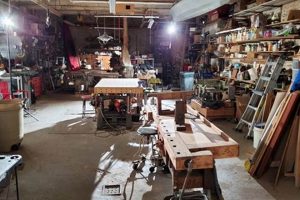
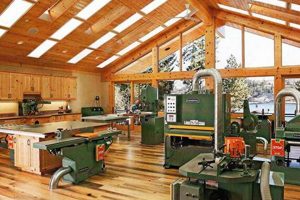
The concept of space adequacy is fundamental to the successful establishment of a home woodworking shop. Insufficient space directly restricts the size and complexity of projects that can be undertaken, limiting the shop’s utility. Conversely, an adequately sized area facilitates efficient workflow, accommodates necessary equipment, and promotes safety. The dimensions of the available space dictate the selection of tools and machinery. A small area may necessitate compact, multi-functional tools, while a larger space permits the use of larger, more specialized equipment. Consider, for example, the difference between assembling a small box in a confined corner versus constructing a large cabinet in a spacious garage; the latter requires significantly more room for material handling, assembly, and finishing.
Practical applications of understanding space adequacy extend to optimizing the layout of the workspace. Adequate space allows for the creation of dedicated zones for different tasks, such as cutting, assembly, and finishing. Clear separation of these zones minimizes cross-contamination (e.g., sawdust in the finishing area) and improves overall efficiency. Furthermore, adequate space provides room for material storage, preventing clutter and potential safety hazards. A well-organized and spacious workshop reduces the risk of accidents and enhances the overall woodworking experience. The inclusion of a workbench with adequate surface area is crucial for executing various woodworking tasks.
In summary, space adequacy is a critical determinant of the functionality and safety of a home woodworking shop. Failing to adequately assess and plan for space requirements can lead to significant limitations and inefficiencies. Effective space management, including the strategic selection of tools, the organization of the layout, and the implementation of storage solutions, is essential for maximizing the potential of the woodworking area and ensuring a safe and productive environment. The challenges related to space limitations can be mitigated through careful planning and the adoption of space-saving strategies, linking back to the broader theme of comprehensively setting up a home woodworking shop.
2. Tool Selection

Tool selection is a pivotal aspect of setting up a home woodworking shop, directly influencing the scope, quality, and efficiency of potential projects. The choices made regarding tools will define the capabilities of the shop and the types of woodworking tasks that can be undertaken effectively.
- Initial Investment and Phased Acquisition
The financial commitment required for tool acquisition necessitates a strategic approach. A phased acquisition strategy, starting with essential hand tools and gradually incorporating power tools, allows for a controlled investment and progressive expansion of capabilities. This approach minimizes initial costs and allows for informed decisions based on experience and project requirements. For instance, starting with a hand saw, chisels, and a basic smoothing plane enables fundamental woodworking, while the subsequent addition of a table saw and jointer broadens the range of possible projects.
- Quality vs. Quantity
The trade-off between tool quality and quantity is a critical consideration. Investing in higher-quality tools often results in improved performance, durability, and accuracy. While acquiring a large number of inexpensive tools may seem appealing, the limitations in their performance and longevity can ultimately hinder progress and necessitate future replacements. Prioritizing a smaller selection of reliable, well-made tools provides a solid foundation for woodworking endeavors. Consider the difference between a low-cost drill that lacks torque and precision versus a higher-quality model that consistently delivers accurate and powerful performance.
- Hand Tools vs. Power Tools
The balance between hand tools and power tools depends on individual preferences, project requirements, and working style. Hand tools offer greater control, precision, and a deeper connection to the craft, while power tools significantly increase efficiency and enable the completion of larger and more complex projects. The appropriate selection involves understanding the strengths and limitations of each category. For example, intricate carving is best achieved with hand tools, while ripping large boards is more efficiently accomplished with a table saw. This balance dictates setting up a home woodworking shop with practical approach.
- Specialized Tools and Project Scope
The scope of intended projects directly influences the need for specialized tools. Certain woodworking tasks, such as joinery, carving, or turning, require specific tools designed for those purposes. Investing in specialized tools expands the shop’s capabilities and enables the execution of projects with greater precision and finesse. For instance, a dedicated mortise and tenon jig facilitates accurate joinery, while a lathe allows for the creation of turned objects. Aligning tool selection with project goals ensures that the shop is equipped to meet the demands of planned woodworking activities. Therefore the project needs should set the tone when setting up a home woodworking shop.
The interplay between these facets underscores the significance of thoughtful tool selection in the establishment of a functional and productive home woodworking shop. Understanding the nuances of investment strategy, quality considerations, tool types, and project requirements enables the creation of a workshop tailored to individual needs and aspirations, ultimately contributing to a rewarding woodworking experience. The correct tools set the stage for success when setting up a home woodworking shop.
3. Safety Measures

The integration of comprehensive safety measures is not merely an adjunct to, but an intrinsic component of, the process of setting up a home woodworking shop. Neglecting safety protocols during establishment and operation elevates the risk of severe injury, rendering the workspace hazardous. The cause-and-effect relationship is direct: inadequate safety measures precipitate accidents, while diligent adherence mitigates risk. A fundamental understanding of this connection is paramount for anyone undertaking woodworking activities.
Examples of this interdependence are manifold. Failure to install and utilize proper dust collection systems, for instance, leads to prolonged exposure to airborne particulate matter, increasing the risk of respiratory illnesses. Similarly, neglecting to wear appropriate eye protection during sawing or sanding operations can result in permanent vision impairment from projectiles. The proper use of machine guards, push sticks, and feather boards prevents contact with cutting blades, minimizing the potential for lacerations and amputations. The implementation of clear lockout/tagout procedures during maintenance prevents accidental machine activation, guarding against unexpected injuries. The placement of fire extinguishers and readily accessible first-aid kits is essential for addressing immediate emergencies. Ensuring adequate lighting reduces the chances of misjudgments or errors that can lead to accidents. The presence of a well-ventilated space for finishing operations minimizes exposure to harmful fumes.
In conclusion, safety measures are not optional considerations but essential prerequisites for setting up a home woodworking shop. The practical significance of this understanding lies in the prevention of injuries, the preservation of health, and the creation of a sustainable and enjoyable woodworking environment. Overlooking or underemphasizing safety protocols undermines the entire endeavor, transforming a potential source of creativity and accomplishment into a zone of avoidable risk. Therefore, safety measures cannot be viewed as separate from, but as integral to, the comprehensive process of establishing and maintaining a home woodworking shop.
4. Dust Collection

The integration of a comprehensive dust collection system is a crucial element when setting up a home woodworking shop. Effective dust management directly impacts the health and safety of the operator, the longevity of tools and equipment, and the overall cleanliness and efficiency of the workspace.
- Health Implications of Wood Dust Exposure
Prolonged exposure to wood dust can lead to a variety of health problems, including respiratory irritation, allergic reactions, and an increased risk of developing certain types of cancer. Specific wood species, such as exotic hardwoods, may contain compounds that exacerbate these risks. Effective dust collection minimizes airborne particulate matter, mitigating potential health hazards and creating a safer working environment. Without adequate dust collection, fine particles remain suspended in the air for extended periods, increasing the likelihood of inhalation and skin contact.
- Equipment Longevity and Performance
Accumulated dust can negatively impact the performance and lifespan of woodworking tools and machinery. Fine particles can infiltrate motors, bearings, and other moving parts, leading to overheating, premature wear, and reduced efficiency. Regular dust removal helps maintain optimal tool function and extends the operational life of valuable equipment. For example, sawdust accumulation on a table saw can affect blade alignment and cut quality, while dust buildup in a router motor can cause overheating and failure.
- Cleanliness and Shop Efficiency
The presence of dust throughout the workshop contributes to a disorganized and inefficient working environment. Dust accumulation on surfaces can obscure markings, hinder finishing processes, and create a generally unpleasant atmosphere. A clean workspace promotes better visibility, reduces the risk of accidents, and facilitates efficient workflow. Effective dust collection systems minimize the spread of dust, making cleanup easier and improving overall shop organization. The implementation of strategically placed dust collection ports near major dust-producing equipment significantly reduces overall shop maintenance.
- Types of Dust Collection Systems
Various dust collection systems are available, ranging from portable shop vacuums to central dust collection units. The selection of an appropriate system depends on the size of the shop, the type of tools used, and the volume of dust generated. Portable shop vacuums are suitable for small shops and occasional use, while central systems provide more powerful and comprehensive dust extraction for larger workshops. Consider a cyclone separator to pre-filter larger particles, extending the life of the filter and maximizing the efficiency of the dust collector. Each tool should be assessed and the best dust collection method applied for proper dust control.
In summary, effective dust collection is an integral component of setting up a home woodworking shop. By mitigating health risks, preserving equipment, and maintaining a clean workspace, a comprehensive dust collection system contributes to a safer, more efficient, and more enjoyable woodworking experience. The choice of system should be carefully considered based on the specific needs and requirements of the workshop. Inadequate consideration can increase the risks and potential long-term damage from improper dust control, thereby negatively impacting the entire work environment for setting up a home woodworking shop.
5. Layout Optimization

Layout optimization is a critical determinant of efficiency, safety, and overall functionality during the establishment of a home woodworking shop. The arrangement of tools, equipment, and workspaces directly impacts workflow, reduces unnecessary movement, and minimizes the potential for accidents. A poorly planned layout can result in wasted time, increased fatigue, and heightened risk of injury. Conversely, a well-optimized layout facilitates a seamless and productive woodworking process.
Practical examples illustrate the significance of layout optimization. Positioning frequently used tools within easy reach minimizes unnecessary trips across the shop, saving time and reducing the risk of tripping hazards. Organizing work areas based on specific tasks, such as cutting, assembly, and finishing, prevents cross-contamination and promotes a cleaner, more efficient workflow. The strategic placement of power tools, considering power outlet locations and dust collection ducting, avoids tangled cords and maximizes dust extraction efficiency. Ensuring adequate clearance around machinery allows for safe operation and material handling. For instance, a table saw requires sufficient space for feeding long boards, while a lathe necessitates unobstructed access for turning operations. Implementing a logical storage system for materials and supplies prevents clutter and ensures easy access to necessary items.
In summary, layout optimization is an indispensable element of setting up a home woodworking shop. A thoughtfully designed layout enhances productivity, promotes safety, and creates a more enjoyable woodworking experience. Failure to adequately plan the layout can lead to inefficiencies, hazards, and limitations. Effective layout optimization requires careful consideration of workflow, tool placement, material storage, and safety considerations. This proactive approach to shop design contributes significantly to the long-term success and sustainability of the home woodworking endeavor. A shop not properly setup has a negative impact when setting up a home woodworking shop.
Frequently Asked Questions
The following questions address common concerns and misconceptions regarding the establishment of a dedicated woodworking space within a residential environment. The responses aim to provide clear and informative guidance based on best practices and industry standards.
Question 1: What constitutes the minimum space requirement for a functional home woodworking shop?
The minimum space requirement is contingent upon the scale and type of projects intended. A small area, approximately 100 square feet, may suffice for basic hand tool woodworking. However, the incorporation of power tools and larger projects necessitates a minimum of 200 square feet to ensure safe operation and adequate material handling space.
Question 2: What are the essential tools required for initial woodworking projects?
The essential tools include a hand saw, a set of chisels, a smoothing plane, a measuring tape, a combination square, a marking gauge, and a sharpening stone. These tools provide the foundation for basic woodworking tasks and can be supplemented with power tools as proficiency increases.
Question 3: What safety precautions are paramount when operating power tools?
Essential safety precautions include the mandatory use of safety glasses, hearing protection, and dust masks. Machine guards should be in place and properly adjusted. Push sticks and feather boards should be utilized to maintain a safe distance from cutting blades. Lockout/tagout procedures should be implemented during maintenance.
Question 4: What is the optimal method for controlling dust within a home woodworking shop?
Effective dust control requires a comprehensive approach, including a dedicated dust collector for power tools and a shop vacuum for general cleanup. Consider a two-stage system with a cyclone separator to pre-filter larger particles. Ensure proper ventilation to remove airborne dust and fumes.
Question 5: How should a home woodworking shop be organized to maximize efficiency?
Organize the shop into distinct zones for different tasks, such as cutting, assembly, and finishing. Place frequently used tools within easy reach. Implement a logical storage system for materials and supplies. Ensure adequate lighting throughout the workspace.
Question 6: What electrical considerations are necessary when setting up a home woodworking shop?
Assess the electrical capacity of the designated area. Install dedicated circuits for power tools to prevent overloading. Consider a ground fault circuit interrupter (GFCI) for added safety. Consult with a qualified electrician to ensure compliance with local electrical codes.
Adhering to these guidelines will contribute to the establishment of a safe, efficient, and productive home woodworking shop, enabling the successful completion of woodworking projects while minimizing potential hazards.
Subsequent discussions will explore advanced woodworking techniques and specialized equipment options.
Conclusion
The preceding analysis has detailed the multifaceted process of setting up a home woodworking shop. This endeavor necessitates careful consideration of space adequacy, strategic tool selection, rigorous safety measures, comprehensive dust collection, and optimized layout design. Each element contributes directly to the functionality, safety, and productivity of the workspace.
Successfully establishing a home woodworking shop requires a commitment to planning, preparation, and adherence to best practices. Ignoring fundamental principles elevates the risk of inefficiency, injury, and project failure. Continuous learning and adaptation are essential for sustained success and the realization of woodworking aspirations.



![Shop-Perfect: Best Lights for Woodworking Shop [Guide] | Step-by-Step Guides, Tools & Inspiration to Build Beautiful Wooden Decor on a Budget](https://woodfromhome.com/wp-content/uploads/2026/03/th-239-300x200.jpg "Shop-Perfect: Best Lights for Woodworking Shop [Guide] Step-by-Step Guides, Tools & Inspiration to Build Beautiful Wooden Decor on a Budget")