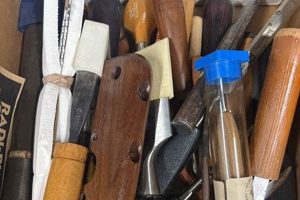
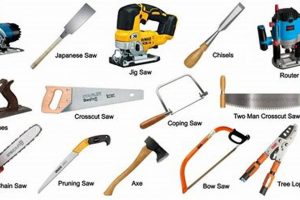
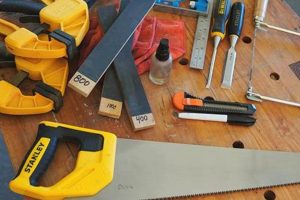
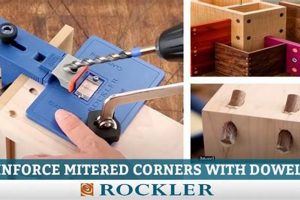
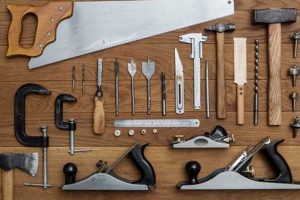
Fundamental instruments in the realm of crafting with wood, these implements are characterized by their user-friendliness and suitability for individuals with limited experience. A block plane, designed for smoothing small areas, or a simple hand saw for basic cuts, exemplifies the type of equipment that falls under this category. The intuitive nature of these instruments lowers the barrier to entry for woodworking enthusiasts.
The accessibility afforded by this class of equipment is paramount in fostering interest and developing foundational skills. It reduces intimidation, allowing novices to gain confidence and produce tangible results quickly. Historically, simpler, manually-operated versions of woodworking equipment were essential for everyday life, evolving alongside advancements in technology and shifting towards more specialized and complex machinery.
Consequently, understanding the selection, application, and maintenance of basic woodworking instruments is a vital stepping stone for anyone wishing to engage with the craft. The discussion will now delve into specific examples and their respective roles within various woodworking projects, providing a practical overview for the prospective woodworker.
Essential Guidance for Efficient Woodworking
Employing the appropriate techniques and maintenance practices maximizes the potential of fundamental woodworking implements and enhances project outcomes.
Tip 1: Prioritize Sharpness. Regular honing of blades, such as those found on chisels and planes, is crucial. A sharp edge minimizes effort and increases precision. Dull tools are not only less efficient, but also present a greater safety risk.
Tip 2: Ensure Proper Adjustment. Before using any tool, verify that it is properly adjusted. For example, the depth of cut on a hand plane must be set to the appropriate level to achieve the desired result. Incorrect adjustments can lead to material waste and subpar finishes.
Tip 3: Apply Appropriate Force. Allow the tool to do the work. Excessive force when using a saw or chisel can result in inaccurate cuts and potential damage to both the tool and the workpiece. Controlled, deliberate movements are essential.
Tip 4: Utilize Guiding Aids. Employ guides, such as a square or straightedge, to ensure accurate cuts and consistent angles. These aids are especially helpful when using saws or routers and will enhance overall project quality.
Tip 5: Master Grain Direction. Understanding grain direction is paramount when working with wood. Cutting against the grain can lead to splintering and a rough surface. Always strive to work with the grain to achieve a clean, smooth finish.
Tip 6: Practice on Scrap Material. Before commencing work on a final project, practice using the implements on scrap wood. This allows refinement of technique and familiarization with the tool’s operation, minimizing errors on valuable materials.
Tip 7: Maintain Tool Cleanliness. After each use, clean the implements thoroughly. Remove any sawdust or debris that may accumulate. This helps prevent corrosion and ensures the tool’s longevity.
Implementing these strategies contributes to improved efficiency, enhanced precision, and safer operation when working with fundamental woodworking equipment.
By embracing these guidelines, individuals can cultivate effective working habits. The ensuing discussion will address the broader application and integration of these tools into comprehensive woodworking endeavors.
1. Ease of Use

In the context of woodworking instruments, operational simplicity is a paramount characteristic dictating accessibility and promoting a positive user experience. Instruments categorized as easy inherently prioritize user-friendliness, minimizing the learning curve and enabling individuals with limited experience to achieve satisfactory results. The correlation between uncomplicated operation and successful project completion is direct; therefore, “easy woodworking tools” place a strong emphasis on intuitive design and straightforward functionality.
- Simplified Operation
Instruments designed for ease of use feature intuitive controls and minimal complex settings. A hand saw, for example, requires no intricate adjustments, offering immediate functionality after a brief familiarization period. A block plane likewise offers relatively simple adjustment mechanisms. This operational simplicity reduces potential errors and enables users to focus on technique rather than deciphering complicated machinery.
- Reduced Physical Demand
An instrument’s ergonomic design contributes significantly to its ease of use. Tools that require less physical exertion to operate, such as lightweight saws or ergonomic screwdrivers, reduce user fatigue and enhance control. This is especially important for beginners who may lack the strength and stamina of experienced woodworkers, allowing them to work for longer periods and maintain consistent results.
- Clear Instructions and Guidance
Comprehensible instructions and readily available support materials are integral to ease of use. “Easy woodworking tools” are often accompanied by detailed manuals or online resources that provide step-by-step guidance and troubleshooting tips. This accessible information empowers users to quickly overcome challenges and refine their skills, leading to a more satisfying and productive woodworking experience.
- Forgiving Design
Instruments with a forgiving design minimize the impact of minor errors. A hand plane with a well-designed blade angle, for example, may be more resistant to chatter or tear-out, resulting in a smoother finish even with slight variations in technique. This forgiving nature allows users to learn from their mistakes without experiencing catastrophic failures, fostering confidence and encouraging continued skill development.
The preceding facets underscore the fundamental importance of uncomplicated operation in the realm of woodworking instruments. Tools exhibiting these characteristics are more likely to be adopted by beginners and utilized effectively, thereby facilitating broader participation in the craft. The simplification of the woodworking process through the utilization of accessible instruments directly contributes to increased user satisfaction and skill acquisition.
2. Tool Safety
The integration of safety considerations into the design and application of fundamental woodworking instruments is paramount. Prioritizing safeguards ensures a lower barrier to entry for novice users and minimizes the risk of injury, thereby enhancing the accessibility and appeal of the craft. Tool safety, therefore, is not merely an adjunct, but rather an intrinsic element in the conceptualization and practical implementation of easy woodworking tools.
- Ergonomic Design and Reduced Strain
An instrument’s ergonomic properties directly influence user safety. Handles designed for a secure and comfortable grip minimize the likelihood of slippage and loss of control. Reduced physical strain translates to improved focus and diminished fatigue, both critical factors in preventing accidents. A hand saw with a well-shaped handle, for example, enables a more controlled and stable cutting motion, thereby minimizing the potential for miscuts or injuries. Lightweight tools similarly decrease strain, particularly during extended use, contributing to safer operation.
- Guards and Safety Mechanisms
The incorporation of physical guards and safety mechanisms is a primary feature of many woodworking implements. Blade guards on saws, for instance, prevent accidental contact with the cutting edge when the tool is not in use. Similarly, locking mechanisms on adjustable tools, such as planes, ensure that settings remain fixed during operation, preventing sudden and potentially hazardous adjustments. These features offer a layer of protection and instill confidence in the user.
- Clear Operating Instructions and Warnings
The provision of comprehensive instructions and clearly marked warnings is essential for safe operation. Instructions should outline proper usage techniques, potential hazards, and recommended safety precautions. Warning labels should be prominently displayed on the tool itself, alerting users to specific risks associated with its operation. This information empowers individuals to make informed decisions and adopt safe working practices.
- Emphasis on Controlled Movements and Proper Technique
The effective employment of “easy woodworking tools” relies not only on the tool itself but also on the user’s adherence to safe operating procedures. Encouraging controlled movements, proper stance, and the use of appropriate personal protective equipment are critical components of a safety-conscious approach. Techniques such as securing the workpiece firmly and maintaining a safe distance between hands and cutting edges are essential for minimizing the risk of accidents.
In summary, the nexus between accessible woodworking instruments and comprehensive safety protocols is inextricably linked. The implementation of ergonomic designs, safety mechanisms, clear operating instructions, and an emphasis on safe working practices contributes to a more secure and approachable woodworking experience. Prioritizing these factors fosters a culture of safety and empowers individuals to engage with the craft with confidence and reduced risk.
3. Project suitability

The selection of instruments should align directly with the demands of the woodworking task at hand. Tools classified as straightforward are not universally applicable; rather, their efficacy is contingent upon the nature and complexity of the project. Mismatched tools can lead to compromised results, increased effort, and potential safety hazards. A basic hand saw, while adequate for simple cuts in softwoods, proves inadequate for intricate joinery or dense hardwoods. Project suitability, therefore, is a critical filter in the selection process, ensuring the chosen instruments are capable of achieving the desired outcome without undue difficulty. A small dovetailed box, for instance, requires more precise tools than a rough-hewn birdhouse, influencing the selection process dramatically.
The importance of aligning equipment with the project requirements extends beyond mere efficiency. Employing the appropriate instruments fosters skill development and promotes positive learning experiences. Novices are more likely to achieve success and maintain enthusiasm when equipped with tools that are well-suited to the task. For example, attempting to create fine moldings with rudimentary shaping tools may lead to frustration and a premature abandonment of the craft. Conversely, using a specifically designed molding plane or router setup allows for easier and more accurate execution, resulting in a more rewarding learning process. This alignment also contributes to improved safety, as correctly selected tools are less likely to be misused or forced beyond their intended capabilities.
In conclusion, the judicious matching of woodworking implements to project demands is paramount for achieving successful outcomes and fostering skill acquisition. Prioritizing this alignment contributes to efficiency, safety, and a positive learning environment. While simple tools offer an accessible entry point to the craft, their limitations must be understood and carefully considered in relation to the specific requirements of each project. This mindful approach ensures that the chosen instruments facilitate, rather than hinder, the woodworking process, leading to greater satisfaction and skill development over time.
4. Material Compatibility

The effectiveness of straightforward woodworking instruments is inextricably linked to the characteristics of the material being processed. Instruments designed for ease of use often exhibit limitations in terms of the types of wood they can efficiently handle. Material compatibility, therefore, is a critical factor to consider when selecting tools for a specific project, influencing both the quality of the outcome and the user’s experience. The hardness, grain structure, and density of the wood directly impact the performance and longevity of simpler instruments. For example, attempting to use a basic hand plane on highly figured hardwoods like curly maple can result in tear-out and a substandard surface finish, necessitating the use of more specialized tools designed to address such challenges. Selecting a tool inappropriate for the material may damage the equipment itself, rendering it less effective for future projects.
Understanding the relationship between woodworking instruments and the properties of various wood species is essential for successful project completion. Softwoods like pine and fir are generally more amenable to simpler instruments, such as basic saws and chisels, due to their lower density and more uniform grain. Conversely, hardwoods like oak, maple, and cherry require sharper, more robust tools to achieve clean cuts and smooth surfaces. Ignoring these material-specific considerations can lead to frustration and substandard results. Consider the task of creating mortise and tenon joints. While a simple mortise chisel might suffice for softwood, hardwood requires a more substantial and precisely sharpened chisel to ensure clean, accurate cuts without damaging the surrounding fibers. Improper material selection could also affect safety, as excessive force exerted to compensate for an incompatible tool can lead to slippage and potential injury. A similar principle applies to sanding; coarse grits are suitable for rough shaping on softwoods but may scratch hardwoods excessively.
In summary, the principle of material compatibility is central to the effective use of fundamental woodworking equipment. Failure to consider the properties of the wood being worked can result in reduced efficiency, substandard results, and potential damage to both the tool and the workpiece. Successful woodworking, especially with “easy woodworking tools”, involves a thoughtful evaluation of the material’s characteristics and the selection of instruments specifically suited for that application, thereby maximizing both the user’s experience and the quality of the finished product. Ignoring this core element may lead to a diminished capacity to achieve intended outcomes and hinder the development of woodworking proficiency.
5. Storage practicality

Storage practicality is a significant, often overlooked, attribute of straightforward woodworking instruments. The ease with which tools can be stored directly impacts their accessibility and long-term maintenance, both critical components of their overall utility. Instruments that are easily organized and protected are more likely to be readily available for use and less susceptible to damage, thereby extending their lifespan and ensuring consistent performance. Disorganized or improperly stored implements can become damaged, misplaced, or require extensive cleaning before use, negating the intended ease of use associated with the category. A simple hand saw stored unprotected in a damp environment, for example, is prone to rust and degradation, rendering it less effective and potentially unusable. Consequently, the practicality of storage is an integral aspect of the overall value proposition of these tools.
Consider the differences between a collection of power tools requiring substantial space and dedicated power outlets and a set of hand tools that can be neatly arranged in a small toolbox or hung on a wall. The reduced footprint and minimal infrastructure requirements of the latter significantly enhance their practicality for individuals with limited workspace or those working in remote locations. Furthermore, the inherent simplicity of many “easy woodworking tools” often translates to straightforward storage solutions. Chisels and hand planes, for instance, can be stored in simple racks or drawers, requiring minimal effort to maintain their organization and accessibility. This contrasts sharply with more complex equipment that may demand specialized storage systems and climate control to prevent damage. The ability to quickly and easily access tools, without spending excessive time searching or preparing them for use, is a direct benefit of prioritizing storage practicality.
In conclusion, the connection between storage practicality and straightforward woodworking implements is multifaceted. Efficient storage enhances accessibility, protects against damage, and reduces the overall maintenance burden. This, in turn, contributes to the tools’ user-friendliness and long-term value. Challenges related to storage often stem from neglecting the specific requirements of different instruments or failing to establish a dedicated organizational system. Addressing these challenges through mindful planning and the implementation of appropriate storage solutions ensures that these tools remain readily available and in optimal condition, thereby maximizing their effectiveness and contributing to a more positive and productive woodworking experience.
6. Maintenance simplicity

Maintenance simplicity is an indispensable attribute of straightforward woodworking instruments, fundamentally influencing their longevity, consistent performance, and overall user-friendliness. The ease with which tools can be maintained directly impacts the frequency of necessary upkeep, the time required for such tasks, and the specialized knowledge or equipment needed to perform them. Instruments requiring complex or frequent maintenance diminish the accessibility afforded by their straightforward design, thereby undermining their intended appeal. A hand plane, for example, exemplifies this principle. While its operation is relatively intuitive, the need for regular blade sharpening is paramount to its effectiveness. If sharpening requires specialized equipment or advanced techniques, the perceived simplicity of the plane is compromised.
The causal relationship between maintenance simplicity and long-term utility is evident across various woodworking implements. Instruments with fewer moving parts and simpler designs inherently require less maintenance. A basic marking gauge, for instance, demands minimal upkeep beyond occasional cleaning and light lubrication. Conversely, powered tools, while offering increased speed and power, often necessitate more complex maintenance procedures, including motor lubrication, belt replacement, and the calibration of various components. Therefore, the selection of tools should consider the user’s willingness and ability to perform the required maintenance. Neglecting maintenance, regardless of its complexity, can lead to reduced performance, premature failure, and potential safety hazards. Regular blade sharpening, cleaning, and lubrication of moving parts contribute significantly to a tool’s lifespan and consistent performance.
In conclusion, maintenance simplicity is not merely a desirable feature of easy woodworking tools but a crucial factor determining their practical value and long-term viability. Instruments that are easy to maintain are more likely to be used consistently and effectively, thereby fostering skill development and promoting a positive woodworking experience. A thorough understanding of the maintenance requirements associated with various tools is essential for making informed purchasing decisions and ensuring the longevity and performance of one’s woodworking equipment. Overlooking this element can lead to frustration and diminished returns, ultimately undermining the benefits associated with the simplicity of these instruments. Therefore, maintenance simplicity should be a primary consideration when selecting tools for both beginner and experienced woodworkers.
Frequently Asked Questions
The following questions and answers address common inquiries and misconceptions concerning fundamental woodworking instruments, providing clarity on their application and capabilities.
Question 1: What defines an instrument as belonging to the “easy woodworking tools” category?
The defining characteristic is user accessibility, encompassing simplicity of operation, ease of maintenance, and a relatively low learning curve. These implements are designed to be readily utilized by individuals with limited prior woodworking experience.
Question 2: Are “easy woodworking tools” suitable for all woodworking projects?
No. The suitability of these implements is contingent upon the complexity of the project and the material being worked. Intricate joinery or dense hardwoods may require more specialized and robust equipment.
Question 3: Is safety compromised in instruments designed for ease of use?
Safety should not be compromised. Reputable “easy woodworking tools” incorporate safety features and clear operating instructions to minimize the risk of injury. However, user responsibility in adhering to safety guidelines remains paramount.
Question 4: Do “easy woodworking tools” require less maintenance than more complex equipment?
Generally, yes. Simpler designs with fewer moving parts typically demand less frequent and less complex maintenance procedures. However, regular upkeep, such as blade sharpening, remains essential for optimal performance.
Question 5: What are the essential “easy woodworking tools” for a beginner?
A basic set typically includes a hand saw, a block plane, a chisel set, a marking gauge, a combination square, and various measuring and marking implements. These provide a foundation for a wide range of woodworking tasks.
Question 6: How does material selection impact the effectiveness of “easy woodworking tools”?
Material compatibility is crucial. Softer woods like pine are generally more amenable to simpler instruments, while hardwoods may require more specialized equipment to achieve clean cuts and smooth surfaces.
In summary, “easy woodworking tools” offer an accessible entry point to the craft, provided that their limitations are understood and their application is aligned with the specific demands of the project and the material being worked.
The discussion will now transition to an exploration of common challenges associated with woodworking and how fundamental tools can be effectively employed to overcome them.
Conclusion
The preceding exploration underscores the accessibility and utility of easy woodworking tools. Their operational simplicity and straightforward maintenance offer a viable entry point for novices and a pragmatic resource for experienced craftspeople tackling uncomplicated projects. The effectiveness of these instruments, however, remains contingent upon their appropriate selection, mindful application, and diligent maintenance. Consideration of project complexity, material properties, and safety protocols are indispensable elements of successful woodworking endeavors utilizing these tools.
As technological advancements continue to shape the landscape of woodworking, a thorough understanding of these foundational instruments remains crucial. Mastery of these implements not only provides a solid base for skill development, but also fosters a deeper appreciation for the craft and its enduring traditions. Continued exploration and responsible application of fundamental woodworking tools will undoubtedly contribute to a more accessible and rewarding woodworking experience for individuals of all skill levels.