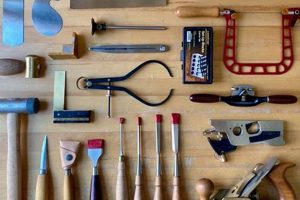
These instruments are essential for achieving precision and accuracy in crafting projects from wood. They encompass devices used to determine dimensions and indicate locations for cuts, joinery, and other operations. Examples include rulers, tape measures, squares, marking gauges, and compasses, each serving a specific purpose in ensuring that components fit together correctly and that the finished piece aligns with the intended design.
Employing these instruments accurately is fundamental to the success of woodworking endeavors. Precise dimensioning and layout reduce material waste, minimize errors during assembly, and contribute to the overall structural integrity and aesthetic appeal of the final product. Their application has been integral to the craft for centuries, evolving from simple notched sticks and plumb bobs to sophisticated laser-guided systems, yet the underlying principle of accurate measurement remains constant.
The subsequent sections will delve into the specific categories of these instruments, exploring their functions, proper usage techniques, and factors to consider when selecting appropriate tools for various woodworking tasks.
Tips for Accurate Woodworking Layout
Achieving precision in woodworking relies heavily on accurate dimensioning and layout. The following tips can improve the quality and efficiency of work by ensuring exact measurements and clear markings.
Tip 1: Always calibrate measuring devices. Verify the accuracy of tape measures and rulers against a known standard periodically. Discrepancies, however small, can accumulate and compromise the outcome.
Tip 2: Select appropriate instrument for each task. A combination square excels at marking perpendicular lines and checking for squareness, while a marking gauge is optimal for consistent parallel lines. The appropriate tool ensures efficiency and precision.
Tip 3: Use a sharp marking tool. A dull pencil or knife creates imprecise lines, increasing the potential for errors. Regularly sharpen marking tools to maintain a fine point, improving visibility and accuracy.
Tip 4: Avoid parallax error. Position eye directly above the measurement mark to prevent distortions. Parallax error can lead to inconsistent readings and inaccurate cuts.
Tip 5: Mark from the same reference point. When transferring multiple measurements, establish a common datum line. Doing so avoids cumulative errors which compound with each subsequent mark.
Tip 6: Double-check all measurements. Before committing to a cut, independently verify all dimensions and markings. This process catches potential mistakes and prevent material waste.
Tip 7: Account for blade kerf. When cutting to a marked line, remember that the saw blade removes a small amount of material. Offset the cut line accordingly to achieve the intended dimension.
Adhering to these guidelines leads to fewer mistakes, improved efficiency, and higher-quality woodworking projects. Consistent application of precise dimensioning principles enhances the final product’s appearance, strength, and functionality.
The concluding section will summarize the key concepts discussed and highlight resources for further exploration of woodworking techniques.
1. Precision
Precision in woodworking fundamentally depends on the capabilities of dimensioning and layout instruments. These tools directly dictate the accuracy with which material is measured, marked, and ultimately, shaped. The relationship is causal: inferior instruments invariably lead to reduced accuracy, dimensional inconsistencies, and compromised joint integrity. The level of accuracy achievable is thus bounded by the inherent precision of the implements employed.
The degree to which dimensions can be transferred, lines can be drawn, and angles can be replicated dictates the overall quality of finished pieces. Consider the construction of a dovetailed drawer. Failure to accurately mark and cut the dovetails, even by a fraction of a millimeter, can result in gaps, misaligned components, and structural weakness. Similarly, in cabinetry, maintaining consistent reveals and ensuring squareness throughout the assembly requires instruments capable of minute adjustments and reliable measurements. The success of these projects hinges on the capacity to achieve, and maintain, a high level of precision throughout the fabrication process.
Therefore, the selection of appropriate, high-quality instruments is a critical decision for any woodworker. Investing in tools that offer fine resolution, reliable repeatability, and stable calibration directly contributes to the precision, and ultimately, the success of woodworking projects. The ability to achieve the desired dimensions is paramount, directly affecting the aesthetics, functionality, and longevity of any completed woodworking project. In conclusion, an understanding of precision is paramount. It informs the choice of appropriate instruments and the methodologies applied, guaranteeing both the dimensional precision and overall success.
2. Accuracy

Accuracy, in the context of woodworking, defines the degree to which a measurement aligns with a recognized standard or target dimension. It is paramount, directly impacting the fit, function, and aesthetics of finished projects. Achieving dimensional correctness is thus reliant on the selection, calibration, and proper use of dimensioning and layout instruments.
- Tool Calibration and Verification
The inherent accuracy of dimensioning and layout instruments can degrade over time or through use. Regular calibration against known standards, such as certified rulers or squares, is essential. Verification procedures, using test pieces or comparison against other reliable tools, can identify discrepancies and prompt necessary adjustments or replacements. Failure to maintain calibration introduces systematic errors that propagate throughout a project.
- Environmental Factors
Environmental conditions, particularly temperature and humidity, can influence the dimensions of both measuring instruments and the wood itself. Steel rules, for example, expand and contract with temperature fluctuations, potentially introducing errors in measurement. Similarly, wood is hygroscopic, meaning it absorbs and releases moisture, causing it to swell and shrink. Accurate woodworking requires accounting for these environmental variables, potentially necessitating adjustments to dimensions based on prevailing conditions.
- User Technique and Skill
Even with high-quality, well-calibrated instruments, user technique remains a critical factor in achieving accuracy. Parallax error, improper tool alignment, and inconsistent marking pressure can introduce significant inaccuracies. Developing proper habits, such as aligning the eye directly over the measurement mark and using a sharp marking tool with consistent pressure, is essential for minimizing user-induced errors. Skillful execution of these techniques translates directly into improved dimensional correctness.
- Material Properties and Selection
The properties of the wood being worked can also influence the accuracy of measurements and cuts. Warped or twisted boards, for example, present challenges in establishing a consistent reference surface. Knots, grain direction, and variations in density can also affect the accuracy of cuts. Careful material selection and preparation, including surfacing and jointing, are crucial for creating a stable and predictable foundation for accurate dimensioning and layout.
The facets outlined above underscore the multifaceted relationship between accuracy and dimensioning and layout instruments. Achieving dimensional correctness in woodworking requires a holistic approach, encompassing instrument calibration, environmental awareness, refined user technique, and careful consideration of material properties. By addressing each of these factors, woodworkers can significantly enhance the accuracy of their projects, leading to improved fit, function, and aesthetic quality.
3. Durability

The longevity and reliability of dimensioning and layout instruments directly impact their efficacy in woodworking. Durability, in this context, refers to the capacity of these implements to withstand the rigors of regular workshop use while maintaining their original precision and accuracy. The consequences of instrument failure extend beyond mere inconvenience, potentially leading to inaccuracies in measurement, wasted material, and compromised structural integrity of woodworking projects. Therefore, the selection of robust and well-constructed dimensioning and layout tools is paramount for sustained accuracy and efficiency.
Material selection and manufacturing processes are key determinants of tool durability. For instance, squares machined from hardened steel are inherently more resistant to deformation and wear compared to those constructed from softer metals or plastics. Similarly, marking gauges with hardened steel pins retain their sharpness and accuracy for longer periods than those with pins made from less durable materials. Exposure to moisture, chemicals, and abrasive particles common in woodworking environments necessitates materials resistant to corrosion and degradation. The design of the tool also plays a critical role; reinforced joints, protective coatings, and ergonomic designs that minimize stress on components contribute to overall durability. Practical examples abound: a low-quality tape measure with a flimsy retraction mechanism is prone to breakage, while a precision rule made from thin, flexible steel can be easily bent out of shape, rendering it inaccurate. Contrast this with a well-maintained combination square made from high-carbon steel, which can last for decades with proper care, providing consistent and reliable performance.
In summary, durability is an indispensable attribute of dimensioning and layout instruments. Investing in robust tools constructed from high-quality materials, coupled with diligent maintenance practices, ensures long-term accuracy and reliability. This commitment to durability translates directly into increased efficiency, reduced material waste, and enhanced quality in woodworking endeavors. While the initial cost of durable instruments may be higher, the long-term benefits in terms of performance, longevity, and accuracy far outweigh the initial investment, rendering durability a crucial consideration for any serious woodworker.
4. Calibration

Calibration is a critical process for ensuring the accuracy and reliability of instruments used for dimensioning and layout. It involves comparing the tool’s readings against a known standard and making adjustments to minimize deviations. The accuracy of dimensioning and layout is directly dependent on the adherence to calibration protocols. Uncalibrated instruments introduce systematic errors that can compound throughout a project, resulting in components that do not fit together correctly, structural weaknesses, and a reduction in the aesthetic quality of the final product. A steel ruler, for example, may become distorted over time due to temperature fluctuations or physical stress. Without periodic calibration against a certified standard, measurements taken with the ruler will be inherently inaccurate, leading to cumulative errors in woodworking tasks. Similarly, a combination square that has been dropped or subjected to impact may lose its squareness. If not detected and corrected through calibration, this deviation will propagate through the project, resulting in misaligned components and compromised structural integrity.
The practical application of calibration extends to a wide range of dimensioning and layout instruments, including tape measures, marking gauges, and levels. Tape measures, for instance, are subject to wear and tear, which can affect the accuracy of the hook at the end or the tension of the measuring tape itself. Regular calibration involves checking the tape measure against a known distance and adjusting the hook or replacing the tape if necessary. Marking gauges, used for scribing parallel lines, require calibration to ensure that the pin remains sharp and that the fence is accurately aligned. This calibration is crucial for achieving consistent and precise lines for joinery or decorative elements. Furthermore, levels, essential for ensuring horizontal and vertical alignment, must be calibrated to account for any shifts in the bubble vial or frame. Failure to calibrate levels can result in skewed surfaces, uneven joints, and compromised stability in woodworking structures.
In summary, calibration is a fundamental aspect of maintaining the accuracy and reliability of woodworking layout instruments. Its consistent application prevents systematic errors, ensuring that dimensioning and layout operations yield precise and predictable results. While the process may seem time-consuming, the benefits in terms of reduced material waste, improved project quality, and enhanced structural integrity far outweigh the effort. Calibration should be viewed as an integral component of woodworking practice, essential for achieving professional-level results.
5. Maintenance

The longevity and sustained accuracy of instruments depend significantly on adherence to proper maintenance protocols. Neglecting maintenance leads to accelerated wear, reduced precision, and ultimately, the premature failure of valuable tools. Therefore, integrating maintenance into the routine workflow is paramount for maximizing the performance and lifespan of measuring and layout implements. For example, regular cleaning of steel rules and tape measures prevents the accumulation of dust and debris, which can obscure markings and hinder accurate readings. Lubricating moving parts, such as the sliding fence of a marking gauge or the retraction mechanism of a tape measure, ensures smooth operation and prevents corrosion. Failure to address these basic maintenance needs results in inaccurate measurements and inefficient work practices.
Effective maintenance practices extend beyond simple cleaning and lubrication. Periodically inspecting tools for signs of damage, such as bent edges on squares or worn points on marking gauges, is essential for identifying potential sources of error. Addressing minor damage promptly, through sharpening, repair, or component replacement, prevents more significant problems from developing. Protective storage is also crucial; storing tools in a dry, organized environment shields them from moisture, impacts, and other environmental factors that contribute to deterioration. For instance, storing precision squares in fitted cases protects their sensitive edges from damage, preserving their accuracy over time. Similarly, hanging measuring tapes prevents kinks and bends that can distort their accuracy. The absence of these proactive maintenance measures increases the likelihood of inaccurate measurements and compromises the quality of finished woodworking projects.
The proactive implementation of maintenance safeguards the investment in quality tools and contributes directly to project success. Regular cleaning, lubrication, inspection, and protective storage are fundamental elements of a comprehensive maintenance strategy. Prioritizing these practices ensures accurate and reliable measurements, minimizes material waste, and enhances the overall quality of woodworking endeavors. While the time investment required for maintenance may seem insignificant, the long-term benefits in terms of tool longevity and project accuracy are substantial, rendering maintenance an indispensable component of responsible woodworking practice.
6. Ergonomics

Ergonomics, the science of designing and arranging workplaces, products, and systems to fit the people who use them, is a critical consideration in woodworking. The interaction between woodworkers and their dimensioning and layout instruments directly impacts comfort, efficiency, and long-term physical well-being. Selection of tools prioritizing ergonomic design principles can mitigate strain, reduce fatigue, and enhance overall productivity.
- Handle Design and Grip
The design of handles and grips significantly influences the user’s comfort and control. Ergonomic handles are contoured to fit the natural shape of the hand, reducing pressure points and minimizing the force required for a secure grip. Examples include marking gauges with sculpted wooden handles and combination squares with textured grips that prevent slippage. Improperly designed handles can lead to hand fatigue, carpal tunnel syndrome, and reduced accuracy due to diminished control over the instrument.
- Weight and Balance
The weight and balance of dimensioning and layout tools affect the amount of effort required for prolonged use. Instruments that are excessively heavy or poorly balanced can cause muscle strain and fatigue, particularly in the arms and shoulders. Ergonomic tools are designed to be lightweight and well-balanced, minimizing the load on the user’s musculoskeletal system. For instance, a lightweight marking knife reduces strain compared to a heavier metal alternative. The balance point should ideally be positioned close to the user’s hand, providing optimal control and reducing the need for compensatory muscle contractions.
- Visibility and Readability
Clear visibility of scales, markings, and graduations is essential for accurate measurements and reduced eye strain. Ergonomic tools feature high-contrast markings, non-glare surfaces, and magnified lenses to enhance readability. Examples include tape measures with bold, easy-to-read numbers and squares with etched graduations that resist wear. Poorly designed scales can lead to errors in measurement, eye strain, and increased frustration, particularly in low-light conditions.
- Minimizing Repetitive Motions
Many woodworking tasks involve repetitive motions, such as marking lines or transferring dimensions. Ergonomic tools are designed to minimize the frequency and range of these motions, reducing the risk of repetitive strain injuries. Examples include marking gauges with adjustable fences that eliminate the need for constant readjustment and squares with built-in stops for consistent measurements. Tools that require awkward or repetitive movements should be avoided in favor of those that promote smooth and efficient workflow.
The connection between ergonomics and dimensioning and layout instruments is paramount for promoting a safe, comfortable, and productive woodworking environment. By prioritizing tools with ergonomic designs, woodworkers can mitigate the risk of physical injury, reduce fatigue, and enhance the accuracy and efficiency of their work. A holistic approach to ergonomics encompasses not only the selection of appropriate tools but also the arrangement of the workspace, the implementation of proper work techniques, and the adoption of regular stretching and exercise routines.
7. Versatility
Versatility, in the context of dimensioning and layout instruments, denotes the capacity of a tool to perform a range of functions or adapt to diverse applications within woodworking. The more adaptable a tool, the greater its utility and potential for streamlining workflow, reducing the number of specialized tools required. Its importance stems from increasing efficiency, reducing storage requirements, and promoting creative problem-solving in varied projects.
- Multifunctional Design
Certain dimensioning and layout instruments incorporate multiple functions within a single tool. The combination square, for example, integrates the capabilities of a square, miter, depth gauge, and level. This multifunctional design eliminates the need to switch between separate tools for different tasks, improving workflow efficiency. A woodworker constructing a cabinet might use a combination square to establish squareness, measure depth, and mark miter angles, all with a single instrument. The tools adaptability reduces the time spent searching for and handling multiple implements.
- Adaptability to Different Materials
A versatile dimensioning and layout instrument can be effectively used with diverse materials beyond wood. A precision steel rule, for instance, functions equally well for measuring metal, plastic, or composite materials. This adaptability expands the tool’s utility beyond traditional woodworking applications, making it suitable for mixed-media projects or general fabrication tasks. A craftsman fabricating a sign with wooden letters mounted on an aluminum composite panel would use the same rule for measuring both materials, ensuring consistent dimensions and alignment.
- Adjustability and Customization
Instruments with adjustable features allow for customization to specific project requirements. Marking gauges with adjustable fences, for example, can be set to precise distances for scribing parallel lines. This adjustability enables woodworkers to adapt the tool to different wood thicknesses or design specifications. A furniture maker creating mortise-and-tenon joints would use a marking gauge to accurately mark the dimensions of the mortise and tenon on the respective pieces of wood, adjusting the fence to match the desired joint dimensions.
- Scale Range and Application Spectrum
A versatile dimensioning and layout tool possesses a broad measurement range and applicability across diverse woodworking projects. A long tape measure, for instance, can be used for tasks ranging from measuring room dimensions to laying out large-scale furniture components. This broad applicability reduces the need for multiple tape measures of different lengths. A construction worker building a deck would use the same tape measure to determine the overall dimensions of the deck, measure the spacing between joists, and calculate the placement of decking boards, thereby streamlining the layout process.
The facets demonstrate the multifaceted nature of versatility. By incorporating multifunctional designs, adapting to different materials, offering adjustability and customization, and providing a broad measurement range, these instruments enhance efficiency, reduce tool clutter, and empower woodworkers to tackle diverse projects with confidence. The principle of versatility, when applied to dimensioning and layout instruments, translates into a more streamlined, adaptable, and ultimately, more productive woodworking practice.
Frequently Asked Questions
This section addresses common inquiries regarding the selection, use, and maintenance of instruments employed for precise dimensioning and layout in woodworking. Answers provided aim to clarify best practices and mitigate potential errors.
Question 1: What are the essential instruments for woodworking projects?
Core tools generally include a steel rule or tape measure for linear measurements, a combination square for establishing squareness and marking angles, a marking gauge for scribing parallel lines, and a sharp marking knife or pencil for accurate layouts. The specific needs may vary depending on the project’s complexity and the materials used.
Question 2: How frequently should dimensioning and layout instruments be calibrated?
The frequency of calibration depends on the intensity of tool usage and the required level of precision. As a general guideline, check instruments for accuracy before each significant project and recalibrate at least annually. Tools subjected to impact or significant temperature variations should be calibrated more frequently.
Question 3: What is the best method for sharpening marking knives?
Marking knives are sharpened using fine-grit sharpening stones, progressing from coarser to finer grits. Maintain the original bevel angle during sharpening. Strop the blade on a leather strop to remove any remaining burr and achieve a razor-sharp edge. The frequency depends on the knife’s usage and dullness.
Question 4: How should wooden measuring tools be stored to prevent warping?
Wooden measuring instruments, such as wooden rules and gauges, should be stored in a stable environment with consistent temperature and humidity. Avoid direct sunlight or exposure to extreme temperature changes. Proper storage minimizes the risk of warping, which can compromise accuracy.
Question 5: What is the purpose of a marking gauge, and how is it properly used?
A marking gauge is used for scribing lines parallel to an edge. To use it properly, set the desired distance between the pin and the fence, tighten the thumbscrew, and hold the fence firmly against the workpiece edge. Guide the gauge along the edge with consistent pressure to create a clean, accurate line.
Question 6: How can parallax error be minimized when taking measurements?
Parallax error occurs when the eye is not directly aligned with the measurement mark. To minimize this error, position the eye perpendicular to the scale or measuring line. Ensure the scale is close to the workpiece to reduce the distance between the eye and the measurement point.
The accurate and consistent application of these best practices enhances the precision and reliability of woodworking outcomes.
The subsequent section will summarize the key concepts discussed and highlight resources for further exploration of woodworking techniques.
Conclusion
The preceding discussion has illuminated the indispensable role of these instruments in realizing precision and accuracy in woodworking. From ensuring dimensional correctness to facilitating intricate layouts, their effective deployment is paramount. Key aspects examined included accuracy, durability, calibration, maintenance, ergonomics, and versatility each contributing to the overall quality and efficiency of woodworking endeavors.
Sustained commitment to proper instrument selection, meticulous maintenance, and refined usage techniques remains crucial for achieving consistent, reliable results. Diligence in these areas translates directly into enhanced project quality, reduced material waste, and a heightened level of craftsmanship. The woodworkers mastery of these fundamentals ultimately dictates the success of any project undertaken.