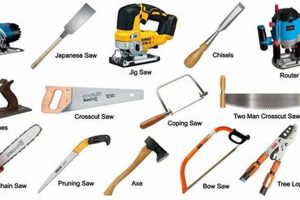
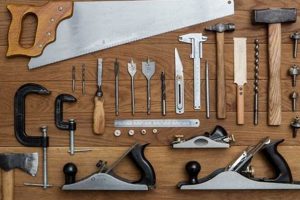
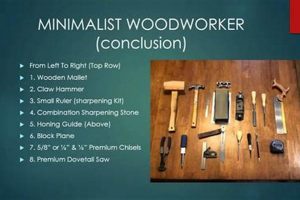
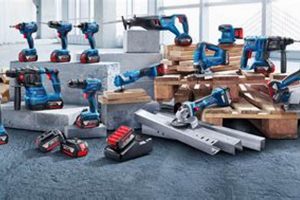
Identifying implements used for shaping wood is fundamental to any engagement with the craft. This act of nomenclature encompasses a diverse range, from hand-powered instruments like chisels and hand saws to power-driven equipment such as routers and planers. The accuracy of this labeling is essential for effective communication and the safe operation of equipment within a woodworking environment. For instance, a drawknife, designed for removing thin slivers of wood, is fundamentally different in its application and technique compared to a spokeshave, which is utilized for shaping curved surfaces.
The significance of correct identification lies in several key areas. Firstly, it ensures that appropriate tools are selected for specific tasks, promoting efficiency and preventing damage to both the workpiece and the implement. Secondly, accurate recognition is crucial for safety protocols, as each tool possesses unique operational characteristics and potential hazards. Historically, the ability to distinguish between different woodworking implements was a core skill passed down through generations of artisans, contributing to the creation of intricate and enduring wooden structures and objects. This knowledge allows for efficient workflow, and allows for the construction of various objects.
Therefore, a comprehensive understanding of the terminology associated with wood shaping instruments is a necessary precursor to effective woodworking. Subsequent sections will delve into specific categories of these instruments, exploring their functions, features, and appropriate usage techniques.
Woodwork Implement Identification
Proficiently naming woodworking tools is paramount for effective project execution and workshop safety. Precise nomenclature ensures the correct tool selection, minimizes errors, and enhances overall craftsmanship.
Tip 1: Consult Illustrated Tool Guides: Utilize comprehensive visual resources showcasing woodworking instruments. Detailed images coupled with accurate descriptions are invaluable for learning proper identification.
Tip 2: Focus on Blade Geometry: The shape of a tool’s cutting edge is a primary identifier. Note the angle, curvature, and overall form, as these features directly relate to the tool’s intended function. For example, the steep bevel of a chisel differs significantly from the shallow angle of a plane blade.
Tip 3: Observe Handle Design: The handle shape and material often provide clues about a tool’s use. A mallet intended for striking chisels typically features a large, rounded head, while a hand saw incorporates an ergonomic grip for controlled sawing action.
Tip 4: Examine Adjustment Mechanisms: Many tools, such as planes and spokeshaves, incorporate adjustable components. Understanding the purpose and function of these mechanisms assists in both identifying the tool and using it correctly.
Tip 5: Study Tool Markings: Examine the tool body for manufacturer’s marks, model numbers, or patent information. This information can be cross-referenced with online resources or historical tool catalogs for precise identification.
Tip 6: Differentiate by Function: Categorize instruments based on their primary purpose. For instance, distinguish between cutting tools (saws, chisels), shaping tools (planes, rasps), and joining tools (clamps, mallets).
Tip 7: Practice with Real Examples: Hands-on experience is critical. Regularly handle and examine a variety of woodworking implements to reinforce visual and tactile recognition skills.
Mastering instrument identification fosters precision, safety, and efficiency in the woodworking environment. Consistent application of these guidelines will improve both tool selection and the execution of projects.
The ability to recognize and name tools is the cornerstone of advanced woodworking skills. The subsequent stage involves understanding the specific functions of each implement and how they contribute to a finished product.
1. Function and Purpose

The relationship between a tool’s intended function and its proper nomenclature is foundational to woodworking proficiency. Understanding why a particular implement exists directly informs its classification and application.
- Cutting Operations
Tools designed for separating wood fibers, such as saws and chisels, are identified by the specific cut they produce. A rip saw, characterized by its large teeth, is purposed for cutting along the grain, whereas a crosscut saw, with its finer teeth, is intended for cutting across the grain. Accurate naming enables selection of the appropriate saw for the desired cut, optimizing efficiency and minimizing tear-out.
- Shaping and Smoothing
Instruments that refine the surface of wood are categorized by the type of material they remove. A hand plane, designed to shave thin layers of wood, is distinctly different from a rasp, which removes material more aggressively. Knowing the function of each tool allows for controlled shaping and surface preparation.
- Jointing and Fastening
Tools used for connecting wood pieces, such as clamps and mallets, are named based on their role in the assembly process. A bar clamp applies consistent pressure to hold components together while adhesive cures, while a mallet is used to drive joints tightly without damaging the wood. Correct identification ensures proper joint construction.
- Measuring and Marking
Implements employed for accurate dimensioning, such as rulers, squares, and marking gauges, are crucial for precise woodworking. A combination square is used to establish right angles, while a marking gauge creates parallel lines for consistent material removal. Recognizing the function of these tools ensures dimensional accuracy in projects.
Therefore, the ability to accurately name woodworking tools is intrinsically linked to understanding their intended purpose. This knowledge base allows woodworkers to select the correct instrument for a specific task, leading to improved efficiency, precision, and overall project quality. The purpose the tool serves defines its name and use case.
2. Blade/Edge Geometry

The configuration of a cutting edge is a primary factor in differentiating woodworking instruments. Blade and edge geometry dictate how a tool interacts with wood fibers, thereby influencing the type of cut produced and the overall efficiency of the process. Therefore, understanding these geometric properties is crucial for accurate tool identification and effective utilization.
- Bevel Angle and Cutting Action
The angle of the bevel on a cutting tool directly affects its aggressiveness and suitability for specific tasks. A steep bevel angle, such as that found on a chisel, allows for controlled paring and fine detail work. Conversely, a shallower bevel angle, characteristic of a plane blade, is more efficient for removing broad swaths of material. Naming a tool often hinges on recognizing its bevel angle and associated cutting action.
- Tooth Pitch and Saw Performance
The spacing and angle of teeth on a saw blade significantly impact its cutting performance. A rip saw, designed to cut along the grain, features a larger tooth pitch and a more aggressive rake angle to efficiently remove wood fibers. A crosscut saw, intended for cutting across the grain, has a finer tooth pitch and a less aggressive rake angle to minimize tear-out. Correct tool identification requires understanding the relationship between tooth geometry and saw performance.
- Curvature and Shaping Capabilities
The shape of a blade’s edge determines its capacity for shaping curved surfaces. A spokeshave, with its curved blade, is specifically designed for shaping rounded forms. A drawknife, featuring a straight or slightly curved blade, is used for removing material from flat or gently curved surfaces. Recognizing blade curvature is essential for selecting the appropriate tool for shaping tasks.
- Edge Hardness and Material Compatibility
The hardness of a tool’s cutting edge dictates its ability to withstand wear and tear when working with different types of wood. Harder steels are necessary for cutting dense hardwoods, while softer steels may suffice for working with softwoods. The hardness of the blade combined with blade shape defines whether a tool should be used on hard woods or soft woods. Determining blade hardness is vital for matching tools to the appropriate materials and ensuring tool longevity.
These geometric attributesbevel angle, tooth pitch, blade curvature, and edge hardnesscollectively define the cutting characteristics of woodworking instruments. The accurate recognition and naming of these instruments depend on a thorough understanding of these blade and edge characteristics, allowing for tool selection and efficient execution of woodworking tasks. The correct name gives insight into the geometry that gives the tool its purpose.
3. Handle Ergonomics

The design of a handle significantly influences a user’s ability to control and manipulate a woodworking instrument. Handle ergonomics, encompassing shape, material, and size, directly correlates with user comfort, safety, and overall efficiency. Consequently, the handle design is an identifying feature when naming tools.
- Grip Shape and Hand Fatigue
The contour of a handle is a critical determinant of grip comfort and the reduction of hand fatigue. Handles designed to conform to the natural curvature of the hand, often featuring flared ends or contoured grips, distribute pressure evenly and minimize strain. Identifying a tool with an ergonomically designed handle can indicate its intended use for prolonged or repetitive tasks. For example, a smoothing plane, used extensively, typically features a handle shaped for extended use.
- Material Composition and Tactile Feedback
The material from which a handle is constructed influences tactile feedback and grip security. Wooden handles, particularly those made from hardwoods like ash or beech, provide a firm and slip-resistant grip. Synthetic materials, such as rubber or textured polymers, offer enhanced grip in wet or oily conditions. The tactile properties of the handle assist in differentiating between tools designed for different environments and applications. A tool intended for heavy-duty use in a workshop may feature a durable synthetic handle, unlike finer tools.
- Handle Size and Leverage
The length and diameter of a handle directly impact the leverage a user can exert. Longer handles increase leverage, facilitating the application of greater force with less effort. Shorter handles offer greater control and precision for delicate tasks. The size of the handle is a key identifier, indicating the intended force and control required for the tool’s operation. Large mallet handles are long to impart force, while smaller knife handles are short and thick for control.
- Handle Orientation and User Posture
The orientation of a handle influences the user’s posture and range of motion. Handles positioned at an angle, as seen on many hand saws, promote a natural wrist alignment and reduce strain. Handles aligned in-line with the blade often maximize force transmission but may require a more constrained posture. The orientation of the handle is a defining characteristic, indicating the specific cutting or shaping motion the tool is designed to facilitate. Some Japanese saws are designed for pulling, while traditional western saws are designed for pushing.
The ergonomic attributes of a handle, including its shape, material, size, and orientation, are intrinsic to the identification and naming of woodworking instruments. Careful observation of these features provides insights into a tool’s intended use, promoting safe and efficient operation. The feel of the handle can define the tool itself.
4. Adjustment Mechanisms

The presence and type of adjustment mechanisms are defining characteristics in the identification of woodworking implements. These mechanisms enable precise control over a tool’s function, allowing for adaptation to varying material properties and task requirements. Therefore, understanding and recognizing adjustment features is essential for accurate tool nomenclature. The absence or presence of an adjustment, and the type of adjustment itself can define the tool and its use case.
A prime example lies in the realm of hand planes. Different types of planes, such as smoothing planes, jack planes, and jointers, are distinguished not only by their size and blade angle but also by their adjustment mechanisms. A smoothing plane typically features fine adjustment screws for precise blade depth and lateral alignment, facilitating the creation of a flawless surface. Conversely, a jack plane, designed for more aggressive material removal, may have simpler adjustment mechanisms or rely more on manual blade positioning. The specific adjustment features directly inform the tool’s name and intended application. Similarly, various saws rely on adjustable blade tension. Identifying the tensioning mechanism helps identify the purpose and intended material for cutting.
Mastery of instrument identification hinges on recognizing adjustment mechanisms. Knowledge of these features allows for proper tool selection, optimized performance, and safer operation. Understanding that tools are named based on adjustment mechanisms allows for more precise work, more efficient time management, and safer work habits.
5. Material Composition

The constitution of materials used in woodworking implements is inextricably linked to their designation and function. The selection of specific materials directly influences a tool’s durability, performance, and intended application, thereby serving as a crucial identifier in nomenclature. For instance, high-carbon steel is prevalent in the manufacture of chisels and plane blades due to its ability to maintain a sharp edge under stress. The presence of this material dictates that the instrument is designed for tasks requiring precise cutting and shaping of wood. In contrast, a wooden mallet typically comprises a dense hardwood, such as beech or maple, due to its capacity to absorb impact without splintering. Recognizing the mallet’s wooden construction signifies its use for striking other tools or workpieces without causing damage.
Further illustrative examples underscore this connection. The body of a hand plane frequently consists of cast iron or ductile iron, materials chosen for their mass and stability. This weight assists in maintaining consistent contact with the workpiece, facilitating smooth and even material removal. The identification of a plane as having a cast iron body implies its use in precision surface preparation. Similarly, saw blades are manufactured from various alloys, each suited to specific cutting applications. High-speed steel blades are employed for cutting hardwoods and metals, while carbon steel blades are more appropriate for softer woods. The type of steel used in the saw blade dictates the type of material the saw is designed to cut.
In summary, the material composition of a woodworking instrument is a critical factor in its designation and intended use. Understanding the properties of these materials provides valuable insight into a tool’s capabilities and limitations, enabling informed selection and optimized performance. The knowledge that specific materials are selected based on their suitability for particular tasks allows woodworkers to accurately identify implements and apply them effectively. Recognizing material composition helps to both name the tool and accurately predict the best use-case for that tool.
6. Historical Context
The evolution of implements significantly informs their categorization. Understanding the historical development of these instruments offers insights into their function, design, and application, thereby aiding in correct naming. The historical context of woodworking tools provides a valuable framework for understanding their purpose and appropriate usage.
- Evolution of Hand Planes
The hand plane exemplifies how historical context impacts tool nomenclature. Early planes were simple, wooden-bodied instruments with limited adjustability. As metalworking techniques advanced, iron-bodied planes with sophisticated adjustment mechanisms emerged. Recognizing the plane’s historical lineage whether it’s a primitive wooden plane or a complex metal one informs its intended use and value, aiding in its accurate identification. Earlier hand planes were rudimentary but effective, and modern hand planes boast incredible customization.
- Development of Saw Types
Saw designs have evolved significantly over centuries. Early saws were primarily frame saws, utilizing a thin blade tensioned within a wooden frame. Later, backsaws with reinforced spines and finer teeth gained popularity for precision work. Understanding the saw’s historical development whether it’s a frame saw, a backsaw, or a modern power saw allows for appropriate application and naming. Backsaws for example were used specifically for controlled joinery, and larger frame saws were used for dimensioning timbers.
- Specialization of Chisels
Chisels have diversified into specialized forms, each tailored for specific tasks. Mortise chisels, firmer chisels, and paring chisels all evolved to meet the demands of increasingly complex woodworking techniques. Identifying a chisel’s specific historical lineage helps determine its intended use for heavy mortising, general shaping, or delicate paring and contributes to accurate nomenclature. The design of the chisel defines its potential function, based on it’s role in the historical context.
- Standardization of Measuring Tools
The standardization of measuring tools has greatly improved precision in woodworking. Early measuring devices relied on inconsistent units and subjective judgment. The adoption of standardized units and the development of precision instruments like the steel rule and combination square revolutionized woodworking. Recognizing the historical context of measuring tools allows for a greater appreciation of their accuracy and consistency, leading to more precise nomenclature and application. Without these precise tools, woodworking projects would prove nearly impossible.
Examining the historical evolution of these tools highlights the interconnectedness of design, function, and application. Recognizing these developmental aspects enables efficient application and reinforces the importance of accurate identification in woodworking. The history of a tool can help determine a tool’s use case.
Frequently Asked Questions
This section addresses common queries regarding the proper naming of woodworking tools, providing clarity and resolving potential ambiguities.
Question 1: Why is it essential to accurately name woodworking tools?
Accurate nomenclature ensures effective communication within a workshop environment. Correct identification enables appropriate tool selection for specific tasks, promoting efficiency and minimizing the risk of damage to materials or equipment. Furthermore, accurate identification is critical for safety protocols, as each tool presents unique operational hazards.
Question 2: What factors contribute to differentiating between similar-looking implements?
Several factors contribute to differentiation, including blade geometry, handle ergonomics, adjustment mechanisms, and material composition. Blade angle, tooth pitch, handle shape, presence of adjustment screws, and the type of steel used all provide clues about a tool’s intended function.
Question 3: How does historical context influence tool identification?
The historical development of woodworking instruments provides insights into their function and design. Understanding the evolution of planes, saws, and chisels allows for a more nuanced appreciation of their capabilities and limitations, aiding in accurate classification.
Question 4: What is the significance of handle design in tool nomenclature?
Handle ergonomics plays a vital role in tool identification. The shape, material, and size of a handle influence user comfort, control, and leverage. An ergonomically designed handle suggests intended use for prolonged tasks and provides clues about the tool’s overall purpose.
Question 5: How do adjustment mechanisms aid in tool identification?
Adjustment mechanisms enable precise control over a tool’s function. The presence and type of adjustment features such as blade depth screws on planes are defining characteristics that assist in differentiating between similar tools and understanding their specific applications.
Question 6: Where can reliable resources for tool identification be found?
Comprehensive illustrated tool guides, historical tool catalogs, and online woodworking communities offer valuable resources for identifying and learning about the naming conventions of implements.
Mastery of instrument nomenclature is fundamental to effective woodworking practices. Accurate identification promotes safety, efficiency, and precision in all woodworking endeavors.
The subsequent section will delve into strategies for maintaining woodworking implements, ensuring their longevity and optimal performance.
Concluding Remarks on Identifying Woodworking Implements
The preceding sections have illuminated the critical importance of accurate nomenclature within the domain of woodworking. Correctly designating these tools extends beyond mere labeling; it directly impacts safety, efficiency, and the quality of craftsmanship. Understanding blade geometry, handle ergonomics, adjustment mechanisms, material composition, and historical context are all essential components of accurate identification.
The skill of identifying “name woodwork tools” represents a fundamental building block for proficient woodworking. Continued engagement with these concepts is encouraged to foster greater precision and confidence in woodworking practice. Further research and application of these principles will not only improve individual skill sets but also contribute to the preservation and advancement of the craft as a whole.
![Smart & Clever Woodworking Tools: [Your Woodworking Goals] | Step-by-Step Guides, Tools & Inspiration to Build Beautiful Wooden Decor on a Budget](https://woodfromhome.com/wp-content/uploads/2026/04/th-305-300x200.jpg "Smart & Clever Woodworking Tools: [Your Woodworking Goals] Step-by-Step Guides, Tools & Inspiration to Build Beautiful Wooden Decor on a Budget")