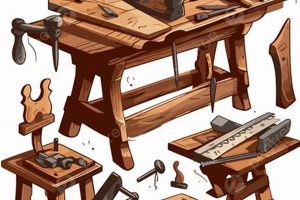
Implements employed in shaping wood that feature a curved cutting edge offer distinct advantages in certain applications. These instruments, often hand-powered, allow for controlled material removal and the creation of rounded profiles. A drawknife, for example, utilizes a blade shaped like a shallow arc and is pulled across the wood surface to shave away material, effectively rounding corners or creating spindles.
The inherent curvature of the cutting edge enables a slicing action, reducing the force required compared to a straight-edged tool for similar tasks. This results in improved control and precision, particularly when working with hardwoods or creating intricate designs. Historically, these tools have been invaluable in crafting furniture components, shaping boat hulls, and producing wooden implements and utensils, reflecting a long-standing recognition of their ergonomic and functional benefits.
The subsequent sections will delve into specific types of these tools, examining their respective uses, maintenance practices, and the techniques required for effective operation, providing a detailed exploration of this crucial segment of woodworking equipment.
Essential Usage Guidelines
The effective utilization of tools featuring a curved cutting edge necessitates a thorough understanding of proper techniques and maintenance procedures. Adhering to the following guidelines will ensure optimal performance and longevity of these implements.
Tip 1: Sharpening is Paramount: The curved blade must be meticulously sharpened to maintain its cutting efficiency. Employ appropriate sharpening stones and honing techniques to ensure a consistent and keen edge along the entire length of the curve. A dull blade increases the risk of tear-out and requires excessive force.
Tip 2: Grain Direction Matters: Pay close attention to the grain direction of the wood being worked. Cutting against the grain with a curved blade can lead to splintering and an uneven surface. Adjust the angle of attack and cutting direction accordingly.
Tip 3: Controlled Pressure is Key: Apply consistent and controlled pressure when using the tool. Avoid forcing the blade, as this can result in inaccurate cuts and potential damage to the tool or workpiece. Multiple light passes are preferable to a single heavy pass.
Tip 4: Secure Workpiece: Ensure the workpiece is securely clamped or held in place. Any movement during the cutting process will compromise accuracy and increase the risk of injury.
Tip 5: Proper Tool Selection: Choose the appropriate tool for the specific task. Different curve radii and blade shapes are designed for various applications. Selecting the wrong tool can lead to inefficient work and unsatisfactory results.
Tip 6: Regular Maintenance: After each use, clean the blade thoroughly and apply a protective coating of oil to prevent rust. Periodically inspect the handle for cracks or damage and repair or replace as needed.
Tip 7: Practice Makes Perfect: Proficiency with these tools requires dedicated practice. Experiment with different wood types and cutting techniques to develop a feel for the tool and its capabilities. Consider practicing on scrap wood before working on a final project.
Mastering these techniques allows for the creation of sophisticated and refined woodworking projects. The precision and control offered by tools with curved blades contribute significantly to the quality and aesthetic appeal of the finished product.
The concluding section will address safety considerations and further resources for those seeking to enhance their understanding of curved blade woodworking tools.
1. Blade Curvature Radius

The blade curvature radius is a fundamental parameter directly influencing the functionality and applicability of woodworking tools with arched blades. This radius, measured as the distance from the center of the arc to the blade’s edge, dictates the tool’s capacity for shaping concave or convex surfaces. A smaller radius enables tighter curves and intricate detail work, whereas a larger radius facilitates the smoothing of broad, sweeping forms. Consider, for instance, a tightly curved spokeshave blade employed in shaping Windsor chair spindles; its design contrasts sharply with the gentler curve of a drawknife used to debark logs, demonstrating the direct cause-and-effect relationship between the curvature radius and intended application.
The selection of an appropriate curvature radius is not merely a matter of preference; it directly impacts efficiency and quality. Using a blade with insufficient curvature for a tight radius task leads to inefficient material removal and potential wood tear-out. Conversely, employing a blade with excessive curvature on a gentle curve results in uneven surfaces. Cabinetmakers, for example, rely on a range of blade radii in their spokeshaves to create the varied curves of chair legs and cabinet moldings, highlighting the practical necessity of understanding and selecting the correct tool. The effectiveness of shaping a violin body with a curved blade hinges entirely on the precise blade curvature.
In conclusion, the blade curvature radius represents a critical design element that determines a woodworking tool’s functionality and its optimal application. Mastery of this concept is essential for any woodworker seeking to efficiently and effectively shape curved surfaces. Challenges arise when attempting to create complex geometries requiring a precise, variable curvature, often necessitating the custom modification of existing tools or the creation of specialized ones. The understanding of this principle contributes significantly to the quality and aesthetic of finished wood products.
2. Sharpening Techniques

The maintenance of a keen edge on woodworking tools featuring an arched blade directly dictates their performance and the quality of the resulting work. The curvature inherent in these blades necessitates specialized sharpening techniques compared to straight-edged tools. A uniformly sharp edge along the entire curve is paramount for achieving clean, controlled cuts. Uneven sharpening leads to inconsistencies in material removal, rendering the tool inefficient and potentially damaging the workpiece. The spoke shave, for instance, relies heavily on a precisely sharpened, arced blade to cleanly shape curves; a dull or uneven edge manifests as tear-out and a rough surface. Drawknives used in chair making exhibit similar sensitivity, requiring consistent sharpening to prevent splitting the wood fibers during shaping.
Various methods exist for sharpening these curved blades, each demanding careful execution. Whetstones, oil stones, and diamond stones are commonly employed, often requiring customized jigs or fixtures to maintain the correct angle of attack along the blade’s contour. Freehand sharpening is possible, but it demands significant skill and practice to avoid inadvertently altering the blade’s geometry. Honing compounds, applied to leather strops, provide a final refinement, removing microscopic burrs and further enhancing the edge’s sharpness. The choice of sharpening medium and technique depends on the steel composition of the blade and the desired level of precision. The sharpening of scythes, tools with pronounced arced blades, presents a more extreme example, requiring specialized peening techniques to reshape the cutting edge.
In summation, sharpening techniques form an inseparable component of the effective utilization of woodworking tools featuring an arched blade. A sharp, uniformly curved edge translates directly into clean, efficient cuts and improved workpiece quality. The challenges associated with maintaining this edge underscore the importance of skilled execution and the selection of appropriate sharpening methods. The ability to maintain this keenness of edge is foundational in all applications and, therefore, crucial skill for any woodworker employing these tools.
3. Material Removal Control

Material removal control is a crucial aspect of woodworking, particularly when utilizing tools featuring a curved cutting edge. The ability to precisely manage the amount and rate of material removed directly influences the accuracy, efficiency, and final quality of the woodworking project. This control is often more nuanced with these tools than with those having straight blades, demanding a higher degree of skill and understanding.
- Blade Angle and Attack
The angle at which the blade engages the wood directly affects the depth of cut and the force required. A steeper angle results in more aggressive material removal, while a shallower angle provides finer control. Adjusting the angle of attack, often achieved by altering the tool’s grip or body position, is critical for managing the cut. When using a drawknife, for instance, a low angle allows for shaving thin layers, essential for precise shaping.
- Shaving Thickness
The thickness of the shavings removed during each pass is a key indicator of material removal control. Skilled woodworkers aim for consistent shavings, indicating a uniform and controlled cut. Variations in shaving thickness suggest inconsistencies in pressure, blade angle, or wood grain. Mastering shaving thickness allows for predictable results and minimizes the risk of overcutting. An adept user of a spokeshave will produce thin, consistent shavings when creating a complex curve.
- Direction of Cut Relative to Grain
The orientation of the wood grain significantly impacts the ease and quality of material removal. Cutting with the grain typically produces cleaner cuts and reduces the risk of tear-out. Conversely, cutting against the grain can lead to splintering and an uneven surface. Understanding grain direction and adjusting the cutting technique accordingly is essential for achieving controlled material removal. This is particularly relevant when shaping irregular forms with a curved blade.
- Tool Sharpness
The sharpness of the blade is a primary determinant of material removal control. A dull blade requires excessive force, leading to inaccurate cuts and increased risk of injury. A properly sharpened blade, however, allows for effortless material removal and precise control. Consistent sharpening practices are therefore essential for maintaining optimal performance and safety. A razor-sharp blade on a curved plane allows for feather-light passes, creating incredibly smooth surfaces.
These aspects of material removal control, in conjunction with appropriate tool selection and skillful technique, are vital for effectively utilizing woodworking tools with arched blades. They enable the creation of intricate shapes and smooth surfaces, contributing to the overall quality and aesthetic appeal of woodworking projects. The interplay between the curve of the blade and the factors that affect its use demands dedicated practice and knowledge.
4. Ergonomic Handle Design

The ergonomic design of handles on woodworking tools featuring arched blades significantly influences user comfort, control, and ultimately, the precision and quality of the finished work. The curvature of the blade often necessitates specific body positioning and grip techniques, placing unique demands on the handle’s form and function. A poorly designed handle can lead to fatigue, strain, and a reduced ability to effectively control the tool, increasing the risk of errors or injury. Conversely, an ergonomically sound handle design allows for extended use with minimal discomfort and maximizes the user’s ability to harness the blade’s capabilities. Consider the drawknife; its traditional design requires a pulling motion, and a handle that does not comfortably fit the hand or provide sufficient grip can quickly lead to hand and arm fatigue, particularly during prolonged use on large workpieces.
The integration of ergonomic principles into handle design encompasses several key factors. Handle material, shape, and surface texture all contribute to user experience. Smooth, contoured handles, often crafted from hardwoods like ash or maple, allow for a secure yet comfortable grip. Some designs incorporate subtle curves or palm swells to better conform to the hand’s natural shape, reducing pressure points and distributing force more evenly. The angle and orientation of the handle relative to the blade are also critical considerations. For example, spokeshaves frequently feature handles angled slightly downwards to provide a more natural wrist position when shaping curved surfaces. Shock absorption is another relevant design factor. Materials like dense wood or incorporating vibration-dampening elements can reduce the impact transmitted to the user’s hands and arms, particularly important for tools used with repetitive motions.
In conclusion, ergonomic handle design is not merely an aesthetic consideration but an integral component of woodworking tools with arched blades. A well-designed handle enhances user comfort, improves control, and minimizes the risk of fatigue and injury, contributing directly to the quality and efficiency of woodworking tasks. Challenges remain in adapting ergonomic principles to traditional tool designs while maintaining their functionality and historical accuracy. Ongoing research and user feedback continue to inform advancements in handle design, further optimizing the user experience and promoting safer, more productive woodworking practices.
5. Wood Grain Orientation
Wood grain orientation exerts a significant influence on the effectiveness and outcome of employing woodworking tools with arched blades. The direction of wood fibers relative to the cutting edge determines the ease and quality of material removal. When the blade cuts with the grain, following the alignment of the fibers, the wood tends to cleave cleanly, producing a smooth surface with minimal tear-out. Conversely, cutting against the grain can cause fibers to lift and fracture, resulting in a rough, uneven surface. For example, shaping a curved chair leg with a spokeshave necessitates a careful assessment of grain direction; failing to account for it can lead to unsightly splintering and necessitate extensive sanding or rework. Similarly, when using a drawknife to round a timber, an awareness of the grain prevents the blade from digging in and creating uncontrolled gouges. The inherent slicing action of a curved blade accentuates the importance of correct grain orientation, as even slight misalignments can amplify the risk of tear-out compared to straight-edged tools.
Understanding wood grain is not simply about avoiding tear-out; it is also crucial for achieving specific aesthetic effects. In bent lamination, for instance, the grain orientation of individual laminations directly affects the strength and flexibility of the final curved component. Aligning the grain consistently across all layers maximizes the component’s ability to bend without fracturing. Similarly, in carving, skilled artisans use grain orientation strategically to create flowing lines and accentuate particular features. The orientation dictates the amount of resistance offered to the blade. For example, a carver might orient the grain to allow a curved gouge to smoothly follow a contour, creating a seamless transition between surfaces. Knowledge of the “wood grain” allows skilled woodworkers to make more informed choices when using “woodworking tools with arched blade”.
In summary, wood grain orientation represents a fundamental consideration when working with woodworking tools with arched blades. A thorough understanding of grain direction, its effect on material removal, and its role in achieving specific aesthetic outcomes is essential for producing high-quality woodworking projects. Challenges remain in working with highly figured or irregular grain patterns, often requiring innovative techniques and specialized tools to overcome potential problems. However, the benefits of mastering this understanding are undeniable, leading to improved efficiency, reduced waste, and ultimately, superior craftsmanship.
6. Specific Tool Applications

The functionality of woodworking tools featuring an arched blade is intrinsically linked to their specific applications within the broader spectrum of woodworking tasks. The curvature of the blade dictates the types of cuts and shapes achievable, making certain tools particularly suited for specific purposes. Understanding these applications is crucial for selecting the appropriate tool and achieving desired results.
- Chair Making
Chair making exemplifies the diverse applications of tools with curved cutting edges. Spokeshaves, with their varying blade curvatures, are instrumental in shaping spindles, legs, and back supports. Drawknives are used to rough out curved components and remove bark from green wood. These tools allow for the creation of the complex curves and profiles that define chair designs, demonstrating their essential role in this specialized area of woodworking.
- Boat Building
The construction of wooden boats relies heavily on the shaping of curved planks and timbers. Drawknives and compass planes are commonly used to create the sweeping curves of hulls and decks. Adzes, with their curved blades, are employed to shape timbers for frames and keels. The curvature of these tools enables the creation of watertight and structurally sound boat hulls, highlighting their importance in maritime crafts.
- Musical Instrument Making
The creation of stringed instruments, such as violins and guitars, demands precision shaping of curved surfaces. Gouges, with their curved cutting edges, are used to carve arched soundboards and backs. Scrapers, often with a slight curve, smooth and refine these surfaces to achieve optimal acoustic properties. The specific curvature of each tool allows for the precise control needed to craft instruments with exceptional sound quality and aesthetic appeal.
- Cooperage
The craft of making barrels and other wooden vessels, known as cooperage, relies on tools that can shape staves into curved forms. Drawknives are used to taper the staves, while specialized planes create the bevels necessary for a tight fit. The curvature of these tools allows for the creation of strong, leak-proof barrels, demonstrating their enduring relevance in traditional trades.
These examples illustrate the diverse and specialized applications of woodworking tools with arched blades. The specific curvature of each tool dictates its optimal use, allowing for the creation of complex shapes and refined surfaces across a range of woodworking disciplines. The enduring popularity of these tools reflects their inherent suitability for these applications, demonstrating their continuing importance in both traditional and contemporary woodworking practices.
7. Safety Protocol Adherence

The utilization of woodworking tools with arched blades necessitates strict adherence to established safety protocols due to the inherent risks associated with their design and operation. The curved cutting edge, while advantageous for shaping and contouring, presents a heightened potential for injury if mishandled. The forceful nature of some applications, such as drawing a drawknife across a workpiece, requires precise control and a secure grip, making deviations from recommended safety practices particularly hazardous. For instance, failure to properly secure a workpiece when using a spokeshave can result in sudden movement, causing the blade to slip and potentially injure the user. The sharpness of these blades, essential for efficient cutting, demands meticulous attention to proper handling and storage, reinforcing safety’s crucial role.
Specific safety precautions pertinent to tools with curved blades include the consistent use of personal protective equipment (PPE), such as safety glasses and work gloves. Eye protection mitigates the risk of projectile wood chips or debris entering the eyes, while gloves enhance grip and reduce the likelihood of cuts. Maintaining a clear and well-lit work area minimizes obstructions and improves visibility, reducing the chances of accidents. Regularly inspecting tools for damage, such as cracks in handles or chips in blades, is critical for preventing failures during operation. When sharpening curved blades, employing appropriate jigs and fixtures ensures a controlled and safe sharpening process. A common mistake is neglecting to keep fingers clear of the blade’s path, particularly when using tools like gouges or carving knives. The risk posed is directly proportional to user inexperience or neglect.
In conclusion, stringent adherence to safety protocols constitutes an indispensable component of the effective and responsible use of woodworking tools with arched blades. The potential for serious injury necessitates a proactive and meticulous approach to safety, encompassing proper tool maintenance, the consistent use of PPE, and a clear understanding of safe operating procedures. Challenges arise in maintaining consistent safety practices over time and ensuring that all users, regardless of experience level, are fully aware of the inherent risks. However, prioritizing safety demonstrably reduces the likelihood of accidents and promotes a safe and productive woodworking environment. The understanding of this symbiosis is therefore critical.
Frequently Asked Questions
This section addresses common inquiries and misconceptions regarding the selection, maintenance, and safe operation of woodworking tools featuring an arched blade. The following questions and answers provide concise and informative guidance.
Question 1: What distinguishes tools incorporating a curved cutting edge from their straight-edged counterparts?
The primary distinction lies in the blade’s geometry and its resultant cutting action. Arched blades excel at shaping curved surfaces, providing a slicing action that often reduces the force required compared to straight blades. However, they may not be as versatile for tasks demanding perfectly straight edges.
Question 2: Are specialized sharpening techniques essential for maintaining woodworking tools with an arched blade?
Indeed, the curved blade necessitates specialized techniques to ensure a uniform edge along its entire length. Standard flat sharpening stones can be used, but specialized jigs and honing guides are recommended to maintain the correct bevel angle and prevent distortion of the blade’s profile.
Question 3: What safety precautions are paramount when using tools that feature a curved cutting edge?
Maintaining a firm grip, ensuring the workpiece is securely clamped, and keeping fingers clear of the blade’s path are crucial safety measures. Consistent use of personal protective equipment, such as safety glasses and work gloves, is also strongly recommended.
Question 4: Does the wood grain orientation significantly impact the performance of woodworking tools with an arched blade?
Absolutely. Cutting against the grain with a curved blade can lead to tear-out and an uneven surface. Careful consideration of grain direction and adjusting the cutting angle accordingly is essential for achieving clean, controlled cuts.
Question 5: How does one select the appropriate tool with a curved blade for a specific woodworking task?
The choice depends on the desired curve radius and the nature of the material being worked. Tools with tighter curves are suited for intricate shaping, while those with broader curves are appropriate for general material removal. Evaluating the specific requirements of the task is crucial for optimal tool selection.
Question 6: Are tools with curved blades inherently more difficult to master than those with straight blades?
While the techniques required may differ, the difficulty is largely dependent on individual aptitude and practice. Mastery of curved blade tools necessitates a thorough understanding of sharpening techniques, wood grain orientation, and controlled cutting motions.
These answers provide a foundational understanding of woodworking tools featuring an arched blade. Proper knowledge and implementation are paramount to safe and successful woodworking practices.
The following section will delve into advanced techniques and considerations for experienced woodworkers seeking to further refine their skills.
Conclusion
The preceding exploration has illuminated the diverse facets of woodworking tools with arched blade, encompassing their design principles, sharpening methods, material applications, safety protocols, and specific considerations related to wood grain. The discussion underscored the inherent advantages of these tools in shaping curved forms, while emphasizing the importance of skilled technique and rigorous adherence to safety guidelines. A thorough understanding of these elements is essential for woodworkers seeking to effectively utilize these implements and achieve optimal results.
Continued advancements in materials and manufacturing processes promise to further enhance the performance and longevity of these tools. Mastery of woodworking tools with arched blade remains a cornerstone of fine woodworking, requiring a dedication to lifelong learning and a commitment to upholding the highest standards of craftsmanship. The legacy of these tools endures, shaping the future of woodworking through their continued application and refinement.

![Top-Rated: Best Brand of Woodworking Tools Guide [2024] | Step-by-Step Guides, Tools & Inspiration to Build Beautiful Wooden Decor on a Budget](https://woodfromhome.com/wp-content/uploads/2026/05/th-69-300x200.jpg "Top-Rated: Best Brand of Woodworking Tools Guide [2024] Step-by-Step Guides, Tools & Inspiration to Build Beautiful Wooden Decor on a Budget")