A powered abrasive instrument utilizing a continuous loop is employed for shaping and finishing wood. This device often features variable speed settings to accommodate diverse materials and desired levels of refinement. An example of its application includes smoothing rough edges on newly cut lumber to prepare the wood for joinery or surface treatment.
The utility of this instrument lies in its ability to rapidly remove material and create consistent surfaces. Its development has significantly reduced the time and effort required for tasks traditionally accomplished with hand tools. Historically, these devices were manually operated, but advancements in motor technology have led to more efficient and precise power-driven versions, widely adopted in both professional workshops and home woodworking environments.
The following sections will delve into specific models, operational techniques, safety considerations, and maintenance procedures related to this essential element in modern woodworking practice. Furthermore, a comparison to alternative methods and advanced applications will be presented.
Operational Guidance for Belt-Driven Woodworking Abrasive Tools
The following guidelines aim to optimize the use of belt-driven woodworking abrasive tools, ensuring precision, safety, and longevity of both the tool and the workpiece.
Tip 1: Material Selection: Employ the appropriate abrasive grit for the specific wood type and desired outcome. Coarser grits are suitable for rapid material removal, while finer grits are intended for surface refinement and polishing. Employ a test piece of similar wood to assess the grit effectiveness before applying it to the final project.
Tip 2: Belt Tension: Maintain correct belt tension as specified by the manufacturer. Insufficient tension can lead to slippage and uneven sanding, while excessive tension may cause premature belt wear and potential damage to the machine’s bearings.
Tip 3: Speed Control: Utilize variable speed settings judiciously. Lower speeds are generally preferred for heat-sensitive materials or intricate details, while higher speeds can be employed for aggressive material removal on more robust stock.
Tip 4: Grain Direction: Sand with the grain whenever possible to minimize the creation of visible scratches and enhance the wood’s natural appearance. Avoid cross-grain sanding unless specifically required for a particular effect, and follow it with successive passes along the grain using progressively finer grits.
Tip 5: Dust Extraction: Integrate a dust collection system. Fine wood dust produced by these tools is a health hazard and can impair visibility. A dedicated dust collector or vacuum attachment will maintain a cleaner, safer work environment.
Tip 6: Regular Cleaning: Routinely clean the platen and belt to remove accumulated debris. Embedded particles can scratch the workpiece and reduce the abrasive efficiency of the belt. Use a brush or compressed air to remove dust and resin buildup.
Tip 7: Inspect Belt Condition: Periodically inspect the abrasive belt for signs of wear, tears, or detachment. Replace worn or damaged belts immediately to prevent substandard results and potential safety hazards.
Proper application of these tips will enhance the performance of the abrasive tool, extend the lifespan of consumables, and contribute to a superior finished product. Prioritizing technique and maintenance yields optimal results.
The subsequent section addresses common troubleshooting scenarios and advanced techniques associated with belt-driven woodworking abrasive tools.
1. Abrasive Belt Grit

The abrasive belt grit is a defining characteristic of a belt-driven woodworking instrument. This specification refers to the size of the abrasive particles bonded to the flexible substrate of the belt. The grit size directly impacts the tool’s function, dictating the rate of material removal and the resultant surface finish. Coarser grits, designated by lower numbers (e.g., 40-grit), facilitate rapid stock removal, suitable for shaping and dimensioning rough lumber. Finer grits, represented by higher numbers (e.g., 220-grit and above), are employed for surface refinement and pre-finishing preparation. Incorrect grit selection can lead to inefficiencies and detrimental effects on the workpiece. For example, using a coarse grit on a delicate veneer will result in irreparable damage, while employing a fine grit for initial stock removal will be time-consuming and ineffective.
The selection of the appropriate grit is driven by the stage of the woodworking process and the wood species involved. Hardwoods generally tolerate coarser grits for initial shaping, while softer woods require finer grits to prevent excessive material removal and surface gouging. Furthermore, the desired finish influences grit selection. Achieving a smooth, paint-ready surface necessitates a progression through multiple grit sizes, starting with a medium grit for leveling and transitioning to progressively finer grits for polishing. The consequences of neglecting grit selection include uneven surfaces, visible sanding marks, and compromised structural integrity of the workpiece. As an illustration, a craftsman preparing a cabinet door for paint may start with 120-grit to remove imperfections, then move to 180-grit and finally 220-grit to create an optimally smooth surface for primer application.
In summation, abrasive belt grit is a critical parameter affecting the performance of belt-driven woodworking tools. Accurate selection and application based on material properties, project requirements, and intended finish are paramount for achieving optimal results. Challenges arise from the variability in wood density and fiber orientation, necessitating careful consideration and often requiring experimentation on scrap material. The principles governing grit selection are essential knowledge for any woodworker seeking to harness the full potential of belt-driven sanding equipment.
2. Tension Adjustment Mechanism

The tension adjustment mechanism is an integral component of any belt-driven woodworking device. It ensures the abrasive belt maintains optimal contact with both the drive and idler pulleys, directly influencing sanding effectiveness, belt longevity, and operator safety. A malfunctioning or improperly adjusted tensioning system compromises the tool’s performance.
- Belt Tracking and Alignment
The tension adjustment mechanism allows for precise belt tracking, preventing the belt from drifting off the pulleys during operation. Misalignment leads to uneven wear, premature belt failure, and potential damage to the tool itself. Real-world examples include the use of a screw-based adjustment to precisely center the belt on the rollers. Correct tracking is essential for a uniform sanding pattern.
- Abrasive Pressure Control
Appropriate belt tension dictates the pressure exerted by the abrasive surface on the workpiece. Insufficient tension results in slippage and ineffective material removal, while excessive tension can cause overheating, belt breakage, and potential motor overload. An example includes varying tension based on material hardness, using less pressure for softwoods. This functionality ensures controlled and efficient sanding.
- Compensation for Belt Stretch
Abrasive belts naturally stretch during use. The tension adjustment mechanism compensates for this elongation, maintaining consistent operating parameters throughout the belt’s lifespan. Without this compensation, performance degrades rapidly as the belt loosens. The use of spring-loaded mechanisms or calibrated dials allows for iterative tension adjustments, extending the usable life of the abrasive material.
- Safety Considerations
A properly functioning tension adjustment system is critical for operator safety. A loose or broken belt presents a significant hazard. The mechanism allows for rapid belt replacement and tension setting, minimizing downtime and potential exposure to moving parts. Interlocks or emergency stop functions linked to the tensioning system can prevent accidental startup with a loose belt, mitigating risk.
In summary, the tension adjustment mechanism is not merely an accessory but a fundamental element governing the performance and safety of the belt-driven woodworking tool. Its ability to control belt tracking, abrasive pressure, and compensate for belt stretch directly impacts the quality of the finished product and the operational lifespan of the equipment. Furthermore, adherence to manufacturer specifications regarding tension settings is crucial for safe operation.
3. Platen Surface Material

The platen surface material within a belt-driven woodworking apparatus plays a critical role in influencing sanding performance and workpiece quality. This material directly supports the abrasive belt, affecting pressure distribution, heat dissipation, and ultimately, the resulting finish on the wood. The platen’s composition determines its resistance to wear, its ability to maintain a flat and consistent sanding surface, and its impact on belt longevity. Variations in platen material significantly alter the tool’s suitability for different woodworking tasks and wood species. For instance, a graphite-coated platen reduces friction, minimizing heat build-up when sanding hardwoods, preventing burning and ensuring consistent material removal. Conversely, a less compliant material might be preferred for aggressive stock removal on softwood, prioritizing pressure over heat control.
Considerations in selecting platen materials encompass factors such as density, thermal conductivity, and coefficient of friction. Dense materials provide stable support and resist deformation under pressure, contributing to a uniform sanding plane. High thermal conductivity facilitates heat dissipation, preventing the abrasive belt from overheating and glazing, which reduces its effectiveness and shortens its lifespan. Low-friction surfaces minimize resistance between the belt and platen, reducing power consumption and promoting smoother operation. Examples of common platen materials include steel, aluminum, graphite-impregnated composites, and various synthetic rubbers. Each material offers a unique balance of properties suited for specific applications. A steel platen offers durability for heavy use, while a graphite surface minimizes friction for delicate finishing.
In conclusion, the platen surface material is an indispensable component of the belt-driven woodworking tool. Its properties directly impact sanding efficiency, surface finish quality, and tool longevity. The selection of an appropriate platen material hinges on the specific woodworking task, the type of wood being processed, and the desired outcome. Understanding the characteristics of different platen materials allows woodworkers to optimize tool performance and achieve consistent, high-quality results. The challenges lie in matching the platen material to the specific abrasive belt grit and the wood species, necessitating careful consideration and potentially, experimentation. This understanding links directly to the broader theme of optimizing tool components for improved woodworking outcomes.
4. Dust Collection Port

The dust collection port is an essential feature integrated into belt-driven woodworking tools. It serves as the primary interface for extracting airborne particulate matter generated during sanding operations, directly impacting operator health, workpiece quality, and overall workshop cleanliness. The presence and effectiveness of this port are critical considerations in the selection and utilization of belt-driven sanders.
- Health and Safety Compliance
Wood dust, classified as a known carcinogen, poses significant respiratory and dermatological health risks. The dust collection port, when connected to a suitable extraction system, mitigates these risks by capturing fine particulate matter at the source, maintaining air quality and compliance with occupational safety standards. For example, OSHA regulations mandate specific dust control measures in woodworking environments; the dust collection port enables adherence to these standards. Failure to utilize this feature can lead to long-term health consequences and regulatory violations.
- Improved Visibility and Precision
Excessive dust accumulation obscures the workpiece surface, hindering visibility and reducing sanding precision. An effective dust collection port removes the dust cloud, providing a clear view of the sanding area. This improved visibility allows for more accurate material removal and reduces the likelihood of errors, particularly when working on intricate details or delicate surfaces. A practical example includes sanding small inlays where visibility is paramount; the dust collection port facilitates precise material removal without obscuring the work.
- Extended Abrasive Belt Lifespan
Accumulated dust and debris can clog the abrasive surface of the belt, reducing its cutting efficiency and lifespan. The dust collection port removes these particles, preventing clogging and maintaining optimal sanding performance. This results in extended belt lifespan and reduced consumable costs. A typical scenario involves sanding resinous woods, where the dust collection port prevents resin buildup on the belt, maintaining its abrasive capacity for a longer duration.
- Reduced Cleanup Time and Workshop Maintenance
Effective dust collection minimizes the dispersion of fine dust throughout the workshop, reducing the time and effort required for cleaning and maintenance. This creates a cleaner and more organized work environment, improving overall productivity and efficiency. An example includes workshops with multiple sanding stations where a centralized dust collection system connected to each dust collection port significantly reduces airborne dust levels and the need for frequent sweeping and vacuuming.
In summary, the dust collection port is a critical component that enhances the health and safety aspects of belt-driven woodworking tools. It provides for optimal material use and reduces maintenance concerns within the woodworking environment. Integrating this port with a comprehensive dust extraction system is an essential practice for responsible and efficient woodworking.
5. Motor Power Rating

The motor power rating of a belt-driven woodworking instrument defines its capacity to perform effectively under varying load conditions. Expressed typically in horsepower (HP) or watts (W), this specification dictates the tool’s ability to maintain consistent belt speed and torque when encountering resistance from the workpiece. Insufficient motor power compromises performance, potentially leading to stalling, reduced material removal rates, and premature motor failure. Conversely, excessive power, while seemingly advantageous, can increase the tool’s weight and cost without providing commensurate benefits for all applications.
- Material Hardness and Removal Rate
The motor power rating dictates the tool’s ability to process materials of varying hardness. Higher power ratings facilitate faster material removal rates on dense hardwoods, enabling aggressive shaping and dimensioning operations. Lower power ratings are suitable for softer woods or less demanding tasks, such as surface preparation and light sanding. A belt sander with a 1 HP motor is better suited for removing stock from oak than a model rated at 1/2 HP, which would struggle and overheat.
- Belt Speed Stability
A robust motor power rating ensures consistent belt speed, even under load. Fluctuations in belt speed compromise surface finish quality and sanding precision. A motor with sufficient power maintains the desired belt speed regardless of the applied pressure or material resistance. For example, a well-powered belt sander maintains a consistent sanding speed when shaping the curved edge of a countertop, preventing uneven material removal.
- Duty Cycle and Overload Protection
The motor power rating correlates with the tool’s duty cycle, or the amount of time it can operate continuously without overheating. Higher-rated motors generally feature enhanced overload protection mechanisms, preventing damage from prolonged use under heavy load. A belt sander used in a professional woodworking shop requires a higher power rating and robust overload protection compared to a tool intended for occasional home use, ensuring it can withstand continuous operation.
- Abrasive Belt Size and Type
The appropriate motor power rating is dependent on the size and type of abrasive belt employed. Larger belts require more power to maintain speed and torque, while specific abrasive types, such as those with aggressive cutting properties, place greater demands on the motor. Using a wide, coarse-grit belt on a belt sander with an undersized motor leads to stalling and inefficient material removal. Matching the motor power rating to the belt size and abrasive type is crucial for optimal performance.
In summary, the motor power rating is a critical specification that determines the performance characteristics of a belt-driven woodworking tool. Selecting a tool with an appropriate power rating ensures efficient material removal, consistent belt speed, and reliable operation under varying load conditions, which is a key component of “woodworking tool with a belt”. The challenges involve accurately assessing the power requirements based on the intended applications and material types, necessitating a thorough understanding of the relationship between motor power, belt size, and material properties.
Frequently Asked Questions
This section addresses common inquiries regarding the application, maintenance, and safety aspects of belt-driven woodworking tools, providing concise and informative responses.
Question 1: What abrasive grit range is recommended for general woodworking tasks?
A grit range of 80 to 220 is generally suitable for general woodworking applications. 80-grit is appropriate for initial stock removal and shaping, while 120 to 180-grit is used for surface preparation. 220-grit and finer grits are suitable for final sanding prior to finishing.
Question 2: How frequently should abrasive belts be replaced?
The replacement frequency of abrasive belts depends on usage intensity and material type. Abrasive belts should be replaced when they exhibit signs of wear, such as reduced cutting efficiency, tearing, or glazing. Regular inspection and replacement ensures consistent sanding performance.
Question 3: What safety precautions should be observed when operating a belt-driven sander?
Safety precautions include wearing appropriate personal protective equipment (PPE), such as safety glasses and a dust mask. Ensure the workpiece is securely clamped and the tool is operated with both hands. Maintain a stable stance and avoid loose clothing that could become entangled in the moving parts.
Question 4: How does the platen material affect sanding performance?
The platen material influences heat dissipation, friction, and surface support. Graphite-coated platens reduce friction and heat build-up, while denser materials provide stable support for aggressive sanding. The platen material must be compatible with the intended applications and wood types.
Question 5: What maintenance procedures are essential for belt-driven sanders?
Essential maintenance procedures include regular cleaning of the tool to remove dust and debris, inspecting and adjusting belt tension, and lubricating moving parts as specified by the manufacturer. Periodic inspection of the power cord and switch is also recommended.
Question 6: How does the dust collection port contribute to a safer work environment?
The dust collection port, when connected to a suitable extraction system, captures airborne particulate matter, reducing respiratory hazards and improving visibility. Effective dust collection minimizes the dispersion of wood dust, creating a cleaner and healthier work environment.
The preceding responses highlight critical aspects of belt-driven woodworking tools, promoting safer and more effective utilization.
The subsequent section will explore advanced techniques and applications associated with these tools.
Conclusion
The preceding discussion has elucidated the critical aspects of the woodworking tool with a belt, encompassing operational techniques, component specifications, and safety considerations. The abrasive grit selection, tension adjustment, platen material, dust collection capabilities, and motor power ratings each play a definitive role in optimizing tool performance and achieving consistent results. Furthermore, adherence to recommended safety protocols and maintenance procedures is paramount for ensuring operator well-being and prolonging equipment lifespan.
Effective utilization of this tool requires a thorough understanding of its capabilities and limitations. Continued advancements in abrasive technology and motor design promise further enhancements in efficiency and precision. Professionals and hobbyists alike are encouraged to remain informed about these developments and prioritize responsible application for safe and effective woodworking practices. The tool, when wielded with knowledge and care, stands as a versatile asset in shaping and refining wood.
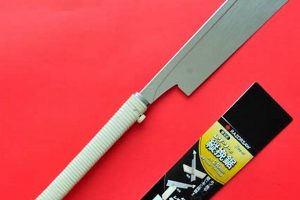
![Mastering the Care & Use of Japanese Woodworking Tools [Tips] | Step-by-Step Guides, Tools & Inspiration to Build Beautiful Wooden Decor on a Budget](https://woodfromhome.com/wp-content/uploads/2026/05/th-83-300x200.jpg "Mastering the Care & Use of Japanese Woodworking Tools [Tips] Step-by-Step Guides, Tools & Inspiration to Build Beautiful Wooden Decor on a Budget")