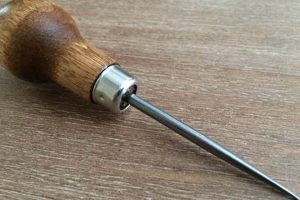
The implements employed by Roman artisans for shaping and joining wood were fundamental to their construction and craft endeavors. These tools, crafted from materials like iron and bronze, enabled the creation of intricate furniture, robust buildings, and sophisticated transportation systems. Examples include axes for felling trees and rough shaping, saws for creating planks, and chisels for detailed carving and joinery.
The availability and refinement of such implements directly influenced the scale and complexity of Roman engineering and artistic achievements. These objects facilitated the construction of lasting infrastructure and enabled the production of goods that supported both daily life and trade networks. Their design and use reflect a sophisticated understanding of material properties and mechanical principles.
A detailed examination of the specific types of axes, saws, chisels, planes, drills, and measuring devices utilized by Roman woodworkers provides valuable insight into their methods and capabilities. Analyzing the archaeological evidence and surviving examples clarifies the advancements they made in woodworking technology and their impact on the ancient world.
Guidance Based on Roman Woodworking Practices
Insights gleaned from the study of Roman woodworking provide enduring guidance applicable to contemporary practice. Understanding their techniques and tools offers lessons in efficiency, precision, and material conservation.
Tip 1: Prioritize Tool Maintenance: Roman artisans understood the importance of sharp, well-maintained tools. Regular sharpening of blades, proper lubrication of moving parts, and careful storage are essential for optimal performance and longevity.
Tip 2: Utilize Appropriate Wood Selection: Romans carefully selected wood based on the intended application, considering factors such as grain, density, and resistance to decay. Matching the wood species to the project requirements ensures durability and aesthetic appeal.
Tip 3: Employ Precise Measurement Techniques: Accuracy in measurement is crucial for achieving desired dimensions and ensuring proper fit. Employing reliable measuring tools and adhering to established standards minimizes errors and reduces material waste.
Tip 4: Master Traditional Joinery Methods: Roman woodworking relied heavily on strong and durable joinery techniques, such as mortise and tenon joints, dovetails, and lap joints. Proficiency in these methods results in structurally sound and aesthetically pleasing constructions.
Tip 5: Optimize Workspace Organization: A well-organized workspace enhances efficiency and reduces the risk of accidents. Maintaining a designated area for each tool and material promotes a smooth and productive workflow.
Tip 6: Emphasize Sustainable Practices: Romans often practiced resourcefulness in their woodworking, minimizing waste and maximizing the utilization of available materials. Modern woodworkers can adopt similar principles by repurposing scrap wood and sourcing timber from sustainable sources.
Tip 7: Develop a Deep Understanding of Wood Grain: Roman craftsmen understood the properties of wood grain and how it affected splitting and warping. Working with the grain, rather than against it, significantly improved the structural integrity of wooden objects.
The principles underlying the effective application of implements offer insights into fundamental aspects of craftsmanship that remain relevant across time periods and technological advancements.
Consideration of the techniques reinforces the enduring importance of skill, knowledge, and mindful practice in the pursuit of quality woodworking.
1. Axes

The axe served as a fundamental implement in Roman woodworking, acting as the primary means for initial timber processing and shaping. Its role extended from forestry to the preparation of raw materials for various construction and craft applications. The design and utilization of axes reflect the practical demands of Roman woodworking practices.
- Felling and Limbing:
Large axes, often wielded with two hands, were employed to fell trees and remove branches. These axes possessed heavy heads and robust handles to withstand the force required for these tasks. Examples exist of axes recovered from Roman-era logging sites, demonstrating their crucial role in acquiring timber resources.
- Rough Shaping:
After felling, axes were used to roughly shape timbers before finer tools could be applied. This process involved hewing logs into manageable sizes and creating preliminary forms for beams, posts, and planks. Evidence suggests that Roman woodworkers skillfully controlled the axe to achieve relatively precise shapes, minimizing waste.
- Adze Variation:
The adze, a variation of the axe with its blade set at a right angle to the handle, played a significant role in creating flat surfaces on timber. This tool allowed woodworkers to smooth and flatten beams or planks efficiently. Archaeological findings indicate that adzes were commonly used in conjunction with axes for preparing lumber.
- Material and Construction:
Roman axes typically comprised an iron head fitted onto a wooden handle, often made from ash or oak. The quality of the iron and the construction of the handle influenced the axe’s durability and effectiveness. Evidence of sophisticated forging techniques is apparent in surviving examples, illustrating a developed understanding of metallurgy.
The prevalence and utility of axes underscore their importance in Roman woodworking. From harvesting raw materials to preparing them for further refinement, axes were indispensable tools that facilitated the creation of both utilitarian structures and elaborate artistic works, showcasing practical applications of engineering and ingenuity.
2. Saws

Saws were an indispensable component of Roman woodworking, representing a crucial tool for transforming raw timber into usable lumber. Their application extended across diverse projects, from large-scale construction to the creation of intricate furniture and decorative elements. The efficiency and precision afforded by saws directly impacted the speed and quality of Roman woodworking endeavors.
The types of saws employed varied according to the task. Large frame saws facilitated the ripping of logs into planks, while smaller handsaws allowed for more delicate shaping and cutting. Archaeological evidence, including depictions on Roman reliefs and surviving saw blades, confirms their widespread usage. For example, fragments of saw blades have been unearthed at Roman settlements, providing direct proof of their material composition and design. The availability of effective saws empowered Roman craftsmen to produce uniform lumber, enabling efficient construction and advanced woodworking techniques, particularly in joinery.
In summary, the saw constituted a core element within the Roman woodworking toolkit. Its impact on material processing, construction efficiency, and the overall quality of finished products cannot be overstated. Understanding the types, functionality, and utilization of Roman saws provides essential insight into the technological capabilities and resourcefulness of Roman artisans.
3. Chisels

Chisels, vital components within the array of implements available to the Roman woodworker, served a purpose in shaping, carving, and refining wooden materials. Their presence is consistently documented in archaeological findings related to Roman workshops and construction sites, highlighting their significance to the craft.
- Types and Functionality
Roman chisels varied in size and form, each designed for a specific task. Mortise chisels, characterized by their robust blades, were used to create the recesses for mortise and tenon joints. Firmer chisels, with their flat blades, facilitated the paring and shaping of surfaces. Carving chisels, often smaller and more specialized, enabled the creation of decorative details. These implements showcase specialized designs catering to particular functions.
- Material Composition and Manufacturing
Roman chisels were typically fashioned from iron, sometimes supplemented with a steel cutting edge for enhanced durability. The manufacturing process involved forging the metal into the desired shape and then hardening the edge to maintain sharpness. Evidence suggests the use of sophisticated tempering techniques to optimize the chisel’s performance. Examples exist of Roman chisels that have retained their structural integrity over centuries, affirming the quality of their construction.
- Application in Joinery
The creation of accurate and strong joints depended significantly on the use of chisels. Mortise and tenon joints, dovetails, and other interlocking structures required precise chisel work. Surviving examples of Roman furniture and building components demonstrate the high level of skill achieved through chisel work. These are a testament to the accuracy afforded by these handheld implements.
- Artistic and Decorative Uses
Beyond structural applications, chisels also played a vital role in the creation of decorative elements. The elaborate carvings found on Roman furniture, doors, and architectural details attest to the proficiency of Roman artisans in employing chisels for artistic expression. Examples of intricate relief carvings demonstrate the versatility and precision offered by these tools.
In summary, the range of chisel types, their method of manufacture, and their employment within both structural and decorative contexts underscore their fundamental place among implements essential to Roman woodworking. Examination of surviving chisels, along with their impact on tangible artifacts, provides an understanding of Roman craftsmanship.
4. Planes

Planes were essential within the toolkit of ancient Roman woodworkers, enabling the creation of smooth and even surfaces on timber. The presence and utilization of planes directly impacted the quality and precision of Roman woodwork, influencing both structural and aesthetic aspects of finished products. The availability of planes allowed for the efficient preparation of wood for joinery, paneling, and other refined applications.
Archaeological evidence for Roman planes is relatively scarce compared to other woodworking tools like axes and saws. Surviving examples, however, demonstrate a functional understanding of planing principles. These implements typically consisted of an iron blade secured within a wooden body. The blade’s angle and projection were adjustable to control the depth of cut and achieve the desired surface finish. The use of planes facilitated the creation of flat, consistent surfaces, which were crucial for creating tight-fitting joints and aesthetically pleasing furniture and architectural elements. For instance, the smooth panels found in Roman cabinets and the accurately planed surfaces of door frames bear testament to the sophisticated use of these tools.
The understanding of planes and their role in ancient Roman woodworking provides crucial insights into the technological capabilities of the period. Although the surviving examples are not numerous, their function is readily understood. Although the plane has been around for centuries, they have become an important tool for woodworkers. Their impact on the production of quality goods cannot be overlooked, helping to define the character of Roman woodworking and its impact on the ancient world.
5. Drills
Drills constituted a significant, though perhaps less prominently documented, component of ancient Roman woodworking toolsets. Their primary function involved creating cylindrical holes in wood for various purposes, including joinery, hardware attachment, and decorative piercing. The application of drills facilitated the construction of more complex and refined wooden objects. The absence of efficient drilling methods would have severely limited the complexity of joinery and fastening techniques available to Roman artisans. For example, accurately drilled pilot holes were essential for driving nails or screws without splitting the wood, crucial in furniture making and building construction.
Evidence suggests the use of both bow drills and hand-operated augers. Bow drills, powered by a reciprocating bowstring, provided a means of generating rotational force for drilling small to medium-sized holes. Augers, on the other hand, relied on manual rotation of a T-shaped handle to bore larger holes. Archaeological finds of drill bits and depictions on Roman artifacts support their use in various woodworking contexts. For instance, small, precisely drilled holes are observed in surviving examples of Roman wooden boxes and musical instruments, suggesting the application of drills in crafting delicate items. The effectiveness of Roman drills relied on a combination of tool design, material quality (typically iron or bronze), and the skill of the artisan.
In summary, although the archaeological record of Roman drills may be less comprehensive than that of axes or saws, their functional importance within the broader spectrum of ancient Roman woodworking tools is undeniable. Drills enabled techniques essential for joinery, fastening, and decorative work, contributing to the overall quality and sophistication of Roman wooden artifacts. Further research into the design and application of these tools promises to illuminate further the ingenuity and technical capabilities of Roman woodworkers.
6. Joinery

Joinery, the art and technique of connecting pieces of wood to create stable and functional structures, represents a cornerstone of Roman woodworking. The effectiveness of the resulting joints directly correlated with the quality and precision of the implements employed. Ancient Roman woodworking tools were, therefore, instrumental in enabling the creation of diverse and structurally sound joinery types. The connection between the two is causative: the specific characteristics and capabilities of these implements determined the complexity and strength of achievable joinery methods. For instance, the mortise and tenon joint, a prevalent feature in Roman construction and furniture, necessitated the use of chisels to create precise mortises (recesses) and tenons (projections). Saws aided in accurately shaping the tenon, ensuring a snug fit. Without sharp, well-maintained chisels and saws, the creation of durable mortise and tenon joints would have been significantly compromised.
The prevalence of dovetail joints in Roman furniture provides a further example. Dovetail joints, known for their exceptional strength and resistance to pulling forces, required careful execution. Chisels were used to create the interlocking “tails” and “pins,” while saws assisted in defining the shape and ensuring a tight interlock. The successful implementation of dovetail joinery depended critically on the availability of precise measuring tools, as well as the skill of the woodworker in utilizing the available saws and chisels. Thus, the existence of refined woodworking implements directly facilitated the widespread application of this sophisticated joinery technique. Furthermore, the choice of specific woodworking techniques depended on the intended application and the available resources, demonstrating a practical understanding of material properties and structural requirements. These choices, dictated by need and facilitated by specific tools, resulted in structures that have, in some cases, endured for millennia.
In conclusion, the relationship between joinery and ancient Roman woodworking tools is inextricable. The effectiveness of Roman joinery methods was contingent upon the availability and proper utilization of these implements. The surviving examples of Roman woodwork, showcasing durable and intricate joinery, serve as tangible evidence of the advanced craftsmanship enabled by the tools at their disposal. The challenges inherent in creating robust joints without modern power tools underscore the ingenuity and skill required of Roman woodworkers, whose achievements are a testament to the efficacy of their tools and techniques.
7. Materials

The selection and preparation of materials formed a critical element in ancient Roman woodworking. The availability and properties of these materials directly influenced the design and utilization of implements employed in their shaping and joining. The tools were, in essence, designed to efficiently process the materials at hand, thereby reflecting a symbiotic relationship between the raw resources and the technologies used to transform them.
- Wood Species and Tool Design
The types of wood prevalent in the Roman world, such as oak, beech, pine, and cypress, dictated the necessary characteristics of woodworking tools. For instance, denser hardwoods like oak demanded axes and saws with hardened iron blades to maintain sharpness and cutting efficiency. Softer woods, like pine, could be worked with lighter, more finely edged tools. The specific grain patterns and structural properties of each species also influenced the design of planes and chisels used for smoothing and shaping.
- Iron Production and Tool Hardness
The quality of iron available to Roman smiths directly impacted the effectiveness and longevity of woodworking tools. Techniques for smelting and tempering iron determined the hardness and durability of axe heads, saw blades, and chisel edges. Higher-quality iron allowed for the creation of tools that could withstand repeated use and maintain a sharp cutting edge, enhancing the efficiency of woodworking tasks. The limitations of iron production also influenced the size and design of tools, as larger tools required greater amounts of high-quality metal.
- Abrasives and Sharpening Techniques
The availability of suitable abrasive materials, such as sandstone and emery, was crucial for maintaining the sharpness of woodworking tools. Roman woodworkers employed sharpening stones to hone the edges of axes, saws, and chisels, ensuring optimal cutting performance. The effectiveness of these sharpening techniques depended on the quality of the abrasive material and the skill of the user. Evidence suggests the use of specialized sharpening jigs or fixtures to achieve consistent angles and maintain blade geometry.
- Adhesives and Joining Compounds
The types of adhesives and joining compounds available influenced the design and application of joinery techniques. Roman woodworkers utilized various glues derived from animal products, resins, and other natural sources to bond wood components. The strength and durability of these adhesives impacted the types of joints that could be reliably employed. For example, weaker adhesives might necessitate the use of more complex interlocking joints to achieve sufficient structural integrity. The selection of appropriate adhesives was therefore critical for ensuring the long-term stability of wooden structures and artifacts.
These intertwined facets of material selection, processing, and tool design underscore a crucial element of Roman woodworking: the sophisticated understanding of material properties and the skillful adaptation of tools to effectively utilize available resources. Understanding this connection provides insight into the resourcefulness and ingenuity of ancient Roman artisans.
Frequently Asked Questions
This section addresses common inquiries regarding the implements utilized in ancient Roman woodworking. The information presented aims to provide clear and objective answers based on archaeological evidence and historical accounts.
Question 1: What were the primary materials used in the construction of these tools?
Ancient Roman woodworking tools were primarily crafted from iron, with bronze sometimes employed for smaller components or decorative elements. Handles were typically made from hardwoods such as oak or ash. The specific materials chosen reflected their availability and suitability for the intended function of the tool.
Question 2: How did the design of Roman saws compare to modern saws?
Roman saws generally lacked the hardened steel blades and sophisticated tooth geometries found in modern saws. However, they effectively utilized frame saws for ripping large timbers and handsaws for finer work. Evidence suggests a basic understanding of tooth set and blade tensioning to improve cutting efficiency.
Question 3: What types of wood were commonly used in Roman woodworking projects?
Common wood species included oak, beech, pine, cypress, and occasionally imported hardwoods. The selection depended on the intended application, with oak favored for structural elements and cypress for its resistance to decay in damp environments.
Question 4: How were Roman woodworking tools sharpened and maintained?
Sharpening involved the use of abrasive stones, typically made from sandstone or emery. Tools were regularly honed to maintain a sharp cutting edge. Evidence suggests that Roman woodworkers understood the importance of proper blade geometry and used jigs or fixtures to achieve consistent sharpening angles.
Question 5: Were power tools used in ancient Roman woodworking?
No. Power tools, as understood today, did not exist in ancient Rome. All woodworking operations were performed manually, relying on human strength and skill.
Question 6: How can the study of ancient Roman woodworking inform modern practices?
Analysis of these ancient techniques offers valuable insights into sustainable resource utilization, efficient tool design, and the development of fundamental woodworking skills. It showcases the capabilities achievable with careful material selection and precise manual execution. The efficiency of Roman woodworking, without the aid of mechanized systems, highlights the practical value of mindful work processes.
In summary, understanding the materials, design, and application of ancient Roman woodworking tools provides a valuable perspective on the ingenuity and resourcefulness of Roman artisans.
The following section will explore the lasting legacy of Roman woodworking techniques.
Conclusion
The preceding examination of “ancient roman woodworking tools” illuminates their crucial role in facilitating construction, craftsmanship, and artistic expression during the Roman era. The specific forms and functions of axes, saws, chisels, planes, and drills were integral to the creation of lasting infrastructure, functional objects, and decorative artwork. The selection and preparation of materials, coupled with the implementation of diverse joinery techniques, demonstrate a sophisticated understanding of both material properties and structural principles. The study of these implements offers insight into the technical capabilities and resourcefulness of Roman artisans.
Further research into these tools, encompassing archaeological discoveries, material analysis, and experimental reconstruction, promises to enrich understanding of ancient Roman technological innovation and its enduring impact on subsequent woodworking traditions. It is necessary to continue investigating the ingenuity inherent in the design and application of tools in human history, and to fully recognize the practical knowledge it affords to improve craftsmanship. The knowledge gives woodworkers to appreciate the ingenuity of craftsman in past.