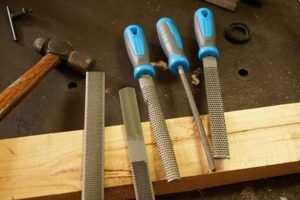
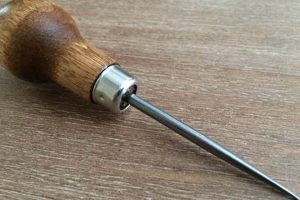
Essential implements designed for fundamental timber crafting form the cornerstone of any woodworking endeavor. These instruments, ranging from hand-powered devices to smaller, electrically-driven machines, facilitate shaping, joining, and finishing wood. A handsaw, for example, is a primary tool used for cutting stock to size, while a hand plane smooths and flattens surfaces. These fundamental pieces of equipment enable craftspeople to execute projects ranging from simple repairs to intricate constructions.
The availability and proper use of appropriate implements are critical for successful and safe woodworking. They enable accurate cuts, secure joints, and refined surfaces, leading to aesthetically pleasing and structurally sound outcomes. Historically, these items have evolved from rudimentary stone and bronze tools to sophisticated steel designs, each advancement contributing to greater efficiency and precision in wood manipulation. Mastering their function provides a strong foundation for more advanced techniques.
Subsequently, this discourse will delve into specific types of equipment, outlining their purpose, operation, and maintenance, thereby providing a practical guide for selecting and utilizing essential instruments for fundamental timber projects. Attention will be given to both hand tools and power tools, elucidating the advantages and disadvantages of each within a foundational context.
Essential Guidance on Fundamental Woodcrafting Implements
The following section outlines critical recommendations for the selection, utilization, and maintenance of items necessary for initiating timber projects. Adherence to these guidelines promotes safety, precision, and longevity of the equipment.
Tip 1: Prioritize Quality Over Quantity: Instead of acquiring a large number of inexpensive items, invest in a smaller set of high-quality versions. Superior materials and construction lead to enhanced durability, accuracy, and user experience. For instance, a well-made hand plane will maintain its sharpness and flatness for a longer duration than a cheaper alternative.
Tip 2: Sharpening is Paramount: Maintaining a keen edge on cutting instruments is essential for both safety and effectiveness. A dull blade requires more force, increasing the risk of slippage and reducing cut quality. Regularly hone blades using sharpening stones or specialized devices. Establish a consistent sharpening routine.
Tip 3: Understand Grain Direction: The direction of wood fibers significantly impacts the ease and quality of cuts. Cutting against the grain can result in splintering and tear-out. Observe the grain pattern before cutting or planing, and adjust technique accordingly to achieve a clean finish.
Tip 4: Practice Proper Clamping Techniques: Securely holding wood pieces in place during assembly is critical for precise joinery. Employ a variety of clamps, such as bar clamps, pipe clamps, and spring clamps, to maintain alignment and apply adequate pressure while adhesives cure. Consider using cauls to distribute pressure evenly across larger surfaces.
Tip 5: Implement Dust Collection Systems: Wood dust is a health hazard and can obscure work surfaces. Utilize dust collection methods, such as shop vacuums or dust collectors, connected to power tools. Regularly clean the workspace to minimize airborne particulates. A clean environment improves visibility and reduces respiratory risks.
Tip 6: Adhere to Safety Protocols: Strict adherence to safety guidelines is non-negotiable. Always wear appropriate personal protective equipment, including safety glasses, hearing protection, and dust masks. Familiarize oneself with the operational procedures of each tool before use. Maintain a focused and deliberate approach to all operations.
These recommendations aim to optimize the performance and lifespan of essential woodcrafting implements, fostering a safe and efficient work environment. Mastery of these principles contributes to the successful completion of projects and the cultivation of expertise.
The subsequent sections will address specific project applications, demonstrating how the aforementioned implements and techniques are employed to achieve various objectives in timber manipulation.
1. Hand Saws

Hand saws constitute a foundational element within the array of implements employed in fundamental timber projects. Their primary function involves the manual division of wood stock into desired dimensions, establishing a necessary prerequisite for subsequent shaping and assembly operations. The efficiency and precision with which a hand saw performs directly impact the overall quality and accuracy of a completed woodworking project. For example, improperly squared cuts executed with a dull or inappropriate saw necessitate corrective measures that consume time and material, potentially compromising structural integrity. Therefore, the selection and proper utilization of these instruments are paramount.
Beyond their role in dimensioning, hand saws contribute to a spectrum of woodworking tasks, ranging from rough stock preparation to the creation of joinery elements such as tenons and dovetails. The choice of sawrip saw, crosscut saw, backsawdepends upon the specific task and the orientation of the cut relative to the wood grain. Mastering the techniques of hand sawing, including proper stance, saw angle, and stroke rhythm, allows for cuts that are both accurate and efficient. Skilled use minimizes material waste and reduces the need for extensive post-sawing correction.
In summary, hand saws are indispensable for fundamental timber applications, forming a critical link in the cause-and-effect chain that leads from raw material to finished product. Their significance stems from their capacity to enable precise and controlled division of wood, a capability that directly affects subsequent stages of the woodworking process. While power tools may offer speed and convenience, proficiency with hand saws remains an essential skill for any woodworker, affording a deeper understanding of wood properties and promoting greater control over the outcome of each task.
2. Measuring Tools
Accuracy in fundamental timber crafting depends directly on the correct employment of measuring implements. These instruments are foundational, establishing the dimensional framework upon which all subsequent operations are based. Inaccurate measurements yield cumulative errors, propagating throughout the project and resulting in misaligned joints, dimensional discrepancies, and overall structural instability. A simple example illustrates this point: a table leg cut even slightly shorter than specified necessitates shimming or re-fabrication, introducing additional complexity and compromising the design. The selection of appropriate measuring apparatus and their conscientious use is therefore not merely a best practice, but a prerequisite for successful execution.
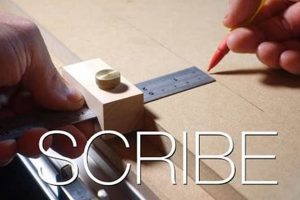
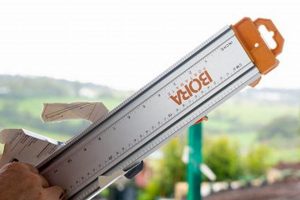
The spectrum of available measuring instruments encompasses a range of devices, each suited for specific applications. Rulers and tape measures provide linear dimensions, while squares and protractors ensure orthogonal and angular accuracy. Marking gauges facilitate the consistent transfer of dimensions, particularly in repetitive tasks such as mortise and tenon layout. Digital calipers offer high-precision measurements for critical components. Furthermore, leveling instruments guarantee horizontal and vertical alignment during assembly. Each implement serves as a critical component in controlling dimensional parameters, minimizing error propagation, and ensuring adherence to design specifications. Failure to utilize these implements properly compromises the entire process.
In summary, measuring instruments are indispensable for fundamental timber construction. They exert a decisive influence on the accuracy, structural integrity, and aesthetic quality of the finished product. Proficiency in their use is therefore an essential skill, enabling craftspeople to translate designs into tangible objects with confidence and precision. Understanding the strengths and limitations of each implement, and employing them with diligence, is paramount. The challenges associated with dimensional accuracy necessitate careful attention to detail, underscoring the critical role of measuring devices within the broader context of woodworking proficiency.
3. Planes

Planes represent a crucial category within the spectrum of implements for fundamental timber manipulation. These hand-held instruments, designed for shaving thin layers of wood from surfaces, enable a level of refinement unobtainable through sawing or chiseling alone. Their purpose extends beyond mere smoothing, encompassing flattening, shaping, and precise fitting of components. Therefore, the plane’s functionality is integral to achieving high-quality results in woodworking.
- Surface Preparation and Flattening
Planes are essential for creating flat and square surfaces, critical for joinery and overall structural stability. A jointer plane, with its long sole, is employed to flatten wide boards, while a smoothing plane removes imperfections and prepares the surface for finishing. Example: Ensuring a table top is perfectly flat before applying a finish prevents uneven coating and enhances the final appearance.
- Shaping and Contouring
Beyond flattening, planes serve to create specific shapes and contours in wood. Specialty planes like the spokeshave are designed for shaping curved surfaces, such as chair spindles and instrument components. Example: A luthier uses a spokeshave to carefully shape the arch of a violin soundboard, influencing its tonal qualities.
- Joinery Refinement
Planes enable the precise fitting of joints, ensuring tight and seamless connections. Block planes, with their low cutting angle, are particularly useful for trimming end grain, a common requirement in joinery. Example: Fine-tuning a dovetail joint with a block plane ensures a snug fit and maximizes its mechanical strength.
- Edge Treatment and Chamfering
Planes are employed to create decorative edges and chamfers, adding visual appeal and improving ergonomics. A chamfer plane creates beveled edges, while molding planes produce complex profiles. Example: A chamfer on the edge of a table prevents splintering and adds a subtle visual detail.
The diverse applications of planes underscore their significance in woodworking. Mastering the use of various types of planes empowers the craftsperson to achieve precise dimensions, refined surfaces, and intricate details. This mastery translates to enhanced project quality, structural integrity, and aesthetic appeal; the connection to fundamental woodworking is therefore undeniable. Their versatility enables the achievement of results unattainable with other equipment, reinforcing their place as an indispensable tool.
4. Chisels

Chisels, edge-cutting implements employed through manual force, are integral to fundamental timber construction. Their function extends beyond simple material removal, encompassing precise shaping, joinery creation, and surface refinement. Proficiency in chisel use is a hallmark of skilled woodcraft and crucial for realizing intricate designs.
- Mortise Creation
Chisels are essential for excavating mortises, the sockets that receive tenons in mortise-and-tenon joinery. The process involves repeated driving and levering actions to remove waste material, demanding precision and control to maintain accurate dimensions and square corners. A poorly executed mortise compromises joint strength and alignment. Example: Constructing a chair requires precisely cut mortises to ensure structural integrity under load.
- Dovetail Formation
Creating dovetail joints, known for their strength and aesthetic appeal, necessitates meticulous chisel work. After sawing the initial dovetail shape, chisels are used to pare away waste material, refining the angles and ensuring a tight fit. A well-cut dovetail exhibits clean lines and interlocking geometry. Example: Drawer construction relies on dovetail joints to withstand repeated opening and closing motions.
- Surface Parring and Refinement
Chisels serve to refine surfaces by removing small imperfections, smoothing rough areas, and creating decorative details. The process requires a sharp edge and controlled hand pressure to achieve a clean, consistent surface. Example: Leveling the bottom of a dado cut with a chisel creates a flat surface for the shelf to seat upon.
- Wood Carving and Shaping
Chisels are fundamental for carving wood, enabling the creation of intricate designs and three-dimensional forms. The selection of specialized carving chisels allows for precise control over material removal, facilitating the execution of complex patterns and textures. Example: Carving decorative motifs on furniture requires skillful chisel work to achieve the desired aesthetic effect.
The multifaceted applications of chisels underscore their significance in fundamental timber construction. The implements, when wielded with precision and expertise, enable the creation of robust joints, refined surfaces, and intricate details, and the skill is foundational for achieving high-quality results in woodworking. Mastery of chisel techniques remains indispensable for woodworkers seeking to execute projects with both structural integrity and aesthetic merit.
5. Clamps

Clamps constitute an indispensable category within the essential toolset for foundational timber construction. Their purpose is to apply and maintain compressive force on wood components during assembly and adhesive curing, thereby ensuring joint integrity and dimensional accuracy. The effective utilization of clamps directly influences the structural stability and aesthetic quality of woodworking projects.
- Joint Assembly and Alignment
Clamps serve to maintain precise alignment of wood elements during joinery procedures. Whether assembling mortise and tenon, dovetail, or butt joints, clamps provide the necessary pressure to seat components correctly and prevent shifting. For example, when gluing a frame, bar clamps exert even force across the joints, ensuring squareness and preventing gaps. The absence of adequate clamping force compromises joint strength and dimensional accuracy.
- Adhesive Curing
Many woodworking joints rely on adhesives to achieve structural integrity. Clamps maintain intimate contact between the surfaces being bonded, facilitating optimal adhesive transfer and curing. Insufficient pressure can result in weakened glue lines and premature joint failure. Pipe clamps, for instance, are commonly used to apply high clamping force during the assembly of large tabletops, ensuring a strong and durable bond. The efficacy of adhesive-based joinery is inextricably linked to the correct application of clamping force.
- Lamination and Veneering
Clamps play a crucial role in laminating wood components, where thin layers of material are bonded together to create thicker, curved, or structurally enhanced pieces. Similarly, in veneering, clamps secure the veneer to the substrate during adhesive curing, preventing bubbles and ensuring a uniform bond. Vacuum presses and specialized clamping jigs are often employed for complex lamination projects. Example: Creating curved furniture elements by laminating multiple thin strips of wood requires precise clamping to maintain the desired shape.
- Workholding during Shaping
While often associated with assembly, clamps also function as workholding devices during various shaping operations. Securing a workpiece to a workbench or other stable surface with clamps allows for controlled and accurate carving, routing, or sanding. Bench vises and holdfasts are specific types of clamps designed for this purpose. For instance, securely clamping a workpiece while routing a decorative edge enhances safety and precision.
In conclusion, the multifaceted applications of clamps underscore their critical role within foundational timber practices. Their significance extends beyond simple force application, influencing the precision, strength, and longevity of woodworking projects. Selecting appropriate clamps and applying them correctly are essential skills for any woodworker seeking to achieve high-quality outcomes.
6. Fastening

The domain of fastening represents a critical intersection within the landscape of fundamental timber crafting. It encompasses a range of techniques and devices utilized to affix wood components permanently or semi-permanently, thereby establishing structural integrity and functional cohesion. This process necessitates specific implements and procedures, rendering it intrinsically linked to the broader context.
- Nail-Based Fastening
Nails, as a primary fastening method, require hammers or nail guns for insertion. The selection of appropriate nail types (e.g., common, finishing, brad) depends on the wood species and desired aesthetic. Hammer technique affects joint strength; improper hammering can lead to bent nails or damaged wood fibers. For example, constructing a basic frame might involve common nails driven with a claw hammer. The hammer becomes an extension of this critical fastening operation.
- Screw-Based Fastening
Screws provide greater holding power than nails and require screwdrivers or power drills for installation. Pilot holes are often necessary to prevent wood splitting, particularly in hardwoods. Screw selection (e.g., wood screws, drywall screws) hinges on application. As an example, attaching hinges to a cabinet door typically involves wood screws driven with a screwdriver. This emphasizes the necessity for specific instruments to enable fastening through screws.
- Adhesive-Based Fastening (Gluing)
Adhesives, or glues, represent a distinct fastening approach. Clamps are essential for maintaining pressure during adhesive curing, ensuring a strong bond. The choice of glue (e.g., wood glue, epoxy) depends on the wood species, joint type, and environmental conditions. Constructing a laminated beam requires clamps to apply uniform pressure while the adhesive sets. This illustrates that even adhesive fastening relies on tools to provide successful joints.
- Specialized Fasteners
Certain woodworking applications necessitate specialized fasteners like dowels, biscuits, or pocket screws. Dowels require precise drilling and alignment, while biscuits necessitate a biscuit joiner. Pocket screws demand a specialized jig and drill bit. Building a bookshelf might involve dowels for shelf support, requiring a drill and doweling jig. These fasteners need specific specialized tools for woodworkers.
These facets, ranging from nail-based techniques to specialized methods, underscore the integral relationship between fastening and fundamental timber construction. The selection of appropriate implements and procedures directly impacts the integrity and longevity of finished products. Mastery of these techniques, along with careful tool selection, is paramount for any woodworker.
7. Safety equipment
Safety equipment constitutes an inextricable component of any comprehensive ensemble of fundamental timber crafting implements. The inherent risks associated with manipulating sharp-edged and high-speed devices necessitate the consistent and conscientious utilization of protective measures. The absence of appropriate safety gear elevates the probability of injury, ranging from minor lacerations to severe trauma. For instance, operating a table saw without safety glasses dramatically increases the risk of eye damage from flying debris. Therefore, viewing protective implements as an integral part of the toolset, rather than an optional addendum, is paramount.
Specific categories of safety equipment address distinct hazards encountered in woodworking. Eye protection, in the form of safety glasses or face shields, safeguards against projectiles. Hearing protection, such as earplugs or earmuffs, mitigates the risk of auditory damage from loud machinery. Respiratory protection, including dust masks or respirators, prevents the inhalation of harmful wood dust. Furthermore, appropriate clothing, such as close-fitting garments and sturdy footwear, minimizes the risk of entanglement or injury. The proper selection and maintenance of safety equipment are essential for ensuring its effectiveness. For example, a respirator with a compromised seal offers inadequate protection against fine dust particles.
In conclusion, the integration of safety equipment into the woodworking process is non-negotiable. The consistent use of these implements mitigates the inherent risks associated with timber manipulation, fostering a safer and more productive work environment. Promoting a safety-conscious culture and providing comprehensive training on the proper utilization of protective gear are crucial steps in minimizing workplace accidents and fostering a responsible approach to woodworking. The failure to prioritize safety constitutes a dereliction of responsibility with potentially severe consequences, emphasizing the inseparability of safety measures from fundamental woodworking implements.
Frequently Asked Questions Regarding Fundamental Timber Crafting Implements
The following section addresses common inquiries pertaining to the selection, utilization, and maintenance of implements essential for basic woodworking endeavors. These questions and answers aim to provide clarity and guidance for both novice and experienced craftspeople.
Question 1: What constitutes an essential starting point for building a collection of fundamental woodworking instruments?
The initial focus should be on acquiring high-quality versions of core items: a combination square, a smoothing plane, a crosscut saw, a rip saw, a set of chisels, and a honing system. These components enable a wide range of basic operations and provide a solid foundation for expanding one’s tool collection.
Question 2: How frequently should one sharpen cutting instruments such as chisels and plane irons?
The frequency of sharpening depends on the wood species being worked and the duration of tool use. However, as a general rule, cutting instruments should be honed before each use and sharpened whenever the edge loses its keenness. Maintaining a sharp edge is critical for both safety and performance.
Question 3: What safety precautions are paramount when operating power woodworking machines?
Eye and ear protection are non-negotiable. It is also essential to ensure that all guards and safety devices are in place and functioning correctly. Operators should be thoroughly familiar with the machine’s operating manual and should never bypass safety procedures.
Question 4: What are the fundamental differences between a rip saw and a crosscut saw, and when should each be used?
A rip saw is designed to cut along the grain of wood, while a crosscut saw is designed to cut across the grain. Rip saws typically have larger teeth with a greater set, while crosscut saws have smaller teeth with a knife-like action. Employing the correct saw for the task is essential for efficient and clean cuts.
Question 5: What types of wood are most suitable for beginning woodworking projects?
Softwoods, such as pine and poplar, are often recommended for beginners due to their relative ease of workability. Hardwoods, such as maple and oak, offer greater durability and aesthetic appeal, but may require more experience and sharper tools to manipulate effectively.
Question 6: How does one determine the appropriate clamping force to apply during glue-ups?
The ideal clamping force is sufficient to bring the joint surfaces into intimate contact without crushing the wood fibers or squeezing out all of the adhesive. Over-clamping can weaken the joint, while under-clamping can result in a poor bond. Experimentation and observation are key to developing a feel for the appropriate pressure.
The principles outlined above represent fundamental considerations for effectively utilizing implements. Adherence to these guidelines promotes safe practices and quality work.
The subsequent section will elaborate on advanced timber manipulation techniques, building upon the knowledge established herein.
Conclusion
This discourse has illuminated the significance of equipping oneself with appropriate implements for fundamental timber manipulation. From sawing and planing to chiseling, fastening, and the imperative consideration of safety, each category of apparatus plays a crucial role in realizing successful woodworking projects. Mastery of these core items, coupled with a commitment to safe practices, forms the bedrock of proficient craftsmanship.
The effective selection, employment, and maintenance of these implements are not merely procedural recommendations, but rather essential preconditions for achieving structural integrity, dimensional accuracy, and aesthetic refinement. Therefore, continued learning, rigorous adherence to safety protocols, and thoughtful investment in quality apparatus remain vital for progressing in the field. The dedication to continuous refinement in timber crafting represents a worthy pursuit, holding the potential to yield objects of enduring value and aesthetic merit.