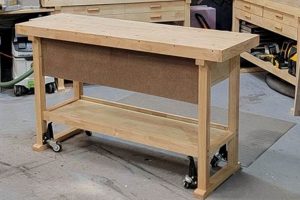
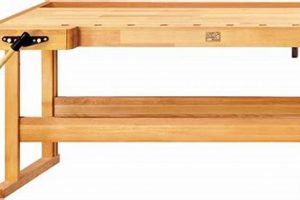
A clamping tool, typically affixed to a workbench, secures wood during various construction and shaping processes. This device provides a stable platform, allowing focused energy application for sawing, planing, chiseling, and other manipulative tasks. For example, when creating a dovetail joint, this securing implement firmly holds the material, enabling precise and safe cuts.
The use of such a securing device is fundamental to efficient and accurate woodworking. It ensures stability, enhancing safety and minimizing material waste. Historically, these tools have evolved from simple screw-operated mechanisms to more sophisticated designs, consistently providing a critical function in the creation of both utilitarian and artistic wooden objects.
The subsequent discussion will delve into the specific types available, optimal selection criteria based on project requirements, techniques for proper installation and maintenance, and common operational practices to maximize efficiency and longevity. Different models possess varied clamping power and jaw width. Therefore, understanding the nuances of these features is essential for effective application.
Essential Guidance
Maximizing the effectiveness of wood-securing vices necessitates adherence to established best practices. The following tips enhance operational safety, precision, and tool longevity.
Tip 1: Jaw Protection is paramount. Use soft jaws, crafted from wood or composite materials, to prevent marring delicate workpieces. Direct contact between the vice’s metal jaws and the wood can cause indentations or unsightly markings.
Tip 2: Even Distribution of Clamping Force is Critical. Ensure the workpiece is flush against the full surface of the jaws. Uneven pressure leads to instability and potential damage, impacting the accuracy of the intended cuts or joinery.
Tip 3: Avoid Over-Tightening. Excessive force risks crushing the wood fibers, particularly with softer species. A firm, secure hold is sufficient; further tightening does not necessarily improve stability and can cause irreparable damage.
Tip 4: Regular Maintenance is Essential. Lubricate the screw mechanism periodically with a light machine oil or grease. This reduces friction, ensures smooth operation, and prevents premature wear.
Tip 5: Proper Mounting Technique is Crucial. Securely attach the vice to a stable workbench using appropriate hardware. A wobbly or poorly mounted vice compromises safety and precision.
Tip 6: Choose the Correct Vice for the Task. Different projects require different vices. A small face vise may be fine for smaller items, but a larger leg vice might be needed for holding bigger projects. Ensure the vice is appropriate for the work at hand.
Tip 7: Consider Adding a Toe-In. If your vice is attached to the front of your workbench, consider adding a very slight toe-in. This means the vise is angled very slightly inwards. This can allow you to more easily clamp wider pieces.
These recommendations, when consistently applied, contribute to both the quality of the woodworking process and the lifespan of the securing device. A properly maintained and skillfully employed vice becomes an invaluable asset in the workshop.
With these points established, the next section will consider common errors made during vice implementation and strategies to circumvent them.
1. Clamping Pressure

Clamping pressure, within the context of securing wood, represents the force exerted by the jaws of a device against the material being held. This pressure must be carefully calibrated. Insufficient pressure results in workpiece instability, leading to inaccurate cuts and potential material slippage. Conversely, excessive pressure can crush wood fibers, particularly in softer species, leaving visible marks and compromising structural integrity. For instance, securing a piece of pine for dovetail joinery requires a lower clamping force compared to holding a piece of maple for the same purpose. The selection of appropriate pressure directly impacts the precision and quality of the woodworking outcome.
The mechanism of force application within a common woodworking clamping device translates rotational input into linear pressure. This mechanical advantage allows controlled force application. The design of the jaws themselves, their surface area, and the materials from which they are constructed further influence the distribution of this force. For example, using a soft-jaw attachment, made of wood or a polymer, spreads the pressure over a greater area, reducing the likelihood of localized damage. The threaded screw mechanism enables a granular control over the force. Precise adjustment is essential for different woods and processes.
Mastering clamping pressure is not merely a mechanical skill but a crucial element of woodworking craftsmanship. An understanding of material properties, force dynamics, and the specific requirements of each project informs the effective deployment of this essential tool. Proper control over clamping pressure directly contributes to the successful creation of precise, aesthetically pleasing, and structurally sound woodworking projects. Recognizing that different timber needs different clamping pressure is vital to getting woodworking done safely and properly.
2. Jaw Width

Jaw width, in the context of a woodworking clamping device, refers to the maximum distance between the clamping surfaces when fully opened. This dimension dictates the largest workpiece that can be securely held. In woodworking, project scale varies significantly; therefore, appropriate jaw width selection is paramount. A device with insufficient jaw width will be unable to accommodate larger workpieces, limiting its utility. Conversely, an excessively large jaw width might be cumbersome for smaller tasks, potentially hindering precise control. For example, constructing a small jewelry box requires a smaller jaw opening than assembling a large dining table.
The practical impact of jaw width extends beyond simple size accommodation. It directly influences the positioning and stability of the workpiece. A wider jaw provides greater surface contact, distributing clamping force more evenly across the material. This reduces stress concentrations, minimizing the risk of crushing or distorting the wood. Moreover, wider jaws facilitate clamping irregular shapes or workpieces with complex geometries, enhancing versatility. Picture crafting a curved chair leg; the ability to securely hold this atypical shape relies heavily on the available jaw width and its effective distribution of clamping force.
In conclusion, jaw width constitutes a critical specification in a woodworking clamping device, directly impacting its suitability for a given task. Selection requires careful consideration of the typical project scale and the nature of the workpieces being manipulated. Optimizing jaw width contributes significantly to enhanced stability, reduced material damage, and increased versatility, ultimately impacting the quality and efficiency of woodworking operations. Without considering jaw width, the user would likely be unable to secure materials effectively.
3. Material Stability

Material stability, referring to the immobility and resistance to deformation of wood during processing, is fundamentally linked to the effective application of a securing device in woodworking. The device provides the necessary counterforce to resist the forces generated by cutting, shaping, and joining operations, thus maintaining the material’s intended form and position.
- Resistance to Movement During Cutting
During sawing or chiseling, the forces applied can easily displace an unsecured workpiece. A well-secured vice counteracts these forces, ensuring the cut follows the intended line with precision. This stability is crucial for creating accurate joints and consistent dimensions.
- Prevention of Vibration During Shaping
Power tools, such as routers or sanders, induce significant vibration. Without adequate restraint provided by a securing device, this vibration translates into inaccuracies and surface imperfections. A stable hold dampens vibration, allowing for smoother, more controlled shaping.
- Minimizing Stress and Deformation
Clamping forces, if improperly applied, can induce stress within the wood, leading to bending or warping. A securing device with adjustable pressure minimizes this risk by distributing the force evenly across the workpiece, preventing localized stress concentrations.
- Facilitating Secure Assembly
When joining components, such as gluing dovetails or mortise-and-tenon joints, a holding device provides the necessary stability for accurate alignment and secure bonding. It ensures that parts remain correctly positioned during the curing process, resulting in stronger and more durable assemblies.
These facets highlight the inextricable relationship between material stability and effective application of a securing device. The tool acts as a facilitator, transforming woodworking from a potentially erratic process into a controlled and precise craft. The inherent properties of wood, combined with the securing capabilities of the tool, determine the quality and accuracy of the final product.
4. Mounting Security

The stability and functionality of a woodworking clamping device are directly contingent upon the security of its mounting to the workbench. This aspect, often underestimated, represents a foundational element in the device’s operational effectiveness. Insufficient mounting security negates the clamping force, rendering the device incapable of providing the necessary stability for accurate and safe woodworking operations. A poorly mounted device can shift or vibrate during use, compromising the precision of cuts, increasing the risk of material damage, and potentially causing injury to the operator.
Consider, for instance, the task of hand-planing a long board. The planing action exerts significant lateral force on the workpiece. If the device is not securely anchored to the bench, it will likely move, resulting in an uneven surface and inaccurate dimensions. Similarly, mortise and tenon joinery requires precise chisel work. Any movement of the secured wood during this process undermines the accuracy of the joint, potentially leading to structural weakness. Proper mounting involves the use of appropriately sized and rated bolts or screws, coupled with a reinforcement of the workbench structure, if necessary. The mounting hardware must be compatible with both the device and the workbench material to ensure a rigid and lasting connection.
In summary, mounting security is not a peripheral consideration but an integral component of a woodworking securing device. The investment in a high-quality clamping mechanism is wasted if the mounting is inadequate. Attention to proper mounting techniques, hardware selection, and workbench reinforcement is essential for maximizing the device’s performance, ensuring safety, and facilitating accurate and efficient woodworking. The solidity of the mounting directly correlates with the tool’s capacity to perform its intended function, reinforcing its foundational importance.
5. Workpiece protection

Workpiece protection constitutes an essential element in the effective and responsible utilization of woodworking clamping devices. The direct contact between the device’s jaws and the wood introduces the potential for surface damage, ranging from minor indentations to significant crushing of wood fibers. Consequently, proactive measures aimed at preventing such damage are integral to preserving the aesthetic and structural integrity of the project. Without adequate protection, the securing action itself becomes a source of degradation, undermining the intended outcome of the woodworking process. For example, a delicate piece of figured maple, clamped directly in a steel-jawed device, is highly susceptible to irreparable marking, negating the value of the material and the craftsmanship invested.
Various techniques are employed to mitigate the risk of damage. Soft jaws, typically constructed from wood, cork, leather, or synthetic materials, provide a cushioning layer between the device’s metal surfaces and the workpiece. These materials distribute the clamping force more evenly, reducing the pressure concentrated on any single point. Furthermore, careful adjustment of the clamping pressure is crucial. Applying excessive force, even with protective measures in place, can still result in deformation or crushing, particularly with softer wood species. The selection of appropriate protection materials and the careful calibration of pressure are therefore essential skills for any woodworker using a securing device. Consider the crafting of musical instruments, where even minute imperfections can impact tonal quality and visual appeal; careful workpiece protection becomes paramount.
Effective workpiece protection is not merely a superficial precaution but a fundamental aspect of skilled woodworking practice. It safeguards the investment in materials, preserves the integrity of the design, and ultimately contributes to the creation of high-quality, durable, and aesthetically pleasing finished products. The integration of protective measures into the workflow reflects a commitment to craftsmanship and a respect for the materials being used. Neglecting this element introduces unnecessary risks and compromises the overall success of the woodworking endeavor, regardless of the clamping tool used.
6. Operational Efficiency

Operational efficiency in woodworking, directly impacted by the effective use of a bench-mounted securing device, denotes the ratio of output to input, encompassing factors such as speed, accuracy, and minimization of material waste. The proper implementation of this device directly affects the time required to complete tasks. For example, a stable clamping mechanism reduces the likelihood of slippage during cutting or shaping, preventing errors that necessitate rework or material replacement. The resultant improvement in accuracy reduces the margin for error, contributing to more efficient utilization of resources. A stable workpiece facilitates the use of power tools, allowing for faster material removal compared to manual methods. Thus, the device’s contribution to operational efficiency manifests in tangible reductions in project completion time.
The ergonomic design of the bench device, coupled with proper mounting techniques, also influences operator fatigue. A securely mounted mechanism, positioned at an optimal height, reduces strain on the user’s body. This diminished physical stress allows for sustained focus and improved concentration, further minimizing the likelihood of errors and contributing to increased productivity over extended work periods. Consider tasks like dovetail cutting or mortise and tenon joinery. Securely clamping the workpiece not only provides safety but allows the woodworker to focus on accuracy and execution, rather than wrestling with an unstable material.
In conclusion, operational efficiency in woodworking is inextricably linked to the effective deployment of a bench-mounted securing device. Factors such as reduced material waste, improved accuracy, faster completion times, and minimized operator fatigue underscore its significance. While challenges may arise in selecting the optimal device for specific tasks or mastering advanced clamping techniques, the benefits of increased efficiency and improved project outcomes justify the investment of time and effort in acquiring and maintaining this fundamental tool. A proper understanding of the principles of clamping and securing leads to more time spent building and creating, instead of reworking and fixing errors.
7. Maintenance practices

Consistent and appropriate maintenance practices are not merely ancillary to the functionality of woodworking clamping devices; rather, they are integral to ensuring longevity, operational efficiency, and consistent performance. Neglecting upkeep leads to a cascade of detrimental effects, ranging from reduced clamping force and increased friction to premature wear and eventual failure. The cause-and-effect relationship between these two is undeniable: inadequate maintenance precipitates a decline in the device’s ability to securely hold materials, compromising precision and safety in woodworking tasks. For example, a screw mechanism left unlubricated will exhibit increased resistance, demanding greater effort to achieve the same clamping force and accelerating wear on the threads. The role of maintenance cannot be understated.
The practical significance of understanding and implementing effective maintenance is readily apparent in real-world scenarios. A woodworking shop that adheres to a routine maintenance scheduleincluding cleaning, lubrication, and inspection for wear or damagewill experience fewer equipment breakdowns and extended service life of its clamping devices. This translates into cost savings, reduced downtime, and a safer working environment. Conversely, a shop that neglects maintenance will face frequent repairs, diminished clamping precision, and an elevated risk of accidents due to equipment malfunction. Regularly cleaning debris from the jaws and threads, lubricating moving parts with appropriate oil or grease, and periodically inspecting for cracks or deformation can significantly extend the lifespan and efficacy of the device.
In summary, the effective use of securing devices in woodworking hinges on a commitment to consistent and appropriate maintenance practices. These practices are not a supplementary concern but an essential component of ensuring the devices reliable performance, longevity, and contribution to safe and precise woodworking operations. The challenges associated with neglecting maintenanceincluding reduced efficiency, increased repair costs, and elevated safety risksunderscore the practical significance of prioritizing upkeep as an integral aspect of woodworking.
Frequently Asked Questions Regarding Woodworking Clamping Devices
This section addresses common inquiries and misconceptions concerning the selection, operation, and maintenance of woodworking clamping devices. The responses provided aim to offer practical guidance for optimizing their usage and ensuring safe, efficient woodworking practices.
Question 1: What are the primary factors to consider when selecting a device for a specific woodworking project?
Selection should be based on workpiece size, material hardness, required clamping force, and the nature of the woodworking operation. Jaw width must accommodate the largest dimension of the workpiece. Material hardness dictates the need for soft jaws to prevent damage. Clamping force should be adjustable to avoid crushing softer woods. The operation, such as sawing or gluing, determines the necessary type and orientation of the securing tool.
Question 2: How often should a woodworking clamping device be lubricated?
Lubrication frequency depends on usage intensity. For frequent use, lubrication should be performed monthly. For less frequent use, lubrication every three to six months is generally sufficient. Use a light machine oil or grease specifically formulated for metal-on-metal contact. Excess lubricant should be wiped away to prevent dust and debris accumulation.
Question 3: What are the common signs that a clamping device is failing or needs repair?
Signs of failure include difficulty tightening or loosening the screw mechanism, slippage under pressure, visible cracks or deformation in the jaws or frame, and excessive wobble or play in moving parts. Any of these symptoms indicate the need for immediate inspection and potential repair or replacement.
Question 4: Can excessive clamping force damage the workpiece?
Yes, excessive clamping force can easily damage softer woods. It is essential to apply only the minimum force necessary to securely hold the workpiece. Utilizing soft jaws and distributing clamping pressure evenly further mitigates the risk of damage. Regular inspection of the workpiece for signs of compression is recommended.
Question 5: What is the best method for cleaning a woodworking clamping device?
Cleaning should be performed regularly to remove sawdust, resin, and other debris. A stiff brush and vacuum cleaner can effectively remove loose material. For more stubborn residue, a solvent-based cleaner may be used, followed by thorough drying and lubrication to prevent corrosion.
Question 6: Are there specific safety precautions that must be observed when using a woodworking clamping device?
Always ensure the device is securely mounted to a stable workbench. Wear appropriate eye protection to guard against flying debris. Avoid over-tightening, which can lead to sudden failure. Never attempt to modify or repair the device without proper training and tools.
These frequently asked questions provide a foundation for understanding best practices. Careful attention to these details will result in improved woodworking results.
The ensuing discussion will focus on the importance of proper storage to extend the tool’s life.
Conclusion
The preceding discussion has illuminated the multifaceted nature of bench vice woodworking. From the essential considerations of material stability and mounting security to the practical aspects of jaw width and operational efficiency, the effective deployment of this tool is central to precise and safe woodworking practices. Mastery of its capabilities requires a thorough understanding of its components, proper maintenance protocols, and the application of best practices tailored to specific project requirements.
As such, continued exploration and refinement of these techniques are encouraged. The benefits derived from diligent application extend beyond mere project completion; they contribute to the creation of enduring, high-quality woodworking pieces, reflecting a commitment to craftsmanship and the enduring value of skill-based labor.