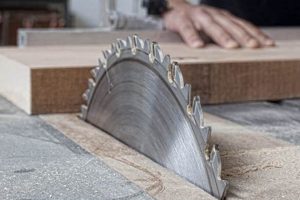
Selecting an optimal handheld power saw for detail-oriented carpentry involves considering several crucial attributes. These saws, designed for precision cuts in wood, differ significantly from those used for rough framing or demolition. A model considered suitable for this purpose exhibits characteristics such as a high blade speed (RPM), a thin kerf blade, and mechanisms for reducing vibration and tear-out. An example would be a cordless saw featuring variable speed control coupled with a blade specifically designed for fine crosscuts in hardwood.
The correct tool choice significantly impacts the quality and efficiency of woodworking projects. Utilizing a saw not designed for delicate work can result in splintering, inaccurate cuts, and wasted material. Historically, hand saws were the only option for this type of work, demanding significant skill and physical effort. The introduction of powered saws tailored for precise cuts dramatically improved both speed and accuracy, making fine woodworking more accessible and less physically demanding.
The following sections will delve into specific features to evaluate when choosing a suitable saw. Blade selection, motor power, dust collection capabilities, and ergonomic design will be examined to provide a comprehensive understanding of what constitutes an appropriate tool for achieving professional-level results in woodworking applications.
Enhancing Precision in Woodworking
Achieving professional-grade results in woodworking necessitates careful consideration of various factors beyond merely selecting the appropriate tool. The following tips provide insights into optimizing its use for enhanced precision and minimized material waste.
Tip 1: Optimize Blade Selection: The blades tooth count and grind angle directly impact cut quality. Employ blades with a higher tooth count (60T or greater) and an ATB (Alternating Top Bevel) grind for cleaner, less splintered edges when crosscutting hardwoods.
Tip 2: Implement Anti-Chip Measures: Applying painter’s tape along the intended cut line on both faces of the material minimizes tear-out, particularly when working with veneer plywood or delicate hardwoods. Scoring the cut line with a sharp knife prior to sawing offers an additional layer of protection.
Tip 3: Prioritize Slow and Steady Feed Rate: Forcing the saw through the wood increases the risk of blade deflection and splintering. Maintain a slow, consistent feed rate, allowing the blade to cleanly sever the wood fibers without excessive pressure.
Tip 4: Ensure Proper Blade Alignment: Verify that the blade is perfectly perpendicular to the saw’s base. Misalignment can lead to angled cuts and increased friction, diminishing cut quality and potentially damaging the motor.
Tip 5: Employ a Guide Rail System: Utilizing a guide rail ensures perfectly straight cuts, especially over longer distances. This is crucial for projects requiring precise dimensions and minimizing discrepancies.
Tip 6: Practice Plunge Cutting Techniques: When performing plunge cuts, gradually lower the blade into the material, maintaining a firm grip and controlled movement. Avoid abrupt plunges, which can cause kickback or blade damage.
Tip 7: Maintain a Sharp Blade: A dull blade necessitates increased force, leading to inaccurate cuts and potential burning. Regularly inspect the blade for sharpness and replace or sharpen it as needed.
Adhering to these guidelines will significantly enhance the precision and quality of woodworking projects. The consistent application of these techniques minimizes material waste, improves accuracy, and contributes to a more efficient and enjoyable woodworking experience.
The next section will explore specific saw models known for their suitability in detail-oriented woodworking applications.
1. Blade Quality

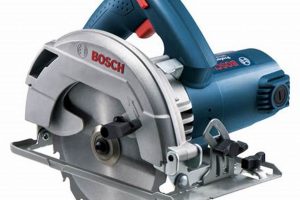
The inherent suitability of a circular saw for detail-oriented carpentry hinges significantly on the quality of its blade. The blade’s material composition, tooth geometry, and manufacturing precision directly influence the smoothness and accuracy of cuts. Inferior blade quality results in splintering, tear-out, and increased material waste, rendering the saw unsuitable for delicate woodworking tasks. A blade crafted from high-carbon steel or carbide-tipped materials, possessing a high tooth count (typically 60 or more teeth), and featuring an appropriate grind angle (such as an ATB – Alternating Top Bevel) is essential for achieving clean, precise cuts in hardwoods and delicate materials like veneers. For example, utilizing a general-purpose blade designed for framing lumber on a piece of cherry wood will almost invariably produce unacceptable results, regardless of the saw’s motor power or other features.
Furthermore, blade quality impacts the saw’s operational efficiency and longevity. A well-made blade retains its sharpness longer, reducing the frequency of replacements and maintaining consistent performance over time. Conversely, a low-quality blade dulls quickly, requiring more frequent sharpening or replacement, increasing operational costs and potentially damaging the saw’s motor due to increased friction and strain. The blade’s kerf (the width of the cut it produces) is also crucial. A thinner kerf blade removes less material, requiring less power from the motor and reducing the likelihood of kickback. This is particularly important when working with expensive hardwoods where minimizing waste is paramount.
In summary, blade quality is not merely an ancillary consideration but a fundamental determinant of a circular saw’s suitability for precision woodworking. Investing in high-quality blades designed for specific applications is crucial for achieving professional-level results, minimizing material waste, and ensuring the longevity and efficient operation of the saw itself. Selecting a subpar blade negates the benefits of other potentially desirable saw features, highlighting the blade as a critical component in the pursuit of a suitable cutting tool.
2. Motor Precision

Motor precision is a cornerstone element of any circular saw designated for detail-oriented woodworking. It dictates the stability and consistency of blade rotation, directly influencing the accuracy and smoothness of cuts. A motor lacking precision introduces unwanted vibrations and speed fluctuations, leading to splintering, uneven edges, and potential inaccuracies in the final product. Therefore, achieving the designation of a woodworking tool that is deemed the “best” is inextricably linked to motor capabilities.
The impact of motor precision is readily apparent in various woodworking scenarios. Consider the task of creating intricate inlays. A motor that surges or stalls even momentarily disrupts the blade’s trajectory, resulting in imperfections that compromise the inlay’s fit and aesthetic appeal. Similarly, when cutting dados or rabbets, precise motor control is vital for maintaining consistent depth and width, ensuring proper joint construction. Motors featuring electronic feedback systems that maintain constant speed under varying loads are particularly beneficial, providing enhanced stability and minimizing the risk of deviations.
In conclusion, motor precision is not merely a desirable attribute but a fundamental requirement for a handheld saw intended for detail work. Its influence on cut quality, dimensional accuracy, and overall project success cannot be overstated. Understanding the significance of motor precision allows woodworkers to make informed purchasing decisions, selecting tools that can consistently deliver the high-quality results demanded by fine woodworking projects. The pursuit of tools offering improved motor stability presents a continuing challenge, with manufacturers striving to provide tools that meet demanding woodworking requirements.
3. Vibration Control
Vibration control is a critical element in the performance and suitability of any circular saw intended for precision woodworking. Excessive vibration compromises accuracy, increases operator fatigue, and can negatively impact the quality of the finished product. A saw designed for delicate work must, therefore, incorporate effective mechanisms to mitigate vibration.
- Impact on Cut Precision
Excessive vibration directly translates to reduced control during the cutting process. The blade’s stability is compromised, leading to inconsistencies in cut depth, deviations from the intended line, and an increased risk of splintering, especially when working with hardwoods. A saw exhibiting minimal vibration allows for smoother, more precise cuts, essential for achieving the tight tolerances demanded by fine woodworking projects.
- Operator Fatigue and Safety
Prolonged exposure to vibration contributes significantly to operator fatigue. This can reduce concentration, impair judgment, and increase the likelihood of accidents. Furthermore, chronic vibration exposure can lead to hand-arm vibration syndrome (HAVS), a debilitating condition affecting nerves, blood vessels, and joints. Saws equipped with vibration-dampening features, such as rubberized grips and counterbalancing mechanisms, mitigate these risks, promoting safer and more comfortable operation.
- Design and Dampening Technologies
Several design features contribute to effective vibration control. These include precision-machined components, optimized motor mounting systems, and the incorporation of dampening materials within the saw’s housing and handles. Some saws employ active vibration control (AVC) systems, which use electronic sensors and actuators to counteract vibration in real-time. These technologies are critical in saws aimed at precision tasks.
- Material Considerations
The materials used in the saw’s construction play a role in vibration dampening. Dense, rigid materials, such as cast aluminum, tend to exhibit lower vibration characteristics than lighter, more flexible materials. Furthermore, the use of vibration-absorbing materials in the handle and grip areas can significantly reduce the transmission of vibration to the operator’s hands. The tool’s mass, coupled with strategically placed dampening elements, collectively contribute to a reduction in felt vibration.
In conclusion, vibration control is a paramount consideration when evaluating a circular saw for precision woodworking applications. Effective vibration mitigation enhances cut quality, reduces operator fatigue, and promotes safer working conditions. Saws incorporating advanced vibration-dampening technologies represent a significant advantage in achieving the exacting standards required for successful woodworking projects.
4. Dust Extraction

Effective dust extraction is an indispensable feature of a circular saw designed for detail-oriented woodworking. The process of cutting wood generates substantial amounts of airborne particulate matter, presenting both health and operational challenges. Integrating efficient dust collection systems directly contributes to a safer, cleaner, and more precise woodworking experience.
- Health and Safety Considerations
Wood dust poses significant respiratory health risks. Prolonged exposure can lead to irritation of the airways, allergic reactions, and, in some cases, more severe conditions such as occupational asthma. A well-designed dust extraction system captures airborne particles at the source, minimizing inhalation risks and promoting a healthier work environment. This is of particular importance in enclosed workshops where dust accumulation is more pronounced. An example would be the integration of a dust port directly into the saw’s housing, allowing for connection to a shop vacuum or dedicated dust collector.
- Improved Visibility and Cut Accuracy
Accumulated sawdust obscures the cut line, hindering precise alignment and increasing the potential for errors. Effective dust extraction removes debris from the immediate vicinity of the blade, maintaining clear visibility of the workpiece and the intended cut path. This is crucial for achieving accurate cuts, especially when working with intricate designs or following precise markings. The ability to clearly see the cutting line allows for more confident and controlled saw operation.
- Equipment Longevity and Maintenance
Sawdust accumulation can infiltrate the internal mechanisms of the tool, potentially causing damage to the motor, bearings, and other critical components. Dust extraction minimizes the build-up of debris, reducing the risk of mechanical failure and extending the lifespan of the saw. Regular cleaning of the tool, coupled with effective dust collection during operation, is essential for maintaining optimal performance and reliability. An example is the integration of sealed components in conjunction with a robust dust port to evacuate particles away from critical areas.
- Workshop Cleanliness and Efficiency
A clean workshop promotes efficiency and reduces the time spent on post-project cleanup. Dust extraction minimizes the spread of sawdust, preventing its accumulation on surfaces and in the air. This creates a more pleasant and organized workspace, allowing the woodworker to focus on the task at hand. The use of a dust collection system allows one to spend less time cleaning and more time on woodworking tasks.
The effectiveness of the dust extraction system is a key differentiator among circular saws. Models equipped with well-designed dust ports, efficient collection shrouds, and compatibility with standard vacuum hoses offer a significant advantage in maintaining a clean and safe woodworking environment. The integration of efficient dust extraction systems directly influences the overall user experience and the quality of finished projects.
5. Cut Depth

Achieving optimal results in detailed woodworking necessitates precise control over the depth of cut. A suitable handheld power saw for this purpose exhibits mechanisms that allow for accurate and repeatable depth adjustments. Insufficient cut depth capabilities restrict the tool’s versatility, while the inability to precisely control the depth leads to inaccurate joinery and wasted material. The relationship between controlled cutting and the overall designation of suitability is therefore inextricably intertwined.
Consider the creation of a precisely fitted rabbet or dado joint. A saw lacking precise depth adjustment necessitates multiple passes or manual paring to achieve the desired dimensions, increasing the risk of error and compromising the joint’s integrity. In contrast, a saw with incremental depth settings, coupled with a clear and easily readable depth gauge, enables the creation of accurate joints in a single pass, minimizing the risk of errors. For example, when creating a tongue and groove joint, uniformity in the groove depth is paramount. A consistent cut depth guarantees the two pieces mate properly.
The control over depth defines its utility. A tool that fails to provide this is less effective for precision detail work. It is, therefore, a critical factor when evaluating whether a particular cutting tool meets the needs of a woodworker who requires careful detailing and accuracy in joint construction. The ability to make repeatable, accurate depth adjustments differentiates a general-purpose tool from one tailored to the demands of fine woodworking.
6. Ergonomics

Ergonomics plays a pivotal role in defining a handheld power saw as optimally suited for intricate woodworking. The design of the tool’s interface with the operator significantly affects comfort, control, and safety, all of which directly impact the quality of the finished product. A poorly designed saw can lead to fatigue, reduced accuracy, and an increased risk of injury, negating the benefits of otherwise desirable features.
- Handle Design and Grip
The shape, material, and texture of the handle are crucial for providing a secure and comfortable grip. Handles should be designed to accommodate a variety of hand sizes and allow for multiple gripping positions, reducing strain during prolonged use. Materials with vibration-dampening properties further enhance comfort and control. An example is a handle with a contoured shape and rubber overmold, minimizing slippage and reducing vibration transmission. Improper handle design can reduce the tool’s overall effectiveness.
- Weight and Balance
The overall weight and balance of the saw influence maneuverability and operator fatigue. A saw that is too heavy or poorly balanced requires more effort to control, increasing the risk of errors and muscle strain. Ideally, the saw should be lightweight enough to be easily manipulated, yet heavy enough to provide stability during cutting. Weight distribution should be optimized to minimize wrist and arm fatigue. A balanced tool allows for better control.
- Control Placement and Accessibility
The placement and accessibility of controls, such as the power switch, blade depth adjustment, and bevel adjustment, directly impact the user’s efficiency and safety. Controls should be located within easy reach, allowing for quick and intuitive adjustments without interrupting the cutting process. Clear and legible markings enhance accuracy and reduce the risk of errors. Placement directly relates to ease of use.
- Vibration Dampening
Effective vibration dampening minimizes the transmission of vibrations to the operator’s hands and arms, reducing fatigue and the risk of hand-arm vibration syndrome (HAVS). This can be achieved through the use of vibration-absorbing materials in the handle and housing, as well as through internal design features that minimize vibration at the source. Reduction in vibrations enables more stable control.
In conclusion, ergonomics are not merely an aesthetic consideration but a fundamental aspect of a woodworking power tool. A saw designed with careful attention to ergonomics enhances operator comfort, improves control, and promotes safety, ultimately contributing to higher-quality workmanship and increased productivity. When evaluating a circular saw for fine woodworking, attention should be given to how the design elements work to enhance the capabilities.
Frequently Asked Questions
The following section addresses common inquiries regarding the selection and application of circular saws for detail-oriented carpentry. These questions are intended to provide clarity and guidance in choosing an appropriate tool.
Question 1: What blade tooth count is optimal for minimizing splintering in hardwoods?
Blades with a tooth count of 60 or higher, particularly those featuring an ATB (Alternating Top Bevel) grind, are recommended for minimizing splintering when cutting hardwoods. The higher tooth count produces a cleaner cut by severing wood fibers more precisely.
Question 2: How does motor amperage relate to cut quality in dense materials?
Higher motor amperage generally indicates greater power and torque, enabling the saw to maintain consistent blade speed when cutting dense hardwoods. This reduces the likelihood of stalling and ensures a smoother, more accurate cut.
Question 3: Are cordless circular saws suitable for precision woodworking, or are corded models preferable?
Cordless circular saws offer greater portability, but their suitability depends on battery capacity and motor performance. High-voltage cordless models with brushless motors can provide comparable power to corded saws, making them a viable option for precision work, provided the battery is adequately charged.
Question 4: How important is vibration control in achieving accurate cuts?
Vibration control is crucial for maintaining stability and control during the cutting process. Excessive vibration reduces accuracy and increases the risk of errors, particularly when working with intricate designs or delicate materials. Saws with vibration-dampening features are highly recommended.
Question 5: What role does dust extraction play in precision woodworking applications?
Effective dust extraction improves visibility of the cut line, reduces the risk of respiratory irritation, and minimizes the accumulation of sawdust on the workpiece. This enhances accuracy and promotes a cleaner, safer working environment.
Question 6: How does the saw’s weight and balance affect its suitability for detail-oriented tasks?
A well-balanced saw that is not excessively heavy is easier to control and maneuver, reducing operator fatigue and improving accuracy. The saw should feel comfortable and stable in the hand, allowing for precise control over the cutting process.
Choosing a saw that excels in the above areas is key to success. Each factor listed plays a part in overall quality of cut and the ease of use.
The next article section will discuss particular brands and models and what features make them stand out.
Best Circular Saw for Fine Woodworking
This exploration has highlighted the critical attributes defining the “best circular saw for fine woodworking.” Blade quality, motor precision, vibration control, dust extraction, cut depth, and ergonomics each contribute significantly to a tool’s suitability for detail-oriented tasks. A comprehensive understanding of these factors enables informed decision-making, ensuring the selected tool aligns with the demands of precision carpentry.
The pursuit of excellence in woodworking demands careful attention to the tools employed. Continued advancements in saw technology promise further refinements in precision and control. Those engaging in fine woodworking should remain informed about these developments, continually seeking tools that enhance their craft and elevate the quality of their work.