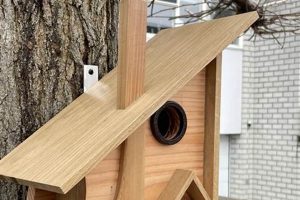
Smaller-scale construction endeavors in woodworking, often achievable within a single day or weekend, offer tangible, completed results in a compressed timeframe. Examples include crafting small boxes, picture frames, or simple shelves. These undertakings contrast with larger, more complex builds requiring extended periods and advanced skills.
The significance of these expedited builds lies in their accessibility to beginners and their role in skill development. They provide immediate gratification and a low-risk environment for experimenting with different techniques and materials. Historically, simplified woodworking tasks have been essential in both domestic crafts and introductory trade skills training.
The following sections will delve into specific project ideas, essential tools, material considerations, and safety protocols for successfully executing small, time-efficient woodworking tasks. These elements will provide a foundation for undertaking more ambitious woodworking endeavors in the future.
Expedited Woodworking Endeavors
Optimizing the creation of smaller-scale wooden items requires careful planning and efficient execution. The following points outline practices to enhance the likelihood of successful project completion within a defined timeframe.
Tip 1: Prioritize Detailed Planning: Before commencing any physical work, develop a comprehensive plan. This includes accurate measurements, a clear understanding of required cuts, and a pre-determined assembly sequence. Doing so minimizes errors and wasted material.
Tip 2: Select Appropriate Wood: Opt for softwood species such as pine or poplar for preliminary projects. These materials are generally more workable, readily available, and cost-effective compared to hardwoods.
Tip 3: Utilize Pre-Dimensioned Lumber: Purchase lumber that is already close to the final dimensions. This reduces the amount of cutting and shaping required, saving time and effort.
Tip 4: Employ Power Tools Strategically: While hand tools have their place, judicious use of power tools like sanders and saws can significantly accelerate project completion. Ensure proper safety protocols are followed.
Tip 5: Apply Efficient Finishing Techniques: Consider fast-drying finishes such as oil-based or water-based polyurethanes. Avoid complex finishing procedures that require multiple coats and extended drying times.
Tip 6: Embrace Simplified Joinery: Utilize basic joinery methods such as butt joints, pocket hole joinery, or dowel joints. These techniques are relatively easy to execute and provide adequate strength for smaller projects.
Tip 7: Batch Process Components: When creating multiple identical parts, perform each step (e.g., cutting, sanding) on all components before moving on to the next stage. This “batch processing” approach enhances efficiency.
Effective time management, careful material selection, and the application of appropriate techniques are essential for successful, smaller woodworking output. These strategies will enable the completion of diverse creations within a reasonable time frame.
The subsequent section will provide a summary and closing remarks.
1. Simplified Designs and Expedited Woodworking

The employment of simplified designs is a foundational element in the domain of efficient woodworking endeavors. It directly influences project feasibility within constrained timeframes, and affects skill level required for execution, and material usage, therefore it is important to consider while engaging in smaller woodworking production runs.
- Reduced Complexity in Construction
Simplified designs inherently involve fewer individual components and less intricate joinery. This reduction in complexity translates directly into shorter assembly times and a lower likelihood of errors during construction. For example, a basic picture frame relying on mitered corners is simpler and faster to build than a frame utilizing complex mortise-and-tenon joints.
- Enhanced Accessibility for Novices
Less complicated designs are often more approachable for individuals with limited woodworking experience. Projects such as small boxes, coasters, or simple shelves require fewer specialized skills and tools, enabling beginners to achieve satisfactory results more quickly and with less frustration.
- Minimized Material Waste
Simplified designs often lead to more efficient utilization of wood. The straightforward nature of the project reduces the need for complex cuts and intricate shaping, thereby minimizing the potential for material waste. A simple rectangular coffee table, for instance, typically generates less waste than a table with curved legs and an irregular tabletop.
- Accelerated Finishing Processes
Designs with fewer intricate details and a smoother overall form often facilitate quicker and more uniform finishing. Simple surfaces are easier to sand, stain, and seal, which significantly reduces the overall project duration.
Simplified designs serve as a cornerstone of quick woodworking projects, enabling timely completion, promoting skill acquisition, and maximizing material usage. The deliberate choice of uncomplicated forms significantly enhances the feasibility and appeal of smaller woodworking tasks, particularly for those with limited time or experience.
2. Efficient Joinery

The relationship between efficient joinery techniques and expedited woodworking tasks is directly proportional. The selection and application of appropriate joinery methods significantly impacts the overall time required for project completion. Efficient joinery, in this context, prioritizes speed of execution without compromising structural integrity, allowing for faster assembly and reducing the need for complex clamping and drying procedures. A butt joint secured with screws, for example, is substantially quicker to implement than a traditional mortise and tenon joint, making it suitable for smaller, time-sensitive endeavors like building simple storage boxes or shelving units.
The strategic use of pocket hole joinery presents another practical illustration of this principle. Pocket holes enable rapid and robust connections using self-tapping screws, minimizing the need for intricate cutting and fitting. This method is particularly effective for constructing face frames for cabinets or assembling table aprons, where structural stability is essential, but aesthetic concealment of the joinery is less critical. Similarly, the use of dowel joints, facilitated by doweling jigs, offers a balance between speed and strength, providing a reliable connection for edge-to-edge board lamination or creating simple frame assemblies.
In summary, the integration of efficient joinery techniques is paramount for the successful execution of smaller woodworking endeavors within limited time constraints. The careful selection of joinery methods, balanced against considerations of structural requirements, aesthetic preferences, and skill level, directly influences project duration and overall outcome. Challenges may arise in selecting the optimal joinery method for specific applications, necessitating a thorough understanding of the strengths and limitations of each technique. Further exploration into specific joinery techniques and their practical applications will undoubtedly enhance woodworking proficiency and efficiency.
3. Pre-cut Materials

The utilization of pre-cut materials is a crucial element in achieving expediency in woodworking. The availability of lumber and components prepared to specified dimensions significantly reduces the time and effort associated with initial project stages, streamlining the construction process. This approach is particularly advantageous in the context of smaller woodworking tasks.
- Reduced Initial Labor Investment
Pre-cut materials eliminate the need for extensive measuring, marking, and cutting procedures. This reduction in initial labor investment allows individuals to focus on assembly and finishing, accelerating the overall project timeline. For instance, purchasing pre-cut shelving components allows for immediate assembly, bypassing the need to dimension raw lumber.
- Enhanced Precision and Accuracy
Materials cut by professional suppliers often exhibit greater precision and accuracy compared to those cut using basic home workshop equipment. This enhanced precision minimizes the need for adjustments during assembly, reducing the potential for errors and ensuring a higher quality finished product. A pre-cut cabinet door, for example, will likely have more accurate dimensions and consistent angles than one cut by hand, leading to a better fit and finish.
- Mitigation of Material Waste
Pre-cut material suppliers optimize cutting patterns to minimize waste, reducing the environmental impact and lowering material costs. This is particularly beneficial for small projects where purchasing full-sized lumber boards may result in significant unusable offcuts. Ordering pre-cut components for a small box, for instance, avoids the waste associated with purchasing a larger board and cutting it down to size.
- Facilitation of Portable Woodworking
Pre-cut materials enhance the feasibility of woodworking in limited spaces or on-the-go. The absence of cutting equipment allows for project assembly in areas without adequate ventilation or power outlets. This is useful for woodworking classes, community projects, or individuals with limited workshop space.
The integration of pre-cut materials into smaller woodworking tasks streamlines project execution, improves precision, reduces waste, and facilitates woodworking in diverse environments. This approach is particularly valuable for beginners and individuals seeking to complete projects efficiently.
4. Rapid finishing

Rapid finishing techniques are crucial to woodworking endeavors prioritized for their expediency. The ability to quickly and effectively apply protective and aesthetic coatings directly correlates to the viability of completing such projects within their intended short timeframes. The selection of appropriate finishing methods directly impacts project duration and overall quality.
- Single-Coat Applications
Finishes requiring only a single application significantly reduce the overall project timeline. Examples include certain oil finishes and some specialized stains with built-in sealers. This is in direct contrast to multi-coat systems, where each coat requires significant drying time and often, intermediate sanding. The use of a single-coat polyurethane, for example, provides protection with minimal delay, allowing the project to proceed to completion swiftly.
- Fast-Drying Formulas
Formulations engineered for rapid drying are essential. Lacquers, shellacs, and some water-based finishes are designed to dry within a few hours, rather than the extended periods required by traditional oil-based paints or varnishes. This allows for faster handling and quicker turnaround times on projects. An example would be using a pre-catalyzed lacquer that dries to the touch within 30 minutes, enabling multiple coats to be applied in a single day.
- Simplified Application Methods
Application methods that minimize the need for intricate techniques or specialized equipment also contribute to rapid finishing. Spray application, for instance, can cover large surfaces quickly and evenly, reducing the time spent on brushing or wiping. Similarly, the use of pre-mixed stains eliminates the time required for blending and color matching. A project might utilize spray-on clear coat to achieve a uniform finish on a small table, saving hours compared to hand-applied varnish.
- Minimal Surface Preparation
Finishes that require less extensive surface preparation are desirable. Self-leveling formulas and those designed to adhere to slightly imperfect surfaces reduce the amount of sanding and filling needed prior to application. This can be achieved with a gel stain that works well without extensive sanding, shortening the preparation process. Such a finish will adhere to a variety of wood species, reducing the amount of sanding and preparation involved.
These factors combine to create a finishing process tailored for efficiency. The selection of a rapid finishing approach must consider the desired aesthetic, level of protection, and application constraints, ensuring that both time and quality are effectively balanced within the demands of expedited woodworking tasks. Alternative approaches may involve film finishes, for example, that are even faster.
5. Essential Tools
The selection and application of appropriate tools are paramount for the efficient execution of smaller-scale woodworking projects. The availability and proficiency in using specific tools directly impacts project feasibility and completion time, making tool selection a critical factor.
- Measuring and Marking Tools
Accurate measurements and precise markings are fundamental to woodworking success. Tools such as measuring tapes, rulers, squares, and marking gauges ensure that cuts are accurate and components fit together properly. In expedited projects, precision minimizes errors and rework, thereby saving time. For example, using a combination square to mark consistent angles for mitered corners ensures accurate cuts, preventing misalignment during assembly.
- Cutting Tools
The selection of cutting tools is contingent upon the project’s requirements and the materials being used. Hand saws, such as dovetail saws or crosscut saws, provide precision for intricate cuts. Power saws, including circular saws and jigsaws, offer speed and efficiency for larger cuts. For simpler woodworking production runs, a sharp utility knife with a metal rule will often suffice for quick straight cuts. The appropriate cutting tool, whether hand-powered or electric, enhances both speed and accuracy, influencing project completion.
- Fastening Tools
Efficient fastening methods are vital for securing components together. Screwdrivers, drills, and nail guns facilitate rapid assembly. Clamps are essential for holding pieces in place while adhesives cure or fasteners are driven. The selection of appropriate fasteners, such as screws or nails, depends on the specific joinery method and the desired level of strength. Pocket hole jigs, for example, provide a quick and strong method for joining wood, but only with the proper fasteners. This method is fast and reliable.
- Surface Preparation Tools
Proper surface preparation enhances the aesthetic appeal and longevity of finished projects. Sandpaper, sanding blocks, and power sanders are used to smooth surfaces, remove imperfections, and prepare wood for finishing. Smoothing planes are utilized for finer surface smoothing. The selection of appropriate grit sandpaper and sanding techniques is crucial for achieving a smooth, even surface in the least amount of time, before applying a final coating.
The integration of the described tools supports streamlined project execution, improves precision, and enhances overall project quality. These choices are essential for individuals seeking to complete projects efficiently. A solid work bench is essential for holding and securing materials as well.
6. Material choice

The selection of materials exerts a substantial influence on the efficiency and feasibility of woodworking projects intended for rapid completion. Appropriate material selection reduces processing time, simplifies construction, and enhances the overall likelihood of success within limited timeframes. Therefore, this critical decision influences project outcomes significantly.
- Workability and Ease of Machining
Softer wood species, such as pine, poplar, and basswood, exhibit greater workability compared to hardwoods. Their lower density translates to easier cutting, shaping, and sanding, reducing the time required for these essential processes. For instance, constructing a small box from pine necessitates less effort than using oak, directly impacting project duration. Using plywood may also reduce overall construction time, depending on the project.
- Material Cost and Availability
Cost-effective and readily available materials minimize delays associated with sourcing and procurement. Common softwood lumber is typically less expensive and easier to obtain than exotic hardwoods. This streamlined acquisition process contributes to faster project starts and reduced overall completion times. Using reclaimed materials may be another time-saving material choice.
- Finishing Characteristics
Materials that readily accept finishes and require minimal surface preparation expedite the finishing process. Certain woods, like pine, absorb stains evenly and require less sanding than others. Selecting materials with favorable finishing characteristics reduces the time spent on sanding, staining, and sealing, further shortening the overall project timeline. Alternatively, selecting pre-finished materials saves labor.
- Structural Suitability
The material should be structurally suitable for the intended application, minimizing the need for complex joinery or reinforcement. For example, constructing a small picture frame from a thin, stable wood like poplar avoids the need for intricate joinery techniques required for heavier, more prone-to-warping materials. The use of engineered woods may reduce issues of stability. The use of lightweight composite board could also shorten the project duration in some instances.
The strategic selection of appropriate materials is crucial for realizing the objectives of projects completed for their expediency. Considering factors such as workability, cost, finishing characteristics, and structural suitability ensures that projects remain within the constraints of both time and skill, leading to successful and timely outcomes. Consideration may also be given to working with plastics rather than wood.
7. Safety Protocols
Adherence to safety protocols assumes heightened importance within the context of expedited woodworking tasks. The compressed timelines inherent in these undertakings can inadvertently foster conditions conducive to accidents if safety procedures are not diligently observed. The cause-and-effect relationship is clear: inadequate safety measures increase the likelihood of injury, while consistent safety practices mitigate risk. For example, the hurried use of power tools without proper eye protection can result in immediate and severe injury from flying debris. Consequently, safety protocols are not merely peripheral considerations but fundamental components of efficient woodworking, ensuring the well-being of the individual and the successful completion of the project.
Consider the case of an individual rushing to complete a small shelving project. In an attempt to save time, the individual forgoes the use of push sticks when operating a table saw. This deviation from established safety guidelines results in a severe laceration to the hand, requiring medical attention and halting the project entirely. Conversely, another individual, undertaking the same project, meticulously adheres to safety protocols, including the use of push sticks, proper ventilation, and appropriate personal protective equipment. This disciplined approach enables the individual to complete the project safely and efficiently, demonstrating the practical significance of integrating safety into every stage of the woodworking process.
In summary, the integration of rigorous safety protocols is not an impediment to efficient woodworking but rather an essential element for ensuring its safe and successful execution. Prioritizing safety through diligent adherence to established procedures, the consistent use of personal protective equipment, and a commitment to responsible tool handling minimizes risk, safeguards the well-being of the woodworker, and ultimately facilitates the completion of expedited woodworking tasks within acceptable parameters. The challenges associated with maintaining safety standards under time constraints can be addressed through proactive planning, disciplined execution, and a relentless focus on risk mitigation.
Frequently Asked Questions
The following section addresses common inquiries and misconceptions regarding the efficient completion of smaller-scale woodworking projects.
Question 1: Is specialized equipment necessary for smaller-scale woodworking production runs?
Specialized equipment is not strictly essential. Many tasks can be accomplished with hand tools, although power tools can significantly reduce completion time. The specific tools required depend on the project’s complexity and material choice.
Question 2: What constitutes an appropriate wood species for a time-sensitive woodworking endeavor?
Softwood species, such as pine or poplar, are generally preferred due to their workability and lower cost. However, the selection should also consider the project’s intended use and structural requirements.
Question 3: How can material waste be minimized during expedited woodworking tasks?
Careful planning, precise measurements, and the strategic use of pre-cut materials can significantly reduce waste. Optimizing cutting layouts also contributes to efficient material utilization.
Question 4: Is extensive woodworking experience required to undertake smaller-scale woodworking projects?
While prior experience is beneficial, many smaller woodworking tasks are accessible to beginners. Starting with simple projects and gradually increasing complexity promotes skill development.
Question 5: What are the most common safety hazards associated with smaller-scale woodworking operations?
Common hazards include cuts from sharp tools, injuries from power equipment, and exposure to airborne dust. Adherence to safety protocols and the use of personal protective equipment are essential.
Question 6: How does the selection of joinery techniques impact the overall project timeline?
Simplified joinery methods, such as butt joints or pocket hole joinery, expedite assembly compared to more complex techniques like mortise-and-tenon joints. The choice should balance speed with structural requirements.
Efficient planning, appropriate material selection, and diligent safety practices are key determinants in the successful execution of time-sensitive woodworking projects.
The next article section will provide a concise summary of key takeaways and future considerations.
Quick Woodworking Projects
This article has provided a detailed examination of quick woodworking projects, emphasizing factors critical to their successful and efficient completion. Efficient planning, appropriate material selection, strategic tool usage, and unwavering adherence to safety protocols have been identified as essential elements. Simplified designs, rapid finishing techniques, and the utilization of pre-cut materials were also presented as key strategies for optimizing time investment.
The ability to execute woodworking tasks expeditiously presents numerous benefits, from fostering skill development to enabling the rapid creation of functional and aesthetically pleasing objects. Continued exploration of innovative techniques and materials will further enhance the feasibility and accessibility of quick woodworking projects, benefiting both novice and experienced woodworkers alike. Mastering these fundamental concepts enables woodworkers to approach each task with efficiency and precision.