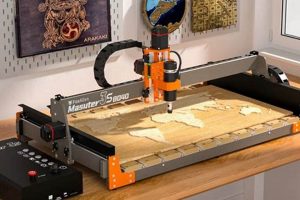
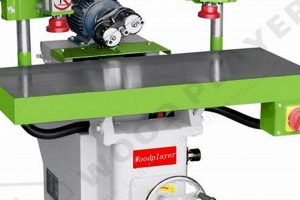
Computer Numerical Control (CNC) equipment engineered for processing wood offers precision and efficiency in cutting, carving, and shaping various timber materials. These automated systems translate digital designs into physical objects, executing complex patterns and intricate details with high accuracy. They are employed for crafting furniture components, decorative elements, cabinetry, and architectural moldings.
The adoption of these advanced tools streamlines production workflows, reduces material waste, and enables the creation of identical components repeatedly. Historically, woodworking relied heavily on manual techniques and skilled artisans. The introduction of automation has broadened design possibilities, increased production volume, and enhanced the consistency of finished products. This technological advancement significantly impacts industries from small-scale workshops to large-scale manufacturing facilities.
The subsequent sections will delve into factors influencing the selection of suitable wood-processing CNC equipment, including consideration of machine size, power, software capabilities, and application-specific features. A comparison of different models and their respective strengths and weaknesses will provide a framework for informed decision-making when procuring such systems.
Essential Considerations for Woodworking CNC Equipment
The following outlines critical factors to assess when selecting a CNC system for woodworking applications, ensuring optimal performance and return on investment.
Tip 1: Evaluate Material Capacity: Ascertain the maximum workpiece dimensions that the system will accommodate. This includes length, width, and thickness, aligning with the intended projects and avoiding limitations on design possibilities.
Tip 2: Assess Spindle Power: Match spindle power to the hardness and density of the wood species commonly processed. Higher horsepower enables efficient cutting of denser materials at faster feed rates.
Tip 3: Consider Software Compatibility: Ensure the system’s control software integrates seamlessly with existing CAD/CAM programs. User-friendliness and robust functionality are essential for efficient programming and operation.
Tip 4: Investigate Drive Systems: Examine the type of drive system used (e.g., servo motors, stepper motors). Servo motors offer greater precision and speed control, while stepper motors may be suitable for less demanding applications.
Tip 5: Review Dust Collection Integration: Effective dust collection is crucial for maintaining a clean and safe working environment, prolonging the lifespan of the equipment, and ensuring accurate cuts. Confirm compatibility with existing dust collection systems or budget for a dedicated unit.
Tip 6: Research Training and Support: Evaluate the level of training and technical support offered by the manufacturer or vendor. Comprehensive training can minimize the learning curve, while responsive support is vital for troubleshooting issues.
Tip 7: Analyze Accuracy and Repeatability: Scrutinize the system’s specified accuracy and repeatability figures. These parameters directly impact the precision and consistency of the finished products.
Careful consideration of these factors is paramount to ensuring the procured woodworking CNC equipment aligns with the specific requirements of the application, yielding high-quality results and efficient production.
The following sections will address maintenance schedules and troubleshooting strategies for optimum longevity and performance.
1. Precision

Precision is a cornerstone characteristic in evaluating and selecting Computer Numerical Control (CNC) equipment intended for woodworking. The degree of accuracy with which a machine executes programmed toolpaths directly correlates to the quality, fit, and finish of the resulting wooden components.
- Dimensional Accuracy
Dimensional accuracy refers to the CNC machine’s ability to consistently produce parts that adhere precisely to specified dimensions. Deviations from these dimensions, even in fractions of a millimeter, can lead to assembly issues, structural weakness, or aesthetic flaws in the final product. In the context of crafting furniture, for example, precise joinery is crucial for structural integrity and visual appeal.
- Surface Finish
The quality of the surface finish produced by the CNC machine significantly impacts the need for secondary sanding or finishing operations. Higher precision translates to smoother surfaces with minimal tooling marks, reducing labor costs and ensuring a consistent aesthetic. Intricate carvings and detailed relief work demand machines capable of delivering a refined surface finish.
- Repeatability
Repeatability is the machine’s ability to consistently produce identical parts over multiple runs. This is particularly important in mass production scenarios where interchangeability and uniformity are critical. In cabinet making, for example, repeatable precision ensures that doors and drawers fit seamlessly within the overall design.
- Toolpath Following
Precise toolpath following refers to the CNC machine’s ability to accurately follow the programmed path provided by the CAD/CAM software. Aberrations in toolpath following can lead to inaccuracies in complex curves, intricate shapes, and detailed engravings. A machine with superior toolpath following capabilities is essential for executing designs with high levels of complexity.
The interplay of dimensional accuracy, surface finish, repeatability, and toolpath following directly determines the overall precision achievable with woodworking CNC equipment. These factors collectively define the suitability of a machine for specific woodworking applications, ranging from mass-produced components to intricate custom designs. Investing in equipment with high precision capabilities is a strategic decision that yields superior output quality and operational efficiency.
2. Material Capacity

Material capacity defines a fundamental constraint on the capabilities of Computer Numerical Control (CNC) equipment within woodworking applications. It dictates the maximum dimensions and physical properties of the workpieces that can be processed, profoundly influencing the range of projects that a machine can undertake. Effective consideration of material capacity is paramount when assessing the suitability of equipment for specific woodworking tasks.
- Maximum Workpiece Dimensions
The physical dimensions of the work area, encompassing length, width, and height (or thickness), directly determine the largest workpiece the machine can accommodate. This limitation affects the creation of large furniture components, architectural millwork, and other substantial wooden objects. Inadequate capacity necessitates multi-stage machining or limits the scope of potential projects.
- Z-Axis Travel and Material Thickness
The Z-axis travel dictates the maximum material thickness that can be processed. Insufficient Z-axis travel restricts the ability to cut or carve deep features or work with thick lumber stock. This is especially critical when creating three-dimensional carvings, intricate moldings, or performing deep pocketing operations. Machines with extended Z-axis capabilities offer greater design flexibility.
- Table Load Capacity
The table load capacity specifies the maximum weight the machine table can support without compromising accuracy or structural integrity. Exceeding this limit can lead to machine instability, reduced precision, and potential mechanical damage. Consideration of density and volume of wood is vital when machining large quantities of material or when working with dense hardwoods.
- Material Handling Systems
For automated production environments, material handling systems can extend the effective material capacity. Automated loading and unloading of stock allows processing of items larger than the machine’s table in a piece-wise manner. Sophisticated systems, such as rotary axis, allow for machining the sides of long pieces in a single operation.
The interconnectedness of maximum workpiece dimensions, Z-axis travel, table load capacity, and integration of material handling solutions form the framework of material capacity. Careful evaluation of these parameters ensures the selection of Computer Numerical Control (CNC) equipment that aligns precisely with the intended scope of woodworking applications, fostering operational efficiency and design versatility.
3. Software Integration

Effective software integration is a critical determinant of performance and efficiency when evaluating woodworking CNC equipment. The capacity of the CNC system to seamlessly interface with design software (CAD) and manufacturing software (CAM) directly impacts workflow efficiency, design complexity, and ultimately, product quality. Incompatibility or limitations in software integration introduce bottlenecks, increase programming time, and can restrict the realization of intricate designs. For example, a CAD/CAM package that cannot efficiently generate G-code for a particular machine will negate the advantages of that machine’s physical capabilities.
The selection of woodworking CNC equipment should involve a thorough assessment of software compatibility. This includes evaluating support for industry-standard file formats (e.g., DXF, DWG, STEP), ease of G-code generation, and the availability of post-processors tailored to the specific machine controller. A well-integrated software environment allows designers to focus on creative aspects rather than troubleshooting technical limitations. Cabinet design software, for example, should seamlessly translate designs into machine-readable code for optimized cutting and joinery, minimizing manual adjustments and reducing the risk of errors.
In summary, the relationship between software integration and high-performing woodworking CNC equipment is synergistic. A system’s physical capabilities are only fully realized when complemented by a software environment that facilitates efficient design translation, optimized toolpath generation, and seamless communication with the machine controller. Limitations in software integration create impediments to productivity, design complexity, and overall return on investment. Prioritizing comprehensive software compatibility is thus essential for organizations seeking to maximize the potential of their woodworking CNC equipment.
4. Spindle Power

Spindle power represents a critical specification when evaluating Computer Numerical Control (CNC) equipment for woodworking. It directly influences the machine’s ability to efficiently and effectively process various wood species and execute diverse cutting operations. Insufficient spindle power restricts material processing capabilities, limits achievable feed rates, and compromises surface finish quality.
- Material Hardness and Density
The hardness and density of the wood being processed significantly dictate the required spindle power. Hardwoods, such as maple, oak, and walnut, necessitate greater power compared to softwoods like pine or cedar. Insufficient power leads to reduced cutting speeds, increased tool wear, and potential stalling of the spindle. The ability to efficiently process a wide range of wood types is a defining characteristic of capable CNC equipment.
- Cutting Tool Diameter and Type
Larger diameter cutting tools and specialized cutters, such as those used for intricate carving or deep profiling, demand more spindle power. The resistance encountered by the tool increases exponentially with its diameter and complexity. Selecting the appropriate tool for a given operation, coupled with adequate spindle power, ensures clean cuts, optimal material removal rates, and prevents premature tool failure.
- Cutting Depth and Feed Rate
Deeper cuts and higher feed rates require greater spindle power to maintain consistent cutting performance. Attempting to exceed the spindle’s capacity results in reduced accuracy, poor surface finish, and potential damage to the workpiece or cutting tool. Optimizing cutting parameters, such as depth of cut and feed rate, in conjunction with appropriate spindle power, maximizes productivity and minimizes the risk of defects.
- Duty Cycle and Continuous Operation
The spindle’s duty cycle indicates its ability to operate continuously under load. A spindle with a low duty cycle may overheat and experience reduced performance during extended periods of operation. For high-volume production environments, it is essential to select a CNC machine equipped with a spindle designed for continuous operation and robust thermal management capabilities to maintain consistent performance over prolonged use.
Ultimately, a well-chosen spindle power rating directly correlates to the versatility, efficiency, and reliability of the woodworking CNC equipment. It is a determining factor in the machine’s ability to handle diverse project requirements and consistently deliver high-quality results. Systems equipped with appropriately sized, high-performance spindles represent a sound investment for woodworking operations seeking to optimize productivity and expand their capabilities.
5. Durability

Durability, in the context of woodworking CNC equipment, signifies the machine’s capacity to withstand prolonged use in demanding operational environments while maintaining precision and reliability. It is a core attribute that directly impacts the return on investment and long-term operational efficiency of such systems.
- Component Quality and Longevity
The quality of individual components, such as the spindle, drive system, and control electronics, profoundly influences the equipment’s overall lifespan. Higher-grade components, often sourced from reputable manufacturers, exhibit superior resistance to wear, fatigue, and environmental factors. For example, using precision ball screws instead of standard lead screws in the drive system enhances accuracy and extends service life. Selecting machines with robust components minimizes downtime and reduces the frequency of costly replacements.
- Structural Rigidity and Vibration Dampening
The structural integrity of the machine frame and gantry is critical for maintaining accuracy and minimizing vibration during high-speed cutting operations. A rigid frame, typically constructed from heavy-gauge steel or cast iron, provides a stable platform that resists deformation and absorbs vibrations. Insufficient rigidity leads to inaccuracies, poor surface finishes, and increased tool wear. Investing in equipment with a robust frame ensures consistent performance and prolonged accuracy.
- Environmental Protection and Corrosion Resistance
Woodworking environments often expose CNC equipment to dust, debris, and humidity, which can accelerate wear and corrosion. Protective measures, such as sealed enclosures for sensitive components, filtration systems, and corrosion-resistant coatings, mitigate these risks. A machine designed with adequate environmental protection requires less frequent maintenance and exhibits greater longevity in harsh working conditions. Choosing machines equipped with effective sealing and filtration mechanisms minimizes the ingress of contaminants and extends the lifespan of critical components.
- Maintenance Accessibility and Ease of Repair
The design of the machine should facilitate easy access to key components for routine maintenance and repairs. Accessibility simplifies tasks such as lubrication, filter replacement, and component inspection, minimizing downtime and reducing the cost of servicing. Modular designs and readily available spare parts further enhance maintainability. Machines engineered for straightforward maintenance and repair offer a lower total cost of ownership and extended operational lifespan.
Collectively, component quality, structural rigidity, environmental protection, and maintainability define the durability of woodworking CNC machines. Investing in equipment engineered for long-term resilience, reduces downtime, ensures consistent precision, and ultimately, maximizes the return on investment.
6. Support Network
The efficacy of woodworking Computer Numerical Control (CNC) equipment is intrinsically linked to the availability and quality of its support network. Superior machine capabilities are diminished without accessible technical assistance, comprehensive training resources, and readily available spare parts. The absence of a robust support infrastructure introduces operational vulnerabilities, increasing downtime and impeding productivity. For instance, a machine malfunction during a critical production run can result in significant financial losses if timely technical support is unavailable. A proactive and responsive support network, on the other hand, ensures swift resolution of technical issues, minimizing disruptions and maximizing the machine’s operational uptime. Many manufacturers now offer remote diagnostics and troubleshooting services, enabling technicians to identify and address problems remotely, further reducing downtime.
Comprehensive training programs play a crucial role in optimizing the utilization of woodworking CNC equipment. Adequate training empowers operators to effectively program, operate, and maintain the machine, maximizing its capabilities and minimizing the risk of errors. Furthermore, access to a readily available inventory of spare parts is essential for ensuring timely repairs and preventing prolonged downtime. A reliable parts supply chain allows for quick replacement of worn or damaged components, minimizing the impact of unexpected breakdowns. For example, companies using specialized tooling can mitigate machine downtime by keeping the most fragile component in stock and rapidly replaced.
In conclusion, a robust support network is not merely an ancillary service but an integral component of high-performing woodworking CNC equipment. Its presence ensures operational continuity, maximizes machine utilization, and safeguards against costly disruptions. A comprehensive evaluation of the support network, encompassing technical assistance, training programs, and parts availability, is essential for making informed decisions when acquiring CNC equipment for woodworking applications. The overall value of the equipment is, therefore, directly proportional to the quality and accessibility of its support infrastructure.
Frequently Asked Questions
This section addresses common inquiries regarding the selection, operation, and maintenance of Computer Numerical Control (CNC) equipment used in woodworking applications.
Question 1: What is the typical lifespan of woodworking CNC equipment?
The lifespan of woodworking CNC equipment depends significantly on factors such as build quality, usage intensity, and adherence to maintenance schedules. Well-maintained machines from reputable manufacturers can often provide reliable service for ten years or more. Regular inspections, lubrication, and timely replacement of worn components are crucial for maximizing longevity.
Question 2: How complex are the programming requirements for woodworking CNC equipment?
The complexity of programming varies depending on the intricacy of the desired output and the capabilities of the associated CAD/CAM software. Basic operations, such as cutting simple shapes, can be programmed with minimal training. However, creating complex three-dimensional carvings or intricate patterns necessitates more advanced programming skills. Familiarity with G-code and specialized CAM software is beneficial.
Question 3: What safety precautions are necessary when operating woodworking CNC equipment?
Operating woodworking CNC equipment requires strict adherence to safety protocols to prevent injuries. Essential precautions include wearing appropriate personal protective equipment (PPE), such as safety glasses and hearing protection. Ensuring proper dust collection to minimize airborne particles and implementing emergency stop mechanisms are also critical. Operators should receive thorough training on safe operating procedures and emergency protocols.
Question 4: What type of maintenance is required for woodworking CNC equipment?
Routine maintenance is crucial for maintaining the performance and extending the lifespan of woodworking CNC equipment. Key maintenance tasks include lubricating moving parts, inspecting and replacing worn components (such as cutting tools and belts), cleaning dust and debris, and verifying the accuracy of machine calibration. Adhering to the manufacturer’s recommended maintenance schedule is essential.
Question 5: How does the cost of woodworking CNC equipment compare to traditional woodworking machinery?
The initial investment in woodworking CNC equipment is typically higher than that of traditional woodworking machinery. However, CNC equipment offers significant advantages in terms of precision, repeatability, and automation, which can lead to increased productivity and reduced labor costs. Over the long term, the total cost of ownership may be comparable or even lower due to these efficiencies.
Question 6: What are the key differences between different types of woodworking CNC machines (e.g., routers, lasers, waterjets)?
Woodworking CNC routers utilize rotating cutting tools to remove material and create shapes. CNC lasers use a focused laser beam to cut or engrave wood. CNC waterjets employ a high-pressure stream of water, often mixed with abrasive particles, to cut through wood. Each technology offers distinct advantages and limitations in terms of cutting speed, material compatibility, precision, and surface finish. The selection of the appropriate technology depends on the specific application requirements.
Effective selection and operation of woodworking CNC equipment hinges on understanding its capabilities, limitations, and maintenance requirements. A thorough assessment of these factors ensures optimal performance and a solid return on investment.
The subsequent section will cover essential considerations for selecting vendors and securing financing options for woodworking CNC equipment.
Concluding Remarks on Precision Woodworking Systems
The preceding exploration has examined critical facets of effective wood-processing Computer Numerical Control (CNC) equipment. Key areas of focus have included precision metrics, material capacity thresholds, integration of design software, the impact of spindle power, the importance of equipment robustness, and the value of a comprehensive support framework. Each factor contributes significantly to the overall efficiency and output quality achievable with such systems.
The acquisition of advanced automated systems represents a substantial capital investment, necessitating thorough due diligence. Informed decision-making, grounded in a comprehensive understanding of specific operational requirements and a comparative analysis of available solutions, remains paramount. Prioritizing systems optimized for long-term reliability and adaptability will ensure sustainable operational benefits and enhanced production capabilities within the woodworking sector.