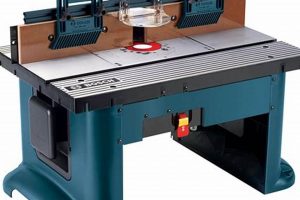
The integration of computer numerical control (CNC) technology with table routers has revolutionized the craft of woodworking. This automated system allows for precise and repeatable cutting, shaping, and carving of wood materials. An example of its application includes the creation of intricate furniture details, custom cabinetry components, and complex joinery.
The benefits of this technology are multifaceted. It significantly increases production speed and accuracy compared to traditional manual methods. Reduced material waste, enhanced design capabilities, and the ability to execute complex geometries are also notable advantages. Historically, this advancement represents a shift from artisanal craftsmanship to a blend of skill and automation, enabling greater efficiency and design freedom.
The subsequent sections will delve into the components of these automated woodworking systems, explore their diverse applications across various industries, and examine considerations for implementing this technology in a woodworking environment. Aspects such as software, tooling, and maintenance will be addressed to provide a comprehensive understanding.
Optimizing Performance with CNC Table Routers in Woodworking
The following guidelines address critical aspects of utilizing CNC table routers in woodworking to maximize efficiency, accuracy, and longevity of both equipment and finished products. Adhering to these points can significantly enhance operational effectiveness.
Tip 1: Material Selection and Preparation: The consistent quality and appropriate moisture content of wood are paramount. Variations can lead to inaccuracies in the cutting process. Thoroughly inspect all material for knots, warps, or internal stresses prior to processing.
Tip 2: Tooling Selection and Maintenance: Employ router bits specifically designed for CNC applications, emphasizing high-speed steel or carbide-tipped options. Regular inspection and sharpening of bits are essential for clean cuts and extended tool life. Dull tooling increases the risk of tear-out and machine strain.
Tip 3: Software Proficiency and Optimization: Master the CAM software associated with the system. Optimize toolpaths for efficient material removal and minimal machine movement. Consider climb milling versus conventional milling based on the specific wood type and desired finish quality.
Tip 4: Secure Workholding and Fixturing: Implement robust clamping mechanisms to prevent material movement during the cutting process. Vacuum tables, specialized jigs, or a combination thereof may be necessary, depending on part geometry and size. Inadequate workholding directly impacts accuracy and can damage tooling.
Tip 5: Regular Machine Calibration and Maintenance: Conduct routine calibration checks to ensure accurate axis movements and spindle alignment. Implement a preventative maintenance schedule that includes lubrication, cleaning, and inspection of critical components. Neglecting maintenance can lead to costly repairs and downtime.
Tip 6: Feed Rate and Spindle Speed Optimization: Experiment with feed rates and spindle speeds to find the optimal settings for each material and tooling combination. Excessive feed rates can cause tool breakage or poor cut quality, while insufficient speeds may lead to burning or excessive wear.
Tip 7: Dust Collection and Air Quality: Implement a comprehensive dust collection system to remove wood chips and debris generated during the cutting process. Adequate dust collection not only improves workplace safety but also prevents dust buildup that can interfere with machine operation and accuracy.
Implementing these strategies contributes significantly to streamlined workflow, reduced errors, and enhanced output quality within woodworking processes that utilize CNC table routers.
The subsequent segments of this exposition will explore application-specific workflows and advanced techniques to further enhance mastery of this technology.
1. Precision Cutting Capability

Precision cutting capability constitutes a core attribute of CNC table routers used in woodworking, directly influencing the quality and complexity of achievable outcomes. The automated control system enables the execution of intricate designs and precise cuts, minimizing deviations compared to manual methods. For instance, replicating identical components for a large cabinet project is significantly facilitated by the consistent accuracy offered.
The inherent precision is dependent on several factors, including the rigidity of the router frame, the accuracy of the drive system, and the resolution of the control software. Any compromises in these areas directly impact the achievable tolerances. The ability to create tight-fitting joinery, detailed carvings, and consistently dimensioned parts stems directly from the precision cutting capabilities of these automated systems.
The demand for high-precision components in woodworking necessitates the implementation of CNC table routers. The understanding and management of these variables becomes crucial for any woodworking shop looking to adopt CNC processes. The technology’s capacity for precise and repeatable cuts translates to reduced material waste, improved assembly times, and enhanced product quality, making it a cornerstone of modern woodworking practices.
2. Software Integration Complexity

The effective operation of computer numerical control (CNC) table routers in woodworking is inextricably linked to the complexity of its software integration. The software component is not merely a peripheral element but a crucial mediator between design intent and physical execution, determining the accuracy, efficiency, and versatility of the automated woodworking process.
- CAD/CAM Interoperability
The seamless transfer of designs from Computer-Aided Design (CAD) software to Computer-Aided Manufacturing (CAM) software is essential. Incompatibilities or limitations in data translation can introduce errors or restrict design complexity. For example, if a CAD model utilizes complex curves or parametric features not fully supported by the CAM software, the resulting toolpaths may be simplified or inaccurate, leading to deviations from the original design. The proficiency with which this exchange occurs directly impacts the system’s utility for creating intricate designs.
- Toolpath Generation Algorithms
CAM software employs algorithms to generate the precise toolpaths that the CNC router follows. The sophistication of these algorithms directly influences the efficiency of material removal, surface finish quality, and overall machining time. Advanced algorithms can optimize toolpaths to minimize unnecessary movements, avoid collisions, and maintain consistent cutting speeds. Inadequate toolpath generation can result in inefficient machining, increased tool wear, and compromised surface quality.
- Machine Control Interface
The software interface responsible for directly controlling the CNC table router’s movements and functions must be robust and reliable. This interface interprets the generated toolpaths and translates them into precise commands for the router’s motors and actuators. A poorly designed or unstable interface can lead to erratic machine behavior, inaccurate cuts, and even potential damage to the machine or workpiece. A streamlined and intuitive interface enhances operator control and reduces the risk of errors.
- Material Parameter Libraries
Effective software integration often includes libraries of material-specific parameters, such as optimal cutting speeds, feed rates, and tool selection guidelines. These parameters are crucial for achieving optimal results with different types of wood and composite materials. Lacking this feature, operators may have to rely on trial-and-error methods to determine appropriate settings, leading to inefficient operation and potential material waste. Comprehensive material libraries streamline the setup process and enhance the system’s versatility.
In summary, the “Software Integration Complexity” element of CNC table routers significantly influences the utility and practicality of this woodworking automation. Efficient CAD/CAM interoperability, precise toolpath algorithms, a reliable control interface, and readily available material libraries are cornerstones for achieving optimal performance in woodworking applications.
3. Material Compatibility Spectrum

The application of computer numerical control (CNC) table routers in woodworking is significantly defined by the material compatibility spectrum. The successful and efficient operation of these machines hinges on the ability to process a range of materials, each possessing unique properties that influence cutting parameters, tool selection, and achievable surface finishes. Incompatibility can lead to suboptimal results, tool damage, or even machine malfunction. The properties of the material dictate the necessary cutting speed, feed rate, and depth of cut. For example, hardwoods like oak require slower speeds and more robust tooling compared to softwoods like pine. Failure to adapt these parameters can result in burning, tear-out, or premature tool wear.
The range of materials that can be effectively processed is a key differentiator between various CNC table router systems. Some machines are specifically designed for processing softwoods and plastics, while others are equipped with the power and rigidity necessary to handle hardwoods, composites, and even non-ferrous metals. The selection of an appropriate machine must therefore consider the anticipated range of materials to be processed. Material selection extends from common lumber to manufactured sheet goods. MDF (Medium-Density Fiberboard), known for its consistent density, requires different tooling than plywood. Plywood’s layers can cause splintering if not properly supported. Plastics have unique challenges, requiring adjusted feed rates to avoid melting. Understanding material properties is thus critical to selecting the correct machine and utilizing the correct settings.
The effective utilization of CNC table routers requires a comprehensive understanding of the material compatibility spectrum. The inherent characteristics of the material exert a direct influence on the cutting process, thereby necessitating adjustments to tooling selection, machine parameters, and operational procedures. A mastery of material compatibility directly correlates with enhanced product quality, reduced material waste, and extended equipment lifespan. Failure to adequately address material properties can lead to costly mistakes and compromised outcomes. Therefore, a diligent approach to material evaluation and parameter optimization is paramount to successful CNC woodworking.
4. Operational Workflow Optimization

The strategic alignment of operational workflow with the capabilities of CNC table routers in woodworking directly influences productivity and profitability. The integration of this technology necessitates a re-evaluation of traditional processes to maximize its potential. Inefficient workflow negates the benefits of automation, resulting in underutilization of equipment and reduced return on investment. For example, if design, programming, and material preparation are not synchronized, the CNC router may sit idle, waiting for input. This delay reduces the system’s overall efficiency. The effectiveness of CNC table routers is contingent on streamlining all supporting activities.
Optimized workflow includes several key areas: design and programming, material handling, machine operation, and post-processing. Design and programming must be accurate and efficient to minimize errors and rework. Material handling needs to ensure timely delivery of prepared stock to the router and removal of finished parts. Skilled machine operators must understand the system’s capabilities and limitations. Post-processing includes sanding, finishing, and assembly. One case involves a cabinet manufacturer integrating a CNC router into their existing operation, only to find that their manual finishing process became a bottleneck. Consequently, investing in automated sanding equipment became essential to maintain the increased pace of production facilitated by the CNC router.
Ultimately, the successful integration of CNC table routers relies on optimizing the entire operational workflow. Challenges include the initial investment in equipment and training, the need for skilled personnel, and the disruption to existing processes. However, the potential benefits include increased production speed, improved accuracy, reduced material waste, and the ability to produce complex designs. Understanding and proactively addressing workflow considerations are therefore crucial for woodworking businesses seeking to leverage the advantages of CNC technology.
5. Automated Design Realization
The capacity for automated design realization is a defining characteristic of CNC table routers in woodworking. This capability transforms abstract design concepts into tangible, physical objects with minimal manual intervention. The connection lies in the symbiotic relationship between digital design and automated fabrication; the design, created in CAD software, serves as the blueprint for the CNC router’s actions. The precision and repeatability afforded by automated realization far surpasses that of manual woodworking techniques, especially when executing intricate or complex designs. Consider the creation of a custom guitar neck. Traditional methods require extensive hand-shaping, a process prone to error and variation. A CNC router, guided by a digital model, can produce identical neck profiles repeatedly, ensuring consistent playability and aesthetic quality.
The importance of automated design realization stems from its impact on efficiency, accuracy, and scalability. The automated fabrication significantly reduces the time required to produce individual components. Furthermore, the system minimizes the potential for human error, guaranteeing uniformity and reducing material waste. This is particularly beneficial in mass production scenarios. Real-world examples extend to cabinet making, furniture design, and even musical instrument manufacturing, wherein CNC technology enables the efficient production of highly customized products. In architectural millwork, for instance, CNC routers enable the production of complex moldings and trim pieces to exacting specifications, allowing for the faithful reproduction of historical designs or the creation of innovative new forms.
In summary, automated design realization is an indispensable component of CNC table routers in woodworking. Its capacity to translate digital designs into physical objects accurately and efficiently drives innovation and productivity. While challenges remain in terms of initial investment and the need for skilled programmers, the practical significance of automated design realization is undeniable, positioning CNC table routers as a cornerstone of modern woodworking practices.
Frequently Asked Questions
The following questions and answers address common inquiries regarding the implementation, operation, and capabilities of CNC table routers in the woodworking industry. The information provided aims to clarify misconceptions and offer guidance for potential users.
Question 1: What is the primary advantage of utilizing a CNC table router compared to traditional woodworking methods?
The primary advantage is increased precision and repeatability. CNC systems offer the ability to produce identical parts with consistent accuracy, reducing material waste and minimizing manual labor for repetitive tasks.
Question 2: Is specialized programming knowledge required to operate a CNC table router?
Yes, a fundamental understanding of CAD/CAM software is necessary. Operators must be able to create or import designs and generate toolpaths that dictate the router’s movements.
Question 3: What factors influence the achievable accuracy of a CNC table router?
Accuracy is affected by machine rigidity, the precision of the drive system, the quality of the tooling, and the accuracy of the control software. Environmental factors such as temperature and vibration can also play a role.
Question 4: What types of wood materials are suitable for use with CNC table routers?
CNC table routers can process a wide range of wood materials, including hardwoods, softwoods, plywood, MDF, and various composite materials. The specific router model and tooling must be appropriate for the material being processed.
Question 5: What maintenance procedures are essential for ensuring the longevity of a CNC table router?
Regular maintenance includes lubrication of moving parts, inspection and replacement of worn components, calibration of axis movements, and cleaning of the machine to remove dust and debris. Adherence to the manufacturer’s recommended maintenance schedule is also crucial.
Question 6: Can a CNC table router be effectively integrated into an existing woodworking shop with traditional equipment?
Yes, but careful planning and workflow adjustments are necessary. The integration process requires consideration of space requirements, power supply, dust collection, and operator training. A phased approach is often recommended.
The adoption of CNC technology in woodworking necessitates a thorough understanding of its capabilities and limitations. The answers provided offer a foundational basis for evaluating the suitability of CNC table routers for specific applications.
The subsequent sections will delve into advanced techniques and specialized applications of CNC table routers in woodworking to further refine operational knowledge.
Conclusion
This exploration of CNC table routers woodworking has highlighted the technology’s transformative impact on the woodworking industry. The ability to achieve precision, repeatability, and automation has been shown to enhance efficiency, reduce material waste, and enable the creation of intricate designs previously unattainable with traditional methods. Furthermore, effective integration hinges upon optimized workflows, material selection, and skilled operation, emphasizing the importance of comprehensive understanding and strategic planning.
Continued advancements in CNC technology promise further refinement of woodworking practices. Investment in this equipment and its associated training represents a commitment to innovation and improved capabilities. The future of woodworking will likely involve an increasing reliance on automated processes, positioning CNC table routers as a pivotal component for success and growth in this evolving landscape. Woodworkers should carefully weigh the benefits against the investment and training to make an informed decision.
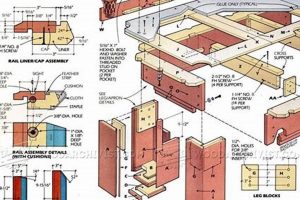
![Best Woodworking Plans Drafting Table [Guide] for Table | Step-by-Step Guides, Tools & Inspiration to Build Beautiful Wooden Decor on a Budget](https://woodfromhome.com/wp-content/uploads/2026/05/th-80-300x200.jpg "Best Woodworking Plans Drafting Table [Guide] for Table Step-by-Step Guides, Tools & Inspiration to Build Beautiful Wooden Decor on a Budget")