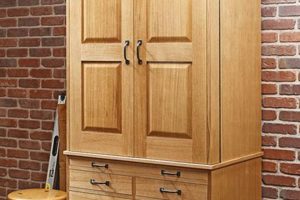
Constructions crafted entirely from a single piece of lumber offer a focused approach to woodworking. These undertakings emphasize efficient material use and streamlined design. For instance, a small shelf, a simple box, or a basic cutting board can all be achieved utilizing this method.
This technique presents several advantages. It reduces waste, lowers material costs, and simplifies the construction process, making it accessible to beginners. Historically, limitations in resource availability often necessitated this resourceful approach, promoting ingenuity and efficiency. The inherent constraints foster creativity in design, leading to elegant and practical solutions.
The following sections will delve into specific project ideas, techniques for maximizing material yield, and considerations for selecting the appropriate wood species for these streamlined builds. The article aims to provide practical guidance for executing successful creations from limited resources.
Essential Considerations for Single Board Woodworking
Successful execution hinges on careful planning and execution. These recommendations provide a framework for optimizing results when working within the constraints of a limited material supply.
Tip 1: Material Assessment: Prioritize a thorough inspection of the available lumber. Evaluate for knots, warping, or other imperfections that could compromise structural integrity or aesthetic appeal. Plan project layouts to avoid these problematic areas.
Tip 2: Optimized Layout Planning: Before commencing any cuts, meticulously plan the arrangement of components on the board. Software tools or hand-drawn sketches can aid in visualizing the most efficient use of space and minimizing waste.
Tip 3: Strategic Grain Orientation: Consider the grain direction of the wood in relation to the structural demands of the project. Aligning the grain along load-bearing axes will enhance strength and durability.
Tip 4: Precise Cutting Techniques: Accurate cuts are essential for seamless joinery and a professional finish. Utilize sharp blades and appropriate cutting tools to ensure clean edges and minimal material loss.
Tip 5: Joint Selection: Choose joints that are appropriate for the thickness and dimensions of the board. Simple joints like butt joints or rabbet joints are often suitable, but may require reinforcement depending on the application.
Tip 6: Clamping and Glue Adhesion: Adequate clamping pressure is crucial for achieving strong and lasting glue bonds. Ensure even distribution of pressure across the joint surfaces and allow sufficient curing time before removing clamps.
Tip 7: Sanding and Finishing: Proper sanding prepares the surface for finishing and enhances the aesthetic appeal of the completed project. Progress through increasingly finer grits of sandpaper, followed by the application of a protective finish.
Adhering to these principles can significantly improve the outcome, ensuring structural integrity and maximizing the aesthetic potential of these streamlined constructions.
The next section will summarize key project ideas and resources to further enhance understanding and inspire creativity.
1. Material Optimization

Material optimization is intrinsically linked to the success of single-board constructions. Due to the inherent constraint of using only one piece of lumber, maximizing the usable surface area becomes paramount. Inefficient layout planning and cutting practices directly translate to project failure, as critical components may not be obtainable within the limited material. For example, when crafting a small tabletop from a single board, precise measurement and strategic placement of the tabletop’s shape within the board’s dimensions are crucial. Failure to do so may result in a tabletop that is too small or unusable due to grain direction or defects in the lumber. Therefore, material optimization functions not merely as a best practice, but as a fundamental prerequisite for completing such endeavors.
The practical application of material optimization often involves employing techniques like nesting, where different components are arranged to minimize waste. This could include fitting smaller pieces inside larger cutouts, effectively using what would otherwise be discarded as scrap. Another consideration is the selection of board dimensions. Choosing a board that closely matches the project’s overall size can reduce trimming and subsequent waste. Further, understanding the project’s structural requirements allows for targeted material allocation; for instance, thicker sections of the board can be reserved for load-bearing elements, while thinner sections can be used for decorative or non-structural parts. Software designed for optimizing cutting layouts is available, allowing for automated nesting and material yield calculations.
In conclusion, material optimization is not merely a desirable attribute in the context of single-board constructions; it is a foundational element that determines project feasibility and resource efficiency. The challenges inherent in working with limited material necessitate careful planning, precise execution, and a thorough understanding of both woodworking techniques and the properties of the chosen lumber. A lack of focus on this integral factor inevitably leads to increased material costs, project abandonment, and a diminished return on investment. Prioritizing these principles is key in woodworking projects.
2. Project Selection

Project selection significantly impacts the feasibility and success rate of constructions derived from a single piece of lumber. The inherent limitation dictates that suitable projects are those with dimensions and component requirements that can be efficiently nested within the confines of the available board. Ill-suited choices can lead to excessive material waste, structural compromises, or outright project failure. For example, attempting to construct a large, complex piece of furniture, such as a multi-drawer chest, from a single plank is generally impractical due to the size constraints and the diversity of components required. Conversely, a small shelf, a basic picture frame, or a simple serving tray are more appropriate, given their relative simplicity and minimal material demands. The cause-and-effect relationship is direct: inappropriate selection leads to material inefficiency and potential structural instability, while judicious choice maximizes resource utilization and construction viability.
The importance of careful project selection extends beyond mere material efficiency. It also impacts structural integrity and design aesthetics. Designs must be tailored to accommodate the grain direction of the chosen wood, which is particularly critical when structural elements require specific strength characteristics. For example, a long shelf designed from a single plank must have the grain running lengthwise to provide sufficient support and prevent sagging. Project selection also influences the joint types that can be employed. Complex joinery, often requiring multiple pieces of wood, becomes impractical. Simpler joints, such as butt joints or rabbet joints, become necessary, potentially impacting the overall design and perceived quality. The project should, therefore, be chosen in concert with the jointing method that maximizes the plank’s potential while meeting functional demands. Real-world cases demonstrate this: a small box jointed using finger joints would require more material and planning, whereas a butt-jointed box demonstrates appropriate material and design choice.
In summary, project selection is a critical determinant of the viability of single-board constructions. It influences material utilization, structural stability, and aesthetic considerations. Challenges arise when attempting projects that exceed the material’s capabilities, leading to compromises in quality or outright failure. Effective solutions involve choosing designs that align with the board’s dimensions and grain direction, employing simplified joinery techniques, and accepting aesthetic constraints to optimize resource use. The choice of project becomes an exercise in resourcefulness, demanding a shift from complex and resource-intensive designs toward efficient and well-considered constructions.
3. Grain Orientation

The direction of wood grain is a paramount consideration in any woodworking endeavor, but it assumes critical importance when working within the constraints of constructions derived from a single piece of lumber. Strategic alignment of the grain relative to the intended application directly affects structural integrity, aesthetic appeal, and long-term durability.
- Structural Integrity
Grain direction dictates the strength of wood along different axes. Wood is strongest when stressed along the grain. In cases where a shelf is crafted from a single plank, the grain must run the length of the shelf to prevent sagging or breakage under load. Orienting the grain perpendicular to the load would render the shelf structurally unsound. The alignment is essential, especially in this single plank situation.
- Dimensional Stability
Wood expands and contracts more significantly across the grain than along it. In designs like boxes where the sides are cut from a single board and joined, careful grain orientation minimizes the risk of warping or cracking due to seasonal humidity changes. Mismatched grain orientation in joined sections will result in uneven expansion and contraction, leading to joint failure and compromised structural integrity.
- Aesthetic Considerations
Grain patterns contribute substantially to the visual appeal of the finished piece. Consistent grain direction on adjacent surfaces creates a cohesive and visually pleasing aesthetic. In a cutting board made from a single plank, choosing a section with attractive grain patterns and ensuring uniform direction across the working surface enhances its overall aesthetic quality. The result is a pleasing piece of craftsmanship.
- Waste Minimization
Optimizing grain orientation during the layout phase on a single plank minimizes waste. Prioritizing key components to align with the strongest axis minimizes the need for redundant cuts and lessens the quantity of unusable offcuts. Careful planning of the material guarantees success in woodworking.
These linked facets of grain orientation underscore its importance for single-plank projects. It’s an intrinsic element affecting not just the durability and aesthetic appeal but also the effective and economical use of resources in the construction. The awareness on these elements is a crucial first step.
4. Joint Simplicity

The concept of joint simplicity assumes a position of paramount importance when executing constructions from a single plank. The inherent material constraints necessitate a pragmatic approach to joinery, favoring methods that minimize material waste and maximize structural integrity within the limited resource.
- Butt Joints and Material Conservation
Butt joints, characterized by their straightforward assembly of two surfaces directly against each other, represent an exemplar of joint simplicity. Their application in constructions from a single plank directly contributes to material conservation. Unlike more complex joints that require extensive material removal to create interlocking features, butt joints minimize waste by merely requiring clean, flat surfaces for adhesion. For instance, constructing a basic box from a single plank often employs butt joints at the corners, maximizing the usable board area and reducing off-cuts. The trade-off is the inherent weakness of butt joints compared to more intricate joinery; however, reinforcement via fasteners or adhesives can mitigate this limitation.
- Rabbet Joints and Structural Enhancement
Rabbet joints, involving the creation of a recessed channel along the edge of one board to receive another, offer a modest increase in structural integrity compared to butt joints while still maintaining relative simplicity. In constructions from a single plank, rabbet joints can be strategically employed to enhance the strength of corners or to facilitate the secure attachment of panels. A common application is in the construction of small drawers, where rabbet joints provide increased gluing surface and mechanical interlock, improving the drawer’s resistance to racking forces. While rabbet joints do require the removal of some material, they represent a balanced approach to simplicity and structural performance.
- Dado Joints and Panel Integration
Dado joints, similar to rabbet joints but located in the middle of a board rather than along its edge, are valuable for integrating panels or dividers in single-plank constructions. These joints enhance the structural stability of projects like shelves or small cabinets by providing a secure recess for panels to sit within. For example, a bookshelf constructed from a single plank can utilize dado joints to support the shelves, distributing the load and preventing sagging. Dado joints, although requiring more precise cutting than simpler joints, offer a significant improvement in structural performance, particularly when spanning longer distances.
- Limitations of Complex Joinery
Complex joinery techniques, such as dovetail joints or mortise-and-tenon joints, are generally impractical for single-plank constructions due to their material-intensive nature and the difficulty of executing them accurately within the constraints of a single board. Dovetail joints, known for their exceptional strength and aesthetic appeal, necessitate significant material removal and precise fitting, making them ill-suited for projects where material conservation is paramount. Similarly, mortise-and-tenon joints require the creation of two distinct components (the mortise and the tenon), which can be challenging to achieve efficiently from a single plank. The emphasis on joint simplicity thus becomes a critical design consideration, steering the project toward more pragmatic and resource-efficient joinery methods.
The selection of appropriate joints in single-plank constructions hinges on a balance between structural requirements and material constraints. While complex joinery techniques offer superior strength and aesthetic qualities, their resource intensity renders them impractical. Simpler joints, such as butt joints, rabbet joints, and dado joints, provide viable alternatives, offering adequate structural performance while minimizing material waste and simplifying the construction process. The successful execution of single-plank projects, therefore, relies on a thorough understanding of joint characteristics and their suitability for the specific design parameters and material limitations.
5. Design Efficiency
Design efficiency, when applied to woodworking from a single piece of lumber, becomes a governing principle rather than a mere consideration. Given the finite nature of the material, designs must prioritize optimal use of space, minimize waste, and ensure structural integrity with the least possible expenditure of resources. The success of such projects hinges directly on the ability to create functional and aesthetically pleasing items from a limited canvas.
- Nesting and Component Arrangement
Nesting refers to the strategic arrangement of individual components to minimize waste. This involves fitting smaller pieces within the outlines of larger ones, utilizing negative space effectively. For instance, when cutting out a circular tabletop from a rectangular plank, the remaining corners can be used for smaller items such as coasters or support brackets. This efficient layout planning is not merely aesthetic; it’s a critical aspect of maximizing the usable surface area of the board. Effective nesting directly translates to a higher yield of usable components, reducing the likelihood of material shortfall.
- Simplified Joinery Selection
Designs must incorporate jointing techniques that conserve material while maintaining adequate strength. Complex joinery, such as dovetails or mortise-and-tenon joints, involves significant material removal, which is often impractical. Simpler joints like butt joints, rabbet joints, or dado joints become necessary, prioritizing function over intricate aesthetics. A basic box crafted from a single plank might employ butt joints reinforced with fasteners, sacrificing the visual appeal of dovetails for the sake of material efficiency. The choice of joinery directly influences the structural robustness and the material footprint of the final piece.
- Multi-Functional Components
Efficient designs often integrate multi-functional components to reduce the overall material demand. A single piece of wood might serve as both a structural support and a decorative element. Consider a small shelf unit where the vertical supports also act as side panels, eliminating the need for separate components. This strategy not only conserves material but also simplifies the construction process, making the project more accessible to less experienced woodworkers. Maximizing the utility of each piece contributes significantly to the overall efficiency of the design.
- Material Thickness Optimization
Designs must carefully consider the thickness requirements for different components. Non-structural elements, such as drawer bottoms or decorative trim, might be made from thinner sections of the board to conserve material. Conversely, load-bearing elements, like table legs or shelf supports, require thicker sections for adequate strength. Strategic allocation of material thickness based on structural demands ensures efficient use of resources without compromising the integrity of the finished product. This involves careful planning and a thorough understanding of the material properties.
These facets of design efficiency are intertwined and essential for successful projects using a single plank. The limitations of the resource demand a holistic approach, where the design process inherently incorporates material conservation, functional integration, and structural optimization. Such a design ethos not only produces aesthetically pleasing and functional items but also promotes a mindful and sustainable approach to woodworking, minimizing waste and maximizing the potential of a single, finite resource.
6. Minimal Waste
The pursuit of minimal waste is not merely a desirable attribute but a foundational necessity when engaging in constructions sourced from a single piece of lumber. The finite nature of the material dictates a shift in focus toward optimized resource utilization, where every cut, joint, and design choice contributes directly to minimizing discarded material. This principle influences every stage of the woodworking process, from initial design to final assembly.
- Strategic Layout Planning
Effective layout planning represents the first line of defense against unnecessary material waste. Prior to commencing any cuts, the strategic arrangement of individual components on the plank is critical. This process, often referred to as nesting, involves positioning pieces in such a way as to maximize the utilization of the available surface area. For example, smaller components can be strategically placed within the negative space created by larger cutouts. The absence of meticulous layout planning inevitably leads to suboptimal material usage and increased waste. Advanced software tools can be employed to automate the nesting process and determine the most efficient layout configurations, further minimizing waste.
- Efficient Cutting Techniques
The execution of precise and efficient cuts is essential to minimizing material loss. The use of sharp blades, properly aligned tools, and careful cutting techniques reduces the amount of material lost in the form of sawdust or splintered edges. Employing a thin-kerf saw blade, for instance, removes less material with each cut compared to a standard blade. Furthermore, minimizing errors and correcting miscuts requires additional material, thus contributing to waste. Adhering to best practices in cutting techniques directly reduces the volume of wasted material and enhances the overall efficiency of the project.
- Joint Selection and Material Usage
The choice of joinery methods significantly influences the volume of material consumed during construction. Complex joints, such as dovetails or mortise-and-tenon joints, necessitate the removal of substantial material to create interlocking features. In contrast, simpler joints, such as butt joints or rabbet joints, require minimal material removal. Opting for simpler jointing methods reduces material waste and streamlines the construction process. While simpler joints may sacrifice some structural strength, they can be reinforced with fasteners or adhesives to achieve adequate performance. The selection of appropriate jointing methods becomes a balance between structural requirements and material conservation.
- Adaptive Design and Modification
The capacity to adapt and modify the design in response to unforeseen material defects or limitations is crucial in minimizing waste. When encountering knots, cracks, or warping within the plank, adjustments to the design may be necessary to avoid these problematic areas. This may involve resizing components, altering the layout, or incorporating design elements that conceal or compensate for the defects. The ability to think creatively and adapt the design on the fly minimizes the likelihood of discarding unusable portions of the plank. Adaptive design becomes a key component of waste reduction, ensuring that the maximum amount of usable material is incorporated into the final product.
The integration of these facetsstrategic layout planning, efficient cutting techniques, judicious joint selection, and adaptive designconstitutes a holistic approach to minimizing waste. The inherent constraint of using a single piece of lumber necessitates a heightened awareness of material utilization and a commitment to optimizing every stage of the woodworking process. The focus on minimizing waste not only promotes resource efficiency but also fosters creativity and ingenuity, challenging woodworkers to find innovative solutions to maximize the potential of a limited material supply. The result is an outcome of quality and a conscientious approach to resource utilization.
7. Functional Integrity
Functional integrity, the ability of an object to perform its intended task reliably and safely over its expected lifespan, gains heightened importance when applied to constructions derived from a single plank. The limitations imposed by a finite material resource necessitate a design and construction approach that prioritizes performance and durability. Failure to adequately address functional integrity can lead to premature failure, rendering the object useless and negating any perceived material savings.
- Load-Bearing Capacity and Material Selection
The load-bearing capacity of a construction is directly tied to the material properties of the chosen wood species and the orientation of the grain. When crafting a shelf, for instance, the selection of a strong, dense wood like oak or maple is crucial to prevent sagging under the weight of supported items. Furthermore, aligning the grain along the length of the shelf provides maximum resistance to bending forces. Ignoring these considerations can result in structural failure, rendering the shelf unusable. The proper alignment of load-bearing capacity and material selection guarantees product longevity.
- Joint Stability and Adhesive Selection
Joints represent potential points of weakness in any construction. Single-plank projects often rely on simpler jointing methods, such as butt joints or rabbet joints, which may require reinforcement to achieve adequate stability. The selection of a high-quality adhesive appropriate for the wood species and intended application is paramount. For example, an exterior project exposed to moisture requires a waterproof adhesive to prevent joint failure due to water ingress. The effectiveness of an adhesive affects the integrity of the workpiece, so the proper adhesive enhances longevity.
- Dimensional Stability and Environmental Factors
Wood is a hygroscopic material, meaning it expands and contracts in response to changes in humidity. Constructions exposed to significant fluctuations in humidity must be designed to accommodate these dimensional changes to prevent warping, cracking, or joint failure. Employing a stable wood species, such as cedar or redwood, can mitigate these effects. Furthermore, applying a protective finish can reduce the rate of moisture absorption and minimize dimensional changes. Ignoring these environmental considerations jeopardizes the long-term stability and functionality of the construction.
- Surface Durability and Finish Application
The surface of a wooden object is susceptible to wear and tear from abrasion, impacts, and exposure to liquids. Applying a durable finish protects the surface from damage and enhances its longevity. The choice of finish depends on the intended use of the object. A cutting board, for example, requires a food-safe finish that is resistant to water and staining. A tabletop requires a finish that is resistant to scratches and abrasion. Proper surface preparation and finish application are essential to maintaining the aesthetic appeal and functional integrity of the construction over time.
These interlinked facets of functional integrity underscore its importance in one-plank constructions. Addressing these considerations guarantees the creations are not just aesthetically pleasing but also structurally sound, durable, and capable of fulfilling their intended purpose reliably over the course of their expected lifespans. Prioritizing functional integrity elevates these projects from mere exercises in material conservation to demonstrations of skillful craftsmanship and responsible design.
Frequently Asked Questions
This section addresses common inquiries and misconceptions surrounding construction from a single piece of lumber. The aim is to provide clarity and guidance for those considering or engaging in such projects.
Question 1: What types of projects are most suitable for one plank construction?
Projects with small dimensions and minimal component requirements are generally most suitable. Examples include shelves, small boxes, cutting boards, and picture frames. Complex designs or those requiring numerous components are typically impractical due to material limitations.
Question 2: How does wood selection impact the success of constructions from a single board?
Wood species selection is crucial. Dense, strong woods like oak or maple are preferable for load-bearing applications. For projects where dimensional stability is paramount, species such as cedar or redwood are recommended. Consideration of grain patterns and defect-free sections of lumber is equally important.
Question 3: What joinery techniques are recommended for constructions from a single plank?
Simpler jointing methods, such as butt joints, rabbet joints, and dado joints, are generally favored due to their minimal material waste. More complex joints, like dovetails or mortise-and-tenon joints, often require excessive material removal and are less practical.
Question 4: How can material waste be minimized in constructions derived from a single piece of lumber?
Strategic layout planning, also known as nesting, is essential. Components should be arranged to maximize the utilization of the available surface area. Employing efficient cutting techniques and adapting the design to avoid material defects also contribute to waste reduction.
Question 5: What considerations should be given to grain orientation in constructions from a single plank?
Grain direction significantly affects structural integrity. For load-bearing elements, the grain should run along the length of the component to maximize strength. Attention should also be paid to grain patterns for aesthetic consistency.
Question 6: How does the limited material influence the overall design of projects crafted from a single board?
The finite nature of the material dictates a design approach that prioritizes efficiency and resourcefulness. Designs must be simplified, incorporating multi-functional components and minimizing unnecessary ornamentation. Structural considerations are paramount, and the design must adapt to the available material rather than vice versa.
The preceding questions highlight critical considerations for those undertaking these projects. Careful planning, material selection, and execution are essential for achieving successful outcomes.
The following section will provide a conclusion, summarizing the key principles and benefits associated with this specific woodworking practice.
Conclusion
The exploration of “one plank woodworking projects” reveals a compelling intersection of resourcefulness, design efficiency, and craftsmanship. The preceding analysis underscores the critical importance of strategic material selection, efficient layout planning, and mindful application of woodworking techniques. The inherent constraints associated with utilizing a single piece of lumber necessitate a holistic approach, demanding meticulous planning and a deep understanding of material properties.
The principles outlined herein provide a framework for maximizing the potential of limited resources and fostering creativity within defined parameters. While challenges undoubtedly exist, the pursuit of these projects offers a unique opportunity to hone woodworking skills, minimize waste, and appreciate the inherent beauty and utility of a single piece of wood. Further exploration and innovation in this area promise to yield increasingly sophisticated and sustainable woodworking solutions.