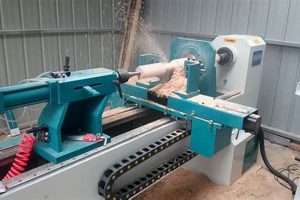
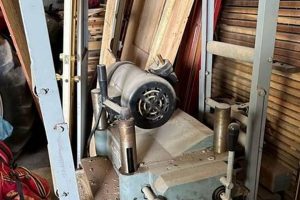
Equipment employed in the fabrication of products from timber and sourced from manufacturers within Europe represents a significant sector within the global woodworking industry. This encompasses a wide array of tools and automated systems used for cutting, shaping, joining, and finishing wood, typically designed and produced to meet rigorous standards of precision and durability. Examples include Computer Numerical Control (CNC) routers, edgebanders, and automated sanding systems designed and manufactured in countries such as Germany, Italy, and Austria.
The significance of this manufacturing lies in its contribution to efficient and high-quality production across diverse industries, ranging from furniture manufacturing to construction and specialized crafts. The precision engineering often associated with this machinery results in reduced material waste, increased production speeds, and improved overall product quality. Furthermore, a historical emphasis on innovation and adherence to stringent safety regulations has positioned European manufacturers as leaders in the development and implementation of advanced woodworking technologies.
The following sections will delve deeper into the specific categories of equipment available, examining their operational characteristics and highlighting key considerations for businesses seeking to invest in advanced technologies to enhance their woodworking capabilities.
Key Considerations for Selecting Equipment
Careful evaluation is essential when acquiring fabrication equipment, regardless of project scope. The following guidelines assist in making informed decisions that align with specific manufacturing needs and operational goals.
Tip 1: Assess Production Volume and Capacity Requirements: Thoroughly analyze current and projected production volumes. This assessment will dictate the necessary capacity and throughput of the equipment, influencing decisions on automation levels and machine size. For example, a high-volume furniture manufacturer will likely require automated CNC lines, while a small custom shop may find a manual edgebander sufficient.
Tip 2: Evaluate Material Compatibility and Versatility: Determine the range of materials that the equipment will process. Consider the ability to handle solid woods, veneers, laminates, and composite materials. Select machinery with appropriate tooling and adjustments to accommodate the desired material diversity.
Tip 3: Investigate Energy Efficiency and Operational Costs: Consider the long-term operational costs associated with equipment. Compare energy consumption rates, maintenance requirements, and the availability of replacement parts. Choose equipment with energy-saving features and robust construction to minimize downtime and reduce overall expenses.
Tip 4: Scrutinize Safety Features and Compliance: Prioritize equipment with integrated safety features that comply with relevant European standards. Verify the presence of safety guards, emergency stop mechanisms, and dust extraction systems. Ensuring operator safety is paramount and minimizes the risk of accidents.
Tip 5: Confirm Availability of Technical Support and Training: Ensure that the equipment supplier offers comprehensive technical support, including installation, maintenance, and troubleshooting services. Training programs for operators are crucial for maximizing equipment performance and preventing errors.
Tip 6: Prioritize Precision and Accuracy: Examine the equipment’s specifications for accuracy and repeatability. High-precision machinery is essential for achieving tight tolerances and consistent product quality. This factor is particularly crucial for applications requiring intricate designs and precise joinery.
Adherence to these considerations will ensure that investments in woodworking machinery provide a strong return through improved efficiency, enhanced product quality, and reduced operational risks.
The subsequent section will explore the technological advancements that are reshaping the industry and influencing the design and functionality of modern woodworking equipment.
1. Precision Engineering

Precision engineering forms a cornerstone in the design and manufacture of woodworking equipment originating from Europe. The commitment to exacting standards in fabrication leads to machinery that delivers superior accuracy, repeatability, and operational longevity. This focus is evident throughout the entire product lifecycle, from initial design concepts to material selection, manufacturing processes, and final assembly.
- CAD/CAM Integration and Numerical Control
Sophisticated Computer-Aided Design (CAD) and Computer-Aided Manufacturing (CAM) software are integral to the design process. This allows for the creation of intricate designs with extremely tight tolerances. Numerical Control (NC) and Computer Numerical Control (CNC) systems then translate these designs into precise machine movements. For example, a CNC router can execute complex cutting patterns on wood with accuracy down to fractions of a millimeter, significantly reducing waste and improving the quality of finished components.
- High-Quality Material Selection and Treatment
The selection of materials plays a critical role in achieving precision. European manufacturers often utilize high-strength alloys and hardened steels in critical components such as saw blades, spindles, and linear guides. These materials undergo specialized heat treatments and surface coatings to enhance their durability, wear resistance, and dimensional stability. This results in machinery that maintains its accuracy and performance over extended periods, even under demanding operational conditions.
- Advanced Sensor Technology and Feedback Systems
Modern machinery incorporates advanced sensor technology to monitor performance and provide real-time feedback. Sensors track parameters such as spindle speed, cutting depth, and material feed rate. This data is then fed back into the control system, allowing for dynamic adjustments that maintain optimal cutting conditions. Examples include laser sensors that detect variations in material thickness and automatically adjust cutting parameters to ensure consistent results.
- Rigorous Quality Control and Testing Procedures
Manufacturers implement comprehensive quality control measures throughout the production process. This includes dimensional inspections using coordinate measuring machines (CMMs), non-destructive testing of critical components, and performance testing under simulated operating conditions. These rigorous procedures ensure that each piece of equipment meets stringent quality standards and delivers the expected level of precision and reliability.
The application of precision engineering principles within the European woodworking equipment sector results in significant advantages for end-users. The enhanced accuracy and repeatability translate to reduced material waste, improved product quality, and increased production efficiency. This commitment to quality positions this machinery as a valuable asset for businesses seeking to optimize their woodworking operations and maintain a competitive edge in the global market.
2. Automated Systems

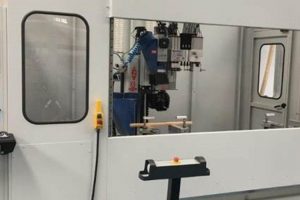
The integration of automated systems within European woodworking machinery represents a significant factor in enhanced production efficiency and precision. Automation within this sector encompasses a spectrum of technologies, including Computer Numerical Control (CNC), robotic material handling, automated finishing lines, and sensor-driven quality control. The implementation of these systems directly affects both throughput and the minimization of human error, allowing for the consistent manufacture of components to exacting specifications.
A primary example of this integration is observed in CNC machining centers. These systems, prevalent in European manufacturing, employ pre-programmed instructions to guide cutting tools, drills, and other implements with minimal human intervention. This automation capability reduces material waste, improves component accuracy, and allows for the efficient production of complex designs. Furthermore, automated material handling systems streamline the flow of workpieces through the production process, reducing cycle times and optimizing resource utilization. These systems often incorporate robotic arms for loading, unloading, and transferring materials between workstations. A consequence of such integration is the increased capacity of woodworking firms to manage large-scale projects while maintaining elevated quality benchmarks.
Automated finishing lines further exemplify the synergy between these systems and manufacturing output. These lines incorporate automated sanding, staining, and coating applications, resulting in a consistent finish quality across all workpieces. Sensor-driven quality control systems provide real-time monitoring of critical parameters, ensuring adherence to pre-defined specifications and mitigating potential defects. The combined effect of these automated technologies is a significant reduction in manual labor requirements, improved production speeds, and an increase in the overall quality and consistency of finished woodworking products. The continued advancement of automation within woodworking machinery reinforces the European sector’s reputation for high-quality manufacturing and technological innovation.
3. Material Versatility

Material versatility, concerning woodworking equipment manufactured in Europe, signifies the capacity of said equipment to effectively process a wide spectrum of materials encountered in modern woodworking applications. This adaptability is a crucial attribute, enabling woodworking businesses to undertake diverse projects and to efficiently utilize varying grades and types of wood and wood-based composites.
- Adaptable Tooling Systems
The ability to quickly and easily change tooling is critical for handling different materials. Equipment frequently features modular tooling systems and quick-change mechanisms to accommodate various cutter profiles, saw blades, and sanding heads optimized for specific material properties. For example, a CNC router might require a diamond-tipped bit for abrasive composite materials versus a high-speed steel bit for softwoods. The reduced downtime associated with these changeovers increases overall productivity.
- Adjustable Feed Rates and Cutting Parameters
Different materials require different cutting speeds and feed rates to achieve optimal results and prevent damage. European equipment is often designed with precise control systems that allow operators to fine-tune these parameters based on the material being processed. Softer woods may require higher feed rates, while denser hardwoods or brittle laminates require slower, more controlled cuts to prevent chipping or splintering. This adjustability ensures consistent quality across diverse material types.
- Integrated Dust Extraction Systems
The efficient removal of dust and debris is essential for both operator safety and maintaining machine performance, particularly when working with materials that produce fine particles or hazardous dust. Equipment often includes integrated dust extraction systems with optimized airflow and filtration to capture dust at the source. This is particularly important when processing materials like MDF or particleboard, which generate large volumes of fine dust that can pose respiratory hazards.
- Variable Clamping and Support Systems
Securely holding the workpiece in place is crucial for accurate cutting and shaping. Equipment is frequently equipped with adjustable clamping and support systems that can accommodate different material thicknesses and shapes. Vacuum clamping systems are common for securing large, flat panels, while adjustable jigs and fixtures can be used to support irregularly shaped components. These systems ensure that the material remains stable during processing, preventing movement or vibration that could compromise accuracy.
The material versatility inherent in European woodworking machinery provides a significant competitive advantage, allowing businesses to adapt to changing market demands and to efficiently process a wide range of materials with minimal investment in specialized equipment. This flexibility contributes to increased profitability and sustainability in an evolving woodworking industry.
4. Safety Standards

Adherence to stringent safety standards constitutes an integral aspect of equipment designed and manufactured within Europe. These standards are not merely regulatory requirements; they represent a philosophical commitment to operator well-being and the prevention of workplace accidents. The application of these standards influences design choices, operational procedures, and the overall safety culture surrounding equipment utilization.
- Compliance with EN Standards
European Norm (EN) standards, such as EN 1870-1 for woodworking machines, define specific safety requirements for equipment design, construction, and operation. These standards mandate the inclusion of safety guards, emergency stop mechanisms, and interlock systems to prevent access to hazardous areas during machine operation. Compliance with EN standards is a legal obligation for manufacturers selling equipment within the European Economic Area (EEA), serving as a baseline for operator protection. Failure to comply results in significant penalties and potential product recalls. For example, a saw without a properly functioning blade guard, as mandated by EN 1870-1, would be deemed non-compliant.
- Risk Assessment and Mitigation
European safety standards require manufacturers to conduct thorough risk assessments to identify potential hazards associated with equipment operation. These assessments involve analyzing the entire machine lifecycle, from installation and setup to operation, maintenance, and disposal. Based on the identified risks, manufacturers must implement appropriate mitigation measures, such as engineering controls, administrative procedures, and personal protective equipment (PPE) requirements. A common example is the implementation of a two-hand control system on a press, requiring the operator to use both hands to activate the machine, thereby preventing accidental hand injuries.
- Ergonomic Design Considerations
Beyond hazard prevention, safety standards also emphasize ergonomic design to minimize operator fatigue and strain. Equipment must be designed to allow for comfortable and efficient operation, reducing the risk of musculoskeletal disorders and other work-related injuries. This includes considerations such as adjustable work heights, intuitive control layouts, and vibration dampening. The positioning of controls on an edgebander, for example, should allow for easy access and operation without requiring excessive reaching or bending, minimizing strain on the operator’s back and shoulders.
- Training and Documentation Requirements
Safety standards mandate that manufacturers provide comprehensive training and documentation to ensure that operators are properly trained in the safe operation and maintenance of equipment. This includes detailed operating manuals, safety instructions, and training programs that cover topics such as hazard identification, emergency procedures, and proper use of safety devices. The availability of clear and concise documentation, coupled with thorough training, empowers operators to identify and mitigate potential hazards, contributing to a safer working environment. A comprehensive training program for a CNC router, for instance, would cover topics such as proper tool selection, workpiece clamping, and emergency stop procedures.
The rigorous application of these safety standards directly impacts the design and functionality of fabrication equipment. The commitment to operator safety, embedded within European manufacturing, results in machinery engineered to minimize risk and promote a culture of safety consciousness within woodworking operations.
5. Durable Construction
The robust nature of fabrication equipment originating from Europe forms a crucial element in its reputation for longevity, reliability, and sustained performance within demanding industrial settings. The emphasis on durable construction is not merely a design characteristic but a foundational principle that influences material selection, manufacturing processes, and overall equipment architecture.
- High-Strength Material Utilization
A defining characteristic is the use of high-strength materials, including specialized steel alloys and hardened components, in critical areas subject to significant stress and wear. For example, machine frames are frequently constructed from thick-gauge steel, precisely welded and stress-relieved to provide a rigid and stable platform. Spindles, bearings, and other moving parts are manufactured from materials that exhibit exceptional resistance to wear, fatigue, and corrosion. This material selection minimizes the risk of component failure and extends the operational lifespan of the equipment.
- Rigorous Manufacturing and Assembly Processes
Durable construction is further reinforced through adherence to meticulous manufacturing and assembly processes. Precision machining techniques ensure tight tolerances and accurate alignment of components. Critical joints and fasteners are designed to withstand high loads and vibrations. The integration of advanced quality control measures throughout the production process guarantees that each machine meets stringent standards for structural integrity and performance. For instance, robotic welding is often employed to ensure consistent and high-strength welds on machine frames, minimizing the risk of structural failure under prolonged use.
- Protective Coatings and Surface Treatments
To enhance durability and corrosion resistance, equipment components are frequently treated with protective coatings and surface treatments. Powder coating, anodizing, and specialized paints are applied to exposed surfaces to shield them from environmental factors such as moisture, chemicals, and UV radiation. These treatments prevent rust, oxidation, and other forms of degradation, preserving the structural integrity and aesthetic appearance of the machinery over time. The application of a corrosion-resistant coating on a saw table, for example, prevents rust formation and ensures smooth material movement for years, even in humid environments.
- Modular Design and Component Accessibility
Durable construction also incorporates a modular design approach, which facilitates ease of maintenance, repair, and component replacement. Key components are designed to be easily accessible, allowing for efficient servicing and minimizing downtime. The modular architecture allows for the replacement of individual parts without requiring extensive disassembly of the entire machine. This design philosophy reduces the cost of ownership and ensures that equipment can be readily upgraded or adapted to meet evolving production needs. For instance, a spindle assembly can be quickly replaced on a CNC router without requiring the removal of other major machine components.
These factors contribute to the enduring reputation of equipment. The investment in durable construction translates to reduced maintenance costs, minimized downtime, and an extended operational lifespan. This commitment to quality positions these machines as a reliable and cost-effective solution for woodworking businesses seeking long-term productivity and profitability.
6. Technological Innovation
Technological innovation serves as a primary driver in the evolution of woodworking equipment, especially within the European manufacturing sector. The continuous pursuit of advanced capabilities and efficiency has led to the development of sophisticated systems that redefine the possibilities of woodworking processes.
- Advanced Sensor Integration
The incorporation of advanced sensors represents a significant advancement. These sensors enable real-time monitoring of critical parameters such as cutting depth, feed rate, and material density. This data is then used to automatically adjust machine settings, optimizing performance and minimizing material waste. For example, laser sensors can detect variations in wood thickness and automatically adjust cutting parameters to maintain consistent product dimensions. This integration leads to improved accuracy and reduced operator intervention.
- CAD/CAM Integration and Simulation
The seamless integration of Computer-Aided Design (CAD) and Computer-Aided Manufacturing (CAM) software facilitates complex design and manufacturing processes. This integration allows for the creation of virtual prototypes and the simulation of machining operations before physical production begins. This capability reduces the risk of errors and optimizes cutting paths for maximum efficiency. Consequently, the manufacturing process is streamlined, leading to faster production times and reduced material waste. The rise in popularity of bespoke furniture would not be possible without these software.
- Robotics and Automation
Robotics and automation are increasingly employed in woodworking operations to handle repetitive tasks and improve overall efficiency. Robotic arms can be used for material handling, workpiece positioning, and automated finishing processes. Automated sanding and spraying systems, for example, provide consistent results and reduce the need for manual labor. The resulting increase in production capacity allows manufacturers to meet growing demands and reduce overall production costs.
- Energy Efficiency and Sustainable Practices
Recent innovations focus on enhancing energy efficiency and promoting sustainable practices within woodworking operations. Equipment is designed to minimize energy consumption through the use of efficient motors, optimized power management systems, and regenerative braking technology. Dust extraction systems are also designed to capture and filter wood dust, improving air quality and reducing environmental impact. The integration of these technologies demonstrates a commitment to environmentally responsible manufacturing practices.
These technological advancements collectively enhance the precision, efficiency, and sustainability of woodworking operations. European manufacturers are at the forefront of these innovations, driving the industry forward and redefining the capabilities of woodworking equipment. The continued emphasis on technological innovation ensures that this sector remains competitive and capable of meeting the evolving demands of the global market.
Frequently Asked Questions
The following section addresses common inquiries regarding the acquisition, operation, and maintenance of equipment sourced from European manufacturers.
Question 1: What distinguishes fabrication equipment from Europe compared to other regions?
Machinery from Europe is often characterized by a focus on precision engineering, robust construction, and adherence to stringent safety standards. These factors contribute to enhanced accuracy, reliability, and operator safety.
Question 2: What factors should be considered when selecting machinery for a specific woodworking application?
Key considerations include production volume requirements, material compatibility, energy efficiency, safety features, and the availability of technical support. A thorough assessment of these factors ensures that the selected equipment aligns with operational needs and goals.
Question 3: What are the primary benefits of integrating automated systems into woodworking operations?
Automated systems enhance production efficiency, reduce material waste, and improve product consistency. These systems minimize the need for manual labor and ensure adherence to stringent quality standards.
Question 4: How does adherence to European safety standards impact the design and functionality of machinery?
Compliance with EN standards mandates the inclusion of safety guards, emergency stop mechanisms, and interlock systems. These features prioritize operator safety and minimize the risk of workplace accidents.
Question 5: What maintenance procedures are essential for ensuring the longevity and performance of fabrication equipment?
Regular maintenance procedures include lubrication of moving parts, inspection of wear components, and adherence to manufacturer-recommended maintenance schedules. Proper maintenance minimizes downtime and extends the operational lifespan of equipment.
Question 6: How does technological innovation influence the evolution of equipment?
Technological advancements, such as advanced sensor integration, CAD/CAM integration, and robotics, enhance precision, efficiency, and sustainability. These innovations allow woodworking businesses to optimize their operations and remain competitive.
In summary, the selection, operation, and maintenance of fabrication equipment necessitates careful consideration of several key factors. A comprehensive understanding of these aspects ensures that investments in machinery provide a strong return through improved efficiency, enhanced product quality, and reduced operational risks.
The subsequent section will explore the long-term cost implications and return on investment associated with advanced woodworking technologies.
European Woodworking Machinery
This exploration has presented a detailed overview of European woodworking machinery, emphasizing its defining characteristics: precision engineering, automated systems, material versatility, stringent safety standards, durable construction, and continuous technological innovation. Each of these elements contributes to the enhanced efficiency, accuracy, and reliability of woodworking operations. The application of advanced technologies and adherence to rigorous quality control measures underscore the sector’s commitment to excellence.
The information presented should serve as a guide for businesses seeking to optimize their woodworking processes through investment in advanced manufacturing technologies. The long-term benefits, including reduced material waste, increased production speeds, and improved product quality, warrant careful consideration. A thorough evaluation of operational needs and equipment capabilities remains crucial for achieving a positive return on investment and maintaining a competitive edge within the global woodworking industry.