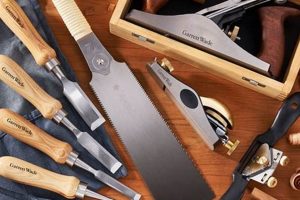
An initial set of implements necessary for beginning the craft of shaping wood, often encompassing items used for measuring, cutting, shaping, and joining, constitute the fundamental requirements for undertaking basic woodworking projects. A typical example might include a hand saw, a measuring tape, a combination square, a block plane, and a selection of chisels.
Acquiring the fundamental instruments enables one to develop essential skills, safely execute elementary projects, and establish a foundation for more complex woodworking endeavors. Historically, possessing these instruments represented a trade’s entry point, enabling apprentices to learn and practice time-honored techniques. The ability to accurately measure, precisely cut, and securely join wood pieces provides a significant advantage to both hobbyists and aspiring professionals.
The subsequent discussion will delve into specific essential instruments, their optimal utilization, and considerations for selecting quality options to build a comprehensive and reliable woodworking toolkit. A carefully curated selection ensures longevity, accuracy, and enhanced user experience in woodworking projects.
Guidance on Acquiring Foundational Woodworking Implements
This section provides essential guidance for individuals seeking to assemble an initial set of woodworking tools. Prudent selection at this stage is crucial for establishing a solid foundation in woodworking, ensuring safety, accuracy, and ultimately, project success.
Tip 1: Prioritize Quality Over Quantity: Investing in fewer, higher-quality tools will prove more beneficial in the long run than acquiring a larger number of inexpensive, lower-quality alternatives. Quality tools offer improved precision, durability, and overall performance, contributing to more satisfying and accurate results.
Tip 2: Begin with Essential Measuring Instruments: Accurate measurements are fundamental to successful woodworking. A quality measuring tape, a combination square, and a marking gauge should be among the first items acquired. These instruments ensure precise layouts and consistent results.
Tip 3: Select a Versatile Hand Saw: A well-chosen hand saw is an indispensable tool for cutting wood to size. Consider a crosscut saw for cutting against the grain and a rip saw for cutting along the grain. A universal saw can serve as a compromise, particularly for beginners.
Tip 4: Acquire a Sharp Chisel Set: Chisels are essential for refining joints, shaping wood, and creating intricate details. A set of chisels in varying widths is advisable. Maintaining their sharpness is paramount for safe and effective use; therefore, sharpening stones should be acquired concurrently.
Tip 5: Invest in a Smoothing Plane: A block plane or smoothing plane is used to create smooth, flat surfaces on wood. It is particularly useful for removing imperfections, preparing wood for finishing, and refining joinery. Practice with proper technique is essential for achieving optimal results.
Tip 6: Consider a Reliable Drill and Drill Bit Set: A power drill, cordless or corded, is versatile for creating holes, driving screws, and various other tasks. Accompanying drill bit sets of different sizes are valuable for diverse projects.
Tip 7: Focus on Safety Equipment: Eye protection, hearing protection, and dust masks are indispensable for safe woodworking practices. These items protect against potential hazards such as flying debris, loud noise, and airborne particles.
Careful consideration of these guidelines will ensure a well-equipped initial toolkit, enabling individuals to confidently embark on their woodworking journey.
The subsequent sections will further explore specific tool features and selection criteria, providing comprehensive insights to aid informed purchasing decisions.
1. Accurate Measurement

Precise dimensioning forms the bedrock of successful woodworking, inextricably linking accurate measurement with the fundamental implements required for the craft’s commencement. Dimensional inaccuracies introduce cumulative errors, rendering components incompatible and compromising structural integrity. Consequently, the “first tools to get for woodworking” must invariably include instruments capable of delivering reliable measurements.
Consider a novice constructing a basic frame. A measuring tape lacking clear gradations or a combination square with a warped blade will yield flawed dimensions. Subsequent cuts and joinery based on these inaccurate measurements will result in a frame that is either out of square, structurally unsound, or both. Conversely, utilizing a high-quality measuring tape with clear markings and a precision-engineered square ensures accurate dimensions. This, in turn, guarantees properly fitting components and a stable, aesthetically pleasing final product. The inclusion of a marking gauge further enhances accuracy when transferring dimensions repeatedly, minimizing variations across multiple workpieces. The absence of precise measuring tools significantly increases the likelihood of project failure, rendering other woodworking implements effectively useless.
In summary, the accuracy achieved during the initial measurement phase dictates the overall success of woodworking endeavors. Consequently, the “first tools to get for woodworking” must prioritize instruments designed for precise and consistent measurement. Overlooking this fundamental aspect introduces compounding errors, jeopardizing structural integrity and aesthetic appeal. Therefore, investing in high-quality measuring tools constitutes a foundational element of a well-equipped woodworking toolkit.
2. Precise Cutting

Precise cutting is an indispensable element within the context of “first tools to get for woodworking,” directly influencing the quality and accuracy of finished projects. An inability to execute accurate cuts renders subsequent woodworking processes, such as jointing or assembly, significantly more challenging, potentially compromising structural integrity and aesthetic appeal. The “first tools to get for woodworking,” therefore, must include implements designed to facilitate this accuracy.
Consider, for instance, the construction of a simple dovetailed box. Imprecise cuts during the creation of the dovetails will result in gaps, weak joints, and an overall unappealing aesthetic. A quality dovetail saw, sharp chisels, and appropriate marking tools are therefore essential “first tools to get for woodworking” in this scenario. Conversely, accurate cuts achieved through the correct tools and techniques enable tight-fitting joints, a robust structure, and a visually refined result. Without this precision, even the most skilled craftsman will struggle to achieve professional-grade outcomes. The selection of appropriate saws (hand saws, backsaws, or specialized saws), coupled with techniques such as precise marking and careful execution, forms the basis of precise cutting in woodworking.
In conclusion, the capacity for precise cutting directly correlates with the utility and effectiveness of the “first tools to get for woodworking.” Without the ability to accurately dimension and shape wood, the foundational skills necessary for advancing in woodworking remain underdeveloped. Investing in quality cutting tools and mastering their proper use is paramount for any aspiring woodworker seeking to achieve consistent and professional results. The challenges posed by inaccurate cuts can be mitigated by careful tool selection and a commitment to developing fundamental cutting techniques, ultimately highlighting the practical significance of prioritizing precise cutting within the initial stages of woodworking education and tool acquisition.
3. Secure Fastening

Secure fastening represents a critical aspect of woodworking, directly influencing the structural integrity and longevity of finished projects. The selection of “first tools to get for woodworking” must, therefore, prioritize implements that facilitate reliable and durable joints. Inadequate fastening techniques lead to structural weaknesses, compromising the overall functionality and lifespan of woodworking creations. The causal relationship between appropriate tools, effective techniques, and secure joints underscores the significance of this element.
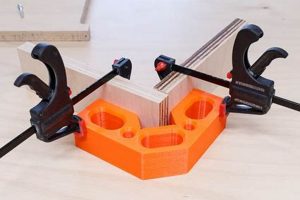
Consider a basic chair construction. If screws of insufficient length or diameter are used, or if pilot holes are omitted, the joints will be weak and prone to failure under stress. The “first tools to get for woodworking” must, therefore, include an appropriate drill with various sized drill bits for pilot holes, as well as a selection of screws suitable for different wood types and joint configurations. Similarly, if glue is employed for joining, the application tools (brushes or spreaders) and clamping mechanisms must be considered part of the initial toolkit. The inability to securely fasten components negates the benefits of accurate measurement and precise cutting, rendering the project structurally unsound. Doweling jigs, countersink bits, and specialized clamps further enhance the quality and reliability of fastening processes.
In conclusion, secure fastening is not merely a secondary consideration, but an integral component of successful woodworking. The “first tools to get for woodworking” should be strategically selected to enable robust and durable joints, ensuring that projects withstand intended use and maintain structural integrity over time. Overlooking the importance of secure fastening compromises the overall quality and longevity of woodworking endeavors. A comprehensive understanding of appropriate fastening techniques and the corresponding tool requirements is, therefore, essential for any aspiring woodworker.
4. Effective Shaping
Effective shaping is intrinsic to woodworking, enabling the transformation of raw materials into refined forms. The selection of initial implements, identified as “first tools to get for woodworking,” must, therefore, account for the capacity to execute controlled and precise shaping operations. The ability to remove material strategically, create curves, and refine surfaces is a cornerstone of the craft.
- Controlled Material Removal
This facet encompasses the removal of excess material to achieve desired dimensions and forms. Planes, rasps, and spokeshaves are crucial “first tools to get for woodworking” for this purpose. An example is using a block plane to chamfer edges or a spokeshave to round over a chair spindle. The implication is that imprecise material removal negatively affects the final form and functionality.
- Curve Creation
The introduction of curves enhances the aesthetic appeal and ergonomic properties of many woodworking projects. Drawknives, carving gouges, and flexible sanding implements constitute relevant “first tools to get for woodworking.” A practical illustration involves utilizing a drawknife to rough out the curved leg of a table or using a gouge to carve decorative details. Failure to execute smooth, consistent curves detracts from the overall visual impact.
- Surface Refinement
Achieving smooth, refined surfaces is essential for both tactile quality and finish adhesion. Sandpaper in varying grits, scraping tools, and burnishers are important “first tools to get for woodworking” for surface preparation. As an example, consider the process of sanding a tabletop to achieve a glass-like smoothness prior to applying a finish. Inadequate surface refinement results in uneven finishes and a diminished overall appearance.
- Form Definition
Defining crisp edges and sharp lines contributes to the overall precision and professional quality of woodworking projects. Chisels, carving knives, and specialized shaping tools belong in “first tools to get for woodworking” when pursuing this aspect. A clear example is paring a tenon to achieve a perfect fit within a mortise or using a carving knife to create intricate details on a decorative molding. Ill-defined forms result in a project that appears unfinished and lacking in precision.
The aforementioned facets of effective shaping underscore the necessity of including shaping tools within the initial woodworking toolkit. The ability to control material removal, create curves, refine surfaces, and define forms directly impacts the quality, functionality, and aesthetic appeal of woodworking projects. The strategic selection of shaping tools, among the “first tools to get for woodworking,” provides a foundation for developing essential skills and achieving professional-caliber results.
5. Surface Preparation
Surface preparation constitutes a critical phase in woodworking, influencing finish adhesion, aesthetic quality, and perceived craftsmanship. The “first tools to get for woodworking” must, therefore, include implements designed to effectively prepare surfaces for subsequent finishing processes. Neglecting this aspect compromises the overall result, regardless of the precision invested in earlier stages.
- Abrasive Smoothing
Abrasive smoothing encompasses the use of sandpaper, sanding blocks, and sanding machines to eliminate imperfections, level surfaces, and create a consistent texture. Sandpaper in varying grits, from coarse to fine, is among the essential “first tools to get for woodworking.” For example, removing mill marks from lumber requires a progression of grits to achieve a smooth, uniform surface. Failure to adequately smooth surfaces results in visible imperfections beneath the finish.
- Planar Smoothing
Planar smoothing involves the use of hand planes, such as block planes or smoothing planes, to refine surfaces and eliminate irregularities. A properly tuned hand plane is a valuable addition to the “first tools to get for woodworking,” offering precise control over material removal. For instance, a smoothing plane can eliminate tear-out or create a flawless surface on figured wood. Insufficient planar smoothing results in uneven surfaces and potential finish defects.
- Scraping
Scraping employs specialized tools, such as card scrapers, to remove minute imperfections and burnish surfaces. A card scraper, when properly sharpened and burnished, is a valuable “first tool to get for woodworking” for achieving an exceptionally smooth surface. As an example, scraping can eliminate fine scratches left by sandpaper or prepare a surface for a high-gloss finish. The omission of scraping techniques leads to a less refined surface texture.
- Surface Cleaning
Surface cleaning entails the removal of dust, debris, and contaminants that impede finish adhesion. Tack cloths, brushes, and compressed air are essential “first tools to get for woodworking” for ensuring a clean substrate. For instance, removing sanding dust prior to applying a finish is crucial for preventing contamination. Inadequate surface cleaning results in finish imperfections, such as fish eyes or poor adhesion.
The interconnectedness of these facets underscores the importance of integrating surface preparation tools into the initial woodworking toolkit. A commitment to proper surface preparation, facilitated by the strategic selection of “first tools to get for woodworking,” ensures optimal finish quality, enhances aesthetic appeal, and elevates the overall craftsmanship of woodworking projects.
6. Joint Formation

Joint formation, the process of connecting individual wood pieces to create a unified structure, critically depends upon the appropriate “first tools to get for woodworking.” The stability, strength, and aesthetic quality of a completed project are directly linked to the efficacy of its joints. Consequently, the initial selection of tools should prioritize those that enable accurate and robust joint construction. A deficient understanding of joint formation principles, coupled with inadequate tool selection, inevitably results in compromised structural integrity and diminished aesthetic appeal.
Consider the creation of a mortise and tenon joint, a fundamental technique in woodworking. The “first tools to get for woodworking” for this joint typically include a mortise chisel, a tenon saw, and a marking gauge. The mortise chisel excavates the mortise (the socket), while the tenon saw shapes the tenon (the projecting tongue). The marking gauge ensures consistent dimensions and precise alignment. Without these tools, the creation of a tight-fitting, structurally sound mortise and tenon joint becomes exceedingly difficult. Similarly, the construction of dovetail joints necessitates a dovetail saw, chisels, and marking tools for precise cutting and shaping. The dovetail’s interlocking design provides exceptional strength, but its execution demands meticulousness and the appropriate implements. The absence of these tools results in ill-fitting joints, jeopardizing the structural integrity of the assembly. Alternatively, simpler joints such as butt joints rely heavily on accurate cutting tools, clamping devices, and appropriate adhesives to achieve adequate strength and stability.
In summary, the ability to effectively form joints is paramount to the success of woodworking endeavors. The “first tools to get for woodworking” must, therefore, encompass implements that facilitate accurate cutting, precise shaping, and secure fastening of joint components. A strategic selection of tools, coupled with a thorough understanding of joint formation principles, ensures structurally sound and aesthetically pleasing finished products. Overlooking this aspect compromises the overall quality and longevity of woodworking projects. Prioritizing joint formation within the initial stages of tool acquisition provides a solid foundation for developing essential woodworking skills and achieving professional-caliber results.
7. Safe Practices
The implementation of safe practices is not merely an adjunct to woodworking, but rather an inextricable element of the craft. The selection of “first tools to get for woodworking” must, therefore, inherently consider the safety implications associated with each instrument. A failure to prioritize safety jeopardizes the well-being of the individual and undermines the potential for developing sustainable woodworking skills.
- Eye Protection
The use of eye protection, specifically safety glasses or goggles, mitigates the risk of injury from flying debris, such as wood chips or dust particles. Safety glasses should be considered foundational “first tools to get for woodworking,” and their consistent use is paramount during all cutting, shaping, and sanding operations. Failure to employ eye protection can result in severe and potentially irreversible ocular damage.
- Respiratory Protection
Respiratory protection, typically in the form of dust masks or respirators, safeguards against the inhalation of airborne particles generated during woodworking activities. Dust masks filter out larger particles, while respirators provide a higher level of protection against finer dust and volatile organic compounds (VOCs) released by some finishes. These are critical “first tools to get for woodworking,” particularly when sanding or working with treated lumber. Prolonged exposure to wood dust without adequate respiratory protection can lead to respiratory ailments and allergic reactions.
- Hearing Protection
The operation of power tools, such as routers, planers, and sanders, generates noise levels that can damage hearing over time. Hearing protection, including earplugs or earmuffs, attenuates noise and reduces the risk of noise-induced hearing loss. This is essential when power tools are included within the list of “first tools to get for woodworking.” Consistent use of hearing protection safeguards auditory health and preserves the ability to discern subtle sounds critical for precise woodworking.
- Workholding and Stability
The secure clamping or otherwise stabilizing workpieces is essential for preventing uncontrolled movement during cutting and shaping operations. Clamps, vises, and non-slip mats should be considered integral “first tools to get for woodworking.” Securing the workpiece prevents the tool from slipping, reducing the risk of injury and enhancing the precision of the operation. A stable and secure workspace minimizes the likelihood of accidents and promotes a controlled, safe working environment.
These safety-related facets underscore the critical link between “Safe Practices” and the initial selection of woodworking tools. Integrating safety equipment into the “first tools to get for woodworking” demonstrates a commitment to responsible woodworking practices and minimizes the potential for preventable injuries. Ultimately, prioritizing safety ensures a sustainable and enjoyable woodworking experience.
Frequently Asked Questions
This section addresses common queries regarding the selection and utilization of essential woodworking tools for beginners. The responses aim to provide clarity and guidance, fostering informed decision-making for individuals embarking on their woodworking journey.
Question 1: What constitutes the bare minimum number of tools to initiate basic woodworking projects?
A foundational set typically comprises a measuring tape, combination square, hand saw, chisel set, and smoothing plane. These implements enable fundamental tasks such as measuring, cutting, shaping, and surface preparation. Additional tools may be added as project complexity increases.
Question 2: Is it more prudent to purchase individual tools or a pre-assembled tool set?
While pre-assembled tool sets offer initial cost savings, the quality of individual tools within such sets is often compromised. Investing in individual, higher-quality tools generally proves more beneficial in the long term, providing improved performance and durability.
Question 3: How does one determine the appropriate size and type of hand saw for general woodworking purposes?
A universal hand saw, with a moderate tooth count, offers versatility for both crosscutting and ripping operations. Blade length should be proportionate to the size of the workpieces being handled. Consider a saw with hardened teeth for extended sharpness.
Question 4: What are the key considerations when selecting a chisel set?
Chisel sets should include a range of blade widths to accommodate various tasks. Opt for chisels made from high-carbon steel, known for its hardness and edge retention. Ergonomic handles enhance comfort and control during prolonged use.
Question 5: How frequently should woodworking tools be sharpened?
Tool sharpness is paramount for safety and precision. Chisels and plane blades should be sharpened regularly, ideally before each project. The frequency of sharpening depends on the type of wood being worked and the intensity of tool use.
Question 6: What basic safety equipment is indispensable for woodworking?
Eye protection (safety glasses or goggles), respiratory protection (dust mask or respirator), and hearing protection (earplugs or earmuffs) are non-negotiable safety essentials. Consistent use of this equipment minimizes the risk of injury and promotes a safe working environment.
Selecting the appropriate foundational woodworking implements is an investment in skill development and project success. Prioritizing quality, versatility, and safety ensures a productive and enjoyable woodworking experience.
The subsequent section will delve into specific project ideas suitable for beginners, showcasing the practical application of these essential tools.
Essential Implements for Woodworking Initiation
This exploration has underscored the significance of judicious selection regarding implements for woodworking commencement. The presented guidance emphasizes the interconnectedness of safety, precision, and functional capability. An informed approach to acquiring “first tools to get for woodworking” establishes a durable foundation for skill development and project execution.
Competent utilization of these foundational instruments unlocks a world of creative and practical possibilities. Mastering these essential implements is the first step towards a fulfilling and productive engagement with the craft. Continued learning and dedicated practice are essential for achieving mastery and unlocking the potential inherent in woodworking.