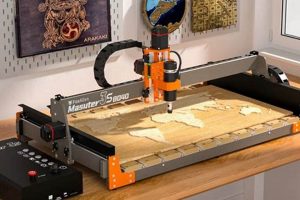
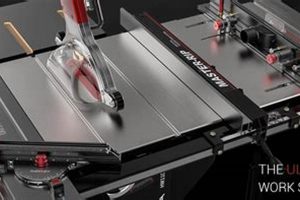
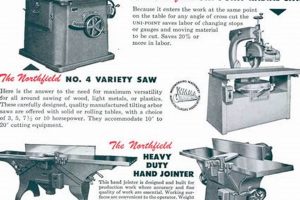
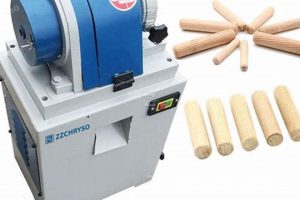
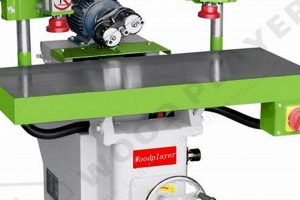
Stationary electrically operated devices designed for shaping wood are essential components in numerous fabrication environments. These tools, permanently mounted to a base or the floor, utilize electric motors to drive cutting implements like blades, bits, or sanding surfaces. Examples include table saws for precise cutting of boards, planers for creating smooth and uniform surfaces, and jointers for establishing perfectly square edges.
The implementation of these mechanized systems enhances efficiency and precision in woodworking projects. Compared to manual methods, they offer greater speed, repeatability, and accuracy. Historically, the development and refinement of these automated solutions have significantly impacted industries ranging from furniture manufacturing to construction, enabling mass production and improved quality control. The static nature of the machinery also promotes safety, allowing for the incorporation of features that minimize operator risk.
The following sections will delve into specific categories of these vital tools, exploring their operational principles, safety protocols, maintenance requirements, and selection criteria. An understanding of these aspects is crucial for effectively utilizing these resources and ensuring both optimal performance and a safe working environment.
Operational Best Practices
Adhering to established guidelines is paramount for ensuring safe and efficient utilization of stationary electrically operated devices used for shaping wood. The subsequent recommendations outline critical considerations for optimal performance and hazard mitigation.
Tip 1: Conduct Pre-Operational Inspections: Prior to activation, meticulously examine each machine for any signs of wear, damage, or malfunction. Verify the integrity of safety guards, power cords, and cutting implements. Any anomalies must be addressed before proceeding.
Tip 2: Employ Appropriate Personal Protective Equipment (PPE): Consistent and correct use of PPE is non-negotiable. Eye protection, hearing protection, and dust masks or respirators are mandatory to mitigate potential hazards such as projectile debris, excessive noise levels, and airborne particulate matter.
Tip 3: Secure Workpieces Adequately: Ensure the material being processed is firmly secured to the machine’s table or fixture. Inadequate fixation can result in workpiece slippage, increasing the risk of kickback or inaccurate cuts.
Tip 4: Utilize Push Sticks and Featherboards: Employ push sticks and featherboards to maintain a safe distance between hands and cutting blades. These auxiliary tools facilitate controlled material movement and prevent inadvertent contact.
Tip 5: Adhere to Recommended Feed Rates: Overly aggressive feeding of material into the machine can lead to motor overload, blade binding, and potential kickback. Consult the manufacturer’s specifications for recommended feed rates and adjust accordingly.
Tip 6: Maintain a Clean and Organized Workspace: A cluttered environment increases the likelihood of accidents. Regularly remove sawdust, scrap material, and other obstructions from the immediate vicinity of the machine.
Tip 7: Disconnect Power During Maintenance: Prior to performing any maintenance, repairs, or blade changes, disconnect the machine from its power source. This measure prevents accidental activation and potential injury.
Proper implementation of these guidelines contributes to a safer and more productive woodworking environment. Diligence in adhering to these practices minimizes risk and maximizes the lifespan of the equipment.
The concluding section will synthesize the key points discussed and provide recommendations for further research and development in the field of stationary electrically operated devices used for shaping wood.
1. Safety Mechanisms

Safety mechanisms are integral to the safe and efficient operation of stationary electrically operated devices used for shaping wood. These mechanisms are engineered to mitigate the inherent risks associated with high-speed cutting and shaping operations, protecting operators from potential injury.
- Blade Guards
Blade guards are physical barriers designed to prevent accidental contact with the cutting blade. Typically constructed of metal or durable plastic, these guards enclose the blade as much as possible while still allowing for workpiece manipulation. Examples include pivoting guards on table saws that automatically adjust to the height of the material being cut and fixed guards on jointers that shield the operator from the rotating cutter head. The correct installation and utilization of blade guards are crucial for minimizing the risk of lacerations and amputations.
- Emergency Stop Devices
Emergency stop (E-stop) devices provide a means to immediately halt the operation of the machinery in the event of an emergency. These devices, typically large, red buttons prominently located on the machine, are designed for quick and easy activation. Activating the E-stop disengages the motor and brings the cutting tool to a rapid stop, preventing further injury or damage. The effectiveness of E-stops relies on their accessibility and the operator’s familiarity with their location and function.
- Anti-Kickback Pawls and Splitters
Kickback, the sudden and forceful expulsion of a workpiece during sawing operations, poses a significant safety hazard. Anti-kickback pawls and splitters are designed to prevent this phenomenon. Pawls are one-way teeth that grip the workpiece, preventing it from being thrown back towards the operator. Splitters are vertical fins positioned behind the blade that keep the kerf (the cut made by the blade) open, preventing the wood from pinching the blade and causing kickback. Their proper adjustment and maintenance are essential for preventing hazardous incidents.
- Dust Collection Systems
While not directly preventing mechanical injuries, dust collection systems significantly contribute to overall safety by removing airborne particulate matter generated during woodworking operations. Excessive dust accumulation can reduce visibility, increase respiratory hazards, and create fire risks. Integrated dust collection systems, often consisting of hoods, ducts, and powerful vacuums, effectively capture and remove dust at the source, promoting a cleaner and healthier working environment. Regular maintenance of these systems is crucial for their continued effectiveness.
The implementation and consistent use of these safety mechanisms are paramount for fostering a secure working environment when operating stationary electrically operated devices used for shaping wood. Continuous evaluation and improvement of these safety features are necessary to address evolving hazards and ensure operator well-being.
2. Precision Cutting

The attainment of accuracy in shaping wood relies heavily on the capabilities of stationary electrically operated devices. These machines, through their inherent stability and engineered design, facilitate the execution of precise cuts essential for quality woodworking. Without these tools, achieving intricate designs and close-tolerance fits would be exceedingly difficult and time-consuming, if not impossible. The relationship is one of cause and effect: stable, powerful machinery enables accurate material removal.
Consider the example of crafting intricate joinery for high-end furniture. A mortise and tenon joint, requiring exacting dimensions for optimal strength and aesthetic appeal, benefits greatly from the use of a stationary mortising machine or a table saw with precision jigs. The stability of the machine minimizes vibration and ensures consistent cuts, allowing for the creation of tight-fitting joints that withstand stress and maintain structural integrity. Similarly, in architectural millwork, the production of consistent and accurate profiles is dependent on the use of shapers and molders, where precise cutter head adjustments and stable material feeding mechanisms are critical.
Ultimately, the capability for precise cutting is a defining characteristic of stationary electrically operated devices designed for shaping wood, directly impacting the quality, efficiency, and complexity of woodworking projects. While operator skill and technique remain crucial, the underlying machine technology provides the foundation for realizing accurate and repeatable results. Understanding the relationship is essential for optimizing workflow, selecting appropriate machinery, and ensuring the production of high-quality finished products. Further advancements in machine design and control systems continue to push the boundaries of achievable precision in woodworking.
3. Material Compatibility

The term “Material Compatibility” in the context of stationary electrically operated devices designed for shaping wood refers to the ability of various wood species and composite materials to be safely and effectively processed by specific machinery. This compatibility encompasses factors such as hardness, density, grain structure, and the presence of foreign objects within the material, all of which can significantly impact machine performance and operator safety.
- Wood Hardness and Machine Power
The hardness of the wood species dictates the power and cutting speed required for optimal machining. Softer woods, like pine and cedar, can be processed with lower power settings and faster feed rates. Conversely, hardwoods such as oak and maple necessitate higher power settings and slower feed rates to prevent motor strain, blade damage, and workpiece kickback. Operating machinery outside of its designed power range for a given wood hardness can lead to premature wear and increased risk of accidents.
- Material Density and Blade Selection
The density of the material being cut influences the appropriate blade selection. Denser materials require blades with a higher tooth count to achieve clean cuts and prevent splintering. Softer materials can be processed with blades having fewer teeth. Incorrect blade selection can result in rough cuts, excessive vibration, and reduced blade life. Further, material density affects the rate of heat buildup during cutting, potentially leading to blade warping and material discoloration.
- Grain Structure and Cutting Direction
The orientation of the wood grain relative to the cutting direction plays a crucial role in achieving smooth and accurate cuts. Cutting with the grain typically produces a cleaner finish compared to cutting against the grain, which can result in tear-out and splintering. Understanding the grain direction is essential for selecting the appropriate cutting technique and adjusting machine settings accordingly. Moreover, certain grain patterns can introduce unpredictable stresses within the material, requiring careful planning and support to prevent warping or splitting during machining.
- Composite Materials and Tooling Requirements
Composite materials, such as plywood and MDF, present unique challenges due to their layered construction and adhesive content. These materials often require specialized tooling, such as carbide-tipped blades, to withstand the abrasive nature of the adhesives and prevent rapid wear. Additionally, dust extraction systems are particularly important when processing composite materials, as the fine dust generated can pose significant respiratory hazards. The presence of formaldehyde and other volatile organic compounds in some composite materials also necessitates adequate ventilation.
In summary, a thorough understanding of material properties is essential for the safe and efficient operation of stationary electrically operated devices. Failure to account for factors such as wood hardness, density, grain structure, and the composition of composite materials can lead to reduced machine performance, increased risk of accidents, and compromised product quality. Proper tooling selection, machine setting adjustments, and adherence to safety protocols are critical for ensuring compatibility between the material being processed and the machinery being used.
4. Maintenance Procedures

Consistent adherence to documented maintenance procedures is paramount for ensuring the longevity, operational safety, and performance efficiency of stationary electrically operated devices designed for shaping wood. Proactive maintenance mitigates the risk of mechanical failure, reduces downtime, and preserves the precision required for quality woodworking.
- Lubrication of Moving Parts
The application of appropriate lubricants to bearings, gears, and sliding surfaces minimizes friction and wear. Inadequate lubrication can lead to overheating, increased power consumption, and eventual component failure. Manufacturers typically specify the recommended lubricants and lubrication intervals for each machine. Failure to follow these guidelines can void warranties and compromise performance. Real-world examples include regular greasing of table saw trunnions and application of dry lubricant to planer beds to facilitate smooth material feeding.
- Blade and Cutter Head Maintenance
Sharp cutting implements are essential for achieving clean cuts and preventing excessive strain on the machine motor. Regular sharpening or replacement of blades, knives, and router bits ensures optimal performance. Dull cutting edges necessitate increased force to push material through the machine, leading to rough cuts, potential kickback, and accelerated wear on machine components. This includes cleaning saw blades to remove resin buildup, which can affect cut quality and motor load.
- Inspection and Adjustment of Mechanical Components
Periodic inspection of belts, pulleys, fences, and other mechanical components is necessary to identify signs of wear, misalignment, or damage. Loose belts can slip, reducing power transfer and affecting cutting accuracy. Misaligned fences can result in inaccurate cuts and increase the risk of workpiece binding. Addressing these issues promptly prevents further damage and ensures the machine operates within its intended specifications. Tightening set screws, adjusting belt tension, and calibrating fences are typical tasks in this category.
- Electrical System Maintenance
The electrical system, including wiring, switches, and motors, requires periodic inspection to identify potential hazards such as frayed wires, loose connections, or overheating. Addressing these issues prevents electrical shocks, fires, and motor failure. This includes checking for proper grounding and ensuring that all safety switches are functioning correctly. Regular cleaning of motor windings prevents overheating due to dust accumulation.
The diligent execution of these maintenance procedures extends the operational life of stationary electrically operated devices, minimizes the risk of accidents, and ensures consistent production of high-quality woodworking projects. Neglecting these procedures results in increased downtime, costly repairs, and potential safety hazards.
5. Power Requirements
The operational efficacy of stationary electrically operated devices used for shaping wood is fundamentally contingent upon adequate and consistent power delivery. These machines, designed for rigorous material processing, demand specific voltage and amperage levels to drive their motors and ensure reliable performance. Insufficient power can result in motor overload, reduced cutting capacity, and, in extreme cases, permanent damage to the equipment. Therefore, a thorough understanding of power requirements is not merely a technical detail but a critical determinant of operational success and equipment longevity.
Consider the example of a large-capacity planer used in a commercial millwork shop. This machine, tasked with surfacing wide boards to exacting thicknesses, requires a dedicated 220V circuit with a substantial amperage rating. If connected to an undersized power source, the motor may struggle to maintain consistent cutting speed, leading to uneven planing and increased risk of motor burnout. Similarly, a high-powered table saw used for ripping thick hardwood necessitates a robust electrical supply to deliver the torque needed to drive the blade without stalling. A practical understanding of power requirements allows operators to correctly size electrical circuits, select appropriate extension cords, and implement power conditioning devices to protect against voltage fluctuations, ensuring smooth operation and minimizing the risk of equipment failure.
In summary, the correlation between power specifications and operational effectiveness cannot be overstated. Adherence to manufacturer-recommended power standards, coupled with proactive monitoring of electrical supply, constitutes a critical element in the safe and efficient utilization of these specialized tools. The challenge remains in ensuring that all users, from hobbyists to professionals, are adequately informed about power demands and the potential consequences of insufficient power delivery, thereby mitigating risks and optimizing performance.
Frequently Asked Questions Regarding Stationary Electrically Operated Devices for Shaping Wood
This section addresses common inquiries concerning the acquisition, operation, and maintenance of stationary electrically operated devices designed for shaping wood. The information presented is intended to provide clarity and promote safe and effective utilization of these tools.
Question 1: What are the primary safety considerations when operating stationary electrically operated devices?
Adherence to established safety protocols is paramount. This includes the consistent use of personal protective equipment (PPE), regular inspection of machine components, proper workpiece securing, and the implementation of auxiliary tools such as push sticks and featherboards. Familiarity with emergency stop procedures is also critical.
Question 2: How does wood hardness affect machine settings?
Wood hardness dictates the power and cutting speed required for optimal machining. Harder woods necessitate higher power settings and slower feed rates to prevent motor strain and blade damage. Softer woods can be processed with lower power settings and faster feed rates.
Question 3: What is the importance of blade selection relative to material density?
Material density influences the appropriate blade selection. Denser materials require blades with a higher tooth count to achieve clean cuts and prevent splintering. Softer materials can be processed with blades having fewer teeth. Incorrect blade selection can result in rough cuts and reduced blade life.
Question 4: Why is regular maintenance essential for stationary electrically operated devices?
Consistent maintenance minimizes the risk of mechanical failure, reduces downtime, and preserves the precision required for quality woodworking. This includes lubrication of moving parts, blade sharpening, inspection of mechanical components, and electrical system maintenance.
Question 5: What are the implications of insufficient power supply?
Insufficient power supply can result in motor overload, reduced cutting capacity, and potential damage to the equipment. Adherence to manufacturer-recommended power standards and proactive monitoring of electrical supply are crucial.
Question 6: How do dust collection systems contribute to safety?
Dust collection systems remove airborne particulate matter generated during woodworking operations. This improves visibility, reduces respiratory hazards, and minimizes fire risks. Regular maintenance of these systems is critical for their continued effectiveness.
In summary, understanding the operational characteristics and maintenance requirements of stationary electrically operated devices is crucial for ensuring safety, maximizing efficiency, and prolonging equipment life.
The next section will provide a glossary of terms commonly associated with stationary electrically operated devices for shaping wood.
Conclusion
The preceding discussion has outlined critical aspects of fixed power-driven woodworking machines, encompassing operational practices, safety protocols, material compatibility, maintenance procedures, and power requirements. A comprehensive understanding of these factors is essential for individuals and organizations engaged in woodworking activities. These machines represent a significant capital investment, and their effective utilization directly impacts productivity, safety, and the quality of finished products.
Continued research and development in this field are necessary to enhance safety features, improve energy efficiency, and expand the range of materials that can be processed effectively. Rigorous adherence to established safety guidelines and proactive maintenance practices remain paramount for minimizing risk and maximizing the lifespan of this indispensable equipment. The future of woodworking hinges, in part, on the responsible and informed application of these powerful tools.