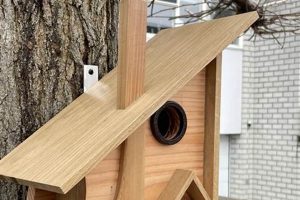
Structures and items crafted from wood designed for outdoor spaces represent a specific category of construction. These items range from functional pieces like raised garden beds and compost bins to decorative elements such as planters, trellises, and garden furniture. A basic example includes the construction of a simple wooden bench for seating in a backyard setting.
The utilization of wood in external environments offers multiple advantages, including aesthetic appeal, customization options, and relative ease of construction. Historically, wood has been a primary material for creating outdoor structures due to its availability and workability. Furthermore, introducing wooden elements into gardens can enhance biodiversity by providing habitats for insects and other small creatures. The practice fosters a connection with nature and promotes sustainable resource use when sourced responsibly.
The following sections will delve into specific design considerations, material selection processes, and construction techniques applicable to creating durable and visually appealing outdoor wooden installations. Topics include understanding wood types suitable for exterior use, planning project dimensions, and implementing appropriate protective finishes to ensure longevity.
Guidance for Outdoor Wood Crafting
The subsequent points provide practical advice for achieving successful and long-lasting results when undertaking outdoor wooden construction endeavors.
Tip 1: Material Selection is Paramount: Employ naturally decay-resistant species like cedar, redwood, or cypress, or pressure-treated lumber to mitigate the detrimental effects of moisture and insect infestation. Proper lumber grading is crucial for structural integrity.
Tip 2: Thorough Planning Prevents Errors: Prior to commencing construction, develop detailed drawings outlining precise measurements and joinery methods. This reduces material waste and ensures structural stability. Consider anticipated load bearing.
Tip 3: Implement Sound Joinery Techniques: Choose robust joinery methods such as mortise-and-tenon, dovetail, or dado joints for optimal strength and durability in exterior conditions. Secure joints with exterior-grade adhesives and fasteners.
Tip 4: Protective Finishes Extend Lifespan: Apply penetrating oil-based stains or paints specifically formulated for outdoor use to shield the wood from ultraviolet radiation, moisture, and fungal growth. Reapply coatings periodically.
Tip 5: Ensure Adequate Drainage: Design projects to facilitate water runoff. Elevate structures slightly above ground level and incorporate drainage features to prevent water accumulation and wood rot. Spacing between boards also aids in drainage.
Tip 6: Prioritize Hardware Quality: Utilize corrosion-resistant hardware, such as stainless steel or hot-dipped galvanized fasteners, to prevent rust and maintain structural integrity over time.
Tip 7: Account for Wood Movement: Wood expands and contracts with changes in moisture content. Incorporate expansion gaps into the design to accommodate these fluctuations and prevent warping or cracking.
Implementing these guidelines will enhance the structural integrity, longevity, and aesthetic appeal of wooden elements within outdoor spaces.
The following sections will explore diverse project ideas and step-by-step construction methods for creating custom outdoor wooden features.
1. Durable Material Selection

The selection of appropriate materials is paramount to the longevity and functionality of outdoor wooden structures. Material properties directly influence resistance to environmental factors, structural integrity, and overall aesthetic appeal.
- Wood Species and Natural Resistance
Certain wood species possess inherent resistance to decay, insect infestation, and moisture damage. Cedar, redwood, and cypress contain natural oils that act as preservatives, minimizing the need for chemical treatments. These species are suitable for raised garden beds, planters, and other structures in direct contact with soil and water. The longevity of these projects is directly proportional to the inherent resistance of the chosen wood.
- Pressure-Treated Lumber and Chemical Modification
Pressure-treated lumber undergoes a process of chemical impregnation that renders it resistant to decay and insects. While cost-effective, proper selection of treatment type is critical to ensure safety, especially for projects intended for edible gardens. Consider using newer, environmentally friendly treatments when possible. The consistent application of treatment throughout the wood extends the service life of the project in harsh environments.
- Composite Wood and Synthetic Alternatives
Composite lumber, manufactured from recycled plastics and wood fibers, offers exceptional durability and resistance to moisture and insect damage. While typically more expensive than traditional lumber, composite materials require minimal maintenance and are ideal for projects exposed to constant wetness, such as decking or edging. They provide a sustainable alternative to harvesting virgin timber and can significantly extend the life of a garden structure.
- Fasteners and Corrosion Resistance
Even the most durable wood can be compromised by the use of inappropriate fasteners. Corrosion-resistant screws, nails, and bolts are essential for maintaining the structural integrity of outdoor wooden structures. Stainless steel or hot-dipped galvanized fasteners are recommended to prevent rust and ensure long-term stability, especially in regions with high humidity or coastal environments. The use of inferior fasteners can negate the benefits of selecting durable wood species.
Careful consideration of these factors within material selection directly impacts the success of outdoor wooden construction endeavors. Prioritizing durability ensures long-term functionality, reduces maintenance requirements, and maximizes the overall value of crafted elements in the garden environment.
2. Accurate Project Planning

Effective construction of external wooden installations depends significantly on detailed and precise project planning. This phase establishes the groundwork for a structurally sound and aesthetically pleasing result, mitigating potential errors and optimizing resource utilization.
- Dimensional Accuracy and Material Estimation
Precise measurements are crucial for material procurement and construction. Detailed drawings outlining dimensions, angles, and material specifications minimize waste and prevent costly errors during assembly. Accurately estimating lumber requirements ensures that sufficient material is available without overstocking. For instance, a detailed plan for a raised garden bed includes length, width, height, and thickness of each component, allowing for exact material calculations and reducing unnecessary cuts.
- Structural Load Considerations and Design Integrity
Planning must account for the anticipated weight and stress on the structure. Factors such as soil load in raised beds, wind resistance for trellises, and weight capacity for benches must be calculated to ensure structural stability. Design considerations include appropriate support systems, joint reinforcement, and material thickness to withstand environmental pressures. Failure to account for these loads can lead to premature failure or collapse of the structure. A well-planned pergola, for example, would consider snow load and wind forces when determining beam size and support post spacing.
- Site Assessment and Environmental Integration
Comprehensive site assessment is essential for integrating the wooden structure with the existing landscape. Factors such as soil composition, drainage patterns, sunlight exposure, and proximity to existing vegetation influence design choices. Planning should accommodate these environmental considerations to optimize functionality and minimize potential negative impacts. A plan for a compost bin, for example, should consider drainage to prevent waterlogging and proximity to garden beds for efficient nutrient cycling.
- Permitting Requirements and Building Codes Compliance
Depending on the size and scope of the project, local building codes and permitting requirements may apply. Thorough research and adherence to these regulations are essential to avoid legal issues and ensure safety. Planning should include allowances for inspections and modifications necessary to comply with local ordinances. Larger structures, such as sheds or pergolas, often require permits and adherence to specific setback regulations.
These components collectively underline the importance of meticulous planning in the successful creation of durable and functional elements. A comprehensive plan serves as a blueprint for translating conceptual designs into tangible installations, maximizing efficiency, minimizing risks, and ensuring long-term satisfaction with the finished product.
3. Robust Joint Construction

The longevity and structural integrity of outdoor wooden installations are intrinsically linked to the quality of their joinery. Environmental exposure places significant stress on these projects, necessitating strong and durable connections to withstand moisture, temperature fluctuations, and physical loads. Inferior joints are prone to failure, leading to structural instability, aesthetic degradation, and ultimately, reduced lifespan of the wooden structure. A raised garden bed constructed with poorly executed butt joints, for example, will likely separate at the seams under the pressure of the soil, rendering it unusable. Therefore, the investment in robust joint construction is a fundamental aspect of successful project design and execution.
Different joint types offer varying degrees of strength and suitability for specific applications. Mortise-and-tenon joints, where a projecting tenon from one piece of wood fits securely into a mortise (hole) in another, provide exceptional strength and resistance to racking forces, making them ideal for structural elements like pergola posts and beam connections. Dovetail joints, characterized by interlocking wedge-shaped projections, offer superior tensile strength and are well-suited for drawer construction in outdoor storage units. Lap joints, where two pieces of wood overlap and are fastened together, offer a balance of strength and ease of construction for applications such as framing for raised beds. The selection of appropriate joinery techniques must align with the specific demands of the project.
In conclusion, robust joint construction is not merely a technical detail but a critical determinant of the success of outdoor wooden installations. The application of sound joinery principles ensures structural stability, enhances aesthetic appeal, and maximizes the service life of structures. Overlooking this aspect can lead to premature failure, increased maintenance costs, and compromised safety. Consequently, a thorough understanding of joint types, their strengths and weaknesses, and their proper application is essential for any undertaking involving external wooden construction.
4. Protective Surface Finishing
The application of appropriate surface treatments is a non-negotiable element in the construction of durable wooden garden features. The external environment subjects wood to a relentless assault of moisture, ultraviolet radiation, temperature fluctuations, and biological agents, all of which contribute to degradation. Without a robust protective barrier, wooden structures will rapidly succumb to decay, warping, cracking, and insect infestation. Therefore, protective surface finishing constitutes a vital defense mechanism, extending the service life and preserving the aesthetic integrity of installations.
The selection of suitable finishes is dependent upon factors such as wood species, intended function, and desired aesthetic. Penetrating oil-based stains provide water repellency and UV protection while enhancing the natural grain of the wood. These are well-suited for applications such as benches and tables. Film-forming paints offer a greater degree of opacity and color versatility, but require careful application and maintenance to prevent cracking and peeling. Paints are frequently used for raised garden beds or decorative elements. Wood preservatives containing fungicides and insecticides offer additional protection against biological decay, but must be selected and applied with consideration for environmental safety, especially in proximity to edible plants. Proper surface preparation, including sanding and cleaning, is crucial for optimal adhesion and performance of the chosen finish. Reapplication of the finish at recommended intervals is necessary to maintain protection.
In conclusion, the investment in quality protective surface finishing is a cost-effective measure that significantly extends the longevity and enhances the visual appeal of wooden garden constructions. Ignoring this crucial step is a false economy that will inevitably lead to premature failure and costly replacements. Proper selection, application, and maintenance of protective coatings are integral to the sustainable and aesthetically pleasing integration of wooden elements into the landscape.
5. Effective Water Management
The integration of water management strategies is critical to the success and longevity of structures deployed in outdoor settings. Moisture is a primary agent of deterioration for wooden materials; consequently, design and construction must proactively address water accumulation and promote rapid drainage to mitigate decay, warping, and structural failure.
- Drainage Integration in Raised Bed Construction
Raised garden beds are in direct contact with soil and water, making them particularly susceptible to moisture damage. Incorporating drainage holes or gravel bases facilitates water runoff, preventing waterlogged soil and extending the life of the wood. Elevating the bed slightly above ground level further promotes drainage and reduces ground contact. Failure to implement these measures results in accelerated wood rot and structural instability, diminishing the functional lifespan.
- Roofing and Overhangs for Structures
Structures such as sheds, pergolas, and potting benches benefit from roofing and overhangs that deflect rainwater away from wooden components. Overhangs protect vertical surfaces from direct exposure to rainfall, reducing moisture absorption and preventing water damage. Properly sloped roofing channels water away from the structure’s base, minimizing soil erosion and preventing water accumulation around posts or foundations. These design elements contribute to long-term structural integrity and reduced maintenance requirements.
- Protective Coatings and Sealants Application
While not a replacement for physical drainage features, the application of water-repellent coatings and sealants provides an additional layer of protection against moisture intrusion. These treatments create a barrier that prevents water from penetrating the wood fibers, reducing swelling, warping, and decay. Reapplication at regular intervals is necessary to maintain the effectiveness of these coatings, particularly on surfaces exposed to direct sunlight and rainfall. Selection of appropriate coatings should consider the specific wood species and the intended function of the structure.
- Material Selection for Moisture Resistance
Choosing naturally decay-resistant wood species like cedar, redwood, or cypress inherently improves resistance to water damage. These species contain natural oils that act as preservatives, inhibiting fungal growth and insect infestation. Alternatively, pressure-treated lumber offers enhanced resistance to moisture and decay, but requires careful consideration for environmental safety, especially in contact with soil or plants intended for consumption. The selection of materials must align with the intended function of the structure and the prevailing environmental conditions.
These facets demonstrate the essential connection between managing water and maintaining the quality of wooden elements. From incorporating physical drainage features to applying protective coatings and selecting appropriate materials, a holistic approach to water management is indispensable for long-lasting and functional outdoor structures.
6. Appropriate Hardware Usage

The selection and deployment of suitable hardware significantly impact the structural integrity, longevity, and safety of external wooden constructions. Hardware failure can compromise structural stability and functionality, leading to premature deterioration and potential hazards. Consequently, careful consideration of hardware properties and application techniques is essential for successful project outcomes.
- Corrosion Resistance and Material Selection
Exposure to the elements necessitates the use of corrosion-resistant materials for fasteners, hinges, and other hardware components. Stainless steel, hot-dipped galvanized steel, and brass offer superior resistance to rust and degradation compared to standard steel. Selection of appropriate materials is contingent upon the anticipated exposure conditions, including humidity, salt spray, and contact with treated lumber. Utilizing substandard hardware can lead to rapid corrosion, weakening of joints, and eventual structural failure. For instance, coastal garden structures require stainless steel hardware to withstand saltwater corrosion, while galvanized steel may suffice for inland projects.
- Load Capacity and Structural Integrity
Hardware components must be selected to withstand the anticipated loads and stresses imposed on the wooden structure. Hinges, latches, and fasteners should possess sufficient load-bearing capacity to support the weight of gates, doors, or suspended elements. Overloading hardware can lead to deformation, breakage, and structural collapse. For example, a gate secured with undersized hinges is prone to sagging and eventual failure. Calculating load requirements and selecting appropriate hardware sizes are essential for ensuring structural integrity.
- Fastener Selection and Joint Strength
The type and size of fasteners significantly influence the strength and stability of wooden joints. Screws offer greater holding power than nails, particularly in applications subjected to pulling forces or vibrations. Exterior-grade adhesives can supplement mechanical fasteners, enhancing joint strength and preventing moisture intrusion. The selection of fastener length and diameter should be appropriate for the thickness and density of the wood being joined. Using excessively short or thin fasteners can compromise joint strength and lead to loosening or separation over time. The use of proper drilling techniques prior to screw insertion prevents wood splitting and enhances fastener grip.
- Compatibility with Wood Treatment and Finishes
Certain hardware materials may react adversely with wood preservatives or finishes, leading to corrosion or discoloration. Copper and brass hardware should be avoided in contact with pressure-treated lumber containing alkaline copper quaternary (ACQ), as the chemical reaction can accelerate corrosion. Compatibility charts and manufacturer recommendations should be consulted to ensure that hardware materials are compatible with chosen wood treatments and finishes. Failure to consider compatibility can result in premature hardware failure and aesthetic degradation of the wooden structure.
In summary, appropriate hardware usage is a multifaceted consideration that directly impacts the functionality, safety, and longevity of elements. From selecting corrosion-resistant materials to calculating load capacities and ensuring compatibility with wood treatments, meticulous attention to hardware details is essential for achieving successful project outcomes and maximizing the return on investment.
Frequently Asked Questions Regarding Garden Woodworking Projects
The subsequent questions address common inquiries pertaining to the design, construction, and maintenance of garden woodworking projects. Clarity on these issues facilitates successful implementation and prolonged usability.
Question 1: Which wood species offer the greatest resistance to decay in outdoor environments?
Species such as cedar, redwood, and cypress contain natural oils that render them highly resistant to rot and insect infestation. Pressure-treated lumber provides an alternative option, although its environmental impact should be considered.
Question 2: What joinery techniques provide the most durable connections for outdoor wooden structures?
Mortise-and-tenon, dovetail, and dado joints offer superior strength and stability compared to simpler joints like butt joints. The selection of an appropriate joinery method depends on the specific application and the loads it will bear.
Question 3: How frequently should protective finishes be reapplied to garden woodworking projects?
The reapplication frequency depends on the type of finish and the level of exposure to the elements. Generally, penetrating oil-based stains require reapplication every one to two years, while paints may last longer but require closer monitoring for cracking or peeling.
Question 4: What measures can be taken to prevent water accumulation and promote drainage in raised garden beds?
Incorporating drainage holes, using a gravel base, and elevating the bed slightly above ground level facilitates water runoff. Soil composition should also be considered to ensure adequate drainage.
Question 5: What type of hardware is best suited for outdoor wooden structures?
Stainless steel and hot-dipped galvanized steel offer superior corrosion resistance in outdoor environments. The size and load capacity of hardware should be carefully selected to match the requirements of the project.
Question 6: How does wood movement impact the design and construction of garden woodworking projects?
Wood expands and contracts with changes in moisture content. Incorporating expansion gaps and allowing for wood movement in the design prevents warping, cracking, and joint failure.
Understanding these factors promotes successful project completion and ensures long-term satisfaction. Proper planning and execution result in enduring and aesthetically pleasing additions to garden spaces.
The following section will offer step-by-step guides for constructing specific types of garden woodworking projects.
Conclusion
This exploration has detailed the critical aspects of constructing functional and aesthetically pleasing structures for outdoor environments. The success of these endeavors rests on a foundation of careful material selection, meticulous planning, robust joinery, protective finishing, and effective water management. Attending to these details ensures the creation of enduring and valuable additions to any outdoor setting. The selection of quality materials and correct construction techniques are important for completing woodworking project.
The information presented provides a solid framework for undertaking such projects with confidence. Prioritizing sound construction principles will contribute to sustainable landscaping practices. Individuals are encouraged to approach outdoor construction with a dedication to both craftsmanship and environmental responsibility. The future of garden woodworking involves a commitment to creating structures that are both beautiful and ecologically sound.