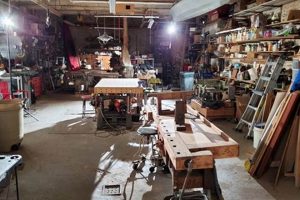
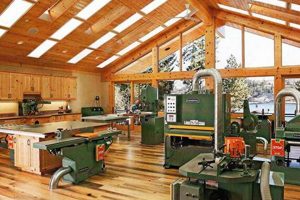
Establishing a dedicated space for crafting projects involving wood requires careful planning and execution. This process encompasses selecting a suitable area, acquiring necessary tools, and implementing safety measures to ensure a productive and secure environment for woodworking activities. This preparation is fundamental to achieving desired outcomes when working with wood.
A properly arranged workspace optimizes efficiency and minimizes potential hazards. It fosters creativity and enables the execution of complex designs. Historically, dedicated spaces for woodworking have evolved from rudimentary outdoor setups to specialized indoor areas equipped with advanced machinery, reflecting advancements in both woodworking techniques and tool technology.
The following sections will delve into crucial aspects, including space selection, essential tool acquisition, dust management, and safety protocols, all vital components in creating an effective and organized location for wood projects.
Essential Considerations
The creation of a functional space for woodworking involves meticulous planning and attention to detail. Prioritization of safety and workflow is crucial for optimal output.
Tip 1: Space Assessment. Evaluate available square footage considering the dimensions of planned projects and equipment. Allocate distinct zones for material storage, assembly, and finishing. Proper spatial arrangement contributes significantly to operational efficiency.
Tip 2: Tool Acquisition Prioritization. Begin with essential tools such as a table saw, jointer, planer, and drill press. Invest in quality tools that provide accuracy and longevity. Expansion of the tool collection should align with project demands.
Tip 3: Dust Management Implementation. Install a dust collection system to mitigate airborne particulates. A combination of a central dust collector and localized shop vacuums is often necessary for effective particle removal. Consider an air filtration system for enhanced air quality.
Tip 4: Illumination Optimization. Adequate lighting is paramount for precision work and safety. Supplement overhead lighting with task lighting to eliminate shadows and enhance visibility. Employ high-lumen LED fixtures for energy efficiency and accurate color rendering.
Tip 5: Electrical Capacity Evaluation. Ensure the electrical system can accommodate the power demands of all equipment. Consult with a qualified electrician to upgrade wiring and outlets as needed. Dedicate circuits for high-amperage tools to prevent overloads.
Tip 6: Workbench Construction. A robust and stable workbench is indispensable. Construct a workbench with ample surface area and integrated clamping systems. Consider incorporating storage drawers and shelves for tool organization.
Tip 7: Material Storage Strategies. Implement a vertical storage system for lumber and sheet goods to conserve floor space. Utilize racks and shelving units to organize hardware, fasteners, and finishing supplies. Label all storage containers for easy identification.
These considerations provide a foundation for a safe, efficient, and enjoyable woodworking practice. Careful planning and execution in these areas will contribute significantly to the overall quality of projects.
The subsequent sections will explore specific tool recommendations and safety protocols in greater detail.
1. Space Allocation

Space allocation is a foundational aspect when establishing a woodworking shop. The efficiency and safety of woodworking activities are directly influenced by the judicious use of available area. Thoughtful arrangement optimizes workflow and mitigates potential hazards.
- Footprint Assessment and Zoning
Determining the total square footage available is the initial step. Subsequently, the area is divided into functional zones, including material storage, tool storage, assembly, finishing, and machine operation. Each zone requires specific spatial considerations. Insufficient space can lead to clutter, impede movement, and increase the risk of accidents. An adequately zoned area ensures a smooth and logical workflow.
- Machine Placement and Clearance
Large stationary tools, such as table saws and planers, demand sufficient clearance for operation and material handling. Space must be allocated around each machine to allow for the safe and unimpeded passage of workpieces. Inadequate clearance restricts movement, potentially leading to inaccurate cuts or collisions. Precise machine placement is therefore essential for efficient and accurate work.
- Material Storage Optimization
Raw materials, including lumber and sheet goods, require a dedicated storage area. Implementing vertical storage solutions, such as racks and shelving, maximizes the utilization of available space. Properly organized storage minimizes the risk of damage to materials and facilitates easy retrieval. Neglecting material storage can result in wasted materials and increased clutter, impeding overall shop efficiency.
- Traffic Flow and Ergonomics
The arrangement of tools and workspaces influences traffic flow within the shop. A clear and unobstructed path between work zones enhances safety and reduces fatigue. Ergonomic considerations, such as workbench height and the placement of frequently used tools, contribute to operator comfort and reduce the risk of strain injuries. Optimized traffic flow and ergonomic design improve productivity and minimize physical strain.
Effective space allocation is not merely about maximizing area; it is about strategically organizing the shop to enhance workflow, safety, and efficiency. A well-planned shop facilitates project completion and minimizes potential risks, contributing to a more productive and enjoyable woodworking experience. Considerations pertaining to space must be integrated at the outset of setting up woodworking spaces and adapted according to evolving requirements and project scopes.
2. Tool Selection

Appropriate tool selection is a critical determinant of success in any woodworking endeavor. In the context of establishing a home woodworking shop, the initial tool acquisitions significantly influence the scope and quality of projects that can be undertaken. Thoughtful consideration of needs, budget, and space limitations is essential.
- Defining Core Tool Set
The core tool set constitutes the fundamental equipment necessary for basic woodworking tasks. This typically includes a table saw, jointer, planer, drill press, and various hand tools. The selection criteria should prioritize quality and precision over initial cost, as durable tools will provide superior performance and longevity. Inadequacy in the core tool set limits project complexity and may compromise safety.
- Matching Tools to Project Scope
Tool selection must align with the intended scope of woodworking projects. For instance, intricate carving requires specialized carving tools, while cabinetmaking necessitates precision measuring and joinery tools. Attempting to execute projects with inadequate tools often results in substandard outcomes and increased frustration. A clear understanding of project requirements informs optimal tool selection.
- Hand Tools vs. Power Tools
A balance between hand tools and power tools is essential in a well-equipped shop. Power tools offer efficiency and speed for repetitive tasks, while hand tools provide greater control and precision for intricate work. Overreliance on power tools can diminish craftsmanship, while neglecting power tools can limit productivity. A judicious combination of both tool types maximizes versatility and efficiency.
- Budget Allocation and Prioritization
Establishing a woodworking shop often involves budgetary constraints. Prudent allocation of funds should prioritize essential tools and safety equipment. Acquiring quality used tools can provide a cost-effective alternative to purchasing new equipment. Overspending on non-essential tools can limit the ability to acquire necessary items, ultimately hindering project execution.
The synergy between judicious tool selection and effective shop setup underpins successful woodworking practices. Appropriate tool choices not only facilitate project completion but also enhance safety, precision, and overall enjoyment of the craft. As woodworking skills evolve and project demands increase, the tool collection should expand accordingly, ensuring continued growth and creativity within the workshop.
3. Dust Control

Effective dust control is an indispensable element in establishing a home woodworking shop. Wood dust generated from sawing, sanding, and routing contains fine particles that pose significant health risks through inhalation and skin contact. The accumulation of dust also presents a fire hazard and reduces the efficiency of tools and machinery. Therefore, incorporating dust control measures from the outset is critical for safeguarding health, minimizing risks, and maintaining a productive workspace. For example, a shop without dust control can lead to respiratory ailments, necessitating costly medical interventions and hindering long-term woodworking activities.
Implementing a comprehensive dust control strategy involves several components. The selection of appropriate dust collection systems, such as central dust collectors or portable shop vacuums, must align with the shop’s size and the types of tools used. Localized dust collection at the source, utilizing dust ports and shrouds integrated with power tools, is particularly effective in capturing dust before it becomes airborne. Additionally, incorporating an air filtration system to remove airborne particles further enhances air quality. Regular cleaning of the shop, including surfaces and equipment, prevents dust accumulation and reduces exposure risks. Ignoring these factors can lead to rapid dust buildup, compromising air quality and potentially damaging equipment. In contrast, a well-maintained dust control system creates a safer and more comfortable working environment, prolonging the lifespan of tools and enhancing the quality of finished products.
In summary, dust control is not merely an ancillary consideration but an integral component of any well-equipped and professionally managed woodworking shop. The initial investment in dust control systems yields long-term benefits in terms of health, safety, and operational efficiency. Failing to address dust control adequately can result in significant health risks and diminished productivity. Thus, a proactive approach to dust management is essential for sustaining a safe and productive woodworking practice.
4. Safety Measures

The integration of robust safety measures constitutes a fundamental element when establishing a home woodworking shop. The inherent risks associated with woodworking machinery and techniques necessitate a proactive and comprehensive approach to safety. Failure to implement adequate safety protocols can result in severe injuries, equipment damage, and potential fire hazards. Consequently, the careful consideration and execution of safety measures are not merely advisable but rather essential for a sustainable and secure woodworking environment. For instance, the absence of eye protection during sawing operations can lead to irreversible eye injuries, highlighting the critical importance of adherence to safety standards. Safety measures are inseparable when learning how to set up a home woodworking shop.
Specific safety measures encompass a wide range of practices and equipment. Personal protective equipment (PPE), including safety glasses, hearing protection, and dust masks, serves as the first line of defense against potential hazards. Adherence to safe operating procedures for all power tools is paramount, requiring thorough understanding of the tool’s capabilities and limitations. The installation and maintenance of safety devices, such as blade guards and push sticks, further mitigate the risk of accidents. Proper ventilation to remove dust and fumes minimizes exposure to hazardous substances. Regular inspection and maintenance of tools and equipment ensure their safe and reliable operation. The establishment of a designated first-aid kit and a clear understanding of emergency procedures are also indispensable components of a comprehensive safety strategy. Real-life examples showcase the significance of safety; such as an individual neglecting PPE during a lathe operation and resulting in a severe eye injury emphasizing the gravity. It’s crucial to fully encompass and implement safety measures when learning how to set up a home woodworking shop.
In summary, the incorporation of stringent safety measures is not merely an adjunct to setting up a home woodworking shop but rather an intrinsic aspect that directly influences the well-being of the user and the longevity of the workshop environment. By prioritizing safety through the implementation of PPE, adherence to safe operating procedures, and the maintenance of a safe workspace, potential risks are significantly mitigated, fostering a productive and secure woodworking practice. Ultimately, the commitment to safety reflects a responsible and professional approach to woodworking. Neglecting safety measures when learning how to set up a home woodworking shop can have severe repercussions.
5. Electrical Capacity
Electrical capacity is a foundational consideration in establishing a home woodworking shop. The safe and efficient operation of woodworking machinery hinges directly on the adequacy of the electrical infrastructure. Insufficient capacity can lead to equipment malfunction, fire hazards, and compromised safety. A thorough assessment and appropriate upgrades are essential.
- Circuit Load Calculation
Determining the aggregate electrical load of all planned woodworking equipment is the initial step. Each tool’s amperage requirements must be identified and summed to ascertain the total load. Overlooking this calculation can result in overloaded circuits, causing breakers to trip frequently and potentially damaging equipment. Accurately calculating the load ensures the electrical system can safely handle the demands of the woodworking shop.
- Dedicated Circuit Allocation
Allocating dedicated circuits for high-amperage tools, such as table saws and planers, is crucial for preventing overloads and ensuring stable power delivery. Sharing circuits among multiple high-demand devices increases the risk of tripped breakers and voltage drops, which can compromise tool performance and lifespan. Dedicated circuits provide a stable and reliable power supply for individual tools, minimizing disruptions and maximizing efficiency.
- Outlet Placement and Wiring Gauge
Strategic placement of electrical outlets throughout the shop ensures convenient access to power for all equipment. Outlets should be positioned near each machine and workbench, minimizing the need for extension cords, which can create trip hazards and voltage drops. Utilizing appropriate wiring gauge is equally important for handling the electrical load without overheating. Under-gauged wiring can lead to fire hazards and equipment damage. Proper outlet placement and wiring gauge contribute to a safe and efficient electrical system.
- Grounding and Safety Measures
Proper grounding of all electrical equipment is paramount for preventing electrical shocks. Grounding provides a safe path for fault currents, minimizing the risk of electrocution. Additionally, the installation of ground fault circuit interrupters (GFCIs) in wet or potentially damp areas further enhances safety. GFCIs quickly detect and interrupt fault currents, preventing electrical shocks. Grounding and GFCIs are essential safety measures for any woodworking shop.
The electrical capacity of a home woodworking shop directly influences its functionality and safety. A well-planned and appropriately upgraded electrical system ensures the reliable operation of tools, minimizes hazards, and provides a foundation for productive woodworking activities. Neglecting electrical considerations can lead to significant safety risks and operational inefficiencies. As a critical component of how to set up a home woodworking shop, investment and careful preparation ensures sustained performance of all equipment.
6. Workbench Design

Workbench design is integrally linked to the successful establishment of a home woodworking shop. The workbench serves as the central hub for numerous woodworking operations, influencing efficiency, precision, and safety. Improper design choices can negatively impact project outcomes and increase the risk of injury. Conversely, a well-designed workbench optimizes workflow, enhances accuracy, and promotes a safer working environment. As a fixed station, a well chosen design is crucial in learning how to set up a home woodworking shop.
The connection between workbench design and shop setup manifests in several practical ways. A robust and stable workbench provides a solid foundation for hand tool operations, such as planing and chiseling. Integrated clamping systems facilitate secure workpiece holding, enhancing accuracy and reducing the likelihood of slippage. Sufficient surface area accommodates larger projects and provides ample space for tool organization. Proper workbench height minimizes strain and fatigue, promoting comfortable and efficient work. Real-world examples demonstrate the practical significance of this connection. A cabinetmaker struggling with an unstable workbench while assembling a cabinet frame exemplifies the challenges posed by poor design. Investing in a well-designed workbench provides a stable and ergonomic work surface, improving productivity and minimizing physical strain; making workbench design a necessity in learning how to set up a home woodworking shop.
In summary, workbench design is not merely an ancillary consideration but rather a crucial element in the establishment of a functional and efficient woodworking shop. The workbench’s design directly influences the quality, precision, and safety of woodworking projects. A well-conceived workbench facilitates workflow, enhances accuracy, and minimizes physical strain, contributing to a more productive and enjoyable woodworking experience. The design consideration is therefore indispensable for anyone seeking to establish a successful home woodworking shop and an important element in learning how to set up a home woodworking shop. Careful planning in designing a workbench should not be ignored when learning how to set up a home woodworking shop.
Frequently Asked Questions
The following addresses commonly encountered inquiries regarding the setup of a residential woodworking space, offering guidance on key considerations and best practices.
Question 1: What is the minimum space requirement for a functional woodworking shop?
The minimum space is contingent upon the scale and nature of intended projects. However, a dedicated area of at least 200 square feet is generally recommended to accommodate essential machinery and allow for safe material handling. Smaller spaces may necessitate compromises in tool selection and workflow efficiency.
Question 2: Which power tools are considered essential for a beginner’s woodworking shop?
A table saw, jointer, planer, and drill press constitute a foundational power tool set. These tools collectively facilitate the accurate and efficient processing of raw lumber, enabling the creation of basic woodworking projects. Subsequent tool acquisitions should align with evolving project needs.
Question 3: What are the most effective methods for mitigating wood dust in a home shop environment?
A multi-faceted approach to dust control is recommended. This includes the use of a central dust collector connected to stationary machinery, localized shop vacuums for portable tools, and an air filtration system to capture airborne particulates. Regular cleaning of the shop prevents dust accumulation and minimizes exposure risks.
Question 4: What are the primary safety considerations when operating woodworking machinery?
Adherence to safe operating procedures is paramount. This includes the use of personal protective equipment (PPE), such as safety glasses and hearing protection, as well as the consistent use of safety devices, such as blade guards and push sticks. Thorough understanding of each tool’s operating manual is essential.
Question 5: How should electrical capacity be evaluated and addressed when setting up a shop?
A licensed electrician should conduct a thorough assessment of the existing electrical system. The total amperage draw of all planned equipment must be calculated to ensure the system can safely accommodate the load. Dedicated circuits for high-amperage tools are recommended, and wiring upgrades may be necessary.
Question 6: What constitutes an ideal workbench design for woodworking activities?
A robust and stable workbench is indispensable. The bench should feature ample surface area, integrated clamping systems, and a comfortable working height. The inclusion of storage drawers and shelves enhances tool organization and accessibility. Customization based on individual preferences and project requirements is encouraged.
These responses provide a foundational understanding of key considerations when establishing a home woodworking shop. Addressing these frequently asked questions will contribute to a safer, more efficient, and ultimately more rewarding woodworking experience.
The following section will offer a summarized checklist for setting up a successful home woodworking shop.
Establishing a Functional Woodworking Space
The preceding discussion has provided a comprehensive overview of the essential factors involved in creating a home woodworking shop. Careful consideration of space allocation, tool selection, dust control, safety measures, electrical capacity, and workbench design is critical for establishing a secure and efficient workspace. Each element contributes uniquely to the overall quality and productivity of the shop environment. Neglecting any of these aspects can compromise safety, hinder workflow, and ultimately limit the scope and quality of woodworking projects.
The successful creation of a home woodworking shop necessitates diligent planning, meticulous execution, and an unwavering commitment to safety. By adhering to the principles outlined above, individuals can establish a productive and enjoyable environment for pursuing the craft of woodworking. Ongoing maintenance, continuous improvement, and a steadfast dedication to safety will ensure the long-term viability and utility of the woodworking space. The implementation of these measures represents a significant investment in both the craft itself and the well-being of the woodworker.