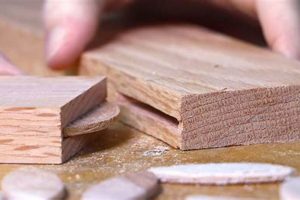
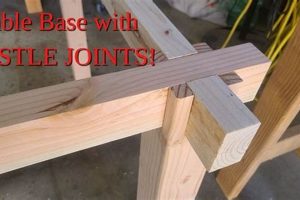
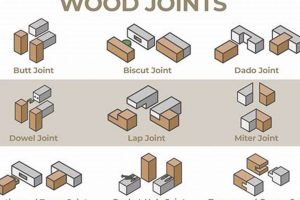
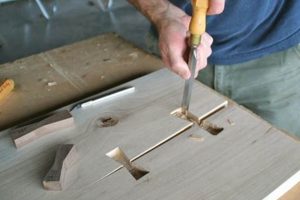
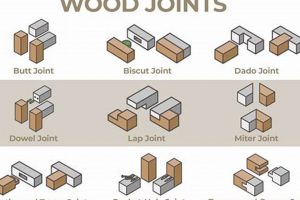
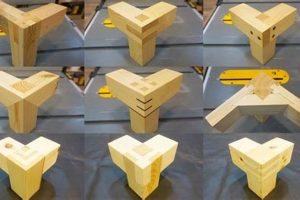
Devices that guide cutting or joining tools to create accurate and repeatable woodworking joints represent a class of specialized aids. These tools ensure precision when forming connections such as dovetails, mortise and tenons, or miters. An example would be a template used with a router to create consistently sized and shaped dovetail joints for drawer construction.
The use of these aids significantly increases efficiency and accuracy in woodworking projects. Historically, achieving strong and aesthetically pleasing joints required extensive hand skills and time. The introduction of these devices allows for faster production, reduced material waste, and consistent results, making complex joinery accessible to a broader range of skill levels. They ensure structural integrity of completed projects, especially where consistent load-bearing is critical.
The following sections will explore specific types of these devices, examining their applications, advantages, and limitations. A detailed overview of selecting the appropriate tool for various joint-making tasks will also be provided. Furthermore, the integration of these precision aids into a comprehensive woodworking workflow will be discussed.
Tips for Optimizing Joinery with Guiding Devices
Employing guiding devices for joinery demands careful consideration for optimal results. The following tips outline key strategies for maximizing accuracy and efficiency.
Tip 1: Material Compatibility: Ensure the selected device is compatible with the workpiece material. Hardwoods require robust jigs made of durable materials, while softer woods may allow for the use of jigs with less rigid construction.
Tip 2: Secure Workpiece Clamping: Maintaining a stable workpiece is crucial. Invest in clamps that provide adequate pressure without damaging the wood. Slippage during cutting operations compromises accuracy.
Tip 3: Router Bit/Saw Blade Selection: The appropriate cutter is paramount. For router-based jigs, select bits with the correct diameter and cutting profile. For saw-based jigs, choose blades designed for clean cuts and minimal tear-out.
Tip 4: Dust Extraction Implementation: Integrate a dust collection system. Accumulation of sawdust impairs visibility and can affect the accuracy of cuts. Furthermore, proper dust management promotes a safer working environment.
Tip 5: Precise Jig Alignment: Prioritize careful alignment. Misaligned jigs produce inaccurate joints. Use precision measuring tools to verify that the jig is square to the workpiece and properly positioned.
Tip 6: Gradual Cutting Passes: Avoid aggressive cutting. Taking multiple shallow passes, rather than a single deep cut, reduces the risk of tear-out and improves the quality of the finished joint, especially when working with dense hardwoods.
Tip 7: Regular Jig Maintenance: Maintain jig integrity through regular cleaning and inspection. Remove debris, tighten loose fasteners, and lubricate moving parts as needed. A well-maintained jig ensures consistent performance.
Effective employment of guiding devices requires a systematic approach. By adhering to these principles, woodworkers can achieve precise, repeatable, and structurally sound joints. The resulting improvements in accuracy contribute to higher quality finished products and reduced material waste.
The following section will provide a detailed discussion on selecting the correct device for specific woodworking applications, allowing for more targeted and efficient joinery processes.
1. Precision

The use of guidance mechanisms in woodworking is inextricably linked to the attainment of precision in joint construction. These devices function as critical intermediaries, minimizing deviations that would otherwise result from manual execution. The consequence of imprecise joinery extends beyond mere aesthetics, often compromising the structural integrity and longevity of the finished piece. For example, a mortise and tenon joint, vital in frame construction, requires exacting dimensions to ensure a secure and load-bearing connection. A mortising jig, when properly employed, enables the creation of consistently sized and accurately positioned mortises, a task significantly more challenging and prone to error when performed solely by hand.
The importance of precision is further amplified in projects involving intricate or repetitive joinery. Consider the construction of a multi-drawer chest using dovetail joints. Each dovetail must align precisely with its corresponding pin to create a visually appealing and structurally sound assembly. Dovetail jigs, available in various configurations, provide the necessary guidance to achieve this level of accuracy, resulting in uniform and gap-free joints. The practical significance of this understanding lies in the ability to consistently produce high-quality work, reduce material waste caused by errors, and minimize the time spent on rework.
In summary, the relationship between guiding devices and precision is fundamental to successful woodworking. While skill and technique remain essential, these specialized tools offer a means to enhance accuracy, particularly in complex or repetitive tasks. Challenges remain in selecting the appropriate jig for a given task and in ensuring its proper setup and maintenance. However, the benefits of improved precision, reduced errors, and increased efficiency make these devices an indispensable asset for woodworkers of all skill levels, particularly when aiming for high-quality and durable final products.
2. Repeatability

Repeatability, a critical attribute in woodworking, directly benefits from the employment of guidance devices for joinery. These devices enable the consistent production of identical joints across multiple instances, an essential factor in projects requiring uniformity and structural integrity. The inherent nature of these tools, designed with fixed dimensions and precise guides, ensures that each joint produced adheres to a predetermined standard. This is particularly crucial in scenarios such as furniture construction, where multiple identical drawers or frame components are required. The ability to consistently replicate a specific joint design significantly reduces the potential for discrepancies and improves the overall aesthetic appeal of the finished product. The use of a miter saw jig for cutting multiple pieces of trim to the same angle serves as a practical example. Without such a device, achieving identical angles across numerous cuts would be challenging and time-consuming, leading to variations and inaccuracies. Therefore, repeatability, facilitated by these guiding tools, transforms the woodworking process from one prone to variability to one characterized by precision and predictability.
The advantages extend beyond mere aesthetic considerations. Structural integrity often relies on consistent joint dimensions. For example, in cabinet construction, accurately sized and consistently executed mortise and tenon joints are essential for supporting the weight of shelves and contents. The use of a mortising jig guarantees that each mortise is uniform, ensuring a tight and secure fit for the corresponding tenon. This consistency contributes to the overall strength and stability of the cabinet, preventing sagging or eventual failure. The application of these aids directly reduces the reliance on manual skill and judgment, factors that can introduce variability and inconsistency into the joint-making process. By minimizing the impact of human error, these tools elevate the standard of craftsmanship attainable by woodworkers of all experience levels.
In summary, guiding devices contribute significantly to repeatability in woodworking joinery. The resulting consistency ensures both aesthetic harmony and structural robustness in finished pieces. Although challenges exist in selecting the appropriate device and mastering its operation, the benefits of enhanced repeatability, reduced variability, and improved overall quality make these tools a valuable asset for any woodworker. The investment in these devices translates into a more efficient and predictable workflow, ultimately leading to higher quality and more consistent finished products.
3. Joint Strength

The relationship between joinery aids and joint strength is causal: employing guidance mechanisms facilitates the creation of more robust and durable woodworking joints. Precise execution is paramount in achieving optimal joint strength. Deviations from intended dimensions or angles, inherent in freehand methods, compromise the integrity of the connection. Guiding devices, by minimizing these deviations, contribute directly to improved joint performance under stress. As an example, finger joints used in long grain-to-long grain bonding exhibit enhanced tensile strength when cut with a specialized jig. The precision-cut fingers interlock more perfectly, maximizing the surface area for adhesive bonding, leading to a more structurally sound joint capable of withstanding greater force.
The use of these aids also addresses issues of consistent glue line thickness, a critical factor in joint strength. An uneven glue line creates weak points and reduces the effective bonding area. Jigs ensure that mating surfaces are consistently flat and aligned, promoting uniform glue distribution. Another practical application is the creation of mortise and tenon joints for chair construction. A well-fitted mortise and tenon, achieved through precise jig-guided cutting, provides exceptional resistance to racking forces and ensures the long-term stability of the chair frame. The improved fit minimizes stress concentrations within the joint, preventing premature failure and extending the lifespan of the furniture piece.
In summary, the employment of guidance mechanisms in woodworking directly impacts the ultimate strength and durability of constructed joints. While material selection and adhesive choice remain important considerations, the precision afforded by these tools ensures optimal joint geometry and consistent glue line thickness. Challenges remain in selecting the correct aid for a given application and ensuring its proper setup and calibration. However, the resulting improvement in joint strength, achieved through minimizing human error and promoting accurate execution, justifies their role in ensuring the longevity and structural integrity of woodworking projects.
4. Material Compatibility

Material compatibility is a significant consideration in the effective deployment of guidance mechanisms for joinery. The mechanical properties of wood species directly influence the performance and longevity of jigs and the quality of the joints they produce. Hardwoods, such as maple or oak, require jigs constructed from robust materials capable of withstanding the increased cutting forces. The use of lightweight or less durable jigs with dense hardwoods often results in premature wear, reduced accuracy, and potential damage to the jig itself. Conversely, softer woods like pine or cedar may be adequately processed with jigs constructed from less rigid materials. A failure to account for the wood species’ density and hardness can result in inaccurate joinery and wasted materials.
The interaction between jig material and workpiece material dictates optimal cutting parameters. For instance, routing dovetail joints in a dense hardwood requires a jig constructed from a high-density phenolic or hardened steel to minimize vibration and ensure clean cuts. The selection of an appropriate router bit, specifically designed for hardwood cutting, is also crucial. Conversely, when cutting mortise and tenon joints in softwood, a jig constructed from plywood may suffice, provided it is adequately reinforced and securely clamped. The appropriate router bit for softwoods should also be selected, preventing tear-out or splintering. Furthermore, the presence of resins or oils in certain wood species can impact the jig’s surface finish, potentially affecting its ability to slide smoothly or maintain a secure grip on the workpiece.
In summary, the successful implementation of guidance mechanisms in woodworking necessitates a thorough understanding of material compatibility. This involves selecting jigs constructed from materials appropriate for the wood species being processed and adjusting cutting parameters accordingly. The challenges lie in recognizing the specific mechanical properties of various wood types and matching them with the appropriate tool characteristics. An awareness of this relationship contributes to enhanced accuracy, improved joint strength, and extended lifespan of both the jigs and the finished woodworking projects. The benefits derived from addressing material compatibility issues manifest in reduced material waste, minimized rework, and increased overall project quality.
5. Ease of Use

The utility of guidance devices in woodworking is inextricably linked to their ease of use. A complex or cumbersome jig, regardless of its potential accuracy, diminishes productivity and increases the likelihood of errors. The overall design and operational characteristics of a jig directly influence its accessibility and effectiveness in a woodworking setting.
- Intuitive Design
An intuitive design minimizes the learning curve associated with operating a specific device. Jigs with clear markings, logical control layouts, and readily understandable instructions promote efficient usage. For example, a dovetail jig with clearly labeled scales for setting pin and tail spacing reduces setup time and minimizes the risk of misconfiguration. Conversely, a poorly designed jig requiring extensive trial and error for adjustment significantly increases the time and effort required to produce accurate joints, negating its intended benefits.
- Simplified Setup Procedures
The complexity of setup procedures directly impacts the practicality of a guiding mechanism. Jigs requiring extensive calibration or intricate assembly steps are less likely to be consistently used, particularly in time-sensitive production environments. A miter saw jig with a quick-release clamping system, enabling rapid workpiece changes, enhances workflow efficiency. Conversely, a jig demanding meticulous and time-consuming adjustments for each workpiece significantly hinders productivity and increases the potential for inconsistencies.
- Ergonomic Considerations
Ergonomic design principles contribute to ease of use by minimizing physical strain and maximizing user comfort. Jigs with comfortable handles, strategically placed controls, and lightweight construction reduce fatigue during extended use. An example is a mortising jig featuring adjustable height and angle settings, allowing the operator to maintain a comfortable posture. In contrast, a jig with awkward dimensions or requiring excessive force to operate increases the risk of operator fatigue and potential injury, diminishing its overall usability.
- Clear Documentation and Support
The availability of comprehensive documentation and technical support significantly enhances the user experience. Jigs accompanied by clear instructions, detailed diagrams, and readily accessible support channels empower users to troubleshoot issues and maximize the device’s potential. A box joint jig with a comprehensive user manual, including step-by-step instructions and troubleshooting tips, enables users to quickly master its operation. Conversely, a jig lacking adequate documentation or support leaves users struggling to resolve issues independently, limiting its effectiveness and increasing frustration.
In conclusion, the ease of use of guiding mechanisms is a crucial determinant of their practical value in woodworking applications. Factors such as intuitive design, simplified setup procedures, ergonomic considerations, and clear documentation contribute to an enhanced user experience, promoting efficient and accurate joint creation. Prioritizing these aspects in the selection and utilization of these devices ensures that their intended benefits are fully realized, leading to improved productivity and higher quality finished products.
6. Time Efficiency

The utilization of specialized guidance tools in woodworking is inextricably linked to enhancements in time efficiency. These devices, designed to streamline and standardize joint-making processes, significantly reduce the time expenditure associated with traditional hand-tool methods. The fundamental mechanism through which these aids improve efficiency lies in their ability to minimize setup time, reduce material waste, and accelerate the cutting or shaping operations required for complex joints. For example, the creation of dovetail joints, traditionally a labor-intensive process, can be expedited considerably through the use of a dovetail jig. This device predetermines the spacing and angle of the dovetails, allowing for rapid and repeatable cuts with a router or saw, effectively eliminating the need for meticulous marking and freehand execution. The resultant reduction in processing time directly translates to increased productivity and reduced labor costs in woodworking projects.
Further analysis reveals that the impact on time efficiency is particularly pronounced in projects involving repetitive joinery tasks. Consider the construction of multiple cabinet doors, each requiring mortise and tenon joints. Employing a mortising jig ensures that each mortise is consistently sized and accurately positioned, eliminating the need for individual measurement and adjustment. This standardization allows for batch processing, where multiple workpieces are machined simultaneously, significantly reducing the overall production time. Practical application extends to large-scale woodworking operations where efficiency is paramount. Furniture manufacturers, for example, routinely employ specialized jigs and fixtures to streamline the production of chairs, tables, and other items. The investment in these tools is justified by the substantial reduction in manufacturing time and the increased output capacity they provide. The ability to produce joints quickly and accurately is a key factor in maintaining competitiveness in the woodworking industry.
In summary, guidance devices are instrumental in enhancing time efficiency within woodworking processes. Their impact is evident in reduced setup times, minimized material waste, and accelerated machining operations. While challenges exist in selecting appropriate devices and mastering their operation, the resulting gains in productivity and cost savings make them an indispensable asset for both professional and amateur woodworkers. Recognizing the time-saving potential of these tools allows for optimized workflows, improved project management, and ultimately, a more efficient and profitable woodworking endeavor.
7. Cost Effectiveness
The economic viability of employing joinery guidance mechanisms in woodworking is a multifaceted consideration. Assessment involves evaluating initial investment, long-term savings, and overall impact on project profitability. The equation extends beyond simple purchase price to encompass factors such as reduced material waste, accelerated production times, and enhanced quality, all of which contribute to a comprehensive cost-benefit analysis.
- Reduced Material Waste
Precise joint creation minimizes errors and miscuts, directly reducing material waste. In woodworking, where lumber costs can be substantial, even small reductions in waste translate into significant savings over time. A dovetail jig, for instance, prevents the common errors associated with freehand dovetailing, saving valuable hardwood from being discarded. The financial impact of these savings accumulates, especially in projects involving expensive or exotic wood species.
- Accelerated Production Time
Guiding devices streamline the joint-making process, accelerating production times. Time is a valuable commodity in any woodworking endeavor, and the ability to complete projects more quickly translates into increased profitability. A mortising jig, for example, allows for the rapid creation of consistent mortise and tenon joints, significantly reducing the labor hours required compared to traditional methods. The resulting time savings allow for increased project throughput and enhanced revenue generation.
- Enhanced Joint Quality and Durability
Improved precision and accuracy lead to stronger and more durable joints, reducing the likelihood of repairs or replacements. High-quality joinery enhances the overall value and longevity of finished products, minimizing warranty claims and bolstering customer satisfaction. A well-constructed frame using a robust tenon joint, achieved with the aid of a jig, ensures structural integrity and prevents premature failure. The reduced need for rework and repairs translates into lower long-term costs and improved brand reputation.
- Skill Level Accessibility
Jigs and templates empower woodworkers of varying skill levels to produce high-quality joints, expanding the pool of potential labor. This accessibility reduces reliance on highly skilled and expensive craftsmen. A beginner, with the aid of a simple miter jig, can produce accurate miter joints comparable to those created by a seasoned professional. The reduced skill barrier broadens access to woodworking projects, enabling cost-effective labor allocation and increased project participation.
The cost effectiveness of joinery guidance mechanisms stems from a combination of factors: reduced material waste, accelerated production times, enhanced joint quality, and increased accessibility. While initial investment is a consideration, the long-term savings and increased profitability associated with these tools make them a valuable asset for both professional and amateur woodworkers. The financial benefits, coupled with improved project outcomes, solidify the economic justification for incorporating these devices into woodworking practices.
Frequently Asked Questions About Joinery Aids
The following section addresses common inquiries regarding guidance mechanisms used in woodworking joinery. The intent is to provide clear and concise answers to prevalent concerns and misunderstandings.
Question 1: What constitutes a “guidance mechanism” in woodworking?
A “guidance mechanism” encompasses any tool or device designed to guide a cutting tool or workpiece to ensure accuracy and repeatability in joint creation. This includes jigs, templates, fences, and specialized fixtures.
Question 2: What factors dictate the selection of an appropriate guidance mechanism?
Selection depends on several criteria, including joint type, workpiece material, required accuracy, production volume, and budget constraints. Complex joints may necessitate specialized jigs, while simpler joints can be executed with more basic tools.
Question 3: How does one ensure the accuracy of a guidance mechanism?
Accuracy is maintained through careful calibration, proper setup, and consistent maintenance. Regular inspection for wear or damage is essential, along with adherence to the manufacturer’s instructions.
Question 4: Are guidance mechanisms solely for novice woodworkers?
No. While beneficial for beginners, these devices also enhance efficiency and precision for experienced woodworkers, particularly in repetitive tasks or complex joinery.
Question 5: What are the primary benefits of using guiding devices in woodworking?
Benefits include improved accuracy, increased repeatability, reduced material waste, accelerated production times, and enhanced joint strength.
Question 6: How does one integrate guidance mechanisms into a comprehensive woodworking workflow?
Integration requires careful planning and organization. Identifying specific joint-making tasks that benefit from these tools, allocating appropriate space for their use, and establishing consistent setup procedures are crucial.
In conclusion, guidance mechanisms represent a valuable asset for achieving precise and consistent joinery in woodworking. Understanding their purpose, selection criteria, and integration into a workflow are essential for maximizing their benefits.
The subsequent article section will delve into best practices for maintaining and storing guidance mechanisms, ensuring their longevity and continued accuracy.
Joint Jigs for Woodworking
This exploration has detailed the function, benefits, and considerations surrounding joint jigs for woodworking. It has examined their role in enhancing precision, repeatability, and joint strength, while also addressing aspects of material compatibility, ease of use, time efficiency, and cost effectiveness. The information presented aims to provide a comprehensive understanding of these devices and their impact on the woodworking process.
The successful integration of these jigs into a woodworking practice necessitates a commitment to understanding their capabilities and limitations. Proper selection, maintenance, and application are crucial to realizing their full potential. As woodworking techniques continue to evolve, the informed and strategic utilization of joint jigs will remain a cornerstone of efficient and high-quality craftsmanship.