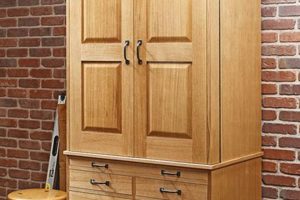
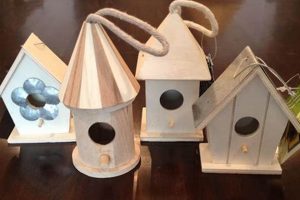
The creation of functional and decorative items using logs as the primary material is a distinct area within woodworking. This involves employing various techniques to transform raw logs into finished products, ranging from rustic furniture and architectural elements to smaller crafts. Examples encompass building log cabins, crafting log furniture such as chairs and tables, and producing smaller decorative items.
This particular type of woodworking offers numerous advantages, including utilizing readily available natural resources, promoting sustainability when sourced responsibly, and yielding aesthetically unique items. Historically, it has been an essential skill in many cultures, providing shelter, tools, and household goods. It contributes to resourcefulness and self-sufficiency.
The subsequent discussion will delve into the specific tools, techniques, and considerations involved in successfully executing projects of this nature. We will explore the processes of log selection, preparation, joinery methods, and finishing techniques essential for creating durable and visually appealing wooden structures and objects.
Essential Tips for Log Woodworking
Effective execution necessitates adherence to specific principles. The following guidance aims to optimize results and ensure structural integrity in this particular discipline.
Tip 1: Prioritize Log Selection. Choose logs based on species, moisture content, and straightness. Opt for hardwoods like oak or maple for durability in furniture, while softer woods like pine may be suitable for decorative projects. Ensure logs are appropriately seasoned or dried to minimize warping and cracking post-construction.
Tip 2: Employ Proper Milling Techniques. Accurate milling is critical for creating consistent and stable lumber. Utilize a chainsaw mill or bandsaw mill to efficiently convert logs into usable boards or timbers. Prioritize safety protocols during milling operations, including wearing appropriate personal protective equipment.
Tip 3: Master Traditional Joinery Methods. Mortise and tenon, dovetail, and lap joints offer robust connections for log structures. Practice these techniques meticulously to ensure tight, secure fits. Consider incorporating metal fasteners for added strength in high-stress areas.
Tip 4: Emphasize Moisture Management. Implement strategies to control moisture infiltration in log structures. Design roofs with adequate overhangs, apply water-repellent sealants, and ensure proper ventilation to minimize the risk of rot and decay.
Tip 5: Implement a Proper Sealing and Finishing. Applying appropriate finishes will significantly prolong the wood’s life. Choose finishes that are weather-resistant and UV-resistant. Regular maintenance and re-application of finishes may be necessary to maintain the structure’s integrity.
Tip 6: Consider Log Placement Carefully. When using entire logs for structural projects, plan their placement carefully to maximize strength and visual appeal. Consider the natural taper of the logs and utilize them to your advantage in the design.
Tip 7: Invest in Specialized Tools. Log building often requires tools beyond the standard woodworking shop. Invest in tools such as a drawknife, froe, and scribe to efficiently shape and join logs.
These tips promote quality output in wooden creations, combining functionality and durability with beauty. Adhering to these best practices will significantly enhance the longevity and aesthetics of any endeavor involving this process.
Next, we move to exploring common challenges and pitfalls that may arise during this creative process.
1. Species Selection

The selection of wood species forms a foundational element in crafting quality structures. The inherent properties of different wood types significantly influence the durability, aesthetics, and suitability of finished projects for specific applications. Careful consideration of these factors is essential to ensure the long-term performance and satisfaction with a wood-based creation.
- Durability and Rot Resistance
Certain species, such as cedar and redwood, exhibit natural resistance to decay and insect infestation. These are particularly suited for outdoor projects or structures exposed to moisture. Conversely, species like poplar or aspen require protective treatments to prevent premature degradation. The cost-benefit analysis of natural resistance versus treatment requirements is an important decision factor.
- Structural Strength and Load-Bearing Capacity
Species like oak and maple offer high density and compressive strength, making them ideal for structural elements such as load-bearing beams and posts. Using lower-density woods in these applications can compromise the structural integrity of the building. Engineering considerations and load calculations should guide the selection of appropriate species for load-bearing components.
- Aesthetic Properties and Grain Patterns
The visual appeal of finished creations varies significantly based on species. Cherry and walnut exhibit rich colors and intricate grain patterns, favored for furniture and decorative elements. Pine and fir offer a more rustic appearance, often used in cabins and naturalized structures. Aligning species selection with desired aesthetic outcomes is essential for achieving the intended visual character.
- Workability and Ease of Machining
Some species are easier to work with than others. Softwoods like pine and fir can be easily shaped and joined using hand tools. Hardwoods often require specialized equipment and techniques due to their density. Considering the required level of skill and available equipment will optimize the fabrication process.
In summary, species selection dictates numerous critical aspects of a building process, impacting its longevity, structural integrity, and visual character. Aligning the intrinsic qualities of different wood types with project-specific requirements leads to successful and enduring results. By evaluating the interplay between durability, strength, aesthetics, and workability, practitioners can ensure informed decisions that improve the final product.
2. Moisture Content

The moisture content of logs directly and significantly impacts the success of woodworking endeavors. Logs harvested with high moisture levels, often referred to as “green” logs, are prone to dimensional instability as they dry. This instability manifests as warping, twisting, checking (surface cracks), and internal stresses that can compromise the structural integrity and aesthetic quality of the finished product. For instance, a log used to construct a cabin wall that has not been adequately dried will likely shrink over time, creating gaps between logs and potentially leading to air and water infiltration. The initial moisture content of logs can vary widely depending on species, time of harvest, and storage conditions. Careful measurement and understanding of this factor are, therefore, crucial.
Effective management of moisture content involves several key steps. First, proper drying or seasoning is essential. This can be achieved through air-drying, kiln-drying, or a combination of both. Air-drying involves stacking logs with spacers to allow for air circulation, a process that can take months or even years depending on climate and log size. Kiln-drying, on the other hand, uses controlled temperature and humidity to accelerate the drying process, reducing the risk of defects. Regardless of the method, monitoring moisture levels using a moisture meter is necessary to ensure the logs reach the desired equilibrium moisture content (EMC) for the intended application. The EMC represents the moisture level at which the wood is in balance with the surrounding environment. For example, furniture intended for indoor use in a dry climate will require a lower EMC than structural elements used outdoors in a humid region. Log homes in arid regions are particularly susceptible to issues with excessive drying; thus, construction techniques and wood selection become even more vital.
Ultimately, neglecting moisture content control can lead to costly repairs, compromised structural integrity, and diminished aesthetic value. A thorough understanding of the principles of wood drying, the use of appropriate measurement tools, and the implementation of sound drying practices are fundamental for achieving durable, stable, and visually appealing results. Addressing moisture content challenges proactively contributes significantly to the longevity and quality of wood creations, ensuring lasting value and minimizing long-term maintenance requirements. Properly dried wood translates to stable, long-lasting structures, avoiding the pitfalls associated with green or improperly seasoned lumber.
3. Joinery Techniques

Joinery constitutes a pivotal element in projects utilizing logs. These techniques dictate the structural integrity, stability, and aesthetic appeal. The selection and execution of appropriate joinery methods are therefore paramount for the creation of durable and visually pleasing structures or objects.
- Mortise and Tenon Joints
These joints, involving a projecting tenon inserted into a mortise (hole), offer exceptional strength and resistance to racking forces. In applications such as furniture construction, mortise and tenon joints provide robust connections for legs, rails, and other structural members. For example, in a log bed frame, the headboard and footboard are often connected to the side rails using this method, ensuring a stable and long-lasting assembly.
- Dovetail Joints
Characterized by interlocking, wedge-shaped projections (dovetails) that resist pulling forces, dovetail joints are primarily used in drawer construction, casework, and other applications where high tensile strength is required. In smaller projects created from logs, such as boxes or chests, dovetail joints contribute to structural integrity and aesthetic value. The interlocking nature of the dovetails prevents the box from pulling apart, even under stress.
- Saddle Notch Joints
Frequently employed in log cabin construction, saddle notch joints involve cutting a concave notch into the underside of a log to allow it to seat securely over another log. This method provides a stable and weather-resistant connection between logs in walls and other structural elements. The precision of the notch determines the tightness of the fit and, consequently, the insulation value of the wall.
- Butt Joints with Fasteners
While less structurally robust than mortise and tenon or dovetail joints, butt joints offer simplicity and ease of construction. These joints involve simply butting two pieces of wood together and securing them with fasteners such as screws, nails, or bolts. In applications where load-bearing capacity is not critical, butt joints provide a cost-effective and efficient connection method. However, care must be taken to properly align and secure the wood to avoid instability.
In summary, joinery techniques are integral to projects utilizing logs. The choice of method depends on the specific requirements of the project, considering factors such as load-bearing capacity, aesthetic preferences, and skill level. Mastery of these techniques enables the creation of structures and objects that are both structurally sound and visually appealing.
4. Tool Proficiency

Skillful application of specialized tools is indispensable for executing any project with logs. The properties of logs, their size, weight, and irregular shapes, often necessitate tools beyond those found in a typical woodworking shop. The successful transformation of raw logs into refined structures and objects relies heavily on competence in utilizing a variety of implements.
- Chainsaw Operation and Maintenance
A chainsaw is essential for milling logs, felling trees, and rough shaping. Proficiency includes safe operation, chain sharpening, tensioning, and engine maintenance. Incorrect chainsaw usage leads to injury and inefficient work. For example, milling a log without proper chain sharpening results in uneven cuts and increased effort.
- Drawknife Mastery
The drawknife is utilized for removing bark and shaping logs. Expertise in drawknife techniques yields smooth, consistent surfaces and accurate detailing. An improperly sharpened drawknife or incorrect angle of attack creates gouges and uneven surfaces. Applying a drawknife for debarking and shaping log furniture components showcases its versatility.
- Adze Application
An adze is used for hollowing out logs and creating curved surfaces. Skilled adze work allows for the creation of bowls, troughs, and other functional objects. Misuse of an adze poses a significant safety risk and results in inaccurate shaping. Creating a dugout canoe or a log trough demonstrates the effective use of an adze.
- Scribing Techniques and Tools
Scribing tools facilitate precise fitting of logs in structures. Accurate scribing ensures tight, weather-resistant joints. Inaccurate scribing leads to gaps and structural weaknesses. Using a scribe to precisely mark the cut lines for saddle notch joints in a log cabin exemplifies proper scribing technique.
Ultimately, proficiency with these tools enables efficient and safe completion of all activities. Competent utilization of specialized implements contributes to the longevity, structural integrity, and aesthetic quality of the finished product. Without the necessary tool expertise, projects are prone to failure, resulting in wasted resources and potential hazards.
5. Structural Design

Structural design, in the context of building with logs, is the application of engineering principles to ensure the stability and load-bearing capacity of structures. It involves analyzing forces, selecting appropriate materials, and designing connections to create safe and durable buildings and objects. This phase is critical to the longevity and safety of any endeavor. Failing to incorporate sound structural design principles can lead to catastrophic failure.
- Load Analysis and Distribution
Accurately calculating and distributing loads is fundamental to structural design. This involves determining the weight of the structure itself (dead load), as well as anticipated occupancy loads, snow loads, wind loads, and seismic loads. For example, a log cabin must be designed to withstand the combined weight of the roof, walls, and furnishings, as well as any snow accumulation on the roof. Load distribution ensures that these forces are evenly transferred through the structure to the foundation, preventing localized stress concentrations that can lead to failure.
- Log Selection and Grading
The structural integrity of a building depends on selecting logs with adequate strength and stiffness. Log grading involves visually inspecting logs for defects, such as knots, decay, and grain irregularities, which can weaken their load-bearing capacity. Selecting logs with consistent diameter and minimal taper ensures even load distribution throughout the structure. For example, using a log with significant decay in a load-bearing wall can compromise the stability of the entire structure.
- Connection Design and Joinery
The design of connections between logs is crucial for transferring loads and maintaining structural stability. Traditional joinery methods, such as mortise and tenon joints, dovetail joints, and saddle notch joints, provide robust connections that resist pulling, shearing, and compressive forces. Properly designed connections prevent logs from shifting or separating under load. For example, a poorly executed saddle notch joint in a log cabin wall can create a point of weakness, allowing the wall to settle and potentially collapse over time.
- Foundation Design and Soil Conditions
A stable foundation is essential for supporting the weight of a log structure and preventing settlement. Foundation design must consider soil conditions, groundwater levels, and frost depth to ensure adequate bearing capacity and prevent frost heave. For example, building a log cabin on unstable soil without proper foundation design can lead to differential settlement, cracking, and structural damage.
The integration of these facets into the design process ensures a robust and long-lasting structure. The combination of load analysis, appropriate log selection, sound connection design, and proper foundation construction contributes to a safe and durable building. Furthermore, understanding and adhering to local building codes and regulations is essential for ensuring the project meets minimum safety standards. Structures designed with consideration for these principles stand as lasting testaments to quality and safety.
6. Surface Treatment
Surface treatment encompasses a range of processes applied to wood surfaces to enhance their durability, aesthetics, and resistance to environmental factors. In the context of log woodworking endeavors, the strategic implementation of appropriate surface treatments is crucial for prolonging the lifespan and maintaining the visual appeal of structures and objects.
- Protection Against Moisture Intrusion
Penetrating sealants and film-forming coatings act as barriers against moisture absorption, a primary cause of wood decay and dimensional instability. For example, applying a borate-based preservative to log cabin walls can prevent fungal growth and insect infestation, extending the structure’s lifespan. Untreated logs exposed to prolonged moisture are prone to rot and structural compromise.
- Resistance to Ultraviolet (UV) Degradation
UV radiation causes lignin, a component of wood, to degrade, resulting in surface discoloration, checking, and weakening. Finishes containing UV inhibitors, such as stains and varnishes, protect wood from sun damage. Log furniture placed outdoors, if unprotected, will exhibit fading and surface degradation over time.
- Enhancement of Aesthetic Qualities
Surface treatments can enhance the natural beauty of wood by accentuating grain patterns, altering color, and providing a desired sheen. Stains, oils, and waxes are employed to achieve specific aesthetic effects. Applying a clear coat of polyurethane to a wooden bowl made from logs can enhance the grain patterns and provide a durable, glossy finish.
- Prevention of Insect Infestation
Certain surface treatments contain insecticides that deter wood-boring insects, such as termites and carpenter ants. These treatments provide a proactive defense against structural damage. Applying a preservative containing insecticide to logs used in exterior construction can prevent costly repairs due to insect damage.
These surface treatments demonstrate the need to protect log structures. Selecting and applying appropriate finishes and protectants requires careful consideration of the wood species, intended use, and environmental conditions to which the wood will be exposed. Skilled surface treatment significantly improves the long-term performance, beauty, and resilience of objects.
7. Environmental Factors
Environmental factors exert a significant influence on the longevity, stability, and overall success of log woodworking projects. The interplay between wood and its surrounding environment necessitates careful consideration to mitigate potential damage and ensure structural integrity.
- Climate and Moisture Content
Climatic conditions, particularly fluctuations in temperature and humidity, directly impact the moisture content of logs. Excessive moisture can lead to rot, decay, and dimensional instability, while extreme dryness causes cracking and warping. Log structures in humid climates require different protective measures compared to those in arid regions. For example, log homes in the southeastern United States may require more frequent treatments with preservatives due to the high risk of fungal growth. Seasonal variations in moisture content necessitate designs that allow for expansion and contraction to minimize stress on joints and connections.
- Sunlight Exposure and UV Degradation
Prolonged exposure to sunlight, specifically ultraviolet (UV) radiation, degrades lignin, a component of wood, causing surface discoloration, checking, and weakening. South-facing walls of log structures are particularly vulnerable to UV damage. Applying UV-resistant finishes and providing shading through architectural design, such as wide roof overhangs, mitigate the effects of UV degradation. For instance, the exterior walls of a log cabin exposed to direct sunlight should be treated with a UV-resistant stain or sealant to prevent fading and cracking.
- Insect and Pest Infestation
Insects and pests, such as termites, carpenter ants, and wood-boring beetles, can cause significant structural damage to log structures. These organisms thrive in damp or decaying wood. Regular inspections, preventative treatments with borate-based preservatives, and proper site drainage minimize the risk of infestation. A log cabin built near a wooded area with high termite activity requires vigilant monitoring and treatment to prevent infestation of structural members.
- Soil Conditions and Site Drainage
Soil conditions and site drainage impact the moisture content and stability of log foundations. Poorly drained soil can lead to water accumulation around the foundation, increasing the risk of rot and decay in the lower logs. Proper grading, the installation of drainage systems, and the use of moisture barriers protect the foundation from water damage. A log home built on a hillside with poor drainage requires a well-designed foundation with adequate drainage to prevent water from accumulating around the base of the walls.
The integration of these factors into the design and construction processes improves the longevity and resilience. Addressing climate, UV exposure, pest threats, and soil issues ensures a balanced structure that withstands environmental duress. Applying the principles and insights will lead to lasting achievements and minimize future deterioration of building or craft.
Frequently Asked Questions About Log Woodworking
The following addresses common inquiries related to the practice of transforming logs into functional and decorative objects, offering clarity on fundamental aspects.
Question 1: What species of logs are best suited for building projects?
Durable hardwood species such as oak, maple, and cedar are favored for their structural integrity and resistance to decay. Softwood species like pine and fir, while more easily worked, necessitate protective treatments for outdoor applications.
Question 2: How is log moisture content managed to prevent warping and cracking?
Logs must undergo a drying process, either air-drying or kiln-drying, to reduce moisture content to an acceptable level before use. Monitoring moisture levels with a moisture meter ensures the logs reach the desired equilibrium moisture content (EMC) for the intended environment.
Question 3: What joinery techniques are recommended for structurally sound log construction?
Mortise and tenon, dovetail, and saddle notch joints offer robust connections for log structures. These techniques provide resistance to racking, pulling, and compressive forces, ensuring structural stability.
Question 4: What specialized tools are typically required for projects?
A chainsaw for milling and felling, a drawknife for debarking and shaping, and scribing tools for precise fitting are essential. The adze is useful for hollowing logs. Each tool serves a specific purpose in preparing and assembling logs.
Question 5: How are log structures protected from environmental degradation, such as UV radiation and insect infestation?
UV-resistant finishes, borate-based preservatives, and proper site drainage offer protection. These measures mitigate the damaging effects of sunlight, moisture, and pests, prolonging the lifespan of log structures.
Question 6: What are key considerations in the structural design to ensure safe structures?
Accurate load analysis, proper log grading, robust connection design, and stable foundation construction are critical. These elements ensure structural integrity and prevent settlement, collapse, or other failures.
Understanding these key aspects facilitates more responsible and successful construction, leading to higher quality outputs.
The next section will discuss resources for further learning and engagement within the field.
Conclusion
This exploration of log woodworking projects has illuminated the multifaceted nature of the craft. From species selection and moisture management to joinery techniques and environmental considerations, successful execution demands a comprehensive understanding of the materials and processes involved. Adherence to sound structural design principles and the skillful application of specialized tools are paramount for creating durable and aesthetically pleasing structures.
The information presented serves as a foundation for further engagement and skill development within this discipline. Continued learning, combined with practical experience, will enable practitioners to create lasting works and contribute to the ongoing evolution of log woodworking projects. The enduring appeal and sustainable potential of this craft warrant continued exploration and refinement.