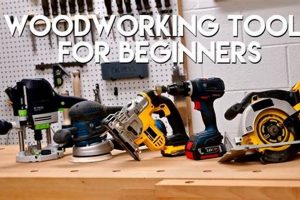
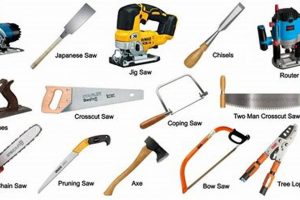
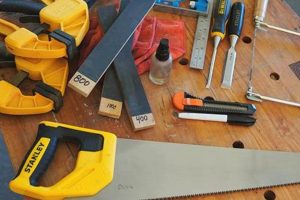
Hand-operated implements employed in the shaping and fabrication of wood represent a foundational element of woodworking. These instruments, driven by human power, offer a direct and tactile approach to manipulating the material. Examples include saws, planes, chisels, and hand drills, each designed for specific cutting, shaping, or joining tasks.
The utilization of these implements fosters precision, control, and a deep understanding of wood’s properties. Their application offers advantages such as reduced noise pollution, the ability to work in environments lacking electricity, and the opportunity for intricate detailing. Historically, these instruments were the primary means of woodworking, shaping everything from simple dwellings to elaborate furniture, and their legacy continues to inform contemporary practice.
Subsequent sections will delve into specific categories of these implements, examining their functions, maintenance, and appropriate usage. Further discussion will focus on selecting quality instruments and developing the skills necessary for achieving optimal results in various woodworking projects.
Tips for Effective Use of Hand-Operated Woodworking Implements
Proficient application of these implements requires a combination of knowledge, skill, and meticulous attention to detail. The following tips provide guidance for achieving optimal results and ensuring safety.
Tip 1: Sharpening is Paramount: Maintain a keen edge on all cutting instruments. A dull blade requires excessive force, reducing control and increasing the risk of accidents. Regularly hone and sharpen blades using appropriate stones or sharpening systems.
Tip 2: Proper Tool Selection: Employ the instrument best suited for the task. A backsaw, for example, excels in creating precise tenon shoulders, while a coping saw is ideal for curved cuts.
Tip 3: Secure Workholding: Ensure the workpiece is firmly secured. Use vises, clamps, or bench dogs to prevent movement during cutting or shaping. Stability is critical for accuracy and safety.
Tip 4: Controlled Movements: Avoid applying excessive force. Allow the instrument to do the work, guiding it with smooth, controlled movements. Rushing increases the likelihood of errors and injuries.
Tip 5: Grain Awareness: Understand the direction of the wood grain. Cutting against the grain can result in tear-out, while cutting with the grain produces a smoother finish. Observe the grain pattern before initiating any cut.
Tip 6: Regular Maintenance: Clean and lubricate instruments after each use. Apply a thin coat of oil to prevent rust. Periodically inspect handles and other components for damage and replace as needed.
Tip 7: Protective Gear: Always wear safety glasses to protect against flying debris. Consider using a dust mask or respirator to avoid inhaling wood dust. Gloves may be appropriate for certain tasks.
Adhering to these guidelines will improve the quality of woodworking projects and enhance safety. Mastery of hand-operated implements demands patience and practice, but the rewards include greater precision and a deeper appreciation for the craft.
The subsequent section will address advanced techniques and specialized applications related to these implements.
1. Precision

Precision is an indispensable attribute in woodworking, especially when employing hand-operated implements. The inherent control these instruments offer necessitates an understanding of how accuracy is achieved and maintained throughout the woodworking process. Attaining precise results depends on several interrelated factors, each demanding careful attention.
- Accurate Measurement and Marking
The foundation of precision lies in accurate measurement and marking. Tools such as rulers, squares, and marking gauges must be employed correctly to transfer dimensions from plans to the workpiece. Errors at this stage propagate throughout the project, leading to misaligned joints and dimensional inaccuracies. Calibration of measuring instruments is essential to ensure consistent and reliable results.
- Sharp Tool Edges
Sharpness is intrinsically linked to precision. A dull blade requires excessive force, leading to deflection and imprecise cuts. Honing and sharpening techniques are critical for maintaining optimal cutting performance. The angle of the cutting edge also influences precision; a steeper angle is suitable for end grain, while a shallower angle is preferable for long grain.
- Stable Workholding
A stable workpiece is crucial for achieving precise cuts. Movement during sawing, planing, or chiseling introduces errors and compromises accuracy. Workholding devices, such as vises, clamps, and bench dogs, must securely restrain the workpiece to prevent slippage or vibration. The choice of workholding method depends on the size and shape of the workpiece, as well as the specific operation being performed.
- Controlled Hand Movements
The operator’s skill in executing controlled hand movements is vital for precision. Jerky or erratic motions can result in inaccuracies and damage to the workpiece. Smooth, deliberate strokes are essential for maintaining consistent cutting pressure and achieving clean, precise results. Practice and experience are necessary to develop the muscle memory required for consistent hand control.
The pursuit of precision in hand-operated woodworking is a continuous process of refinement. By mastering the techniques of accurate measurement, sharp tool maintenance, stable workholding, and controlled hand movements, woodworkers can achieve superior results and unlock the full potential of these implements. The reward for this diligence is work of exceptional quality and lasting value.
2. Sharpness

In the realm of hand-operated woodworking implements, sharpness is not merely a desirable attribute; it is a fundamental requirement for effective and safe operation. The degree to which a blade can sever wood fibers cleanly and efficiently dictates the quality of the finished work and the physical effort required from the user.
- Reduced Force and Fatigue
A keenly sharpened blade minimizes the force necessary to execute a cut. This reduction in force translates directly to decreased fatigue for the woodworker, enabling extended periods of work with greater precision. A dull blade, conversely, demands excessive pressure, leading to muscle strain, reduced control, and increased risk of error.
- Clean Cuts and Finishes
Sharpness dictates the quality of the cut. A razor-sharp edge severs wood fibers cleanly, producing a smooth surface with minimal tear-out. This is particularly crucial when working with figured woods or creating joinery. A dull blade, on the other hand, tends to crush or tear the wood fibers, resulting in a rough, uneven surface that requires additional sanding or planing.
- Enhanced Control and Accuracy
A sharp implement provides superior control. The user can guide the blade with greater precision, allowing for intricate cuts and fine detailing. A dull edge is more prone to wander or skip, making it difficult to maintain accuracy. This is especially critical when creating tight-fitting joints, where even small inaccuracies can compromise the structural integrity of the piece.
- Increased Safety
Counterintuitively, a sharp blade is safer than a dull one. A dull blade requires more force to operate, increasing the likelihood of slippage and accidental cuts. A sharp blade, by contrast, engages the wood with minimal pressure, allowing the user to maintain better control and reduce the risk of injury. Regular sharpening is therefore a crucial safety practice.
The interconnectedness of sharpness with force reduction, cut quality, control, and safety underscores its pivotal role in hand woodworking. Regular maintenance and proper sharpening techniques are not merely optional; they are essential for maximizing the performance and safety of these implements. The investment in time and skill to maintain a keen edge yields significant dividends in the quality of the finished product and the user’s overall woodworking experience.
3. Ergonomics

The application of ergonomic principles is essential when designing and utilizing hand-operated implements. The physical demands inherent in woodworking necessitate careful consideration of tool design and usage to minimize strain, prevent injuries, and maximize efficiency.
- Handle Design and Grip
The shape, size, and material of a tool’s handle directly influence grip comfort and control. Handles designed to fit the natural contours of the hand reduce pressure points and minimize the risk of repetitive strain injuries. Textured surfaces or non-slip materials enhance grip stability, particularly during demanding tasks. The diameter of the handle must accommodate a range of hand sizes to ensure comfortable and secure holding.
- Tool Weight and Balance
The weight and balance of an instrument affect the amount of force required to use it. A tool that is too heavy can cause fatigue and muscle strain, while one that is poorly balanced can be difficult to control. Optimizing the weight distribution of an instrument reduces the effort needed for precise movements and improves overall efficiency. Lightweight materials can reduce the total weight, while strategic placement of mass can improve balance.
- Body Posture and Movement
The design of an implement should promote proper body posture and natural movements. Awkward or strained positions increase the risk of musculoskeletal disorders. Tool handles should be angled to allow for comfortable wrist and elbow alignment, minimizing stress on these joints. The length of a tool should be appropriate for the user’s height and the task at hand, preventing the need to overreach or bend excessively.
- Vibration Dampening
Prolonged exposure to vibration can lead to hand-arm vibration syndrome (HAVS), a debilitating condition that affects the nerves and blood vessels in the hands and fingers. Instruments that generate significant vibration, such as power tools, should incorporate vibration-dampening features, such as rubberized grips or anti-vibration mounts. Users should also limit their exposure to vibration and take frequent breaks.
The integration of ergonomic principles into the design and use of implements is crucial for safeguarding the health and well-being of woodworkers. By prioritizing comfort, reducing strain, and promoting proper posture, the application of ergonomics enhances both the efficiency and enjoyment of this craft.
4. Maintenance
The longevity and performance of hand-operated woodworking implements are inextricably linked to consistent and proper maintenance. Neglecting maintenance leads to diminished cutting ability, increased physical exertion, and ultimately, the premature failure of these instruments. Regular attention to cleaning, sharpening, and lubrication mitigates wear, prevents corrosion, and preserves the intended functionality.
Sharpening, a critical aspect of maintenance, directly affects the tool’s cutting efficiency. A dull plane iron, for example, will tear wood fibers rather than producing a smooth shaving, requiring significantly more force and resulting in a substandard finish. Similarly, a dull chisel is prone to slipping, increasing the risk of injury. Lubricating moving parts, such as threads on a screw-adjustable plane, ensures smooth operation and prevents binding. Cleaning removes accumulated resin, sawdust, and moisture, all of which can contribute to corrosion and impede performance. Consider the case of a vintage hand saw left unattended; rust accumulation can render it unusable, while prompt cleaning and oiling would have preserved its cutting ability for decades.
Effective maintenance of hand-operated implements is not merely a matter of prolonging tool life; it is an integral component of safe and precise woodworking. Consistent maintenance practices minimize the effort required for each task, enhance the quality of the finished product, and contribute to a more enjoyable and rewarding woodworking experience. Investing time in proper maintenance yields significant returns in terms of performance, safety, and the lifespan of these valuable tools.
5. Technique

The efficacy of hand-operated woodworking instruments hinges inextricably upon the user’s mastery of appropriate techniques. The design and mechanical principles of these tools are such that their potential remains unrealized without skillful application. The correlation is causal: flawed technique yields flawed results, regardless of the implement’s inherent quality. A poorly executed mortise and tenon joint, for instance, created with the finest chisels and saws, will still lack structural integrity due to incorrect paring or imprecise cuts. Conversely, competent technique can coax acceptable results even from less sophisticated or older implements. A seasoned craftsman can produce clean, accurate dovetails with a basic saw and chisel through meticulous marking, controlled cuts, and precise paring.
Specific applications illustrate the importance of technique. Sharpening, essential for cutting performance, demands a disciplined approach. Holding the blade at a consistent angle against the sharpening stone, applying uniform pressure, and executing specific stropping motions are critical for achieving a keen edge. The technique of using a hand plane to flatten a board requires knowledge of blade projection, angle of attack, and coordinated body movement to apply pressure appropriately. Employing a drawknife to shape a spindle demands nuanced control over the blade’s angle and depth of cut to prevent tearing or gouging the wood. A failure in any of these techniques will result in a suboptimal outcome, negating the potential benefits of the tool itself.
Understanding the symbiotic relationship between manual instruments and technique is paramount for successful woodworking. While acquiring quality implements is important, investment in learning and practicing proper techniques will ultimately deliver greater dividends in terms of precision, efficiency, and the overall quality of finished work. The challenges lie in the patience and diligence required to develop these skills, but the rewards are evident in the superior craftsmanship that results. This understanding reinforces the broader theme that skillful application, not just possession, determines the value of these instruments in the woodworking craft.
6. Material

The selection of appropriate materials forms a crucial prerequisite to effective woodworking with manual instruments. The inherent properties of the chosen material, primarily wood, directly influence the selection of specific instruments and the techniques employed. The hardness, density, grain orientation, and moisture content of the wood dictate the effort required, the achievable precision, and the overall quality of the finished work. For example, hardwoods such as maple or oak necessitate the use of tools with greater edge retention and robust construction compared to softer woods like pine or cedar. Similarly, working with highly figured woods, such as curly maple, demands meticulous attention to grain direction and cutting angles to prevent tear-out. The application of a finely tuned smoothing plane to achieve a glass-like surface is far more challenging, and perhaps impractical, on a knotty piece of softwood than on a straight-grained piece of hardwood.
The type of manual instrument employed is often determined by the material’s characteristics. A coping saw, designed for intricate curved cuts, may be suitable for thinner sections of softwood, but inadequate for thicker hardwoods. Conversely, a robust frame saw, equipped with a coarse blade, is better suited for ripping through thicker stock, regardless of hardness. The selection of appropriate abrasives for surface preparation also depends on the material’s hardness and grain structure. Finer grits are typically employed on hardwoods to achieve a polished finish, while coarser grits are used on softwoods to remove imperfections or prepare the surface for finishing. Metal, used for parts like hinges or decorative elements, demands its own set of tools and techniques, necessitating a broader range of instruments and skills beyond those specific to woodworking itself.
The comprehension of material properties and their interaction with manual instruments is essential for successful woodworking outcomes. A carpenter aiming to construct durable furniture from locally sourced hardwoods must understand the wood’s drying characteristics, its susceptibility to warping or cracking, and the appropriate joinery techniques to mitigate these risks. Conversely, a hobbyist creating decorative objects from readily available softwoods may prioritize ease of shaping and finishing over structural integrity. The mastery of both tool skills and material knowledge empowers the woodworker to make informed choices, optimize processes, and achieve consistent, high-quality results. The connection between material and tool is foundational to the craft.
Frequently Asked Questions
This section addresses commonly encountered questions regarding hand-operated implements used in woodworking, offering concise and factual responses.
Question 1: What advantages do instruments offer over power tools?
Advantages include reduced noise pollution, greater control for intricate detailing, portability for use in areas without electricity, and fostering a deeper understanding of material properties.
Question 2: Is prior experience necessary for their effective utilization?
While prior experience can be beneficial, it is not strictly required. A commitment to learning proper techniques, practicing regularly, and adhering to safety guidelines is paramount.
Question 3: How important is sharpness in maintaining these cutting instruments?
Sharpness is of utmost importance. Sharp blades require less force, improve accuracy, reduce the risk of accidents, and produce cleaner cuts.
Question 4: What are the essential instruments for a beginner?
Essential starter instruments include a hand saw, chisels, a plane, a marking gauge, a combination square, and sharpening stones.
Question 5: How often should these instrument be sharpened?
The frequency of sharpening depends on the type of wood being worked, the intensity of use, and the quality of the blade steel. Regular honing and sharpening should be performed whenever a decrease in cutting efficiency is noticed.
Question 6: Are there specific safety precautions to follow?
Always wear safety glasses to protect against flying debris. Ensure the workpiece is securely held. Use sharp instruments. Maintain a clear and organized workspace. Avoid distractions. Consider using a dust mask or respirator.
These tools provide a direct connection to the craft of woodworking, fostering skill development and creating opportunities for creativity. Consistent application of proper techniques and diligent maintenance practices are key to achieving optimal results.
The subsequent section will explore best practices for selecting instruments, covering factors such as quality, materials, and value.
Conclusion
This exploration of manual woodworking tools has underscored their fundamental role in the craft. The discussions have covered essential aspects, including precision, sharpness, ergonomics, maintenance, technique, and the importance of material selection. These elements are not isolated but are interdependent, collectively contributing to the quality and efficiency of woodworking processes. The utilization of implements demands not only knowledge of their function but also a deep understanding of the materials being shaped.
Mastery of these tools offers a path to enhanced precision, control, and a greater appreciation for the craft. Continued study, practice, and adherence to safety guidelines are paramount for achieving proficiency and unlocking the full potential of these instruments. The legacy of manual woodworking remains a valuable source of knowledge and inspiration for contemporary practice, underscoring the enduring relevance of these time-honored instruments.