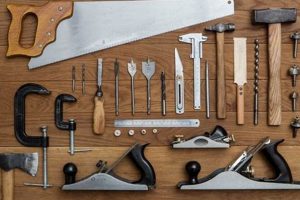
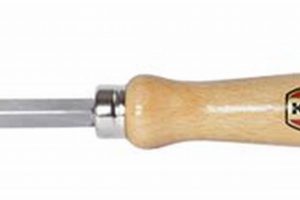
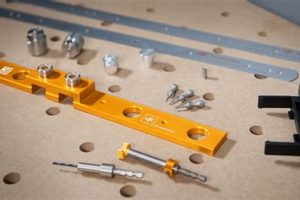
The implements employed for crafting objects from wood at a significantly reduced scale represent a specialized niche within the broader field of woodworking. These instruments, often scaled-down versions of their full-sized counterparts, facilitate detailed work on small pieces, enabling the creation of intricate models, dollhouse furniture, and other diminutive wooden artifacts. Examples include scaled-down saws, planes, chisels, and lathes designed for precise manipulation and shaping of delicate wooden components.
The use of these specialized instruments offers numerous advantages. The ability to work with precision on a small scale is paramount, allowing for highly detailed and accurate reproductions. Furthermore, these instruments often cater to a need for creating pieces that would be impossible or impractical to produce using larger, conventional woodworking equipment. Historically, the development of such tools can be traced back to model making and the creation of scaled prototypes, demonstrating a long-standing need for precision in small-scale wood fabrication.
The following sections will delve into specific types of these instruments, exploring their applications, considerations for selection, and best practices for their effective utilization in various woodworking projects. Subsequent discussion will address maintenance, safety protocols, and resources for acquiring these specialized tools.
Guidance on Utilizing Instruments for Small-Scale Wood Fabrication
The following represents a collection of recommendations intended to optimize the effectiveness and longevity of implements used in small-scale wood projects. Adherence to these guidelines will contribute to improved precision and overall quality of craftsmanship.
Tip 1: Selection Criteria: When acquiring these tools, prioritize instruments manufactured from high-quality materials. Hardened steel blades and robust handles are essential for maintaining sharpness and control during operation. Invest in instruments specifically designed for fine detail work.
Tip 2: Sharpening Protocol: Maintaining a keen edge on cutting instruments is paramount. Utilize appropriate sharpening stones and honing techniques to ensure optimal performance. Dull blades necessitate increased force, potentially compromising accuracy and safety.
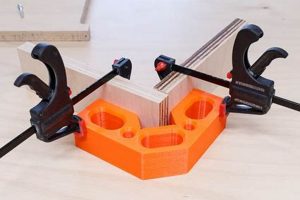
Tip 3: Secure Workholding: Employ vises or clamps specifically designed for securing small workpieces. Adequate workholding is crucial for preventing movement during cutting or shaping operations, thereby minimizing the risk of errors and potential injury.
Tip 4: Gradual Material Removal: Adopt a method of removing material in small increments. This approach promotes greater control and reduces the likelihood of overcutting or splintering. Practice patience and precision in execution.
Tip 5: Magnification Assistance: Consider incorporating magnification aids, such as magnifying glasses or illuminated magnifiers, to enhance visibility and precision. Improved visibility allows for more accurate execution of intricate details.
Tip 6: Proper Storage: Store instruments in a designated location to prevent damage and maintain their integrity. A fitted toolbox or organized drawer system will safeguard blades and protect delicate mechanisms from dust and impact.
Tip 7: Regular Cleaning: Clean instruments after each use to remove sawdust and debris. A clean, dry tool will perform more reliably and resist corrosion. Periodic lubrication of moving parts may also be beneficial.
Adhering to these principles will enhance the user’s experience and facilitate the creation of high-quality miniature wood artifacts. The benefits of proper tool selection, maintenance, and technique extend to both the precision of the final product and the longevity of the instruments themselves.
This guidance serves as a foundation for successful employment of these instruments. The subsequent sections will explore specific instrument types and their respective applications in greater detail.
1. Precision

In the realm of small-scale wood fabrication, precision transcends a mere aspiration; it is a fundamental requirement. The efficacy of implements designed for diminutive work hinges directly on their capacity to execute minute alterations and maintain tight tolerances. This inherent reliance on accuracy defines the characteristics, applications, and overall utility of these specialized instruments.
- Tolerances and Measurement
Maintaining stringent dimensional accuracy is paramount when creating miniature replicas or intricate models. The tools employed must facilitate precise measurement and consistent execution of cuts within fractions of a millimeter. A miniature caliper, for example, allows for measuring dimensions with accuracy to 0.01mm, enabling parts to fit together seamlessly in a small-scale construction.
- Control and Stability
The user’s capacity to exert unwavering control over the tool is intrinsically linked to precision. Instruments should exhibit minimal backlash or play, permitting smooth and predictable movement. For example, a miniature carving chisel must be precisely balanced and sharpened to allow controlled removal of minute amounts of material, enabling the creation of intricate details without damaging the surrounding wood.
- Tool Design and Calibration
The design and calibration of the tools themselves significantly impact the achievable level of precision. Properly calibrated saws with accurately set teeth or planes with finely adjustable blades are essential. A miniature miter saw, for instance, must have a precisely calibrated angle gauge to ensure that cuts are made at the intended angle with minimal deviation.
- Material Quality and Consistency
The materials used in the construction of both the tools and the workpiece contribute to the overall precision. High-quality, dimensionally stable materials are less prone to deformation or vibration during operation. Using a high-density hardwood for the workpiece and a hardened steel for the tool’s blade can help maintain precision during intricate cuts.
The intersection of these factors underscores the critical role of precision in miniature woodworking. The ability to achieve fine tolerances, coupled with meticulous tool design and material selection, ultimately dictates the success of projects undertaken with these specialized implements.
2. Scale

The dimension denoted by “scale” constitutes an inherent characteristic of these implements. The effectiveness of such tools is predicated upon their compatibility with the size of the workpiece, dictating design, functionality, and achievable precision. A tool designed for standard woodworking will invariably prove unsuitable for tasks requiring minute manipulation and detailing; thus, “scale” acts as a primary determinant in the selection and utilization of instruments for small-scale wood fabrication. The reduction in size directly impacts the force required for operation, the level of control attainable, and the intricacy of the resulting work. For example, a full-sized hand plane would be impractical for shaping miniature furniture components, whereas a specialized miniature plane allows for controlled material removal on a smaller surface area.
The influence of scale extends beyond the mere physical dimensions of the tool. It also governs the mechanics of operation and the ergonomic considerations. A miniature tool must be designed to accommodate the human hand while simultaneously enabling precise movements. The leverage, balance, and grip must be optimized for controlled force application. A miniature saw, for instance, will require a handle design that facilitates a secure grip and minimizes hand fatigue during prolonged use. Furthermore, the blade thickness and tooth configuration must be scaled appropriately to avoid binding or tearing the delicate wood fibers of the workpiece. The practical application of this understanding is evident in the design of miniature lathes, where the spindle speed and motor torque are calibrated to handle the reduced mass of the rotating stock.
In summary, scale is not simply a descriptive attribute but a foundational element governing the utility and performance of tools employed in miniature woodworking. Understanding the interplay between tool size, force application, and control is crucial for achieving successful outcomes in this specialized field. The challenges associated with maintaining precision at a reduced scale underscore the importance of selecting implements specifically designed for these applications, thereby ensuring the creation of intricate and accurately rendered wooden artifacts.
3. Control

The attribute of control is paramount when employing implements for small-scale wood fabrication. Miniature woodworking necessitates precise manipulation and unwavering command over the tool’s movement. Any deviation from the intended trajectory or excessive force application can compromise the integrity of the delicate workpiece. Therefore, the design and application of instruments for small-scale wood projects must prioritize the user’s capacity to maintain absolute control. The connection between the tool and the hand becomes an essential interface, dictating the accuracy of cuts, shaping operations, and overall craftsmanship. As an example, using a miniature hand plane requires a delicate touch and unwavering grip to prevent gouging or uneven material removal. The implement’s weight, balance, and handle design directly influence the operator’s ability to maintain the desired plane and depth of cut.
The significance of control extends to the prevention of injury. Given the diminished size of the workpieces and the increased proximity of the hands to the cutting edges, the risk of accidental cuts or punctures is heightened. A lack of control can lead to slippage or unintended tool movement, resulting in potential harm. Therefore, the selection of instruments with ergonomic designs and safety features is crucial. For example, miniature carving tools often feature short, rounded handles that provide a secure grip and prevent the hand from slipping onto the blade. Additionally, the use of appropriate workholding devices, such as miniature vises or clamps, further enhances control by securing the workpiece and minimizing movement during operation.
In summary, control is not merely a desirable characteristic but a fundamental prerequisite for successful small-scale wood fabrication. The ability to exert precise manipulation over the tool is directly correlated with the accuracy, safety, and overall quality of the finished product. Challenges related to maintaining control at a diminished scale underscore the importance of selecting instruments specifically designed for this application, and employing meticulous techniques to ensure the safe and effective execution of intricate woodworking tasks. Mastering control is central to realizing the potential of miniature woodworking and producing high-quality, detailed pieces.
4. Detail
The capacity to execute intricate features and minute embellishments defines the utility and application of specialized implements used in small-scale wood fabrication. Detail work is not merely an aesthetic consideration but a fundamental requirement for accurately replicating scaled-down objects and creating complex miniature designs. The effectiveness of implements designated for this purpose is directly proportional to their ability to facilitate the creation of fine, well-defined features.
- Precision Cutting and Shaping
Achieving minute details requires instruments capable of executing precise cuts and shaping operations. The cutting edges must be exceptionally sharp and finely controlled to prevent tearing or splintering of the wood. Miniature saws, chisels, and carving knives are specifically designed with thin blades and fine tips to facilitate the creation of intricate lines, curves, and textures. For example, a miniature dovetail saw with precisely set teeth allows for the creation of tight-fitting joints in small-scale furniture models.
- Surface Finishing and Refinement
Surface treatment is crucial for highlighting details and achieving a polished appearance. Miniature sanding tools, files, and polishing cloths are employed to refine surfaces, remove imperfections, and create smooth, even finishes. The selection of appropriate abrasives and techniques is essential to avoid damaging delicate features or altering the intended dimensions. Miniature burnishers and polishing compounds are utilized to bring out the natural luster of the wood and accentuate fine details.
- Miniature Joinery Techniques
The creation of intricate joinery is essential for constructing durable and visually appealing miniature structures. Specialized tools are required to execute precise joints, such as dovetails, mortise and tenons, and mitered corners. Miniature jigs and fixtures are often used to aid in alignment and ensure accuracy during the joinery process. The success of these techniques relies on the precision and control offered by dedicated miniature woodworking tools.
- Embellishment and Ornamentation
The addition of decorative elements and ornamentation enhances the visual appeal and realism of miniature wood projects. Miniature carving tools, gouges, and detail brushes are employed to create intricate patterns, textures, and relief carvings. The application of paint, stain, and other finishes further accentuates these details and adds depth to the overall design. These embellishments require tools designed for meticulous application and precise control, allowing for the creation of convincing miniature representations of real-world objects.
The capacity to achieve fine detail is not merely a function of the tool itself but also depends on the skill and experience of the craftsman. A combination of specialized implements, meticulous techniques, and a keen eye for detail is essential for creating truly remarkable miniature wood projects. The pursuit of detail in this field demands dedication, patience, and a commitment to precision, ultimately resulting in the creation of intricate and compelling works of art.
5. Materials

The selection of materials exerts a profound influence on the performance, longevity, and achievable detail of implements used in small-scale wood fabrication. The physical properties of materials employed in tool construction directly impact their cutting efficiency, resistance to wear, and overall durability. For example, a miniature chisel crafted from high-carbon steel will maintain a sharper edge for a longer duration compared to one fashioned from lower-grade steel. This, in turn, allows for cleaner, more precise cuts, crucial for achieving intricate details. Similarly, the material used for tool handles dictates grip comfort, stability, and resistance to deformation under pressure, directly affecting the user’s control. Using hardwoods like ebony or rosewood for handles can provide superior grip and longevity compared to softer woods or plastics. The interdependence is clear: the material used in tool construction determines its suitability for the demanding tasks of miniature woodworking.
Considerations extend beyond the tool itself to encompass the materials being worked upon. The type of wood selected for a project significantly influences the choice of implements. Softer woods, such as basswood, may be easily shaped with less robust tools, while hardwoods, such as maple or walnut, demand sharper, more durable blades. The grain structure, density, and moisture content of the wood affect its machinability and susceptibility to splitting or splintering. The type of adhesive and finishing materials also influence the tool selection. For example, certain adhesives require specialized applicators for precise placement, while some finishes necessitate specific sanding tools for achieving a smooth, even surface. The practical application of this knowledge is evident in the specialized tools available for working with exotic hardwoods or creating intricate inlays using contrasting materials. This underscores that the success of any miniature woodworking project hinges on a coordinated approach to material selection and tool utilization.
In summation, the relationship between materials and miniature woodworking instruments is multifaceted and critical. The quality and properties of the materials used in tool construction directly affect their performance and durability, while the characteristics of the workpiece dictate the necessary tool attributes. Achieving optimal results requires a thorough understanding of these interdependencies and a careful selection of both tools and materials to ensure compatibility and performance. The challenges associated with sourcing high-quality materials and maintaining tools necessitate a continuous commitment to knowledge acquisition and meticulous craftsmanship. Failure to consider the material science underpinning miniature woodworking can lead to compromised results and a diminished quality of the final product.
6. Durability

The enduring functionality of implements employed in small-scale wood fabrication is of paramount importance. “Durability,” in this context, signifies the capacity of instruments to withstand repeated use and maintain their operational effectiveness over an extended period. The diminutive size and intricate nature of these tools necessitate a construction robust enough to endure the stresses of precise manipulation and resist premature degradation. The inverse relationship between tool size and the potential for damage necessitates high-quality materials and meticulous manufacturing processes. The implication of compromised durability manifests as increased frequency of replacement, elevated costs, and inconsistent performance.
The choice of materials directly impacts instrument longevity. High-carbon steel blades, hardened to specific tolerances, maintain their sharpness and resist deformation under pressure. Similarly, handles constructed from dense hardwoods or durable synthetics withstand repeated gripping and manipulation without cracking or splintering. The implementation of precision engineering techniques, such as heat treatment and stress relieving, further enhances the durability of critical components. A miniature hand plane, for example, constructed with a precisely machined steel sole and a securely fastened blade, will maintain its flatness and cutting ability for extended periods, ensuring consistent results and minimizing the need for readjustment or replacement. The cost associated with acquiring higher-quality, more durable instruments is often offset by their extended lifespan and reduced maintenance requirements.
In conclusion, the longevity of instruments designed for miniature woodworking is a critical factor influencing both the economic viability and the effectiveness of these instruments. The emphasis on durable materials, precise construction, and diligent maintenance is essential for maximizing their operational lifespan and ensuring consistent, high-quality results. Neglecting durability considerations leads to premature failure, increased expenses, and compromised precision. The understanding of these interdependencies is essential for professionals and hobbyists alike.
Frequently Asked Questions
The following questions address common inquiries and misconceptions regarding the selection, utilization, and maintenance of instruments employed in small-scale wood fabrication.
Question 1: What constitutes a “miniature” woodworking tool?
A “miniature” woodworking tool is defined as an instrument specifically designed for manipulating wood at a significantly reduced scale. Such instruments are typically smaller, lighter, and more precisely manufactured than their full-sized counterparts.
Question 2: Are conventional woodworking tools suitable for miniature work?
While certain full-sized tools may be adapted for limited use in miniature woodworking, they often lack the precision and control necessary for intricate detail work. Dedicated miniature tools are generally preferable for achieving optimal results.
Question 3: What materials are commonly used in the construction of miniature woodworking tools?
High-carbon steel is frequently used for cutting edges due to its hardness and ability to maintain sharpness. Handles are often crafted from hardwoods, such as ebony or rosewood, or durable synthetic materials like phenolic resins.
Question 4: How does one maintain the sharpness of miniature cutting tools?
Maintaining sharpness requires the use of appropriate sharpening stones, honing compounds, and meticulous technique. Regular honing and occasional sharpening are essential for preserving the cutting edge and preventing damage to the workpiece.
Question 5: What safety precautions should be observed when using miniature woodworking tools?
Safety precautions include wearing appropriate eye protection, securing the workpiece with clamps or vises, and exercising caution to avoid accidental cuts or punctures. Familiarization with the tool’s operation and limitations is also crucial.
Question 6: Where can high-quality miniature woodworking tools be acquired?
High-quality miniature woodworking tools are typically available from specialized tool suppliers, online retailers, and woodworking supply stores. Researching reputable brands and reading product reviews is advisable before making a purchase.
The proper selection, maintenance, and safe utilization of these instruments are essential for successful small-scale wood fabrication. Understanding these principles is key to achieving precise and high-quality results.
The subsequent sections will delve into specific tool types and their applications, providing a more detailed understanding of their use in various woodworking projects.
Conclusion
This examination has detailed the significance of “miniature woodworking tools” in enabling precise and intricate fabrication at reduced scales. Key considerations include the crucial interplay of precision, scale, control, detail, material selection, and durability. The proper understanding and application of these principles are essential for achieving optimal results in small-scale wood projects.
The effective utilization of specialized implements will continue to be pivotal as advancements in miniaturization drive further demand for intricate, high-quality components. The mastery of “miniature woodworking tools” facilitates innovation and artistry, and is vital for those engaged in modeling, crafting, and precision manufacturing. Further investigation into advanced techniques and specialized instrument designs will only elevate the craft.