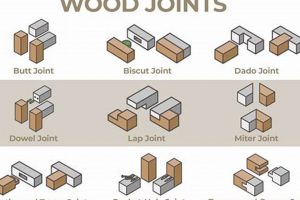
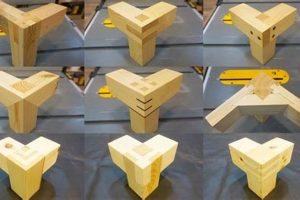
A method for joining wood planks where each board has a rabbet or groove cut along its edge, allowing the boards to overlap neatly. This overlapping creates a distinct reveal line, adding a decorative element to the surface. Common applications include interior wall paneling, exterior siding, and occasionally, flooring.
This construction technique offers several advantages, including ease of installation, inherent strength and stability due to the interlocking nature of the connection, and a degree of weather resistance when properly installed. Historically, it has been utilized in boat building to create watertight hulls, showcasing its robustness. Its aesthetic appeal, combined with practical advantages, has ensured its continued popularity in both traditional and contemporary designs.
The following sections will delve into the specifics of creating these connections, explore various techniques for achieving optimal results, and provide guidance on selecting appropriate materials and tools for successful projects.
Essential Considerations for Effective Shiplap Construction
Achieving optimal results with this construction method requires meticulous planning and execution. The following recommendations will contribute to a structurally sound and aesthetically pleasing finished product.
Tip 1: Material Selection: Choose lumber that is dimensionally stable and appropriate for the intended environment. Consider the moisture content of the wood and its susceptibility to warping or cupping. Kiln-dried lumber is generally preferred.
Tip 2: Precise Measurements: Accurate measurements are crucial for consistent reveals and a professional appearance. Utilize a precision measuring tool and double-check all dimensions before cutting any lumber.
Tip 3: Consistent Rabbet Depth: Maintain a uniform rabbet or groove depth along the edges of each board. Variations in depth can lead to uneven overlaps and a less polished final result. Use a router or table saw with precision settings.
Tip 4: Proper Fastening Techniques: Employ appropriate fasteners, such as nails or screws, based on the thickness of the lumber and the substrate to which it is being attached. Predrilling pilot holes can prevent splitting, particularly with hardwoods.
Tip 5: Account for Expansion and Contraction: Wood expands and contracts with changes in humidity. Leave a small gap between boards to accommodate these movements, preventing buckling or distortion over time. This is especially important in environments with significant humidity fluctuations.
Tip 6: Surface Preparation: Ensure the substrate is clean, level, and free of any obstructions. A smooth and even surface will facilitate proper alignment and a professional finish. Consider applying a vapor barrier if installing in a moisture-prone area.
Tip 7: Consistent Reveal: Maintain a consistent reveal (the exposed portion of each board) throughout the installation. This uniformity contributes significantly to the overall aesthetic appeal. Utilize spacers or jigs to ensure even spacing.
Adhering to these guidelines will ensure the creation of durable, visually appealing installations that will withstand the test of time. Focus on precision and material considerations for a superior outcome.
The subsequent sections will address common challenges encountered during the process and offer solutions for overcoming these obstacles.
1. Joint Strength

Joint strength is a critical factor in determining the durability and longevity of structures employing overlapping plank connections. The interlocking design inherently contributes to increased resistance against lateral forces, as each plank supports its neighbor. Poor execution, however, can negate these inherent advantages. Improperly cut rabbets, inadequate fastener selection, or insufficient substrate support directly compromise joint integrity, potentially leading to separation, warping, or even structural failure. Examples include exterior siding installations exposed to high winds, where weakened connections can lead to planks detaching, or interior wall paneling subject to impacts, resulting in unsightly gaps and decreased structural stability. Understanding the relationship between joint strength and the overall construction process is essential for creating a reliable and lasting installation.
The effectiveness of interlocking connections is further influenced by the type of wood used and the specific fastening method employed. Softer woods, for instance, may require closer fastener spacing to prevent the edges from pulling away, particularly in areas subject to moisture exposure. Similarly, the choice between nails and screws should be carefully considered based on the wood’s density and the anticipated stress levels. Screws generally provide greater holding power, but nails may be more appropriate in situations where flexibility is desired to accommodate slight movements due to expansion and contraction. Moreover, adhesives can augment joint strength, especially when bonding the planks to the substrate. However, the selection of an appropriate adhesive is crucial to ensure compatibility with both the wood and the substrate, as well as resistance to environmental factors. Consider the example of floorboards with these interlocking connections where there is heavy foot traffic. Without sufficient joint strength, these types of floors become prone to squeaking, shifting, and eventual failure.
In summary, joint strength is an indispensable element of successful interlocking plank connection projects. Neglecting this aspect can lead to premature failure and costly repairs. By prioritizing precise rabbet cuts, appropriate fastener selection, and proper substrate preparation, the inherent structural advantages of this construction method can be fully realized. A comprehensive understanding of these principles is essential for ensuring a robust and aesthetically pleasing result, providing long-term stability and functionality.
2. Material Stability

Material stability is fundamentally linked to the success of shiplap applications. Wood, being a hygroscopic material, undergoes dimensional changes in response to variations in ambient humidity. This inherent characteristic directly impacts the integrity of the joints. Unstable materials, prone to excessive expansion and contraction, compromise the tight fit necessary for both structural soundness and aesthetic appeal. The interlocking nature of the joint distributes stress; however, significant dimensional changes can overcome this advantage, leading to warping, cupping, and ultimately, joint separation. For example, using improperly seasoned lumber for exterior siding inevitably results in gaps and potential water infiltration, necessitating costly repairs.
The choice of wood species plays a pivotal role in determining material stability. Certain species, such as cedar and redwood, exhibit superior dimensional stability compared to others, making them well-suited for demanding applications. Kiln-drying lumber to a moisture content appropriate for its intended environment is crucial for minimizing subsequent movement. Additionally, acclimatizing the material to the installation site before construction allows it to equilibrate with the surrounding humidity, reducing the likelihood of post-installation warping or cupping. Consider the case of interior paneling installed in a newly constructed home; if the wood is not properly acclimatized, the inevitable drying of the building’s structure can cause the panels to shrink, creating unsightly gaps at the joints.
In conclusion, material stability is not merely a desirable attribute but an essential prerequisite for durable and visually pleasing applications. Failure to account for the hygroscopic nature of wood can lead to compromised joint integrity and premature failure. Careful species selection, proper seasoning, and acclimatization are vital steps in mitigating the risks associated with material instability, ensuring the long-term success and functionality of shiplap installations. Addressing these concerns proactively minimizes potential issues and contributes significantly to a superior final result.
3. Rabbet Precision

Rabbet precision serves as a foundational element in the successful execution of overlapping plank installations. Inaccurate or inconsistent rabbets, the recesses cut into the edges of the boards, directly compromise the integrity and aesthetic quality of the finished surface. The purpose of the rabbet is to allow the boards to overlap in a flush manner, creating a distinct reveal line. Deviations from the intended dimensions, even by fractions of an inch, accumulate across multiple boards, leading to uneven surfaces, gaps, and a visually unappealing result. A practical illustration of this principle is evident in exterior siding applications. Imprecise rabbets allow water to penetrate the joints, accelerating wood rot and potentially causing structural damage. This emphasizes the direct cause-and-effect relationship between rabbet precision and the long-term performance of the installation.
Achieving rabbet precision necessitates the use of appropriate tools and techniques. A table saw equipped with a sharp blade and accurate fence settings is generally preferred for producing consistent rabbets. Alternatively, a router with a rabbeting bit can be employed, particularly for intricate designs or when working with smaller pieces. Regardless of the chosen method, meticulous attention to detail and precise measurements are essential. Furthermore, the use of test pieces is recommended to verify the accuracy of the setup before cutting the final boards. The practical significance of this understanding is evident in the reduction of material waste and the minimization of rework, resulting in a more efficient and cost-effective construction process. Consistent monitoring and calibration of the tools ensure that each board is prepared with the necessary degree of accuracy, thus facilitating a seamless and visually harmonious installation.
In summary, rabbet precision is not merely a technical detail but a crucial determinant of the overall quality and durability of overlapping plank structures. Its impact extends from structural integrity and weather resistance to aesthetic appeal and long-term performance. While challenges in achieving perfect precision may arise due to material variations or tool limitations, a commitment to meticulousness and the application of appropriate techniques will significantly enhance the likelihood of success, linking directly to the broader theme of creating durable, aesthetically pleasing, and structurally sound installations.
4. Reveal Consistency

Reveal consistency represents a critical design element in shiplap construction, directly influencing the aesthetic outcome and perceived quality of the finished surface. The reveal, defined as the visible portion of each plank, creates the characteristic shadow line that defines shiplap’s visual appeal. Maintaining a uniform reveal across the entire expanse of the installation is essential for achieving a professional and aesthetically pleasing result.
- Impact on Visual Harmony
Inconsistent reveals disrupt the visual rhythm established by the parallel lines, leading to a chaotic and unprofessional appearance. Even slight variations in reveal width are noticeable, particularly in large installations or under direct lighting. The human eye is naturally drawn to patterns and symmetry; deviations from these expectations detract from the overall aesthetic appeal. A consistent reveal creates a sense of order and precision, contributing to a visually harmonious and balanced final product.
- Relationship to Manufacturing Tolerances
Achieving reveal consistency necessitates adherence to strict manufacturing tolerances for the lumber used. Variations in board thickness or rabbet depth directly translate into inconsistencies in the reveal. Selecting high-quality lumber with minimal dimensional variations is paramount. Furthermore, precise milling and cutting techniques are essential for creating accurate rabbets. Utilizing calibrated machinery and employing experienced craftsmanship are critical for minimizing manufacturing-related inconsistencies that can impact the uniformity of the reveal.
- Role of Installation Techniques
Even with perfectly manufactured lumber, improper installation techniques can compromise reveal consistency. Maintaining consistent spacing between boards during installation is crucial. The use of spacers or jigs can aid in achieving uniform spacing, ensuring that the reveal remains consistent across the entire surface. Careful attention must be paid to alignment and leveling to prevent cumulative errors that can lead to noticeable variations in the reveal width over longer distances. Accurate measurement and meticulous execution are indispensable for achieving the desired visual outcome.
- Influence of Environmental Factors
Wood expands and contracts in response to changes in humidity, potentially affecting reveal consistency over time. In environments with significant humidity fluctuations, the reveal width may vary slightly as the wood swells or shrinks. To mitigate these effects, it is essential to allow the lumber to acclimatize to the installation environment before construction. Additionally, leaving small expansion gaps between boards can accommodate minor dimensional changes, preventing buckling or distortion that could compromise the uniformity of the reveal. The understanding of how environmental dynamics interact with the material is crucial.
These interlocking board connections are not merely functional; they represent a marriage of precision and craftsmanship. Inconsistent reveals can undermine the effort invested in other aspects of the project. By prioritizing material quality, manufacturing precision, meticulous installation techniques, and an understanding of environmental factors, builders can ensure a consistent reveal, resulting in a visually stunning and enduring shiplap installation.
5. Weather Resistance
Weather resistance is a paramount consideration when employing overlapping plank methods, particularly in exterior applications. The ability of this construction technique to withstand environmental stressors directly influences its longevity and protective capacity against the elements. Effective weather resistance mitigates moisture intrusion, prevents premature decay, and maintains structural integrity.
- Overlapping Design for Water Shedding
The overlapping design inherently provides a degree of water shedding. Rainwater flows down the surface, with the overlapping boards diverting it away from the underlying structure. This layered approach minimizes direct exposure to the sheathing or framing beneath. However, this functionality relies on the precision of the joint and the use of appropriate sealants or coatings. Gaps or imperfections in the connection can negate this benefit, allowing water to penetrate and compromise the building envelope. The effectiveness of this design is particularly evident in historical maritime applications, where this planking was fundamental to constructing watertight hulls.
- Material Selection for Environmental Durability
The choice of wood species significantly impacts weather resistance. Naturally durable woods, such as cedar, redwood, and cypress, possess inherent resistance to decay and insect infestation, making them well-suited for exterior use. These species contain oils and extractives that act as natural preservatives, inhibiting the growth of fungi and deterring pests. Utilizing less durable woods necessitates the application of protective coatings or chemical treatments to enhance their resistance to weathering. The selection process should prioritize species that align with the specific climatic conditions of the installation site.
- Protective Coatings and Sealants
The application of protective coatings and sealants is crucial for enhancing weather resistance. Paints, stains, and sealants create a barrier that shields the wood from moisture, ultraviolet radiation, and temperature fluctuations. Penetrating oil finishes can also provide protection while allowing the wood to breathe, minimizing the risk of trapped moisture. The choice of coating should be based on its compatibility with the wood species, the desired aesthetic, and the specific environmental conditions. Regular maintenance and reapplication of coatings are necessary to sustain long-term weather resistance. The integration of these protective methods are essential to ensure longevity.
- Proper Installation Techniques to Minimize Water Intrusion
Correct installation methods are as crucial as material selection and protective coatings. Ensuring a tight fit between the boards and properly flashing around openings, such as windows and doors, are essential for preventing water intrusion. The orientation of the boards should also be considered to maximize water shedding. Vertical installation, for example, can facilitate faster water runoff compared to horizontal installation. Furthermore, providing adequate ventilation behind the structure can help to dry out any moisture that may penetrate the surface. These methods must be planned from the outset to ensure proper implementation.
Weather resistance in this plank style is a multifaceted concept encompassing design, material selection, protective coatings, and installation techniques. Addressing each of these elements comprehensively is crucial for creating a durable and long-lasting exterior cladding system that protects the building from the elements. The interconnectedness of these factors highlights the importance of a holistic approach to ensure optimal performance. A failure in any one of these areas can compromise the overall weather resistance of the construction.
6. Aesthetic Integration

The seamless incorporation of shiplap construction into a cohesive design scheme, referred to as aesthetic integration, is a critical factor in determining the overall success and visual impact of any project employing this plank connection. This integration encompasses not only the selection of appropriate materials and finishes but also the careful consideration of scale, proportion, and contextual harmony with the surrounding environment.
- Contextual Harmony with Architectural Style
The style of shiplap construction should complement the overall architectural design of the building or space. For instance, a rustic, weathered finish may be appropriate for a farmhouse-style interior, while a sleek, painted installation may be better suited for a modern aesthetic. Discrepancies between the style of the shiplap and the overall architectural design can create visual dissonance, detracting from the intended ambiance. Consider a minimalist space with a heavily distressed style; the two styles compete, disrupting the intended clean, unadorned aesthetic. Ensuring contextual harmony enhances the overall visual coherence and creates a more unified and pleasing design.
- Consideration of Scale and Proportion
The dimensions of the boards and the spacing between them, or the reveal, should be proportionate to the size of the space and the surrounding elements. Overly large boards can overwhelm a small room, while overly small boards may appear insignificant in a large space. The reveal should also be carefully considered to ensure visual balance and harmony. A wide reveal can create a bold, graphic effect, while a narrow reveal can provide a more subtle and refined appearance. Proportionate scaling is essential for maintaining visual equilibrium and preventing the style from becoming visually dominant or recessive in the overall design. For example, in smaller spaces, narrower boards with minimal reveal often feel more balanced than wider boards.
- Color Palette and Finish Selection
The color palette and finish of this plank connection should align with the overall color scheme and material palette of the space. Choosing colors that complement the surrounding elements, such as walls, flooring, and furniture, creates a cohesive and harmonious design. The finish, whether painted, stained, or left natural, should also be consistent with the desired aesthetic. A glossy finish can reflect light and create a more contemporary look, while a matte finish can provide a more subdued and rustic feel. Color palettes can also affect the mood of a room. The careful selection of color and finish is critical to achieving a visually appealing and unified design.
- Integration with Lighting and Spatial Arrangement
The direction and intensity of lighting can significantly impact the appearance. Properly positioned lighting can accentuate the texture and create interesting shadow patterns, while poorly placed lighting can highlight imperfections or create glare. The spatial arrangement of the space should also be considered. The placement of furniture, artwork, and other decorative elements should complement the layout and contribute to the overall visual balance. Coordinating lighting and spatial arrangement maximizes the aesthetic impact and contributes to a more inviting and visually stimulating environment. A room that is well-integrated in terms of these aspects promotes the design.
Aesthetic integration is not merely an afterthought but an integral aspect of successful installations. By carefully considering architectural style, scale, proportion, color palette, finish selection, lighting, and spatial arrangement, it is possible to create a design that is both visually appealing and contextually appropriate. Attention to these details elevates the project from a purely functional application to a cohesive and aesthetically pleasing element of the overall design, demonstrating an understanding of not only construction but also the art of visual harmony.
Frequently Asked Questions
The following questions and answers address common concerns and misconceptions regarding this method of plank connection.
Question 1: What are the primary advantages of utilizing this interlocking plank technique compared to other methods of joining wood boards?
The interlocking design inherently provides increased structural stability due to the overlapping nature of the connection. It offers a distinctive aesthetic characterized by consistent reveal lines and simplifies the installation process compared to other intricate joinery techniques.
Question 2: What wood species are most suitable for construction of these joints, especially in environments prone to moisture?
Species with inherent decay resistance, such as cedar, redwood, and cypress, are preferable for moisture-prone environments. Kiln-dried lumber, regardless of species, is recommended to minimize dimensional changes post-installation. The inherent oils in these species provide protection.
Question 3: What specific tools are essential for achieving precise rabbets or grooves when creating interlocking plank connections?
A table saw equipped with a sharp blade and precise fence adjustments is highly recommended. Alternatively, a router with a rabbeting bit can be used. Precision measuring tools, such as calipers and digital levels, are also essential for ensuring accuracy.
Question 4: How can one ensure consistent reveal lines throughout an installation, especially over extended surfaces?
Utilizing spacers or jigs during installation is critical for maintaining uniform spacing between boards. Regular monitoring of reveal width and adjustment as needed is also necessary. Precise milling of the lumber ensures consistency.
Question 5: What are the recommended fastening methods to securely attach interlocking planks, and how does the choice of fastener impact the structural integrity of the assembly?
Screws generally provide greater holding power than nails, particularly in hardwoods. Predrilling pilot holes is recommended to prevent splitting. The length and gauge of the fastener should be appropriate for the thickness of the lumber and the substrate. Proper fastening ensures durability.
Question 6: How does one address potential issues related to wood expansion and contraction when employing overlapping plank connections in varying environmental conditions?
Acclimatizing the lumber to the installation environment prior to construction is essential. Leaving small expansion gaps between boards allows for dimensional changes without compromising the integrity of the installation. Proper ventilation is also crucial for managing moisture levels.
Mastering this type of joinery relies on a comprehensive understanding of material properties, precise execution, and appropriate installation techniques. By addressing these frequently asked questions, the complexities can be overcome, leading to superior results.
The following section will provide a comprehensive summary of the critical considerations for a successful project.
Conclusion
This exploration of shiplap joints woodworking has underscored the multifaceted nature of this construction method. Key aspects such as joint strength, material stability, rabbet precision, reveal consistency, weather resistance, and aesthetic integration are all indispensable for achieving optimal results. Each of these elements contributes significantly to the overall durability, functionality, and visual appeal of the finished product.
Mastery of shiplap joints woodworking requires a commitment to precision, a deep understanding of material properties, and meticulous attention to detail. While challenges may arise, a thorough understanding of the principles outlined ensures successful implementation and lasting value. It is incumbent upon practitioners to embrace these principles to elevate the quality and longevity of their work. Further research and continued refinement of techniques will undoubtedly lead to even more innovative and sustainable applications of this time-honored method.