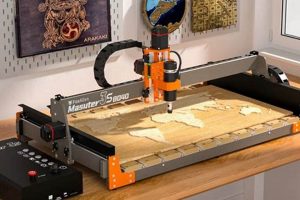
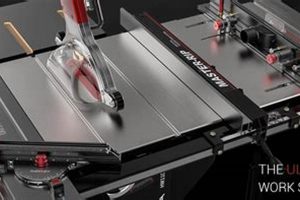
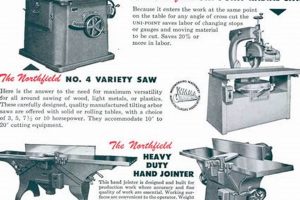
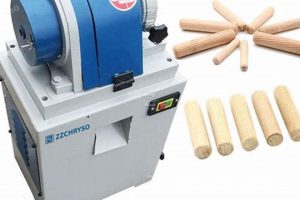
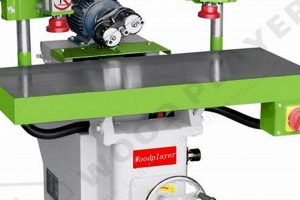
Compact fabrication tools designed for shaping wood are essential for hobbyists, small businesses, and educational institutions. These tools enable the creation of a variety of wooden objects, from simple crafts to intricate furniture components. Examples include benchtop lathes, mini milling machines optimized for wood, and compact band saws.
The reduced size and portability of these tools offer several advantages. They require less workshop space, making woodworking accessible to individuals with limited areas. Furthermore, these tools generally consume less power and represent a lower initial investment compared to their larger counterparts. Historically, miniaturization has enabled wider adoption of woodworking as a craft and profession.
The following sections will delve into specific types of these fabrication tools, their applications, selection criteria, and safety considerations. These considerations are of utmost importance to the successful and safe implementation of these tools into any wood shop.
Tips Regarding Compact Wood Shaping Tools
Proper selection, use, and maintenance are vital for achieving optimal results and ensuring safety when operating compact wood shaping tools.
Tip 1: Prioritize Safety Equipment: Always use appropriate safety glasses, hearing protection, and dust masks. These tools generate wood chips and fine particulate matter that can cause eye, ear, and respiratory irritation.
Tip 2: Conduct Regular Maintenance: Routinely inspect and clean these tools. Sharp blades and properly lubricated components improve cutting efficiency and reduce the risk of equipment failure.
Tip 3: Use Appropriate Work Holding: Secure the workpiece with clamps or vises. This prevents movement during operation and ensures accurate cuts while keeping hands safely away from cutting surfaces.
Tip 4: Select the Correct Speed and Feed Rate: Refer to the tools manual and adjust the speed and feed rate based on the type of wood and the specific operation. Excessive speed can cause burning and reduce tool life.
Tip 5: Understand Material Limitations: Compact wood shaping tools are best suited for softer woods and smaller workpieces. Attempting to work with dense hardwoods or excessively large pieces can overload the machine and lead to damage.
Tip 6: Practice Before Tackling Complex Projects: Familiarize yourself with the operation of these tools by practicing on scrap wood. This allows for experimentation with different techniques and settings without risking damage to valuable materials.
Tip 7: Ensure Adequate Workspace Lighting: Proper illumination allows for clear visibility of the workpiece and cutting area, improving accuracy and reducing the risk of accidents.
Tip 8: Store Properly: When not in use, store in dry, secure environments, to minimize the chance of deterioration.
By adhering to these guidelines, operators can maximize the performance and longevity of compact wood shaping tools while minimizing the risk of injury and equipment damage.
The next section will review the safety precautions to take when using these tools.
1. Size and Portability
The attributes of size and portability are defining characteristics of compact wood fabrication equipment. These factors directly influence the accessibility, operational flexibility, and overall suitability of such tools in various work environments.
- Space Optimization
Reduced dimensions allow placement in areas with limited square footage, such as apartments, classrooms, or small workshops. This expands the potential user base by removing spatial barriers to entry.
- Ease of Transportation
Lighter weight and smaller footprint facilitate movement between locations. This is beneficial for mobile craftsmen, educators who conduct off-site demonstrations, and hobbyists who require storage solutions. Portability enables sharing resources or conducting projects in diverse environments.
- Setup Flexibility
Compact equipment requires less dedicated infrastructure. They can be readily set up and disassembled, providing adaptable configurations for various projects or workflows. This is valuable for those with fluctuating space needs or who perform tasks in temporary settings.
- Storage Efficiency
Reduced size translates to less storage space when the tool is not in use. This frees up valuable area for other equipment or activities and minimizes the impact of non-operational periods.
Collectively, these facets of size and portability contribute to the practicality and adoption of small wood fabrication equipment. The ability to operate and store these tools in diverse environments broadens their utility and accessibility, while the setup flexibility contributes to project efficiency and adaptability.
2. Power Requirements

Power requirements constitute a critical specification for compact wood fabrication equipment, directly impacting operational capabilities and limitations. Lower power demands, often associated with smaller tools, enable usage in environments with limited electrical infrastructure. This is particularly relevant in home workshops or educational settings where dedicated high-voltage circuits may be absent. For example, a benchtop drill press engineered for woodworking may operate efficiently on a standard 120V outlet, whereas an industrial-grade equivalent necessitates 240V service. The selection of equipment must align with the available power supply to ensure safe and effective operation, preventing overloads or equipment malfunctions.
Inadequate power can lead to diminished performance, specifically reduced cutting speeds and torque. A compact band saw intended for intricate scrollwork may struggle when tasked with cutting thicker hardwoods if its power supply is insufficient. Conversely, optimizing the power supply for the tool’s intended use maximizes its lifespan and efficiency. Cordless or battery-powered tools offer an alternative, providing portability at the expense of sustained high-power output. These tools are suitable for tasks such as sanding or light routing, where extended periods of continuous high power is not required.
Ultimately, matching power requirements to project demands is paramount. Understanding the tool’s power consumption, the available electrical capacity, and the materials to be processed ensures safe and productive operation. Ignoring power limitations can lead to inefficient workflows, equipment damage, or potentially hazardous situations. Careful consideration of power specifications is, therefore, integral to the successful integration of compact wood fabrication equipment in any workshop or educational environment.
3. Precision Capabilities
The relationship between precision capabilities and compact wood fabrication equipment is fundamental. Precision dictates the accuracy with which a machine can execute cuts, shapes, and joinery. The inherent design and construction of smaller woodworking tools influence their ability to achieve fine tolerances. For example, a mini lathe with a poorly constructed spindle will exhibit runout, preventing the creation of perfectly cylindrical objects. In contrast, a well-engineered compact milling machine, despite its reduced size, can achieve intricate cuts suitable for model making or detailed inlay work. The attainable level of precision is a primary determinant of the final product’s quality and the tool’s suitability for specific applications. For example, a smaller tool with limited precision would be suitable for rough shaping tasks, but inadequate for detailed carving.
Achieved accuracy directly impacts the feasibility of complex woodworking projects. Joinery techniques like dovetails or mortise-and-tenon joints demand tight tolerances for structural integrity and aesthetic appeal. A compact table saw with a precise fence and miter gauge enables the creation of accurate cuts for these joinery methods. The absence of precision leads to gaps, misalignment, and weakened structures. Similarly, in crafting musical instruments, precise fret placement on a guitar neck is paramount for accurate intonation. A compact fret slotting saw, when used with a precise indexing system, facilitates this operation, ensuring accurate fret placement on a guitar neck. Therefore, a high degree of precision expands the range of projects achievable with these tools.
In summary, precision is not merely a desirable feature of compact wood shaping tools but a vital attribute defining their usefulness and application. The inherent design of a machine largely dictates the level of accuracy, therefore careful selection of the tool is essential. The absence of precision severely limits the scope and quality of projects, particularly those involving intricate joinery or fine details. Conversely, precision is a vital component that empowers the operator to realize complex and refined woodworking projects. Therefore a fundamental component must be carefully weighed when considering any “small woodworking machines”.
4. Material Compatibility
Material compatibility is a critical consideration when operating compact wood shaping tools. The physical properties of the material being worked directly impact the tool’s performance, efficiency, and longevity. Matching the appropriate tool to the wood type is essential for achieving desired results and preventing damage to either the material or the equipment.
- Hardness and Density
The hardness and density of wood influence the cutting force required. Softer woods, such as pine or basswood, are readily shaped with a variety of compact tools. Harder woods, like oak or maple, demand greater power and sharper cutting edges. Attempting to force a compact tool through dense hardwoods can lead to motor strain, blade dulling, or kickback. For example, while a mini lathe might efficiently turn a spindle from pine, it may struggle to shape the same spindle from ebony.
- Grain Direction
The direction of the wood grain relative to the cutting tool significantly affects the smoothness of the cut and the risk of tear-out. Cutting against the grain can cause splintering and uneven surfaces, particularly in brittle woods. Compact routers and planers must be carefully oriented to work with, rather than against, the grain direction. Proper technique and sharp blades are crucial for minimizing tear-out and achieving clean cuts.
- Moisture Content
Wood’s moisture content impacts its machinability and stability. Wet or green wood is generally easier to cut but is prone to warping and shrinking as it dries. Kiln-dried wood is more stable but can be more difficult to work, particularly with smaller tools lacking significant power. Maintaining appropriate moisture content and adapting cutting techniques accordingly are essential for achieving stable and dimensionally accurate results.
- Resin Content
Resinous woods, such as pine or fir, can pose challenges for compact tools. The resin can build up on cutting edges, reducing efficiency and increasing friction. Regular cleaning of blades and cutters is necessary to prevent resin accumulation. Furthermore, excessive resin can clog dust collection systems, requiring more frequent maintenance. Proper ventilation is crucial when working with resinous woods to minimize exposure to volatile organic compounds.
These elements of material compatibility demonstrate their link to small woodworking machines. Careful matching of machine to material is imperative. Selection criteria that reflect these considerations can improve the quality, and reduce downtime.
5. Safety Protocols
The implementation of comprehensive safety protocols is paramount when operating compact wood fabrication equipment. These protocols are designed to minimize the risk of injury, equipment damage, and environmental hazards. The reduced scale of these machines does not diminish the need for rigorous safety measures; on the contrary, their accessibility necessitates heightened awareness and adherence to established guidelines.
- Personal Protective Equipment (PPE)
The consistent use of appropriate PPE is a cornerstone of safe operation. This includes, but is not limited to, safety glasses to protect against flying debris, hearing protection to mitigate noise exposure, and dust masks or respirators to prevent inhalation of wood dust. For example, prolonged exposure to fine particulate matter generated by sanding operations can lead to respiratory illnesses, necessitating the use of a properly fitted respirator. Gloves, while sometimes debated for specific operations, may be warranted when handling treated lumber or applying finishes. PPE serves as the first line of defense against potential hazards associated with wood shaping activities.
- Machine Guarding and Interlocks
All safety guards and interlocks provided by the manufacturer must be properly installed and maintained. These devices are designed to prevent accidental contact with moving parts, such as saw blades or rotating spindles. Bypassing or disabling these guards compromises safety and increases the risk of serious injury. For example, a blade guard on a compact table saw prevents contact with the blade during non-through cuts. Interlocks, such as those found on dust collection systems, ensure that the machine cannot operate without proper dust extraction, minimizing exposure to airborne particles.
- Operational Procedures and Training
Operators must receive adequate training on the safe operation of each machine before use. This includes understanding the machine’s capabilities, limitations, and potential hazards. Written procedures outlining safe operating practices should be readily available and followed consistently. For instance, operators of a compact router table should be trained on proper bit selection, feed rates, and the use of feather boards or push sticks to maintain control of the workpiece. Regular refresher training reinforces safe habits and addresses any new safety concerns.
- Workspace Management and Housekeeping
Maintaining a clean and organized workspace reduces the risk of slips, trips, and falls. Wood scraps, sawdust, and other debris should be promptly removed. Adequate lighting is essential for clear visibility of the work area. Proper ventilation ensures that airborne dust and fumes are effectively extracted. Power cords and air hoses should be routed to prevent tripping hazards. A well-maintained workspace contributes to a safer and more efficient working environment.
These considerations on safety and small woodworking machines should inform any adoption. The consistent implementation of robust safety protocols is non-negotiable when working with compact wood shaping equipment. These protocols are not merely recommendations but essential safeguards that protect operators, prevent equipment damage, and promote a safe and sustainable woodworking practice.
Frequently Asked Questions Regarding Compact Wood Fabrication Equipment
The following questions address common concerns and misconceptions about the utilization of compact wood fabrication equipment. Each answer aims to provide clarity and guidance for prospective and current users.
Question 1: Are smaller units inherently less accurate than larger, industrial-grade woodworking machines?
Size alone does not determine accuracy. Precision is a function of engineering design, build quality, and maintenance. Some smaller units offer comparable accuracy to larger machines when properly calibrated and maintained. However, inherent stability limitations due to reduced mass may affect performance on larger, demanding projects.
Question 2: What is the expected lifespan of compact woodworking equipment compared to full-sized machines?
Lifespan depends on usage frequency, maintenance, and build quality. Professional-grade compact tools, with proper care, can offer extended service. However, lighter-duty units intended for hobbyist use may have a shorter lifespan, particularly with frequent heavy use. Component wear and availability of replacement parts also factor into the overall lifespan.
Question 3: Do these machines require specialized electrical connections or power sources?
Many compact units are designed to operate on standard 120V power, facilitating use in home or small shop environments. However, some larger or more powerful models may require 220V or dedicated circuits. Consulting the manufacturer’s specifications is essential to ensure compatibility with the available power infrastructure.
Question 4: Can compact tools effectively process hardwoods, or are they limited to softer materials?
While many entry-level units are best suited for softwoods, professional-grade compact tools can process hardwoods with appropriate techniques and sharp cutting edges. However, limitations in motor power and machine rigidity may restrict the size and complexity of hardwood projects. Attempting to force a machine beyond its capabilities can lead to damage or reduced accuracy.
Question 5: Is specialized training required to safely operate compact woodworking machines?
Regardless of machine size, proper training is essential. Understanding safe operating procedures, machine limitations, and material properties is crucial for preventing accidents and achieving desired results. Many manufacturers offer training resources, and local woodworking clubs or educational institutions may provide formal instruction.
Question 6: Are compact dust collection systems adequate for controlling airborne particulate matter?
The effectiveness of a dust collection system depends on its design, airflow capacity, and filter efficiency. While some compact units offer acceptable dust control for small-scale projects, larger or more intensive operations may require a dedicated dust collector with higher CFM (cubic feet per minute) ratings to ensure a safe and healthy working environment.
These FAQs provide a foundation for understanding the capabilities and limitations of compact woodworking equipment. Continued learning and adherence to safety guidelines are essential for successful and responsible utilization.
The following section will discuss the proper maintenance and care of these machines.
Conclusion
The exploration of small woodworking machines reveals their utility across diverse applications. These tools, characterized by their compact size and portability, offer accessibility and convenience to hobbyists, educators, and small-scale manufacturers. While limitations in power and capacity exist, advancements in design and engineering have enabled significant precision and versatility within the category.
The careful selection and responsible operation of small woodworking machines, coupled with adherence to safety protocols and ongoing maintenance, are essential for realizing their full potential. Continued innovation and refinement in this sector promise to further expand the capabilities and accessibility of woodworking for a wider audience. The integration of these tools into educational programs and small businesses demonstrates their enduring significance in the field of wood fabrication.