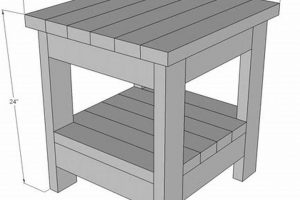
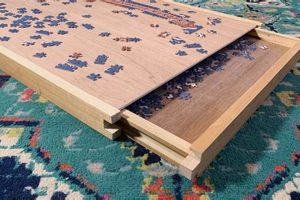
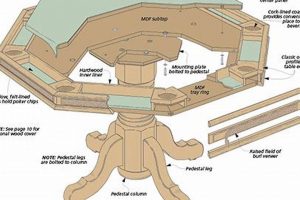
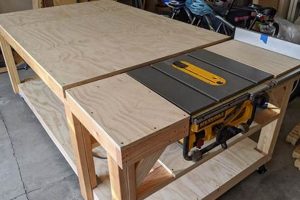
A dedicated surface designed to facilitate carpentry and related activities provides a stable and secure platform for a range of tasks. These tasks commonly include cutting, shaping, assembling, and finishing wood components. The structure often incorporates features such as vises, clamps, and integrated measuring systems to improve accuracy and efficiency. As an example, a cabinet maker might employ such a structure to assemble drawer boxes or prepare door frames.
This essential piece of equipment offers numerous advantages to woodworkers, contributing to improved precision, safety, and project quality. Its solid construction minimizes movement during operations, leading to more accurate cuts and joinery. Historically, similar structures have existed in workshops for centuries, evolving from simple workbenches to highly specialized tools designed to meet the increasing demands of modern woodworking. The implementation of this structure enhances workflow and decreases the risk of accidents.
The subsequent sections will explore different types of such structures, common features and accessories, considerations for selection and setup, and maintenance procedures to ensure longevity and optimal performance within a woodworking environment.
Essential Considerations for a Carpentry-Focused Surface
The following points provide guidance on optimizing the functionality and longevity of a carpentry-focused surface, enhancing both the quality of work and the overall workshop environment.
Tip 1: Prioritize a Rigid Frame: Structural integrity is paramount. Select a structure with a robust frame, typically constructed from hardwood or heavy-gauge steel, to minimize vibration and deflection during demanding operations. This ensures accuracy in cuts and joinery.
Tip 2: Opt for a Flat and Stable Work Surface: The top surface should be meticulously leveled and resistant to warping. Consider materials like solid core doors, laminated particleboard, or butcher block, depending on budget and intended use. Regular checks and adjustments are necessary to maintain flatness.
Tip 3: Integrate Effective Clamping Mechanisms: A range of clamping options is crucial for securing workpieces. Vises, dog holes with bench dogs, and t-tracks allow for versatile and secure holding of materials during cutting, routing, and assembly. Ensure clamps are durable and easily accessible.
Tip 4: Incorporate Dust Collection Provisions: Woodworking generates substantial dust. Design the setup with integrated dust collection ports or proximity to a shop vacuum system. This minimizes airborne particulates and maintains a cleaner, healthier workspace.
Tip 5: Optimize Height for Ergonomic Comfort: Adjust the height to suit the user’s stature. A surface that is too low or too high can lead to fatigue and musculoskeletal strain. The ideal height allows for comfortable work with forearms parallel to the floor.
Tip 6: Select Durable Surface Material: Surface material should be durable to withstand various woodworking activities. Material such as hard wood is preferable as it withstands wear and tear from tools or impacts when working on a project.
Adhering to these considerations results in a carpentry-focused surface that is not only functional but also contributes to enhanced precision, safety, and user comfort, thereby maximizing the quality of woodworking projects.
The subsequent section will delve into specific models and variations available, enabling informed decision-making for the purchase or construction of a dedicated carpentry work surface.
1. Surface Flatness

Surface flatness is a fundamental characteristic of any effective carpentry structure. Deviations from a true plane directly compromise the accuracy of cuts, joinery, and assembly operations. A non-planar surface introduces inconsistencies in measurements and workpiece support, leading to errors that propagate throughout the project. For instance, if a tabletop intended for assembling cabinet doors is not perfectly flat, the resulting doors may exhibit gaps or misalignment, necessitating rework or compromising the final product’s quality.
The influence of surface flatness extends beyond immediate project accuracy. It also impacts the longevity of tools and the efficiency of workflow. Using hand planes on an uneven surface requires excessive force and inconsistent pressure, accelerating tool wear and reducing control. Similarly, inaccuracies introduced by a warped structure may necessitate repeated adjustments during assembly, consuming valuable time and resources. Therefore, maintaining surface flatness is not merely a desirable feature but a critical component of any carpentry work platform.
In summary, the relationship between surface flatness and the functionality of a carpentry structure is direct and consequential. Uneven surfaces yield inaccurate results, while precisely leveled surfaces contribute to project quality, tool longevity, and efficient workflow. Regular inspection and maintenance are essential to uphold surface flatness and ensure optimal performance of the work platform.
2. Structural Rigidity

Structural rigidity is a critical factor dictating the performance and longevity of a carpentry support structure. It directly influences the stability of the work surface, the accuracy of operations performed, and the overall safety of the woodworking environment. Insufficient rigidity leads to vibration, deflection, and inaccurate results, undermining the very purpose of a dedicated work platform.
- Material Selection
The choice of materials significantly impacts structural rigidity. Dense hardwoods, such as maple or beech, and heavy-gauge steel offer superior resistance to bending and deformation compared to softer woods or thinner metals. For example, a steel-framed structure with a solid hardwood top provides a stable platform for heavy-duty tasks, while a structure constructed from lightweight materials may flex under load, compromising precision.
- Joint Construction
The method of joining structural components is paramount. Mortise and tenon joints, dovetail joints, and welded connections offer superior strength and rigidity compared to simple butt joints or nailed connections. A carpentry structure with robustly constructed joints will maintain its form under stress, ensuring consistent performance and resisting the development of instability over time.
- Frame Design
The overall design of the frame influences its resistance to torsion and deflection. A well-designed frame incorporates triangulation and cross-bracing to distribute loads and minimize movement. For instance, a structure with angled supports and a reinforced apron resists racking forces, preventing the work surface from tilting or twisting during use.
- Load Capacity
Structural rigidity directly correlates to the load capacity of the structure. A more rigid structure can support heavier workpieces and withstand greater forces without compromising stability. Exceeding the load capacity of the structure can lead to deformation, joint failure, and potentially hazardous conditions. Therefore, selecting a structure with adequate load capacity for the intended applications is essential.
In summation, structural rigidity, achieved through careful material selection, joint construction, frame design, and load capacity considerations, forms the bedrock of a functional and reliable carpentry structure. Its absence diminishes accuracy, compromises safety, and shortens the lifespan of the equipment. Therefore, evaluating and prioritizing structural rigidity is paramount in the selection or construction of a woodworking work platform.
3. Clamping Options

Clamping options represent an indispensable feature of a carpentry structure, directly influencing the efficiency, accuracy, and safety of woodworking operations. The ability to securely hold workpieces in place is fundamental to tasks such as cutting, shaping, joining, and finishing. A carpentry surface without adequate clamping provisions severely limits the range and complexity of projects that can be undertaken effectively. For instance, attempting to hand-plane a large panel without secure clamping leads to instability, inaccurate results, and potential injury. The availability of diverse clamping mechanisms is, therefore, a primary determinant of a work surface’s versatility and utility. Different woodworking tasks necessitate different clamping approaches.
The design and integration of clamping solutions within the carpentry structure are critical. Options can include integrated vises (leg vises, face vises, shoulder vises), dog holes for bench dogs, T-tracks for specialized clamps, and the physical structure’s edge for C-clamps or bar clamps. The type and placement of these options dictate the range of workpiece sizes and shapes that can be accommodated. Consider the assembly of a frame and panel door; various clamps, including bar clamps applied to the outside frame and internal wedges to secure the panel, may be required to achieve a tight, square assembly. A carpentry structure offering multiple, well-placed clamping points streamlines this process, reducing the need for makeshift solutions and improving the quality of the final product.
In conclusion, clamping options are not merely an accessory but an integral component of a carpentry structure, significantly affecting its performance and the woodworker’s ability to execute precise and safe operations. The integration of diverse and well-designed clamping mechanisms enhances versatility, improves accuracy, and contributes to a safer and more efficient woodworking experience. Properly chosen and implemented clamping solutions transform a basic surface into a powerful tool for carpentry.
4. Material Durability

Material durability plays a pivotal role in determining the lifespan, functionality, and overall value of a carpentry structure. The ability of the materials used in construction to withstand the rigors of daily woodworking activities directly impacts the equipment’s performance and the safety of the user. A carpentry surface constructed from materials lacking adequate durability is prone to damage from impacts, abrasions, and exposure to environmental factors, leading to premature failure and compromised functionality. Consider, for example, a structure with a softwood top; repeated striking with chisels or mallets will quickly damage the surface, rendering it uneven and unsuitable for precision work. The selection of durable materials is, therefore, an essential consideration when choosing or constructing such equipment.
The practical significance of material durability extends beyond simple resistance to wear and tear. It also influences the structural integrity of the entire structure. A frame constructed from materials susceptible to rot or insect infestation will gradually weaken, compromising the stability of the work surface and posing a safety hazard. Conversely, a structure built from durable materials like hardwood or steel can withstand significant loads and maintain its structural integrity for many years. This translates to a longer service life, reduced maintenance requirements, and a safer working environment. The cost associated with utilizing durable materials is generally offset by the long-term benefits of increased lifespan and improved performance, making it a sound investment for any serious woodworker. For example, utilizing a quality hardwood for the table surface and a steel base, reduces the vibration during cutting, routing, and sanding woodworking activities.
In summary, material durability is not merely a desirable attribute but a fundamental requirement for a functional and reliable carpentry structure. It affects the structure’s ability to withstand the demands of woodworking activities, maintains structural integrity, and ensures a safe and productive working environment. Ignoring material durability compromises the lifespan, functionality, and overall value of the structure. Therefore, prioritizing durable materials is paramount in the selection or construction of a carpentry support structure.
5. Ergonomic Height

Ergonomic height, in the context of a carpentry work surface, refers to the optimized vertical distance between the floor and the work surface, designed to minimize physical strain and maximize user comfort and efficiency. Its significance cannot be overstated, as it directly impacts posture, reach, and the application of force during woodworking operations.
- Reduced Musculoskeletal Strain
An appropriately-sized carpentry structure reduces the likelihood of musculoskeletal disorders. A work surface that is too low forces the user to stoop, stressing the lower back. Conversely, a work surface that is too high elevates the shoulders and arms, leading to neck and upper back discomfort. A structure at an ergonomic height allows for a neutral posture, minimizing strain on joints and muscles.
- Enhanced Precision and Control
Optimal height facilitates precise movements. When a work surface is positioned correctly, a woodworker can maintain a stable stance and apply force efficiently. This is particularly crucial for tasks requiring fine motor skills, such as hand-planing or carving. A structure that is too low or too high compromises stability and control, increasing the risk of errors and accidents. For example, consider when operating hand tools such as a chisel or saw for precise cutting and joinery techniques.
- Improved Workflow and Productivity
Ergonomic height contributes to a smoother workflow. When the work surface is at a comfortable level, less time is spent adjusting posture and compensating for discomfort. This allows the woodworker to focus on the task at hand, increasing productivity and reducing the potential for errors caused by fatigue. This creates a natural flow when transitioning from one task to another. This, in turn, reduces unnecessary movement and wasted time.
- Customization and Adjustability
The ideal ergonomic height varies based on individual stature and work preferences. Some carpentry structures offer adjustable height mechanisms to accommodate multiple users or different types of tasks. Features like adjustable legs or risers enable woodworkers to fine-tune the work surface to their specific needs, ensuring optimal comfort and efficiency. In a shared workshop environment, adjustability is paramount.
In summary, the relationship between ergonomic height and a carpentry work surface is direct and consequential. A properly sized structure promotes comfort, reduces strain, enhances precision, and improves productivity. Conversely, a structure that is not ergonomically designed can lead to discomfort, fatigue, and increased risk of injury. Therefore, careful consideration of ergonomic height is paramount in the selection or design of carpentry equipment.
6. Dust Collection
Effective dust collection, when integrated with a carpentry structure, mitigates health risks and enhances workflow efficiency. Woodworking operations generate substantial airborne particulate matter, which, if inhaled, can lead to respiratory ailments and long-term health complications. A dedicated dust collection system, either directly integrated into the structure or positioned in close proximity, minimizes the dispersal of these particles into the work environment, directly improving air quality and worker safety. The integration can take several forms, including direct connection to power tools via ports on the table’s surface, or strategically placed collection shrouds around the work area. As an example, a structure equipped with a downdraft dust collection system pulls particles downward, preventing them from entering the breathing zone during sanding operations.
The practical advantages of incorporating dust collection extend beyond health considerations. The removal of sawdust and wood shavings from the work surface maintains visibility and reduces the risk of inaccuracies. Accumulation of debris can obscure layout lines and interfere with tool operation, compromising precision. Furthermore, a clean work area promotes better organization and reduces the likelihood of slips and falls. The implementation of a dust collection system also minimizes the need for manual cleanup, saving time and effort. A structure with integrated dust collection often features enclosed compartments or drawers for storing accessories and tools, further contributing to a tidy and efficient workspace. A real-world scenario could involve a cabinet maker using such a setup to assemble complex joinery, benefitting from clear visibility and reduced cleanup time between steps.
In conclusion, dust collection is an essential component of a modern carpentry structure, offering tangible benefits in terms of health, safety, and productivity. The challenges associated with implementing effective dust collection primarily involve initial investment and the need for ongoing maintenance. However, the long-term advantages far outweigh the costs. The integration of dust collection transforms a basic carpentry structure into a comprehensive woodworking station, promoting a cleaner, safer, and more efficient work environment.
7. Storage Capacity

Storage capacity, in relation to a carpentry structure, defines the ability of the structure to accommodate tools, materials, and accessories essential for woodworking tasks. The efficient integration of storage solutions directly impacts workflow, organization, and the overall productivity of the workspace.
- Tool Accessibility
Integrated storage compartments enable immediate access to frequently used tools. Drawers, shelves, and specialized holders provide designated spaces for hand tools, power tools, and measuring instruments. This reduces time spent searching for tools, minimizes clutter on the work surface, and enhances the speed and efficiency of project execution. For instance, a drawer dedicated to chisels, each in its own slot, prevents damage and allows for rapid selection.
- Material Organization
Storage capacity facilitates the organized storage of lumber, hardware, and finishing supplies. Shelving units, bins, and racks can be incorporated into the structure’s design to accommodate various material sizes and quantities. Efficient material organization reduces waste, prevents damage, and streamlines the project workflow. A well-organized system might include labeled bins for screws and nails, sorted by size and type.
- Space Optimization
Integrated storage optimizes the use of available workspace. By consolidating tools and materials within the structure, the surrounding area remains uncluttered and free for movement and project assembly. This is particularly valuable in smaller workshops where space is limited. The design might incorporate vertical storage solutions to maximize space utilization.
- Mobility and Portability
For portable or mobile carpentry structures, storage capacity allows for the secure transportation of tools and materials to job sites. Integrated compartments and locking mechanisms prevent items from shifting or becoming damaged during transport. This enhances convenience and efficiency for woodworking tasks performed outside of the main workshop. A rolling structure with secure storage for power tools is an example.
In summary, storage capacity is an integral element of a carpentry structure, contributing to a more organized, efficient, and productive woodworking environment. From facilitating tool accessibility to optimizing workspace utilization, integrated storage solutions enhance the overall functionality and value of the structure. The design should be carefully considered to accommodate the specific needs of the woodworker and the types of projects undertaken.
Frequently Asked Questions Regarding Woodworking Structures
The following questions address common concerns and misconceptions about carpentry structures, offering clear and informative answers to guide decision-making.
Question 1: What constitutes an ideal surface height for a carpentry structure?
The optimum height is dependent on the user’s stature and the specific task being undertaken. A general guideline is to position the surface at a height that allows for comfortable work with forearms parallel to the floor. This typically ranges from 36 to 40 inches for individuals of average height. Adjustability is a beneficial feature to accommodate varying needs.
Question 2: Which materials are best suited for constructing a durable carpentry structure?
Dense hardwoods like maple, beech, or oak are excellent choices for the work surface, offering resistance to impact and abrasion. Steel frames provide structural rigidity and stability. The selection depends on budget constraints and the intended intensity of use.
Question 3: How does surface flatness impact the accuracy of woodworking operations?
A surface that is not perfectly flat introduces inconsistencies in measurements and workpiece support, leading to errors in cuts, joinery, and assembly. Maintaining a true plane is essential for achieving precise and accurate results.
Question 4: What are the essential clamping options to consider for a versatile carpentry structure?
A variety of clamping mechanisms are desirable, including integrated vises (leg vises, face vises), dog holes for bench dogs, and t-tracks for specialized clamps. These options facilitate secure holding of workpieces of various sizes and shapes.
Question 5: What role does dust collection play in maintaining a safe woodworking environment?
Effective dust collection minimizes the dispersal of airborne particulate matter generated during woodworking operations, reducing the risk of respiratory ailments and improving air quality. Systems can be directly integrated into the structure or positioned in close proximity.
Question 6: How can integrated storage enhance the functionality of a carpentry structure?
Integrated storage compartments provide immediate access to tools, materials, and accessories, reducing clutter on the work surface and streamlining the workflow. Designated spaces for specific items contribute to a more organized and efficient workspace.
The key takeaways underscore the importance of selecting a structure based on height, material, flatness, clamping mechanisms, dust collection and storage.
The subsequent section will delve into case studies illustrating the application of these principles in diverse woodworking scenarios.
Conclusion
This exploration has illuminated the essential characteristics and considerations surrounding a table for woodworking. Surface flatness, structural rigidity, versatile clamping options, material durability, ergonomic height, effective dust collection, and integrated storage capacity have been identified as critical determinants of functionality and performance. The significance of each element, when properly addressed, contributes to enhanced precision, safety, and efficiency within the woodworking environment.
The informed application of these principles empowers woodworkers to optimize their workspace and elevate the quality of their craft. A carpentry structure, thoughtfully selected or constructed, becomes more than a mere surface; it evolves into a foundational tool for realizing creative vision. Continued adherence to best practices in setup and maintenance ensures the long-term utility and value of this essential piece of woodworking equipment.