The crafting of tables using wood as the primary material involves a range of techniques and processes. These methods encompass joinery, shaping, and finishing to create functional and aesthetically pleasing surfaces and structures. For example, a dining surface constructed from oak, employing mortise and tenon joints for stability, exemplifies this type of craftsmanship.
The significance of this practice resides in its ability to produce durable and customizable furniture. Wooden tables offer a blend of practicality and visual appeal, often serving as focal points in domestic and commercial environments. Historically, the creation of these pieces has reflected evolving design trends and advancements in woodworking technology, contributing significantly to the development of furniture styles across various cultures.
The following sections will delve into specific aspects, including the selection of appropriate wood types, various joinery techniques employed, and the application of finishing treatments to ensure longevity and enhance the visual characteristics of the finished product. These elements are crucial considerations for producing quality, enduring pieces.
Tips for Successful Table Woodworking
Achieving optimal results in table construction using wood requires careful planning, precise execution, and attention to detail. The following tips provide guidance on key aspects of the process.
Tip 1: Wood Selection: Choose wood species based on the intended use and desired aesthetic. Hardwoods like oak and maple offer durability for high-use surfaces, while softwoods such as pine are suitable for less demanding applications or painted finishes. Proper moisture content is critical to prevent warping or cracking.
Tip 2: Accurate Measurement and Cutting: Precise measurements and accurate cuts are fundamental to achieving a structurally sound and visually appealing table. Utilize sharp, well-maintained tools and double-check all dimensions before cutting. Inaccurate cuts compromise the integrity of joints and overall design.
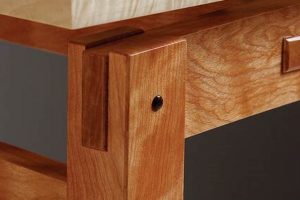
Tip 3: Strong Joinery Techniques: Employ appropriate joinery techniques to ensure the stability and longevity of the table. Mortise and tenon joints, dovetail joints, and well-executed dowel joints provide superior strength compared to simple butt joints. Choose the joinery method based on the structural requirements of the table design.
Tip 4: Proper Surface Preparation: Thorough surface preparation is essential for achieving a flawless finish. Sand the wood progressively with increasingly finer grits of sandpaper to remove imperfections and create a smooth surface. Remove all dust and debris before applying any finishing products.
Tip 5: Appropriate Finishing Application: Select a finish that complements the wood species and provides the desired level of protection. Consider factors such as durability, water resistance, and ease of application. Apply the finish evenly in thin coats, allowing adequate drying time between coats.
Tip 6: Hardware Considerations: When incorporating hardware, such as fasteners or decorative elements, select high-quality components that are appropriate for the application. Ensure that screws and bolts are properly sized and tightened to prevent loosening or stripping over time.
Tip 7: Design for Stability: Account for potential wood movement during the design phase. Allow for expansion and contraction by incorporating appropriate joinery and finishing techniques. Avoid designs that restrict wood movement, as this can lead to cracking or warping.
Careful consideration of these tips enhances the quality and longevity of wooden tables. Implementing these practices leads to a more robust and aesthetically pleasing final product.
The next sections will explore specific design considerations and advanced techniques in table construction.
1. Wood Selection

The selection of wood is a foundational element in any endeavor involving the construction of tables. The inherent characteristics of different wood species directly influence the structural integrity, aesthetic qualities, and overall lifespan of the finished product. Careful consideration of these factors is paramount to successful execution.
- Density and Durability
Wood density dictates its resistance to wear, impact, and indentation. Hardwoods like oak, maple, and walnut are frequently chosen for table tops due to their inherent strength and durability, capable of withstanding daily use and resisting damage from spills and impacts. Conversely, softer woods such as pine or cedar may be more appropriate for decorative elements or less frequently used surfaces, where durability is less critical.
- Grain Pattern and Aesthetics
The grain pattern of wood contributes significantly to the visual appeal of a table. Species like cherry and mahogany exhibit rich, distinctive grain patterns that enhance the aesthetic value of the piece. The choice of grain pattern should align with the desired style and aesthetic, whether it be a rustic, contemporary, or traditional design. Matching grain patterns across different table components creates a cohesive and visually pleasing outcome.
- Workability and Machinability
Different wood species exhibit varying degrees of workability, affecting the ease with which they can be shaped, joined, and finished. Softer woods are generally easier to cut, shape, and sand, while hardwoods may require more specialized tools and techniques. Understanding the workability of a selected species is essential for efficient construction and achieving precise joinery.
- Moisture Content and Stability
The moisture content of wood profoundly affects its stability and susceptibility to warping, cracking, and movement. Kiln-dried wood with a low moisture content is preferred for table construction to minimize these risks. Proper acclimatization of the wood to the environment in which the table will be used is also crucial for maintaining dimensional stability and preventing future problems.
The interplay between these facets underscores the critical role of informed wood selection in producing quality tables. The choice of species is not merely an aesthetic consideration but a fundamental decision that impacts the structural integrity, longevity, and overall value of the finished piece. A thorough understanding of wood properties and their relationship to woodworking techniques is essential for successful table construction.
2. Joint Integrity
Joint integrity is paramount in table construction. The long-term stability and functionality of a wooden table are directly contingent upon the strength and durability of its joinery. Compromised joints lead to structural failure, rendering the piece unusable. Therefore, the selection and execution of appropriate joinery techniques are critical considerations for woodworkers.
- Joinery Type and Load Distribution
Different joinery types exhibit varying capacities for load distribution. Mortise and tenon joints, dovetail joints, and bridal joints offer superior resistance to shear and tensile forces compared to butt joints or simple screw connections. The choice of joint type must be carefully aligned with the anticipated load and stress patterns experienced by the table during normal use. For example, a large dining table requires robust joinery at the leg-to-apron connection to withstand the weight of the tabletop and any applied forces.
- Material Compatibility and Joint Stability
The compatibility of the wood species used in conjunction with the chosen joinery technique significantly impacts joint stability. Woods with high expansion and contraction coefficients require joinery methods that accommodate movement to prevent stress fractures. For instance, using a floating tenon in a breadboard end allows the tabletop to expand and contract without compromising the integrity of the joint. Conversely, rigid joinery in conjunction with incompatible materials can lead to catastrophic failure.
- Adhesive Selection and Application
Adhesive selection and application are crucial for reinforcing mechanical joints and ensuring long-term stability. High-quality wood glues designed for specific applications, such as aliphatic resin glue or polyurethane glue, provide superior bond strength compared to general-purpose adhesives. Proper clamping techniques and adequate curing time are essential for achieving optimal adhesion and preventing joint failure. Inadequate glue coverage or insufficient clamping pressure can significantly reduce the strength and lifespan of the joint.
- Precision and Fit
Precise cutting and fitting of joinery components are fundamental to achieving maximum joint strength. Gaps or inconsistencies in the joint compromise the adhesive bond and reduce the overall surface area available for load transfer. Accurately milled components and meticulous assembly are essential for creating tight, well-fitted joints that withstand the rigors of daily use. The use of specialized tools and jigs facilitates precise cutting and assembly, minimizing the risk of errors and ensuring consistent joint quality.
These aspects of joint integrity coalesce to ensure the longevity and structural soundness of the completed table. The understanding and correct application of these principles are thus essential skills for any woodworker engaged in table construction. The robustness of the joinery dictates the service life and usability of the furniture piece.
3. Surface Finish

Surface finish represents a critical stage in table woodworking, directly affecting both the aesthetic appeal and the functional lifespan of the piece. The application of a suitable finish serves not merely as a cosmetic enhancement but as a protective barrier against environmental factors that can degrade the wood over time. For example, a properly applied polyurethane finish on an oak dining table resists water damage from spills, prevents stains from penetrating the wood fibers, and provides a durable surface that withstands abrasion from daily use. The absence of such a finish would leave the wood vulnerable to moisture, leading to warping, cracking, and eventual decay. Therefore, the choice and application of the surface finish are integral to the overall success of the woodworking project.
The selection of a specific finish necessitates careful consideration of several factors, including the type of wood used, the intended use of the table, and the desired aesthetic. Oil-based finishes, such as linseed oil or tung oil, penetrate the wood and enhance its natural grain, providing a warm, traditional look. These finishes offer moderate protection against moisture but require periodic reapplication. Water-based finishes, on the other hand, offer superior durability and are less prone to yellowing over time. They are often preferred for modern designs and applications where resistance to water and chemicals is paramount. Shellac, lacquer, and varnish are further options, each with unique characteristics and application requirements. Correct surface preparation, including sanding and cleaning, is essential for ensuring proper adhesion and a uniform appearance of the finish. The application technique, whether brushing, spraying, or wiping, must be meticulously executed to avoid imperfections such as streaks, bubbles, or uneven coverage.
In summary, the surface finish is an indispensable component of table woodworking, contributing significantly to the longevity, functionality, and aesthetic value of the finished product. The selection and application of the finish require a thorough understanding of wood properties, finishing techniques, and the specific requirements of the project. While achieving a flawless finish can present challenges, such as dust contamination or uneven drying, the benefits of a properly executed finish far outweigh the effort involved. The surface finish is thus an integral part of the complete woodworking process, transforming a raw piece of wood into a durable and aesthetically pleasing table.
4. Design Stability
Design stability, in the context of crafting tables from wood, refers to the inherent ability of a design to maintain its structural integrity and intended form over time, under anticipated loads and environmental conditions. It encompasses considerations of material properties, joint design, and overall structural configuration to ensure the table remains functional and aesthetically pleasing throughout its lifespan.
- Wood Movement Accommodation
Wood is a hygroscopic material, meaning it expands and contracts with changes in moisture content. Design stability necessitates accommodating this natural movement to prevent warping, cracking, or joint failure. For instance, a solid wood tabletop should not be rigidly attached to the base; rather, methods like slotted screw holes or breadboard ends allow the wood to move freely without compromising the structural integrity of the table. Failure to account for wood movement results in instability and premature failure.
- Leg Placement and Support Structure
The placement of legs and the design of the support structure significantly impact the overall stability of a table. Legs positioned too close together may result in instability, particularly with larger tabletops. Aprons, stretchers, or other bracing elements enhance stability by distributing weight and preventing racking. A well-designed base provides a solid foundation, ensuring the table remains level and resists tipping or wobbling under normal use conditions.
- Joinery Selection and Execution
The choice of joinery techniques directly influences the strength and stability of a wooden table. Robust joints, such as mortise and tenon, dovetail, or bridle joints, provide superior resistance to stress and shear forces compared to simpler joinery methods like butt joints or screw connections. Proper execution of these joints, with precise fitting and adequate adhesive, is essential for maximizing their effectiveness and ensuring long-term stability. Weak or poorly executed joints lead to instability and potential structural failure.
- Weight Distribution and Load Capacity
Design stability requires careful consideration of weight distribution and load capacity. The design must ensure that the weight of the tabletop and any anticipated loads are evenly distributed across the support structure. Reinforcements or thicker material sections may be necessary to support heavier loads or prevent deflection in areas of high stress. Failure to account for weight distribution can result in sagging, warping, or even catastrophic failure under excessive loads.
These facets of design stability are interconnected and crucial for the creation of durable and functional tables. Ignoring these principles leads to tables that are prone to instability, damage, and ultimately, a shorter lifespan. A thorough understanding of these considerations is thus essential for any woodworker engaged in crafting tables.
5. Hardware Quality

The longevity and structural integrity of wooden tables are directly influenced by the quality of the hardware used in their construction. Hardware components, including screws, bolts, hinges, drawer slides, and decorative elements, are integral to the overall performance and aesthetic appeal. The selection of inferior hardware can lead to premature failure, compromising the stability and usability of the table. For instance, using low-grade screws that shear under stress in a table leg attachment undermines the entire structure. Conversely, high-quality, corrosion-resistant hardware ensures a durable and reliable connection, extending the lifespan of the table. The causal relationship is clear: superior hardware contributes to a more robust and lasting product, while substandard components detract from the overall quality and value.
The practical significance of understanding hardware quality extends to both functional and aesthetic considerations. High-quality hinges on a drop-leaf table, for example, ensure smooth and reliable operation, preventing sagging or misalignment. Similarly, well-crafted drawer slides in a table with drawers facilitate effortless opening and closing. Furthermore, the aesthetic appeal of the table is enhanced by hardware that complements the design. Precisely manufactured knobs, pulls, and decorative accents contribute to a cohesive and refined look, whereas poorly finished or ill-fitting hardware detracts from the overall visual impression. The selection of appropriate hardware requires an understanding of the intended application, the load-bearing requirements, and the aesthetic style of the table.
In summary, hardware quality is not merely an ancillary consideration in wooden table construction but a crucial determinant of its structural integrity, functionality, and aesthetic value. While selecting high-quality hardware may involve a higher initial investment, the long-term benefits in terms of durability, reliability, and aesthetic appeal far outweigh the cost. Challenges in hardware selection include identifying reputable suppliers and discerning quality differences between seemingly similar products. However, a thorough understanding of hardware materials, manufacturing processes, and performance characteristics is essential for producing tables that stand the test of time.
6. Tool Precision
Tool precision is a fundamental determinant of quality in wooden table construction. Accurate cuts, smooth surfaces, and tight-fitting joints are direct results of employing tools that are properly calibrated, sharpened, and skillfully used. The execution of intricate designs and complex joinery relies heavily on the capacity of tools to perform with exacting accuracy.
- Accurate Dimensioning and Cutting
Precise dimensioning and cutting are essential for creating components that fit together seamlessly. Tools such as calibrated measuring tapes, precision squares, and sharp saws (both hand and power tools) enable woodworkers to achieve accurate dimensions. For instance, a miter saw with a digital angle display facilitates precise angled cuts for table legs and aprons. The consequences of imprecise cutting include gaps in joints, uneven surfaces, and a compromised structural integrity of the table.
- Smooth Surface Preparation
Achieving a smooth and consistent surface finish requires tools that minimize tear-out and leave a minimal amount of material to be removed during sanding. Planers, jointers, and sanding tools (both hand and power) must be properly maintained and used to create surfaces that are free from imperfections. A hand plane with a finely set blade, for example, can produce a surface that requires minimal sanding, resulting in a higher quality finish. Inadequate surface preparation results in uneven stain absorption and a less aesthetically pleasing final product.
- Precise Joinery Execution
Creating strong and aesthetically pleasing joints necessitates tools that enable precise cutting and shaping of mating surfaces. Chisels, routers, and specialized joinery tools (e.g., dovetail saws and mortise chisels) are essential for executing complex joinery techniques. A precisely tuned router with a dovetail jig, for example, allows for the creation of tight-fitting dovetail joints. Inaccurate joinery results in weak connections and a diminished lifespan of the table.
- Consistent Hardware Installation
Consistent and accurate hardware installation relies on tools that ensure proper alignment and precise drilling. Drill presses, self-centering drill bits, and specialized hardware installation jigs are essential for achieving consistent results. A drill press, for instance, allows for precise and repeatable drilling of pilot holes for screws, preventing splitting of the wood. Inaccurate hardware installation compromises the functionality and aesthetic appeal of the table.
These facets of tool precision are intertwined and collectively contribute to the overall quality and longevity of wooden tables. While skilled craftsmanship remains paramount, the utilization of precise tools is indispensable for translating design concepts into tangible and enduring furniture pieces. The investment in high-quality, well-maintained tools is thus a prerequisite for achieving excellence in wooden table construction.
7. Preservation

The long-term viability of table woodwork hinges on effective preservation strategies. Wood, being an organic material, is susceptible to various forms of degradation, including decay, insect infestation, and physical damage from environmental factors and use. Without proactive measures, even the most meticulously crafted table will eventually succumb to these destructive forces. The connection is causal: inadequate preservation leads to deterioration, while diligent preservation extends the lifespan and maintains the aesthetic and functional qualities of the piece. For example, a 19th-century mahogany table, if left unprotected in a humid environment, is likely to develop wood rot and warping, rendering it structurally unsound. In contrast, a table treated with appropriate sealants and regularly maintained will retain its integrity for generations. The practical significance of this understanding lies in informing the selection of appropriate finishing treatments, storage conditions, and maintenance protocols to maximize the longevity of valuable wooden furniture.
Effective preservation encompasses several key approaches. Environmental control, particularly humidity and temperature regulation, plays a critical role in minimizing wood movement and preventing fungal growth. Regular cleaning with gentle, non-abrasive products removes surface contaminants that can contribute to degradation. Protective finishes, such as varnishes, lacquers, or penetrating oils, act as barriers against moisture, UV radiation, and physical abrasion. Furthermore, periodic inspection for signs of insect infestation or structural damage allows for early intervention and prevents widespread deterioration. For instance, applying a sealant to the underside of a table top can prevent moisture from penetrating the wood and causing warping. Addressing minor surface scratches or blemishes promptly prevents them from escalating into more significant damage.
In summary, preservation is not merely an afterthought in table woodwork but an integral component of ensuring its enduring value. The connection between preservation and the longevity of these pieces is direct and undeniable. Challenges in preservation include selecting appropriate treatments for different wood species and finish types, as well as balancing the desire to maintain originality with the need to protect the wood from further damage. By understanding the principles of wood degradation and implementing proactive preservation strategies, it becomes possible to safeguard the functional and aesthetic qualities of table woodwork for generations to come, connecting the craftsmanship of the past with the utility and beauty of the present.
Frequently Asked Questions Regarding Table Woodwork
The following addresses common inquiries concerning the selection, construction, and maintenance of tables crafted primarily from wood. The objective is to provide clarity and informed guidance on various aspects of this time-honored craft.
Question 1: What wood types are most suitable for tabletops intended for heavy use?
Dense hardwoods, such as oak, maple, and walnut, are typically favored for tabletops subjected to frequent use. Their inherent hardness provides resistance to scratches, dents, and other forms of wear. The selection should also consider grain patterns and aesthetic preferences.
Question 2: How can one prevent warping in a solid wood tabletop?
Warping is primarily addressed through careful wood selection and proper joinery techniques. Kiln-dried wood with a low moisture content is essential. Joinery methods should accommodate seasonal wood movement, preventing stress buildup that leads to warping. Breadboard ends or floating tenons are examples of such techniques.
Question 3: What is the recommended approach for repairing scratches on a finished wooden tabletop?
The repair method depends on the severity of the scratch and the type of finish. Minor surface scratches can often be addressed with polishing compounds or touch-up markers. Deeper scratches may require sanding, staining, and refinishing the affected area, or the entire surface, for consistent appearance.
Question 4: What are the advantages of using mortise and tenon joinery in table construction?
Mortise and tenon joinery provides exceptional strength and durability due to the interlocking nature of the joint. This type of joint resists racking forces and tensile stress, making it suitable for connecting table legs to aprons and other critical structural elements. It also allows for a clean and aesthetically pleasing appearance.
Question 5: How does humidity affect wooden tables, and what preventative measures can be taken?
High humidity causes wood to expand, while low humidity causes it to contract. These fluctuations can lead to warping, cracking, and joint failure. Maintaining a stable indoor environment with a humidifier or dehumidifier, along with applying a moisture-resistant finish, can mitigate these effects.
Question 6: What types of finishes offer the best protection for wooden tables intended for outdoor use?
For outdoor applications, finishes that provide UV protection and water resistance are essential. Marine-grade varnishes, exterior-grade polyurethane, and penetrating oils with UV inhibitors are commonly used. Regular maintenance and reapplication of the finish are necessary to ensure continued protection.
These responses highlight the importance of informed decision-making when working with wooden tables. Careful attention to wood selection, joinery, finishing, and environmental factors is crucial for achieving durable and aesthetically pleasing results.
The subsequent sections will explore case studies and examples of exceptional craftsmanship within the field of table construction.
Conclusion
This exploration of table woodwork has underscored the multifaceted nature of its practice. From the selection of appropriate wood species to the application of advanced joinery and finishing techniques, each stage demands careful consideration and precise execution. Design stability, hardware quality, tool precision, and diligent preservation further contribute to the creation of enduring and functional furniture.
The enduring appeal of table woodwork resides in its capacity to blend utility with artistry. Continued adherence to established principles and the embrace of innovative methods will ensure the sustained relevance and appreciation of this craft. Further research and refinement of techniques remain essential for advancing the field and preserving its legacy.
![Best Woodworking Plans Drafting Table [Guide] for Table | Step-by-Step Guides, Tools & Inspiration to Build Beautiful Wooden Decor on a Budget](https://woodfromhome.com/wp-content/uploads/2026/05/th-80-300x200.jpg "Best Woodworking Plans Drafting Table [Guide] for Table Step-by-Step Guides, Tools & Inspiration to Build Beautiful Wooden Decor on a Budget")