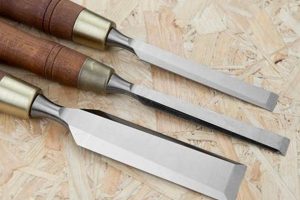
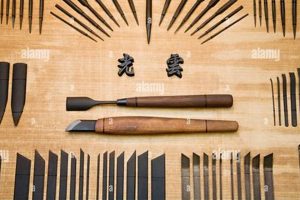
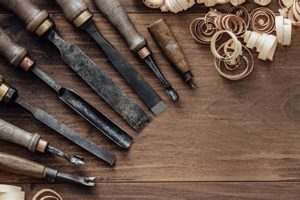
Hand-operated implements designed for shaping wood form the basis of this craft. These instruments, often forged from steel and paired with wooden handles, enable precise cuts, carving, and joinery. Examples include hand planes for smoothing surfaces, chisels for detailed shaping, and saws for cutting stock to size. The manipulation of these tools requires skill and an understanding of wood properties.
The use of these instruments fosters a deeper connection with the material, promoting mindful creation and a tangible outcome. Historically, these tools were essential for construction, furniture making, and various artistic endeavors. The longevity of objects created with these methods often surpasses that of mass-produced alternatives, representing a sustainable approach to production.
The following discussion will delve into the specific categories of these implements, examining their function, maintenance, and the techniques required for their effective employment. This analysis will provide a comprehensive overview of the essential components for practicing this craft.
Essential Guidance for Traditional Woodworking Tools
Effective utilization and maintenance of hand-operated implements are crucial for achieving optimal results and ensuring longevity. The following tips provide guidance on maximizing the performance and lifespan of these tools.
Tip 1: Sharpening is Paramount: Regularly hone cutting edges to maintain sharpness. Dull tools require more force, increasing the risk of errors and damage to both the workpiece and the implement.
Tip 2: Proper Tool Selection: Choose the appropriate tool for each specific task. Using a chisel as a pry bar, for instance, can result in breakage or misalignment.
Tip 3: Handle Maintenance: Inspect wooden handles for cracks or looseness. Secure loose heads and replace damaged handles immediately to ensure safe operation.
Tip 4: Rust Prevention: Apply a light coat of oil to exposed metal surfaces to prevent corrosion. This is particularly important for tools stored in humid environments.
Tip 5: Wood Orientation Awareness: Consider wood grain direction when cutting or shaping. Working against the grain can lead to tear-out and uneven surfaces.
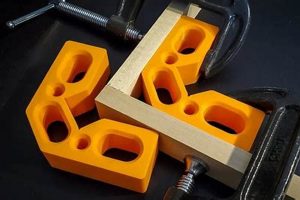
Tip 6: Secure Workholding: Employ vises, clamps, or other workholding devices to stabilize the workpiece. A stable platform promotes accuracy and reduces the chance of injury.
Tip 7: Controlled Force Application: Apply force gradually and deliberately. Avoid excessive pressure, which can cause tools to slip or break. Sharp tools require minimal force.
The adherence to these principles will enhance user proficiency and ensure the continued functionality of these essential instruments, supporting the creation of high-quality woodworking projects.
The subsequent section will discuss advanced techniques and considerations for achieving professional-level results with traditional woodworking methods.
1. Tool Steel Quality
The quality of steel used in traditional woodworking tools directly affects their performance, longevity, and the overall quality of the finished work. The steel’s composition determines its hardness, toughness, and resistance to wear, all critical factors in maintaining a sharp edge and withstanding the rigors of daily use.
- Hardness and Edge Retention
Harder steels are capable of holding a sharper edge for a longer period. This reduces the frequency of sharpening, saving time and minimizing the amount of material removed from the tool during maintenance. Examples include high-carbon steels and alloyed steels. The ability of a plane iron or chisel to maintain a keen edge is paramount for achieving clean, precise cuts in various wood species.
- Toughness and Resistance to Chipping
Toughness refers to the steel’s ability to absorb impact without fracturing or chipping. A tool used for chopping or mortising must possess sufficient toughness to withstand repeated blows from a mallet without damage. Steels with higher carbon content are often hardened to a greater degree; however, achieving a balance between hardness and toughness is crucial to prevent brittleness.
- Wear Resistance and Durability
The steel’s resistance to abrasion and wear determines the tool’s overall lifespan. Tools made from higher-quality steels will maintain their original dimensions and shape for a longer period, requiring less frequent replacement. This is particularly important for tools such as saws and files, which are subjected to significant friction during use.
- Corrosion Resistance
While not the primary concern, resistance to corrosion is a beneficial attribute. Rust can weaken the steel and compromise its cutting edge. Proper maintenance, including cleaning and oiling, is essential, but using steels with inherent corrosion resistance properties can further prolong the tool’s lifespan.
The choice of steel for traditional woodworking tools represents a compromise between various properties. Understanding these trade-offs and selecting tools crafted from appropriate steel types is vital for both efficiency and the preservation of these indispensable implements. The interplay of hardness, toughness, wear resistance, and corrosion resistance ultimately defines the tool’s suitability for a given task and its enduring value within the woodworking shop.
2. Edge Holding Ability

The edge-holding ability of traditional woodworking tools is a critical determinant of performance and efficiency. This characteristic refers to the tool’s capacity to maintain a sharp cutting edge during use, directly impacting the precision and smoothness of the resulting cut. A tool with poor edge retention necessitates frequent sharpening, disrupting workflow and increasing the potential for inaccuracies. The steel’s composition, heat treatment, and geometry are primary factors influencing edge-holding ability. For example, a high-carbon steel plane iron, properly hardened and tempered, will maintain a sharper edge for a longer period than a softer steel, allowing for smoother planing and reduced effort. This is particularly evident when working with hardwoods, where the resistance to cutting is significantly higher. A dull edge not only increases the force required but also leads to tear-out and uneven surfaces, compromising the quality of the finished piece.
The practical significance of understanding edge-holding ability lies in its direct correlation with the quality of work produced. A keen edge allows for controlled removal of material, enabling the creation of fine details and intricate joinery. Consider the use of a chisel for paring a dovetail joint. A sharp chisel with good edge retention will shear the wood cleanly, leaving a precise and accurate fit. Conversely, a dull chisel will crush the wood fibers, resulting in a sloppy joint and requiring additional remediation. Furthermore, the effort expended to achieve a desired result is directly proportional to the tool’s sharpness. A sharp tool requires less force, reducing fatigue and minimizing the risk of error. The selection and maintenance of tools with superior edge-holding capabilities are, therefore, essential for achieving professional-level results in traditional woodworking.
In summary, the edge-holding ability of traditional woodworking tools is a fundamental characteristic that significantly influences the quality, efficiency, and overall experience of woodworking. The challenges associated with maintaining sharp edges underscore the importance of selecting high-quality tools and adhering to proper sharpening techniques. Ultimately, the artisan’s understanding and mastery of edge-holding ability are paramount for achieving the desired precision and aesthetics in their craft, linking directly to the enduring value and functionality of the finished product.
3. Ergonomic Handle Design

The ergonomic design of handles on traditional woodworking tools significantly impacts user comfort, efficiency, and the overall quality of the resulting work. The shape, size, and material of a tool’s handle directly influence the user’s grip, control, and the amount of force that can be effectively applied. A poorly designed handle can lead to fatigue, discomfort, and even repetitive strain injuries, hindering the artisan’s ability to perform precise and controlled movements. Conversely, a well-designed handle promotes a natural grip, reduces stress on the hand and wrist, and enhances the tool’s usability. For example, a plane handle contoured to fit the hand allows for consistent pressure and smooth strokes, resulting in a flat and even surface. The selection of materials, such as hardwood with a specific grain orientation, can further enhance grip and minimize vibration transmission, contributing to a more comfortable and controlled experience.
The practical implications of ergonomic handle design extend beyond mere comfort. Improved grip and control translate directly into increased accuracy and reduced risk of errors. Consider the use of a chisel for delicate carving. A handle that allows for a secure and stable grip enables the artisan to make precise cuts and intricate details with greater confidence. The shape and size of the handle must be proportionate to the tool’s function and the user’s hand size. Handles that are too small can lead to a cramped grip and reduced control, while handles that are too large may be difficult to maneuver. The angle of the handle relative to the blade or cutting edge also plays a crucial role in optimizing leverage and reducing strain. The design of a drawknife, for example, incorporates angled handles that allow the user to apply force efficiently while maintaining a comfortable body position. The choice of handle materials influences both grip and vibration damping. Hardwoods like beech or maple provide a solid and durable grip, while softer woods may be used in combination to absorb vibration and reduce fatigue.
Ergonomic handle design in traditional woodworking tools represents a critical integration of form and function. The benefits extend beyond comfort to include increased efficiency, accuracy, and reduced risk of injury. While challenges may arise in finding or creating handles that perfectly suit individual preferences and hand sizes, the pursuit of ergonomic optimization is essential for ensuring the long-term well-being and productivity of the artisan. This link to user health and the tool’s effective performance is directly tied to the craft’s historical success, and is crucial for maintaining quality and artistry.
4. Precision of Cut

Precision of cut, a cornerstone of fine woodworking, is inextricably linked to the use of traditional hand tools. The attainment of precise cuts with these implements depends on a combination of tool quality, sharpness, and the artisan’s skill. The relationship between tool and user becomes a direct determinant of accuracy. The use of a well-tuned hand plane, for example, allows for incremental material removal, enabling the creation of perfectly flat and square surfaces. The precision afforded by this method is difficult to replicate with power tools, where the speed and force of the machine can obscure subtle irregularities. Similarly, a dovetail saw, properly sharpened and guided, allows for the creation of tight-fitting joints with minimal gap. The accuracy of these cuts dictates the strength and aesthetic appeal of the finished piece. Therefore, the pursuit of precision is inherent to the effective use of traditional woodworking tools.
The practical significance of this understanding lies in its impact on the quality and durability of woodworking projects. A precise cut ensures proper fit, alignment, and structural integrity. For instance, in the construction of a cabinet, precise joinery is essential for preventing racking and maintaining squareness. Traditional hand tools offer a level of control that enables the creation of complex and intricate joinery, such as mortise-and-tenon joints, which are known for their strength and longevity. Real-world examples abound in antique furniture, where the precision of the hand-cut joinery has allowed these pieces to withstand centuries of use. The ability to achieve a precise cut is not merely an aesthetic consideration; it is a functional requirement for creating objects that endure over time. This focus allows the craftsman to achieve the desired outcome.
In conclusion, precision of cut is a vital characteristic of traditional woodworking tools and their application. The attainment of precise cuts requires skill, sharp implements, and a deliberate approach. While power tools offer speed and efficiency, traditional tools allow the artisan to achieve a level of control and accuracy that is often unattainable with machines. The challenges lie in mastering the techniques required to wield these tools effectively. The benefits, however, are evident in the quality, durability, and aesthetic appeal of the finished work. The enduring legacy of traditional woodworking lies in its ability to create objects of lasting beauty and utility, achieved through the unwavering pursuit of precision.
5. Maintenance Procedures

The efficacy and longevity of traditional woodworking tools are fundamentally dependent on rigorous adherence to appropriate maintenance procedures. These procedures, encompassing sharpening, cleaning, lubrication, and proper storage, are not mere ancillary tasks but integral components of tool ownership and utilization. Neglecting maintenance precipitates a cascade of negative effects, including diminished cutting performance, increased effort expenditure, heightened risk of injury, and ultimately, irreversible tool degradation. For instance, a dull hand plane requires significantly more force to achieve a smooth surface, increasing fatigue and the likelihood of tear-out. Regular honing, therefore, is essential for maintaining the tool’s intended functionality and safeguarding the artisan’s physical well-being. Without these procedures, hand-powered woodworking tools will be rendered useless for its purposes.
Sharpening, a cornerstone of tool maintenance, demands both skill and specialized equipment. A blunt cutting edge not only impedes performance but also compromises safety, as increased force is required, leading to potential slippage. The selection of sharpening media, such as water stones or oil stones, depends on the steel’s composition and the desired fineness of the edge. Cleaning is equally crucial, as accumulated pitch, rust, or debris can impede movement and accelerate corrosion. Application of a thin layer of oil to exposed metal surfaces protects against oxidation, particularly in humid environments. Correct storage methods also play a vital role in preventing damage. Tools should be stored in a dry, organized manner, protecting them from impact and abrasion. The implementation of these maintenance practices represents a tangible investment in the tool’s value and operational readiness, ensuring reliable performance over its intended lifespan.
In conclusion, meticulous adherence to appropriate maintenance procedures constitutes a non-negotiable aspect of traditional woodworking tool ownership. These procedures are not merely superficial actions but rather fundamental requirements for preserving tool functionality, enhancing user safety, and maximizing the investment in these indispensable implements. The consequences of neglect are far-reaching, encompassing diminished performance, accelerated degradation, and ultimately, the erosion of the craft’s precision and efficiency. The dedication to proper maintenance is, therefore, a reflection of the artisan’s commitment to both the tools and the enduring legacy of traditional woodworking.
Frequently Asked Questions
This section addresses common inquiries regarding the nature, application, and maintenance of hand-operated implements used in woodworking, providing factual answers.
Question 1: What distinguishes traditional woodworking tools from modern power tools?
Traditional implements are hand-powered and require manual skill, while modern power tools utilize electricity or compressed air to automate processes. The former emphasizes control and tactile feedback, whereas the latter prioritizes speed and efficiency.
Question 2: Are traditional methods less efficient than modern techniques?
The perception of efficiency depends on the task. While power tools excel at rapid material removal, hand tools offer precision and control for intricate work and fine detailing. The choice is determined by the project requirements.
Question 3: What fundamental tools are essential for a beginner in traditional woodworking?
Core implements include a hand plane for smoothing surfaces, chisels for shaping and joinery, saws for cutting stock, and sharpening equipment to maintain tool edges. Acquiring these provides a foundational skill set.
Question 4: How does one maintain the sharpness of traditional woodworking tools?
Maintaining sharpness necessitates regular honing on sharpening stones, such as water stones or oil stones, followed by stropping to refine the edge. This practice extends tool life and improves performance.
Question 5: What are the primary safety considerations when using hand-operated woodworking implements?
Safety protocols encompass secure work holding, the use of sharp tools, and the application of controlled force. Eye protection and appropriate hand protection are also imperative to prevent injury.
Question 6: Is traditional woodworking a dying art, or is there a resurgence of interest?
There exists a demonstrable resurgence of interest in traditional woodworking, driven by a desire for craftsmanship, sustainability, and a connection to time-honored techniques. Workshops and online resources reflect this growing trend.
The understanding of these fundamental queries provides a foundation for the effective utilization and appreciation of traditional woodworking practices.
The subsequent section will delve into specific case studies illustrating the application of these instruments in historical and contemporary projects.
Conclusion
This exploration has underscored the importance of traditional woodworking tools within the broader context of craftsmanship and material manipulation. The discussion highlighted essential elements such as steel quality, ergonomic design, precision cutting, and rigorous maintenance, emphasizing their interconnected roles in achieving high-quality results. The value of skill and thoughtful practice was shown to enhance the potential of these instruments.
The enduring relevance of these implements lies not merely in their functional capacity, but also in their ability to foster a deeper connection between artisan and material. The continued study and application of these time-honored techniques ensures the preservation of a valuable tradition. The future of craftsmanship depends on the willingness of individuals to invest in the knowledge and skills required to effectively utilize these instruments, ensuring their legacy for generations to come.