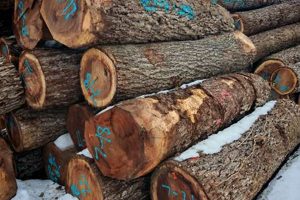
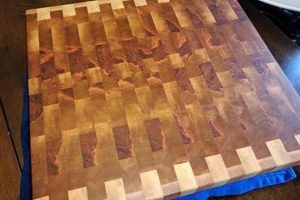
The procurement of superior lumber is a foundational element in successful woodworking endeavors. Sourcing materials appropriate for the intended project, considering factors like species, grain, and moisture content, directly influences the durability, aesthetic appeal, and workability of the final product. For instance, a fine furniture maker will likely seek kiln-dried hardwood from a reputable supplier, while a hobbyist building a birdhouse might find suitable material at a local home improvement center.
The choice of supply source carries significant implications for both the craftsperson and the end result. Access to well-sourced materials can reduce waste, minimize the risk of defects, and enhance the overall quality of the finished piece. Historically, woodworkers relied on local mills and timber merchants. However, modern options range from large-scale distributors to specialized online retailers, offering a wider selection and potentially greater convenience. This evolution has expanded access to diverse species and improved quality control, but also necessitates careful evaluation of suppliers.
Therefore, understanding the diverse avenues available for acquiring lumber, differentiating between various suppliers based on quality and specialization, and employing strategies for evaluating the material itself become crucial skills for any woodworker. Subsequent sections will delve into exploring these varied options, assessing quality indicators, and ensuring appropriate selection for diverse project requirements.
Tips for Sourcing Superior Lumber
Selecting the appropriate supplier is a critical determinant of project success. Implementing the following guidelines can mitigate risks and ensure the acquisition of suitable material.
Tip 1: Prioritize Reputable Suppliers: Research the supplier’s history and reputation. Established businesses with positive reviews and demonstrable expertise are generally more reliable sources.
Tip 2: Consider Specialization: Determine if the supplier specializes in the specific type of wood required. A hardwood specialist, for example, will likely offer a wider selection and deeper understanding of appropriate species.
Tip 3: Inspect Material Personally: Whenever feasible, physically examine the lumber before purchase. This allows for a direct assessment of grain, knots, and potential defects.
Tip 4: Inquire About Kiln-Drying Practices: Understand the supplier’s kiln-drying processes. Properly kiln-dried lumber minimizes warping and cracking, leading to greater stability in the finished product.
Tip 5: Assess Moisture Content: Employ a moisture meter to verify the moisture content aligns with the intended application. Excess moisture can lead to dimensional instability.
Tip 6: Evaluate Grading Practices: Familiarize oneself with lumber grading standards (e.g., those established by the National Hardwood Lumber Association). Understanding these standards facilitates informed selection.
Tip 7: Document Purchases: Retain receipts and any associated documentation. This documentation serves as proof of purchase and can be valuable in resolving any potential disputes.
Adhering to these guidelines provides a greater probability of securing suitable lumber, leading to improved project outcomes and minimizing potential issues during the woodworking process.
The subsequent sections will provide comprehensive information and resources to assist with this critical aspect of woodworking.
1. Specialized Lumberyards

Specialized lumberyards represent a significant resource for woodworkers seeking superior materials. Their business model centers on providing a curated selection of lumber species, grades, and dimensions, catering to the specific demands of discerning craftspeople. These establishments often possess expertise in wood characteristics and appropriate applications, distinguishing them from general home improvement retailers.
- Curated Inventory and Expert Staff
Specialized lumberyards typically maintain a diverse inventory of both domestic and imported hardwoods and softwoods. Beyond selection, these businesses often employ staff with extensive knowledge of wood properties, including grain patterns, density, workability, and appropriate finishing techniques. This expertise allows them to guide customers towards the most suitable material for a given project, minimizing the risk of material failure or aesthetic disappointment. Examples include assisting a furniture maker in selecting the appropriate grade of cherry for a table top or advising a luthier on the tonal qualities of different spruce varieties. Such specialized knowledge is a crucial element in the context of informed lumber procurement.
- Quality Control and Grading Practices
These lumberyards prioritize quality control, implementing rigorous grading practices to ensure consistent material characteristics. Many adhere to established grading standards, such as those defined by the National Hardwood Lumber Association (NHLA). This adherence provides a degree of assurance regarding the presence of knots, defects, and overall lumber quality. In contrast to generalized retailers, specialized yards often meticulously inspect incoming lumber, rejecting pieces that do not meet their standards, thus reducing the likelihood of encountering unusable material. This focus on quality directly addresses the woodworker’s need for reliable and predictable material properties.
- Kiln-Drying and Moisture Content Management
Controlling moisture content is paramount in woodworking to prevent warping, cracking, and joint failure. Specialized lumberyards often operate or contract with sophisticated kiln-drying facilities, enabling them to precisely control the moisture content of their lumber. This level of control is essential for achieving dimensional stability in finished projects. These yards frequently offer lumber with specific moisture content levels tailored to different environments or applications. The ability to specify and obtain lumber with a controlled moisture content is a significant advantage for woodworkers concerned with long-term performance and stability.
- Milling and Custom Dimensioning Services
Beyond providing raw lumber, many specialized lumberyards offer milling and dimensioning services. These services include planing, jointing, ripping, and shaping lumber to precise specifications, saving woodworkers time and equipment investment. The ability to obtain lumber pre-dimensioned to the required size reduces waste and minimizes the need for specialized machinery. This feature is particularly beneficial for smaller workshops or hobbyists who may not possess extensive milling capabilities. This service offering further enhances the value proposition of specialized lumberyards as comprehensive material providers.
In conclusion, specialized lumberyards serve as a crucial link in the chain of supply for woodworkers seeking superior materials. Their focus on quality, expertise, and value-added services provides a tangible advantage over general retailers, making them a worthwhile option when material quality and project success are paramount. Choosing a specialized lumberyard as a source directly contributes to the overall caliber of woodworking endeavors.
2. Online Retailers

Online retailers have emerged as a significant avenue for procuring woodworking materials, offering both convenience and a potentially vast selection. Their role in the context of securing quality lumber necessitates careful consideration of their unique advantages and disadvantages.
- Expanded Selection and Niche Species
Online retailers often provide access to a wider array of wood species than local suppliers, including exotic and rare varieties. This expanded selection caters to specialized projects demanding specific wood characteristics, such as instrument making or intricate carving. For example, a craftsman seeking genuine ebony or figured maple may find limited options at brick-and-mortar stores but discover numerous suppliers online. However, this increased selection necessitates diligent research to ensure the species is appropriate for the intended application and that the supplier is reputable.
- Convenience and Accessibility
The accessibility of online retailers is a primary advantage, allowing woodworkers to source materials from remote locations and at any time. This convenience is particularly valuable for those with limited access to specialized lumberyards or those who prefer the ease of online ordering. A woodworker residing in a rural area, for instance, can readily order lumber from a supplier thousands of miles away. However, this convenience comes with the caveat of potential shipping costs and the inability to physically inspect the material before purchase.
- Information Resources and Technical Data
Many online retailers provide detailed information about the wood they sell, including species descriptions, technical data, and grading information. This resource helps woodworkers make informed decisions, particularly when selecting unfamiliar species or when specific wood properties are required. A supplier might, for instance, provide data on the Janka hardness or shrinkage rate of a particular wood. However, the accuracy and completeness of this information must be verified, as inconsistencies can occur.
- Shipping Considerations and Quality Control
Shipping poses a significant challenge for online lumber retailers. Damage during transit is a common concern, and the lack of physical inspection before purchase increases the risk of receiving substandard material. Robust packaging and clear return policies are crucial for mitigating these risks. A reputable online retailer will typically offer insurance against shipping damage and accept returns of defective lumber. However, resolving disputes with online vendors can sometimes be more complex than with local suppliers.
The suitability of online retailers for securing quality wood for woodworking depends heavily on the woodworker’s specific needs, risk tolerance, and willingness to conduct thorough research. While the convenience and expanded selection are compelling, the potential drawbacks related to shipping, quality control, and returns must be carefully weighed against the advantages offered by traditional brick-and-mortar suppliers.
3. Local Mills
Local mills constitute a significant, often overlooked, resource for sourcing lumber. Their connection to regional forests and direct processing capabilities offer unique advantages and potential drawbacks when considering where to procure lumber appropriate for woodworking projects.
- Direct Source and Species Availability
Local mills often source timber directly from nearby forests, which can provide access to regionally specific species not readily available from national suppliers. For example, a mill in the Pacific Northwest might specialize in Douglas fir or western red cedar, while a mill in the Southeast might offer cypress or Southern yellow pine. This direct sourcing can result in lower costs and a more intimate understanding of the wood’s characteristics. However, the species selection may be limited to what grows locally.
- Custom Cutting and Dimensioning
Many local mills offer custom cutting and dimensioning services, allowing woodworkers to obtain lumber precisely tailored to their project requirements. This can be particularly beneficial for projects requiring non-standard dimensions or specific grain orientations. Unlike larger retailers, local mills are often more flexible in accommodating specialized requests. For instance, a woodworker building a timber frame structure might require beams of specific dimensions, which a local mill can readily provide.
- Rough-Sawn Lumber and Processing Requirements
Local mills frequently sell lumber in a rough-sawn state, meaning it has not been planed or surfaced. This requires the woodworker to have access to the necessary equipment and skills for milling the lumber to the desired dimensions and smoothness. While rough-sawn lumber is typically less expensive, the added labor and equipment requirements represent a significant consideration. A woodworker might choose rough-sawn lumber for a rustic project where a perfectly smooth surface is not required, but for fine furniture, additional processing is essential.
- Quality Control and Seasoning Practices
The quality control and seasoning practices at local mills can vary significantly. Some mills maintain high standards for grading and kiln-drying lumber, while others may offer air-dried or green lumber with less rigorous quality control. It is crucial to assess the mill’s practices and inspect the lumber carefully before purchase. Inconsistent seasoning can lead to warping and cracking, while poor grading can result in the inclusion of lumber with significant defects. Woodworkers must ascertain that the mill’s practices align with the requirements of their intended projects.
Ultimately, the decision to source lumber from local mills depends on a balance of factors, including species availability, budget constraints, equipment access, and project requirements. While local mills can offer cost-effective and specialized options, a thorough assessment of their practices and lumber quality is essential to ensuring a successful woodworking outcome.
4. Woodworking Clubs

Woodworking clubs serve as valuable, albeit often overlooked, resources for sourcing quality lumber. These organizations, typically comprised of woodworking enthusiasts ranging from novices to seasoned professionals, frequently facilitate the exchange of information and resources related to material acquisition. The connection between such clubs and access to quality lumber arises from the collective experience and established networks within the woodworking community.
One primary contribution of woodworking clubs lies in the shared knowledge regarding reputable lumber suppliers. Members often exchange information about local lumberyards, mills, and even online retailers known for their quality, price, and reliability. This informal vetting process can significantly reduce the risk of purchasing substandard materials. For instance, a club member might recommend a particular mill based on firsthand experience with its consistently high-quality kiln-dried hardwoods. Furthermore, some clubs organize group purchases, leveraging their collective buying power to negotiate lower prices with suppliers. Another avenue through which clubs impact material sourcing involves member-to-member exchange or sale of surplus lumber. This can be a particularly beneficial option for acquiring small quantities of specific wood species or reclaimed materials, often at significantly reduced costs. Many clubs also host workshops and demonstrations featuring industry professionals, including lumber experts, who provide insights into grading, species selection, and proper storage techniques, improving members’ ability to identify and procure quality wood.
In summary, woodworking clubs function as informal but effective networks for sharing information and resources related to lumber procurement. Their collective knowledge, buying power, and educational opportunities contribute significantly to improving members’ access to quality materials. While clubs may not directly sell lumber, their role in facilitating informed purchasing decisions and connecting woodworkers with reliable suppliers makes them a valuable component of the overall landscape of material sourcing for woodworking projects. The effectiveness of this resource is highly dependent on the active participation and collaborative spirit of the club’s membership.
5. Estate Sales

Estate sales represent a potential, albeit unpredictable, source for acquiring lumber suitable for woodworking. The connection arises primarily from the disposition of assets following a death or significant life change, often including woodworking tools, equipment, and associated materials such as lumber stockpiles. These events can present opportunities to acquire wood that has been carefully stored over extended periods, potentially including species no longer readily available in commercial markets, or lumber exhibiting unique grain patterns and characteristics difficult to source through conventional channels. For instance, an estate sale might reveal a stash of old-growth mahogany carefully preserved by a deceased cabinet maker. However, the quality and suitability of lumber acquired from estate sales are highly variable, necessitating careful evaluation.
The importance of estate sales as a component of lumber sourcing lies in their capacity to offer unique finds and potentially undervalued materials. Woodworkers may encounter rare or vintage lumber at prices below market value, especially if the sale is not specifically marketed toward woodworking enthusiasts. The challenge, however, involves assessing the wood’s condition and determining its suitability for a given project. Factors such as moisture content, insect damage, and the presence of defects must be carefully considered. Furthermore, the logistics of transporting lumber from an estate sale can be complex, requiring appropriate vehicles and handling equipment. The lack of standardized grading or guarantees necessitates a higher degree of due diligence than is typically required when purchasing from established lumber suppliers. Instances of acquiring significant quantities of exotic hardwoods at nominal prices are not uncommon, although they are balanced by the risk of acquiring unusable material.
In conclusion, estate sales can provide opportunities to acquire unique and potentially valuable lumber for woodworking, but they also demand a heightened level of scrutiny and awareness. Woodworkers must approach estate sales with a discerning eye, carefully evaluating the condition and suitability of lumber before making a purchase. The unpredictable nature of these sales requires a flexible approach and a willingness to accept a higher degree of risk. While not a primary source for lumber, estate sales can serve as a supplementary option for woodworkers seeking unusual materials or bargain opportunities, contingent on careful assessment and prudent decision-making.
6. Salvaged Materials
Salvaged materials constitute an increasingly significant, albeit unconventional, source within the broader framework of lumber procurement for woodworking. This approach entails acquiring wood from deconstructed buildings, discarded furniture, fallen trees, or other sources destined for disposal or destruction. The connection to establishing “where to buy quality wood for woodworking” arises from the potential to obtain unique, seasoned lumber that often surpasses the quality of newly harvested stock, while simultaneously promoting sustainable practices. For instance, reclaimed heart pine from demolished textile mills often exhibits superior density and character compared to commercially available pine lumber. This availability, however, depends on successfully navigating the challenges inherent in sourcing, assessing, and processing salvaged materials.
The importance of salvaged materials stems from several factors. Environmental considerations drive a growing interest in resource conservation and waste reduction. Reusing existing lumber reduces the demand for virgin timber, mitigating deforestation and its associated ecological impacts. Furthermore, salvaged lumber frequently possesses characteristics unavailable in modern markets. Old-growth timber, salvaged from pre-20th century structures, often exhibits tighter grain patterns and greater dimensional stability than contemporary lumber. However, utilizing salvaged material necessitates meticulous inspection for structural integrity, pest infestation, and contaminants such as lead paint. Processing salvaged lumber typically involves removing nails, screws, and other fasteners, as well as planing or milling to achieve desired dimensions and surface quality. A craftsman might source salvaged oak from old barns for a rustic furniture project, necessitating careful cleaning and restoration to highlight the wood’s inherent character while ensuring its structural soundness.
In conclusion, salvaged materials represent a viable, though often demanding, alternative within the spectrum of lumber procurement options. While sourcing salvaged wood requires more effort and expertise than purchasing from established suppliers, the potential for obtaining unique, high-quality lumber while promoting sustainability renders it an increasingly attractive option. Addressing the challenges of assessment, processing, and ensuring material safety remains critical to integrating salvaged wood effectively into woodworking practices. The growth of architectural salvage businesses provides a more formalized channel for accessing these materials, mitigating some of the risks associated with informal salvage operations, and further solidifying salvaged materials as a noteworthy element within the lumber sourcing landscape.
Frequently Asked Questions
This section addresses commonly raised inquiries concerning the acquisition of high-quality wood materials. The information presented aims to provide clarity and guidance for woodworkers seeking reliable sources.
Question 1: What factors constitute “quality” in the context of woodworking lumber?
Lumber quality encompasses several key attributes. These include species suitability for the intended application, dimensional stability (resistance to warping or cracking), moisture content appropriate for the environment, minimal defects such as knots or splits, and consistent grain pattern. Grading standards, such as those established by the National Hardwood Lumber Association (NHLA), provide a framework for evaluating these characteristics.
Question 2: How does the choice of lumber supplier impact the final woodworking project?
The selected lumber supplier directly influences the quality, cost, and availability of materials. Reputable suppliers implement rigorous quality control measures, ensuring consistent grading, proper kiln-drying, and accurate species identification. Selecting a supplier specializing in the intended wood type can provide access to superior materials and expert advice. Conversely, unreliable suppliers may offer substandard lumber with hidden defects, leading to project failures and increased costs.
Question 3: Is purchasing lumber online a viable option for ensuring quality?
Purchasing lumber online presents both advantages and disadvantages. The expanded selection and convenience of online retailers are appealing, but the inability to physically inspect the material before purchase introduces risk. Mitigating this risk requires careful research into the supplier’s reputation, return policies, and shipping practices. Reviewing customer feedback and requesting detailed product descriptions, including grading information, can help assess lumber quality before committing to a purchase.
Question 4: What role does kiln-drying play in lumber quality, and how can its effectiveness be assessed?
Kiln-drying is a critical process for reducing moisture content and stabilizing lumber, minimizing the risk of warping, cracking, and decay. Effective kiln-drying practices require precise control of temperature and humidity to prevent damage to the wood fibers. Asking the supplier about their kiln-drying procedures and requesting moisture content readings can help assess the effectiveness of the process. Lumber that is excessively dry or exhibits signs of case-hardening may be of lower quality.
Question 5: What are the key considerations when sourcing lumber from local mills?
Local mills offer the potential for cost savings and access to regionally specific species. However, careful evaluation of their milling and drying practices is essential. Inquire about their quality control procedures, lumber grading practices, and kiln-drying capabilities. Inspect the lumber thoroughly for defects and ensure it is properly seasoned before purchase. Rough-sawn lumber from local mills typically requires additional processing, which necessitates appropriate equipment and skills.
Question 6: What steps can be taken to verify the sustainability of lumber sources?
Verifying lumber sustainability involves assessing the environmental impact of the harvesting and processing practices employed. Look for certifications from organizations such as the Forest Stewardship Council (FSC), which indicate that the lumber originates from responsibly managed forests. Inquire about the supplier’s chain-of-custody procedures, which track the wood from the forest to the end user. Choosing salvaged or reclaimed lumber also promotes sustainability by reducing the demand for virgin timber.
In summary, securing quality lumber for woodworking requires a multifaceted approach, encompassing careful supplier selection, thorough material assessment, and an understanding of relevant grading standards and processing techniques. Prioritizing these considerations contributes directly to the success and longevity of woodworking projects.
The subsequent article sections will delve into specific techniques for evaluating lumber quality and addressing common woodworking challenges.
Conclusion
This exploration of where to buy quality wood for woodworking has emphasized the diverse avenues available to the discerning craftsperson. From specialized lumberyards prioritizing curated selections and expert advice to the convenience of online retailers, the accessible choices are wide-ranging. Local mills and woodworking clubs offer further possibilities, while estate sales and salvaged materials present unique, albeit less predictable, options. Success relies upon a thorough assessment of individual project requirements, supplier reputations, and the inherent characteristics of the wood itself.
The pursuit of superior lumber represents a fundamental investment in the longevity and aesthetic appeal of finished woodworking pieces. A comprehensive understanding of the factors discussed herein, combined with diligent research and careful evaluation, empowers woodworkers to make informed decisions, ensuring that material sourcing contributes positively to the overall quality and sustainability of their craft. Therefore, the dedication to sourcing optimal materials remains a cornerstone of enduring woodworking excellence.