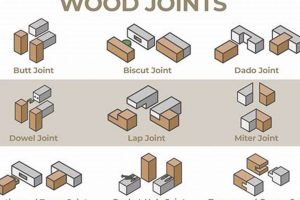
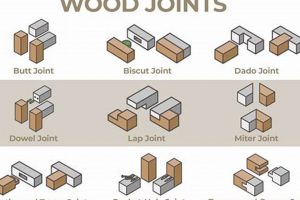
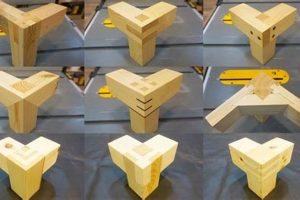
Connections made between pieces of timber or lumber form an integral element of structural integrity and aesthetic appeal in woodworking projects. These connections, achieved through a variety of methods, range from simple adhesion to complex interlocking configurations. Each type offers specific advantages and is selected based on factors such as load-bearing requirements, visual preferences, and material properties. A basic example is a butt joint, where two flat surfaces are simply placed edge-to-edge and fastened; more sophisticated options, like dovetail or mortise-and-tenon arrangements, provide significantly greater strength and resistance to tensile forces.
The skillful application of appropriate joinery techniques enhances the durability and longevity of wood-based constructions. Historically, these methods were essential, predating modern adhesives and fasteners. Even today, well-executed connections can outperform alternatives in certain applications, ensuring stability over time. Furthermore, the aesthetic dimension cannot be overlooked; certain connection styles are valued for their visual characteristics and can contribute significantly to the overall design of a piece.
This article will delve into a variety of these timber-joining methods, examining their individual strengths, weaknesses, and appropriate applications. We will explore techniques suitable for both amateur and professional woodworkers, covering a spectrum from basic assemblies to more advanced, specialized arrangements. This examination will provide a solid foundation for selecting and executing optimal connection strategies in diverse woodworking endeavors.
Essential Considerations for Woodwork Connections
Effective employment of timber connection techniques is paramount to producing durable and aesthetically pleasing woodworking projects. The following guidelines offer insights into selecting and executing appropriate methods.
Tip 1: Species Compatibility: When joining different wood species, account for varying expansion and contraction rates. Incompatibility can lead to joint failure over time. Consider using species with similar properties for greater stability.
Tip 2: Grain Orientation: Aligning grain direction in adjacent pieces maximizes strength. End-grain gluing is inherently weak; avoid relying on it for structural integrity. Employ joinery that interlocks fibers for superior hold.
Tip 3: Adhesive Selection: Choose appropriate adhesives based on wood type, environmental conditions, and stress loads. Consider water resistance, cure time, and gap-filling properties. Follow manufacturer guidelines for optimal bond strength.
Tip 4: Precise Fit: Accurate cuts and tight tolerances are crucial for effective joins. Gaps compromise strength and aesthetic appeal. Utilize precision measuring tools and techniques to ensure accurate mating surfaces.
Tip 5: Reinforcement Strategies: Augment connections with mechanical fasteners, such as screws or dowels, for increased strength. Consider concealed options for a cleaner visual appearance.
Tip 6: Joint Selection relative to Load: Match joint type to the anticipated stress. High-stress applications, such as table legs, necessitate stronger configurations, such as mortise-and-tenon or dovetail joints. Simple butt joints are generally insufficient for such applications.
Tip 7: Dry Fit Verification: Always dry-fit components before applying adhesive. This step allows for identification and correction of fitment issues, preventing costly mistakes during final assembly.
Consistent application of these principles will significantly enhance the structural integrity and longevity of woodwork creations, leading to projects that stand the test of time.
The subsequent sections will further explore specific connection types and their respective applications in greater detail.
1. Strength and durability
The selection and execution of specific timber connections directly influence the structural integrity and longevity of woodwork projects. Strength, the capacity to withstand applied forces without deformation or failure, and durability, the ability to resist wear, decay, and degradation over time, are paramount considerations when choosing joinery techniques. Weak or improperly executed joints compromise the overall structure, leading to premature failure and potential safety hazards. The effectiveness of each joining method in resisting tensile, compressive, and shear forces determines its suitability for specific applications.
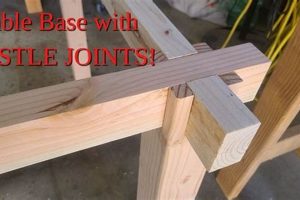
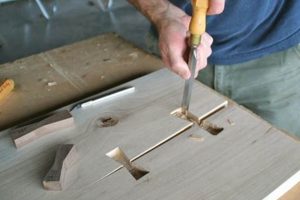
For example, consider the construction of a load-bearing table. Simple butt joints, reliant solely on adhesive for strength, would be inadequate to support significant weight or withstand repeated use. In contrast, a mortise-and-tenon joint, where a projecting tenon from one piece of wood fits snugly into a mortise (hole) in another, provides significantly greater resistance to these forces. Similarly, dovetail joints, characterized by their interlocking wedge shape, are frequently employed in drawer construction due to their exceptional resistance to pulling forces, ensuring the drawer front remains securely attached to the sides despite repeated opening and closing. The choice between these, and other joinery methods, hinges on a clear understanding of the stresses the completed project will encounter.
Ultimately, the relationship between joinery methods and structural integrity is one of cause and effect. The meticulous selection and precise execution of appropriate timber connections are causal factors in ensuring long-term performance and resilience in woodwork projects. Overlooking this connection results in compromised structural integrity and diminished lifespan. Therefore, a thorough understanding of the inherent strengths and limitations of each method is crucial for any woodworker seeking to produce robust, enduring creations. The ability to correlate the demands placed on a finished object with the characteristics of available timber connections is fundamental to successful construction.
2. Aesthetic considerations

The visual appeal of a woodworking project is inextricably linked to the choice and execution of timber connections. The joints utilized are not solely functional; they contribute significantly to the overall aesthetic impression. The conscious integration of these connections into the design is critical. Mitre joints, for example, offer a clean, almost seamless appearance at corners, often favored in applications like picture frames or delicate boxes where visual purity is desired. Conversely, exposed dovetail joints, while providing robust structural integrity, can also serve as a decorative element, showcasing craftsmanship and adding a visual feature to furniture pieces. The selection of such joints should be driven by a consideration of the overall artistic intention.
Consider the difference between a simple butt joint, typically concealed, and a scarf joint, designed to lengthen a piece of wood, which can be shaped to create a visually interesting pattern. The butt joint prioritizes utility, whereas the scarf joint, though functional, introduces opportunities for visual enhancement. In traditional Japanese joinery, connections are often celebrated, with intricate interlocking designs deliberately left visible to highlight the maker’s skill and the beauty of the wood itself. This stands in contrast to modern minimalist aesthetics, where the goal might be to minimize the visibility of any joint, creating an illusion of seamlessness. The choice directly impacts the perception of the finished piece.
The aesthetic considerations are not secondary to functionality but rather integral to the complete design. Ignoring the visual impact of timber connections can detract from an otherwise well-executed piece. By understanding how different joints present visually, woodworkers can harness them to enhance the overall design, achieving a harmonious balance between structural integrity and aesthetic appeal. This nuanced understanding addresses the challenge of reconciling form and function, resulting in projects that are both structurally sound and visually pleasing.
3. Joint selection criteria

Selecting the appropriate method for connecting timber elements is critical to the success of any woodworking endeavor. The criteria influencing this decision encompass a complex interplay of structural demands, aesthetic considerations, skill level, and material properties. Understanding these criteria enables informed choices, leading to durable and visually appealing outcomes.
- Structural Load and Stress
The primary criterion is the ability of a given connection to withstand anticipated loads. Joints subjected to high tensile or shear forces necessitate robust solutions such as dovetails or mortise-and-tenon arrangements. In contrast, low-stress applications, like picture frames, may suffice with simpler mitre or butt joints. Failure to account for these forces leads to structural instability and potential joint failure, compromising the entire project.
- Material Properties and Compatibility
Different wood species exhibit varying strengths, densities, and expansion/contraction rates. When joining dissimilar materials, these differences must be considered to prevent stress fractures or warping. Softer woods may not hold certain joint types as effectively as hardwoods, requiring adaptations or alternative methods. Understanding these properties is essential for long-term joint integrity.
- Aesthetic Requirements and Visibility
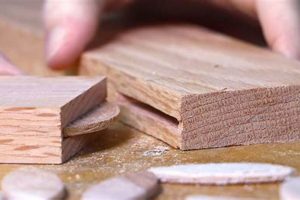
The visual impact of a connection is a crucial consideration. Some joints, like exposed dovetails, are inherently decorative, adding to the overall aesthetic. Others, like biscuit joints, are designed to be concealed entirely. The choice depends on the desired visual outcome, ranging from celebrating craftsmanship to achieving a seamless, minimalist appearance. The desired style dictates the allowable joint types.
- Skill Level and Available Tools
Complex joints, such as compound dovetails or intricate scarf joints, demand advanced skills and specialized tooling. Selecting a joint that exceeds the craftsman’s capabilities or available resources can lead to frustration and compromised results. Starting with simpler techniques and gradually progressing to more challenging methods promotes skill development and project success. Joint selection must align with practical limitations.
These criteria are not mutually exclusive; rather, they interact to inform the most appropriate joint selection for a given woodworking task. Evaluating each factor thoroughly ensures that the chosen method meets both the functional and aesthetic requirements of the project, resulting in a durable and visually pleasing final product. Disregarding any one of these aspects can compromise the overall quality and longevity of the woodworking piece.
4. Assembly methodology

The systematic process by which individual components are united to form a cohesive whole is inextricably linked to the selection and utilization of timber connections. The chosen joints dictate the required assembly steps, influence the necessary tools and techniques, and ultimately determine the structural integrity and aesthetic outcome of the completed piece. An effective assembly methodology maximizes efficiency, minimizes errors, and ensures the proper alignment and secure fastening of all components.
- Sequential Integration
Assembly often proceeds in a defined sequence, building progressively from sub-assemblies to the final form. The order of these steps is frequently dictated by the joint types employed. For instance, mortise-and-tenon joints in a table frame may require assembling the legs and aprons separately before uniting them to the tabletop. Deviating from the planned sequence can introduce insurmountable challenges and compromise structural integrity. Consider a chair assembly, where the backrest must be integrated before certain structural supports; reversing the sequence renders proper alignment impossible. The correct sequence optimizes efficiency and minimizes stress on already connected components.
- Clamping Techniques and Fixtures
Many timber connections require clamping during adhesive curing to ensure intimate contact and maximum bond strength. The choice of clamps, their placement, and the applied pressure are critical considerations. Complex assemblies may necessitate custom-built jigs or fixtures to maintain precise alignment and prevent distortion. Examples include clamping cauls to distribute pressure evenly across a wide glue-up surface or specialized fixtures to hold dovetail joints in perfect alignment during assembly. Improper clamping can result in weakened joints, misaligned components, and compromised structural integrity.
- Fastening Methods and Hardware
Beyond adhesive, mechanical fasteners, such as screws, nails, or dowels, are often employed to reinforce timber connections. The selection of appropriate fasteners, their size, and their placement are governed by the joint type and the anticipated loads. Dowels, for example, are frequently used to enhance the strength of mortise-and-tenon or butt joints, while screws provide additional clamping force in mitered frames. The method and hardware selected augment the joint’s strength and maintain alignment during and after glue-up.
- Dry Fitting and Verification
Before applying adhesive and permanently uniting components, a thorough dry fitting is essential. This process allows for the identification and correction of any fitment issues, ensuring accurate alignment and preventing costly mistakes. Each joint is tested for tightness, squareness, and overall structural integrity. Adjustments are made before the adhesive is applied, thereby ensuring a seamless and structurally sound assembly. The practice allows for refinement before final execution.
The assembly methodology is not merely a series of steps, but a carefully orchestrated process designed to maximize the inherent strengths of chosen timber connections. Each element from the sequence of integration to the application of clamping force contributes to the creation of a durable and visually appealing finished product. By understanding and meticulously executing the appropriate assembly techniques, woodworkers can ensure the longevity and aesthetic integrity of their creations, validating the deliberate selection of joinery methods.
5. Long-term performance

The sustained utility and aesthetic integrity of woodworking projects hinge directly on the selection and execution of appropriate timber connections. The term “long-term performance” encapsulates the ability of a constructed object to maintain its structural integrity and visual characteristics over an extended period, often measured in decades. The choice of connection method represents a critical determining factor in this performance. A poorly chosen or executed joint introduces a point of weakness, accelerating degradation and ultimately leading to failure. Consider, for instance, an outdoor bench constructed with simple butt joints secured only by nails. Exposure to environmental elements, coupled with the stress of repeated use, will inevitably lead to joint separation, wood rot around the nail holes, and premature structural collapse. In contrast, a bench utilizing mortise-and-tenon joints, properly glued and potentially reinforced with dowels, offers significantly greater resistance to these forces, ensuring a far longer service life.
Further emphasizing the connection, the durability of finishes and protective coatings is directly affected by the stability of the underlying timber connections. A rigidly constructed piece with well-executed joinery prevents the development of cracks and fissures in the wood, thereby minimizing the ingress of moisture and the subsequent degradation of the finish. Conversely, a structure with unstable joints experiences movement that compromises the finish, accelerating its deterioration and exposing the wood to environmental damage. This is readily apparent in antique furniture, where the survival of original finishes is often correlated with the integrity of the joinery. Pieces with intact, well-maintained joints retain their finish for considerably longer than those suffering from joint failure and subsequent wood movement. Similarly, the preservation of valuable structural components in historic buildings depends on the condition of the timber connections; damaged or failing joints necessitate costly repairs or replacements, while sound connections ensure the longevity of the original materials.
In summary, the long-term performance of any woodworking project is inextricably linked to the careful selection and precise execution of its timber connections. Choosing the appropriate joint for the anticipated load, environmental conditions, and aesthetic requirements is crucial for ensuring structural integrity, minimizing maintenance, and maximizing the lifespan of the object. Ignoring this connection is a false economy, leading to premature failure, costly repairs, and a diminished value of the finished piece. The understanding and diligent application of sound joinery principles is an investment in the enduring quality and value of woodworking creations.
Frequently Asked Questions About Timber Connections
This section addresses common inquiries regarding the selection, application, and performance of various timber connections in woodworking.
Question 1: What factors primarily influence the choice of joint for a given woodworking project?
The selection is primarily governed by the anticipated structural loads, aesthetic preferences, material properties of the wood, and the skill level of the craftsman. Careful consideration of each of these factors ensures optimal performance and longevity.
Question 2: How does grain orientation impact the strength of a timber connection?
Proper alignment of wood grain in adjacent pieces significantly enhances joint strength. End-grain gluing is inherently weak and should be avoided in load-bearing applications. Interlocking grain patterns provide superior resistance to tensile forces.
Question 3: Is adhesive alone sufficient for securing timber connections in high-stress applications?
While modern adhesives provide considerable strength, reliance solely on adhesive in high-stress situations is generally inadvisable. Mechanical fasteners, such as screws or dowels, should be employed to augment the bond and provide added structural support.
Question 4: What are the key differences between a mortise-and-tenon joint and a dovetail joint?
A mortise-and-tenon joint excels in resisting shear and compressive forces, making it suitable for frame construction. A dovetail joint, on the other hand, offers superior resistance to pulling forces, commonly utilized in drawer construction.
Question 5: How does wood movement affect the long-term performance of timber connections?
Wood expands and contracts with changes in humidity. Employing appropriate joint types that accommodate this movement is crucial to prevent stress fractures and joint failure. Species selection and proper acclimatization of the wood are also essential considerations.
Question 6: What is the purpose of a dry fit before final assembly?
A dry fit allows for the identification and correction of any fitment issues prior to applying adhesive. This practice prevents costly mistakes, ensures accurate alignment, and maximizes the strength of the final connection.
In summary, a thorough understanding of joint mechanics, material properties, and assembly techniques is essential for creating durable and aesthetically pleasing woodworking projects. Diligence in these areas ensures the longevity and structural integrity of timber constructions.
The following section delves into specific types of timber connections, providing detailed explanations of their construction and applications.
Woodwork Joints and Their Uses
This examination has traversed the landscape of timber connections, revealing their fundamental role in the structural and aesthetic integrity of woodworking. From the basic butt joint to the complex dovetail, each method presents a unique combination of strengths and limitations. Effective utilization necessitates a comprehensive understanding of load-bearing requirements, material properties, and visual design principles. The careful selection and precise execution of these connections directly influence the longevity and overall quality of finished pieces.
Mastery of these techniques represents a commitment to enduring craftsmanship. Further exploration and rigorous practice remain essential for achieving proficiency. As woodworking continues to evolve, a solid foundation in these fundamental principles will empower practitioners to create robust and aesthetically compelling pieces that withstand the test of time. Continued innovation in this field demands a deep respect for the time-honored methods of timber joinery.