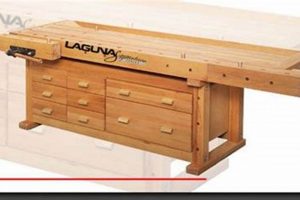
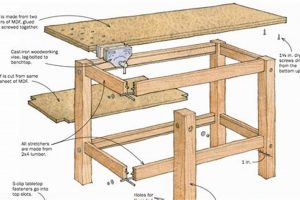
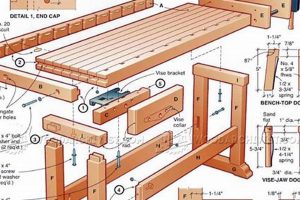
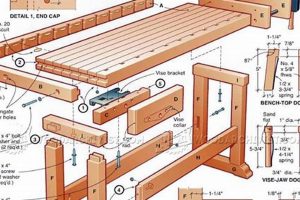
A mobile workstation designed for woodworking activities integrates the functionalities of a traditional workbench with the added benefit of portability. This type of equipment typically features a sturdy work surface, vise(s) for securing materials, and storage solutions, all mounted on a wheeled base. The inclusion of wheels allows for easy relocation within a workspace or even transport to different locations.
The advantages of a mobile woodworking platform are multifaceted. Enhanced flexibility and adaptability within a workshop environment contribute to improved workflow efficiency. Space constraints are mitigated as the unit can be readily moved and stored when not in use. Historically, workbenches were stationary fixtures; the introduction of mobility addresses modern needs for dynamic and adaptable workspaces, aligning with principles of lean manufacturing and optimized ergonomics.
The following sections will delve into various aspects of this valuable tool, including considerations for selecting the optimal model, strategies for customization and modification, essential safety protocols, and best practices for maintaining its operational integrity, contributing to its longevity and ensuring continued safe and efficient use in diverse woodworking applications.
Tips for Utilizing a Mobile Woodworking Platform
Optimizing the use of a mobile woodworking platform enhances both efficiency and safety within the workshop. The following guidelines offer practical advice for maximizing the benefits of this tool.
Tip 1: Secure Casters During Operation: Before commencing any woodworking task, ensure all casters are locked to prevent unintended movement. This stability is crucial for precision and user safety.
Tip 2: Distribute Weight Evenly: When storing tools or materials on or within the platform, strive for balanced weight distribution. Uneven loads can compromise stability and maneuverability.
Tip 3: Regularly Inspect Wheel Mechanisms: Casters and locking mechanisms should be periodically inspected for wear, damage, or debris accumulation. Promptly address any issues to maintain optimal performance.
Tip 4: Plan Movement Routes: Prior to relocating the unit, carefully assess the intended path, ensuring it is free from obstacles that could impede movement or create hazards.
Tip 5: Implement Proper Cable Management: If the platform is used with power tools, implement a system for managing cords and cables to prevent tripping hazards and ensure unobstructed movement of the platform.
Tip 6: Utilize Integrated Storage Solutions Effectively: Maximize the utility of any built-in storage compartments. Organize tools and materials in a manner that promotes efficient access and minimizes clutter.
Tip 7: Consider Workbench Height: Select or modify the platform’s height to align with ergonomic principles, minimizing strain and maximizing comfort during prolonged use.
Adhering to these recommendations promotes a safer, more organized, and more productive woodworking environment. The mobile platform, when used correctly, represents a valuable asset to any workshop.
The subsequent sections will explore strategies for customizing the mobile woodworking platform to suit individual needs and project requirements, further enhancing its utility.
1. Mobility

The defining characteristic of a woodworking bench on wheels is its mobility. This feature directly addresses the limitations of traditional, stationary workbenches. The inclusion of casters, typically heavy-duty and lockable, enables the user to relocate the entire workstation within a workshop or even to different work areas. This ability to reposition the bench has a cascading effect, influencing workflow efficiency, space utilization, and ergonomic considerations. For example, a craftsman working on a large project in a confined space can readily move the bench to access different angles or to clear the area for other tasks.
The effect of mobility extends beyond simple relocation. It allows for dynamic adjustments to the workshop layout based on the project at hand. A bench can be positioned near a power outlet for ease of tool access or moved closer to raw materials for efficient processing. In collaborative projects, multiple mobile benches can be arranged to facilitate teamwork. Furthermore, mobility facilitates cleaning and maintenance, enabling access to previously inaccessible areas beneath the bench.
Understanding the practical significance of mobility in a woodworking bench is crucial for optimizing workshop operations. The capacity to adapt to changing spatial requirements, the facilitation of efficient workflow, and the contribution to a more ergonomic and cleaner environment all stem from this single feature. The successful integration of mobility hinges on robust caster design, reliable locking mechanisms, and careful consideration of weight distribution to ensure safe and efficient relocation.
2. Stability

Stability is a paramount consideration in the design and utilization of a woodworking bench on wheels. While the mobility afforded by casters is advantageous, it must not compromise the bench’s inherent stability. A stable work surface is essential for precise woodworking operations and user safety. Any wobble or instability can negatively impact accuracy and potentially lead to accidents.
- Caster Locking Mechanisms
The primary means of ensuring stability on a mobile bench are the caster locking mechanisms. These locks, typically engaging a brake on the wheel or the swivel, prevent unintended movement during use. Effective locking mechanisms are critical for creating a firm, unwavering work surface. Inferior locks may slip or fail under load, jeopardizing stability. The quality and design of these mechanisms directly influence the bench’s suitability for demanding woodworking tasks.
- Weight Distribution and Base Design
Stability is also significantly affected by the distribution of weight across the bench and the overall design of the base. A wide base with a low center of gravity will resist tipping more effectively. Uneven weight distribution, such as placing heavy tools only on one side, can create instability. Manufacturers often reinforce the base structure and strategically position weight-bearing components to optimize stability even when the bench is loaded with tools and materials.
- Material Selection and Rigidity
The materials used in the construction of the bench frame and work surface contribute directly to its overall rigidity and, consequently, stability. Solid hardwoods, such as maple or beech, provide superior rigidity compared to softer woods or composite materials. A flexible or weak frame will transmit vibrations and movement, reducing accuracy and increasing the risk of errors. The thickness and construction of the work surface also play a role in minimizing deflection under load.
- Floor Surface Considerations
The type of flooring on which the bench is used impacts its perceived stability. Uneven or soft surfaces, such as carpeting or uneven concrete, can compromise the effectiveness of the caster locking mechanisms. A stable, level floor provides the optimal foundation for a mobile workbench. In situations where the floor is uneven, shims or adjustable feet can be employed to compensate and achieve a level, stable work surface.
The interplay between mobility and stability in a woodworking bench on wheels necessitates a careful balance. While the former provides flexibility and convenience, the latter ensures safety and precision. Effective caster locking mechanisms, thoughtful weight distribution, appropriate material selection, and consideration of the floor surface all contribute to achieving the desired level of stability, making the mobile workbench a valuable and reliable tool in the woodworking shop.
3. Work Surface

The work surface constitutes the primary interface between the woodworker and the project in the context of a mobile woodworking platform. Its characteristics directly influence the precision, efficiency, and safety of various woodworking operations. The selection of appropriate materials, dimensions, and features for the work surface is critical to maximizing the utility of the entire unit.
- Material Composition
The composition of the work surface determines its durability, resistance to wear, and ability to withstand the stresses of woodworking activities. Hardwoods like maple and beech are frequently employed due to their density and resistance to impact. Laminated surfaces, such as butcher block, provide a stable and easily cleaned working area. The choice of material must balance cost considerations with performance requirements. For example, a professional woodworker may opt for a solid maple top for its longevity and stability, while a hobbyist might choose a less expensive laminated option.
- Dimensional Attributes
The dimensions of the work surface, including its length, width, and thickness, must be appropriate for the types of projects typically undertaken. A larger surface area provides more space for layout, assembly, and the use of larger power tools. Thickness is a critical factor in resisting deflection under load. A surface that is too thin will flex, compromising accuracy. Standard workbench heights also influence user comfort and ergonomics. For instance, furniture makers working with large components may require a wider and longer work surface, whereas a model maker may find a smaller, more compact surface sufficient.
- Integrated Features
Many work surfaces incorporate features that enhance their functionality. These may include pre-drilled dog holes for clamping, integrated vises for securing workpieces, and built-in measuring scales. Dog holes allow for flexible clamping arrangements, accommodating various shapes and sizes of materials. Vises provide secure hold-down capabilities, particularly useful for planing and sawing. Integrated scales assist in accurate layout and measurement. An example is a bench with dog holes arranged in a grid pattern, allowing for the use of various clamping accessories to hold a workpiece at any angle.
- Surface Treatment and Maintenance
The surface treatment of a woodworking bench is essential for extending its useful life and maintaining a productive workspace. Applying a sealant or finish protects the wood from moisture, stains, and abrasion. Regular cleaning helps prevent the build-up of sawdust, glue, and other debris that can interfere with woodworking operations. Surface treatments also impact the slipperiness or grip of the work surface, which can influence the control and safety of hand tool use. For instance, a sealant may be applied to a solid-wood workbench to prevent moisture absorption, which can cause warping or cracking over time.
In conclusion, the work surface is a critical component of a woodworking bench on wheels, influencing both the efficiency and quality of woodworking tasks. By considering material composition, dimensions, integrated features, and ongoing maintenance, users can optimize their mobile woodworking platform for a wide range of projects, thereby maximizing the overall value and versatility of the equipment.
4. Storage Capacity

Storage capacity, in the context of a mobile woodworking platform, directly influences the efficiency and organization of woodworking operations. Adequate storage minimizes clutter, reduces time spent searching for tools and materials, and contributes to a safer working environment.
- Integrated Drawer Systems
Drawer systems integrated into the workbench offer designated spaces for tool storage, hardware organization, and material containment. Drawers of varying sizes accommodate different tool types and project requirements. For instance, shallow drawers may house measuring tools and marking instruments, while deeper drawers can store power tools or larger hand tools. A well-designed drawer system maximizes space utilization and promotes accessibility.
- Open Shelving and Compartments
Open shelving provides accessible storage for frequently used items or bulkier materials. Open compartments can accommodate jigs, fixtures, or larger project components. The open design facilitates quick retrieval of necessary items. Consider a mobile bench with open shelving below the work surface for storing lumber or sheet goods.
- Tool Hanging Provisions
Tool hanging provisions, such as pegboards or hooks, offer an efficient method for storing hand tools and frequently used accessories. Hanging tools keeps them within easy reach and prevents them from becoming buried in drawers or cluttering the work surface. A mobile bench might incorporate a side-mounted pegboard for organizing chisels, saws, and other hand tools.
- Material Storage Considerations
Storage capacity must also address the need to store raw materials, project components, and work-in-progress items. Bins, trays, or dedicated shelves can be integrated to facilitate the organized storage of materials. Proper material storage protects materials from damage and ensures they are readily available when needed. A roll-out tray beneath the workbench could be used to store offcuts and small pieces of lumber.
The effective utilization of storage capacity in a woodworking bench on wheels directly contributes to a more streamlined and productive workflow. Organized storage reduces downtime, minimizes clutter, and promotes a safer working environment. By considering integrated drawer systems, open shelving, tool hanging provisions, and material storage needs, users can optimize their mobile woodworking platform for maximum efficiency.
5. Material Compatibility
Material compatibility is a critical consideration in the selection and utilization of a woodworking bench on wheels. The materials used in the construction of the bench itself must be compatible with the types of wood and finishes commonly employed in woodworking projects. Incompatibility can lead to undesirable consequences, ranging from surface damage to structural instability. For instance, a bench top constructed from a softwood might be easily dented or scratched by hardwood workpieces, impacting precision and longevity. Conversely, certain surface finishes on the bench could react negatively with adhesives or finishes applied to woodworking projects, leading to adhesion problems or contamination.
The work surface material significantly impacts the type of woodworking activities that can be effectively performed. A solid hardwood top, such as maple or beech, provides a durable and stable surface suitable for a wide range of tasks, including sawing, planing, and joinery. However, softer materials may be more appropriate for specialized applications. For example, a surface covered with a replaceable fiberboard sheet could be advantageous for tasks involving adhesives, preventing glue from adhering permanently to the bench. The interaction between the bench surface and workpiece materials also affects clamping. Some materials offer better grip and prevent slippage, while others may require the use of protective pads to avoid marring the workpiece.
Ultimately, the choice of materials for a mobile woodworking bench should reflect a clear understanding of the intended applications and the properties of the wood and finishes that will be used. Prioritizing material compatibility ensures the durability of the bench, the quality of woodworking projects, and the safety of the user. This careful selection mitigates the risk of damage to both the bench and the workpieces, contributing to a more efficient and enjoyable woodworking experience. Neglecting this aspect can lead to premature wear, compromised project quality, and potential hazards. A well-chosen mobile workbench, with appropriate material compatibility, becomes a reliable and versatile asset in any woodworking environment.
6. Locking Mechanisms

The functionality of a woodworking bench on wheels relies significantly on its locking mechanisms. These mechanisms, integral to the design, address the inherent instability introduced by the inclusion of casters. Without reliable locks, the bench’s mobility becomes a liability, compromising precision and posing safety hazards. Locking mechanisms prevent unintended movement during woodworking operations, creating a stable work surface essential for accurate cuts, secure clamping, and overall control. A common example is a cam-lever-actuated brake on each caster, engaging to prevent rotation of the wheel and swivel. The effectiveness of these locks directly impacts the quality and safety of any task performed on the bench. If the locking mechanisms fail, the bench can shift during sawing, potentially causing inaccurate cuts or even injury.
Different types of locking mechanisms exist, each with varying degrees of effectiveness and ease of use. Some benches utilize individual wheel locks that must be engaged manually for each caster. Others feature a central locking system, engaging all casters simultaneously with a single lever or pedal. The choice of locking mechanism depends on factors such as bench size, weight capacity, and intended use. For instance, a heavier bench used for demanding tasks may require more robust locking mechanisms than a smaller, lighter bench used for occasional projects. Furthermore, the type of flooring on which the bench is used can influence the effectiveness of the locks. Smooth concrete floors may require locks with a high friction coefficient to prevent slippage, while uneven surfaces may necessitate adjustable locking mechanisms that can compensate for variations in height.
In conclusion, the integrity of locking mechanisms is fundamental to the safe and efficient operation of a woodworking bench on wheels. Reliable locks transform a potentially unstable platform into a secure and versatile workstation, enabling precise woodworking tasks and minimizing the risk of accidents. The selection of appropriate locking mechanisms should be based on a thorough assessment of the bench’s intended use, weight capacity, and operating environment. Maintenance of these mechanisms is equally important to ensure their continued effectiveness over time. Therefore, understanding the significance of locking mechanisms is crucial for maximizing the benefits of a mobile woodworking bench.
Frequently Asked Questions
The following addresses common inquiries regarding mobile woodworking platforms, offering concise and informative responses.
Question 1: Are mobile woodworking benches as stable as stationary benches?
A properly designed mobile woodworking bench, when the casters are locked, can achieve a level of stability comparable to that of a stationary bench. The stability is contingent upon the quality of the locking mechanisms, the base design, and the even distribution of weight.
Question 2: What is the optimal weight capacity for a mobile woodworking bench?
The optimal weight capacity is determined by the intended use. For general woodworking tasks, a capacity of 300-500 pounds is typically sufficient. Heavy-duty applications may necessitate a higher capacity, potentially exceeding 500 pounds.
Question 3: What type of casters are best suited for a mobile woodworking bench?
Heavy-duty casters with a locking mechanism are recommended. The caster material should be durable and suitable for the floor surface. Polyurethane casters are often preferred for their non-marking properties and smooth rolling action.
Question 4: Can a mobile woodworking bench be used on uneven surfaces?
While mobile benches are designed for smooth surfaces, some models feature adjustable feet to compensate for minor unevenness. Using shims may also address uneven surfaces, enhancing stability.
Question 5: What is the recommended height for a mobile woodworking bench?
The optimal height varies depending on the user’s height and typical woodworking tasks. A common recommendation is to set the bench height so that the user’s elbows are at a 90-degree angle when standing.
Question 6: How should a mobile woodworking bench be maintained?
Regular maintenance includes cleaning the work surface, inspecting and lubricating casters, and ensuring the locking mechanisms are functioning properly. Periodic inspection of the frame for structural integrity is also advised.
In summary, a mobile woodworking bench provides significant advantages in terms of flexibility and space utilization, provided it is properly selected, maintained, and used in accordance with recommended guidelines.
The following section will explore potential customization options for a mobile woodworking bench, further enhancing its utility and adaptability.
Conclusion
The preceding discussion has examined the multifaceted nature of the woodworking bench on wheels, delineating its core components, operational considerations, and frequently encountered questions. Essential elements, encompassing mobility, stability, work surface characteristics, storage capacity, material compatibility, and locking mechanisms, collectively define the utility and safety of this equipment within diverse woodworking contexts.
The information presented serves as a foundation for informed decision-making in the selection, utilization, and maintenance of a woodworking bench on wheels. Careful consideration of these aspects ensures the realization of its full potential, optimizing workspace efficiency, promoting safe practices, and ultimately enhancing the quality of woodworking endeavors. The future of woodworking may see continued innovation in mobile workbench designs, warranting ongoing attention to advancements in materials, mechanisms, and ergonomic features.