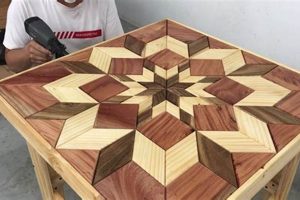
Crafting a central surface for the living space through woodworking involves numerous concepts, from simple, rustic designs to complex, modern constructions. These concepts encompass a range of styles, materials, and construction techniques aimed at creating functional and aesthetically pleasing furniture. For instance, a basic design might feature a solid wood top with straightforward legs, while a more intricate project could incorporate inlays, drawers, or a multi-tiered structure.
The significance of this undertaking lies in its ability to personalize a home’s dcor and create a unique focal point. The benefits include the opportunity to utilize reclaimed materials, customize dimensions to suit a specific space, and tailor the design to reflect individual tastes. Historically, handcrafted tables have been valued for their durability and artisanal quality, representing a departure from mass-produced furniture.
The following sections will delve into specific considerations for material selection, joint construction, finishing techniques, and design variations suitable for creating a distinctive and enduring piece of furniture for the central living space.
Essential Considerations for Coffee Table Construction
The following guidelines are designed to optimize the outcome of a woodworking project focused on constructing a central table for the living room. These recommendations address crucial aspects from material selection to finishing techniques.
Tip 1: Material Selection: Prioritize hardwood species known for their durability and aesthetic appeal. Options such as oak, maple, or walnut offer resistance to wear and tear and provide a desirable grain pattern. Ensure the wood is properly dried and acclimated to the environment to minimize warping or cracking.
Tip 2: Joint Integrity: Employ robust joinery techniques such as mortise and tenon, dovetail, or biscuit joints to ensure structural stability. Reinforce joints with adhesive specifically formulated for woodworking to maximize their strength and longevity. Carefully consider the weight-bearing capacity required for the design.
Tip 3: Dimensional Accuracy: Precise measurements are crucial for achieving a professional result. Utilize accurate measuring tools and techniques to ensure all components fit together seamlessly. A well-fitting frame contributes significantly to the overall stability and aesthetic appeal.
Tip 4: Surface Preparation: Thoroughly sand all surfaces to achieve a smooth, even texture prior to applying any finish. Start with a coarser grit sandpaper and gradually progress to finer grits to remove imperfections and create an optimal surface for finishing.
Tip 5: Finishing Application: Select a finish appropriate for the intended use and aesthetic. Options include polyurethane, lacquer, or oil-based finishes, each offering varying degrees of protection and sheen. Apply multiple thin coats, allowing sufficient drying time between each coat, to achieve a durable and even finish.
Tip 6: Hardware Considerations: Choose high-quality hardware, such as hinges, drawer slides, or decorative accents, that complement the overall design and provide reliable functionality. Ensure the hardware is appropriately sized and installed securely.
Tip 7: Design Proportions: Consider the overall dimensions of the room and other furniture when determining the size and proportions of the central surface. Aim for a harmonious balance that complements the space without overwhelming it.
Adhering to these principles will increase the likelihood of crafting a durable, aesthetically pleasing, and functional piece of furniture for the central living area.
The subsequent sections will address specific design styles and advanced construction techniques for creating truly unique and personalized centerpieces.
1. Material Durability

Material durability directly impacts the longevity and functionality of a center living room table crafted through woodworking. The selection of a wood species with inherent resistance to wear, scratching, and moisture is paramount. A softer wood, for example, is more susceptible to damage from daily use, leading to a diminished aesthetic and structural integrity. Conversely, a hardwood such as oak, maple, or walnut offers increased resistance to these factors, ensuring a longer lifespan for the finished piece. The cause and effect relationship is clear: inferior material selection leads to premature degradation, while superior choices promote lasting value.
The practical significance of understanding material durability lies in its economic implications. Investing in a durable wood species upfront minimizes the need for frequent repairs or replacements, ultimately reducing long-term costs. Furthermore, a robust material ensures the structural integrity of the table, preventing issues such as sagging or instability. For instance, a table intended to support heavy objects, such as books or decorative items, requires a wood species with a high weight-bearing capacity. Ignoring this consideration can result in structural failure and potential safety hazards.
In summary, the selection of a durable material is a critical component in the successful creation of a center table. This decision influences not only the aesthetic appeal but also the structural integrity and long-term cost-effectiveness of the piece. Careful consideration of wood species characteristics and their suitability for the intended use is essential for ensuring a lasting and functional addition to the living space. Challenges such as budget constraints may influence material choices, but prioritizing durability within those limitations remains a vital aspect of the woodworking process.
2. Joint Strength

Joint strength is a critical determinant of the structural integrity and longevity of a coffee table crafted through woodworking. The ability of joints to withstand applied forces directly influences the table’s capacity to support weight, resist racking, and maintain its shape over time. Inadequate joint strength results in instability, potential failure under load, and a diminished lifespan for the furniture piece. The design and execution of woodworking joints must, therefore, be prioritized in the creation of durable and functional coffee tables. For example, a poorly constructed mortise and tenon joint on a table leg is likely to loosen or break under stress, leading to a wobbly or collapsed structure. Conversely, a well-executed joint of the same type provides a robust connection capable of withstanding considerable force. Joint Strength is a core element to the successful production of furniture.
The practical application of this understanding extends to the selection of appropriate joint types for specific coffee table designs. A simple table with straight legs might benefit from sturdy butt joints reinforced with screws and adhesive. More complex designs, particularly those involving angled legs or intricate aprons, necessitate stronger jointing methods such as dovetails or mortise and tenons. Furthermore, the choice of wood species impacts joint strength. Softer woods require larger joint surfaces or the use of reinforcing elements to achieve comparable strength to joints constructed from hardwoods. An example of practical application includes the use of pocket hole joinery, appropriate for simpler constructions, yet unsuitable for supporting very heavy loads. The understanding of Joint Strength, its types and applications is very important for a Woodworking Coffee Table Idea.
In conclusion, the durability and overall quality of a coffee table are intrinsically linked to the strength of its joints. A careful selection of appropriate jointing techniques, considering both the design and the materials used, is essential for ensuring a structurally sound and long-lasting piece of furniture. Challenges such as limited woodworking experience or access to specialized tools can be overcome through careful planning and the selection of simpler, yet effective, jointing methods. Ultimately, prioritizing joint strength translates to a more resilient and aesthetically pleasing addition to the living space. This also applies for various woodworking coffee table ideas.
3. Surface Finish
The surface finish applied to a woodworking project significantly influences both the aesthetic appeal and functional performance of a coffee table. It serves as a protective barrier against moisture, scratches, and UV damage, while also enhancing the wood’s natural grain and color. The appropriate finish is crucial for preserving the table’s appearance and extending its lifespan.
- Protection Against Environmental Factors
A durable surface finish shields the wood from environmental stressors such as humidity, spills, and sunlight. Polyurethane, for instance, forms a robust barrier against water damage, preventing warping and staining. A table without adequate protection is susceptible to discoloration, cracking, and eventual degradation, especially in environments with high humidity or frequent exposure to liquids.
- Enhancement of Aesthetic Qualities
The choice of finish can dramatically alter the visual characteristics of the wood. A clear finish allows the natural grain pattern and color variations to shine through, while a stain can enhance or alter the wood’s hue. For example, applying a cherry stain to maple can mimic the appearance of more expensive cherry wood. Furthermore, the level of sheen, from matte to gloss, influences the perceived formality and elegance of the piece.
- Durability and Wear Resistance
The surface finish dictates the table’s resistance to scratches, abrasions, and general wear and tear. Harder finishes, such as catalyzed lacquer, provide superior protection against scratching compared to softer finishes like wax. A well-applied finish minimizes the appearance of imperfections and ensures the table maintains its visual appeal even with frequent use. In heavily used environments, a more durable finish is imperative.
- Ease of Maintenance
Certain finishes are easier to clean and maintain than others. Polyurethane and lacquer, for example, create a smooth, non-porous surface that is easily wiped clean. Conversely, oil-based finishes may require more frequent reapplication to maintain their protective qualities. The ease of maintenance is a practical consideration for coffee tables, as they are often subject to spills and require regular cleaning.
Consideration of surface finish extends beyond mere aesthetics. Its impact on the wood’s longevity, resilience to wear, and ease of upkeep warrants careful evaluation. The choice of finish represents a critical step in realizing a completed table, one that balances beauty, function, and practicality. The application must be considered in all woodworking coffee table ideas.
4. Design Style

Design style dictates the aesthetic form and functional attributes of a coffee table. It serves as the guiding principle during the woodworking process, influencing material selection, joinery techniques, and finishing applications. A specific style choice, such as mid-century modern, directly affects the table’s silhouette, leg shape, and overall visual appeal. Conversely, a rustic design aesthetic will influence the wood species choice and finishing techniques, often leaning toward reclaimed materials and distressed finishes. Without a defined design style, the woodworking process lacks direction, potentially resulting in a disjointed and aesthetically unpleasing final product.
The selection of a design style informs crucial aspects of construction. A minimalist design, for example, may prioritize clean lines, simple joinery, and a light finish. A more ornate design, inspired by Victorian or Art Deco styles, may necessitate complex carvings, intricate inlays, and a high-gloss finish. Practical application of this understanding includes determining the appropriate leg attachment method; a Scandinavian design might use splayed legs attached with angled mortise and tenon joints, while a farmhouse style could feature turned legs attached with straightforward aprons and screws. The choice of a design style isn’t merely an aesthetic decision; it has practical ramifications for the entire woodworking process.
In summary, design style is a foundational element in creating a woodworking coffee table. Its influence spans material selection, construction methods, and finishing techniques, thereby directly impacting the table’s appearance, durability, and functionality. Challenges in selecting a style might arise from conflicting personal preferences or a lack of understanding of different design movements. Overcoming these challenges requires research, exploration of various styles, and a clear articulation of the desired aesthetic. Ultimately, a well-defined design style ensures a cohesive and aesthetically satisfying woodworking project. This ensures an impactful result of the woodworking coffee table ideas.
5. Leg Design
Leg design, in the context of woodworking for center living room tables, represents a critical element influencing both the structural integrity and aesthetic character of the finished piece. Its selection and execution must harmonize with the overall design concept and intended use of the table.
- Structural Support and Stability
The primary function of legs is to provide stable support for the table’s surface and any objects placed upon it. The choice of leg design, including its thickness, material, and attachment method, directly affects the table’s weight-bearing capacity and resistance to tipping or wobbling. A poorly designed leg system compromises the structural integrity of the entire piece, regardless of the quality of the tabletop construction. Example: Tapered legs, while visually appealing, may require reinforcement for heavier loads. The absence of secure attachments can cause movement on the leg itself, and potential leg failure.
- Aesthetic Harmony and Style
Leg design contributes significantly to the overall aesthetic style of the coffee table. Different leg styles, such as turned, tapered, splayed, or trestle, evoke distinct design periods and visual cues. The choice of leg style should complement the tabletop’s shape, material, and finish to create a cohesive and visually pleasing piece. Example: Sleek, metal hairpin legs often complement a mid-century modern design, while ornate, carved legs are more suited to a traditional or Victorian aesthetic. A discrepancy between leg design and tabletop style results in a visually discordant table, detracting from the overall aesthetic.
- Material Compatibility and Construction Techniques
The selection of leg material should align with the chosen tabletop material and the intended construction techniques. Different materials, such as wood, metal, or acrylic, require specific joinery methods and finishing treatments to ensure a strong and durable connection. Example: Wood legs can be attached to a tabletop using mortise and tenon joints, screws, or metal fasteners, while metal legs often require welding or bolting. The choice of material and construction technique directly impacts the stability and longevity of the leg attachment, ensuring a secure hold. A mismatch between materials and construction methods can lead to weakened joints and structural failure.
- Ergonomics and Functionality
Leg design can influence the table’s functionality and user experience. The height and placement of legs should provide ample legroom for users seated around the table. Leg design should avoid creating obstructions or sharp edges that could pose a safety hazard. Example: Angled or splayed legs can increase stability but may also encroach on legroom. Tables with adjustable-height legs provide increased versatility. If legs get in the way, the purpose of having the legs are moot.
In conclusion, leg design constitutes a crucial element within the broader spectrum of woodworking coffee table concepts. The selection and execution of leg design should be informed by structural considerations, aesthetic goals, material compatibility, and functional requirements, all contributing to a final product that is both visually appealing and structurally sound, enhancing the overall utility and aesthetic value of the living space.
6. Tabletop Shape
Tabletop shape fundamentally influences the aesthetic and functional properties of a woodworking project. The selection of a specific form dictates the visual harmony, spatial utilization, and user interaction with the central surface. Considerations of proportion, ergonomics, and intended use are intrinsically linked to the chosen shape, thereby shaping the overall design and practicality of the furniture piece.
- Circular Tabletop Shape: Social Interaction and Spatial Dynamics
A circular shape promotes inclusive social interaction by enabling equal access and visual connection among users. Its lack of corners facilitates movement and avoids sharp edges, enhancing safety. This shape maximizes spatial efficiency in smaller areas, but may present challenges in aligning with rectilinear furniture arrangements. An example is a round table encouraging conversation in a compact living room, but potentially conflicting with the sharp lines of a sectional sofa. Considerations around woodworking for this shape involve creating a uniform curve, securing center support, and determining edge finishing, each impacting structural integrity.
- Rectangular Tabletop Shape: Functionality and Formal Aesthetics
Rectangular table shapes offer the most expansive surface area, maximizing functionality for various activities. This form complements linear room layouts, providing a sense of order and balance. However, its corners may impede circulation and require careful placement to prevent obstruction. An example is a rectangular surface for both decor display and serving snacks in a larger living space, but its sharp edges might pose a safety risk. Relevant woodworking aspects include ensuring proper support to prevent sagging, achieving consistent edge profiles, and accommodating joinery with table legs or aprons.
- Oval Tabletop Shape: Balance of Formality and Flow
The oval combines the benefits of both circular and rectangular shapes. It maintains a sense of formality while encouraging interaction and easing movement. Its elongated form can visually lengthen a space, but requires careful consideration to maintain proportional harmony. An oval surface, for instance, can add elegance to a room while facilitating traffic flow, but may appear out of scale in a narrow area. Woodworking challenges involve creating a complex curve, evenly distributing weight, and securing consistent edge finishing.
- Freeform Tabletop Shape: Uniqueness and Artistic Expression
Freeform shapes allow for maximum creativity and personalization, creating unique focal points. However, they demand advanced woodworking skills and require careful consideration of structural stability and ergonomic considerations. These unconventional surfaces provide for an artistic flair, while they are often harder to create and construct. Consideration during constructions involve advanced techniques and precise cuts for intricate design. An example would be an oddly designed table crafted using epoxy for a unique look. Woodworking with a freeform table can be more difficult to design and build.
In conclusion, tabletop shape represents a pivotal decision point in the creation of a center surface for living areas. The selected form influences not only the aesthetic impression but also the practical usability and spatial harmony of the completed project. By carefully considering the implications of various shapes and integrating them into the woodworking process, it is possible to create functional and aesthetically pleasing centerpieces that enhance the living environment.
Frequently Asked Questions
The following addresses common inquiries regarding the design, construction, and maintenance of handcrafted coffee tables, emphasizing practical considerations and best practices.
Question 1: What wood species are best suited for constructing a durable coffee table?
Hardwood species such as oak, maple, walnut, and cherry are generally recommended due to their density and resistance to wear. Softwoods, such as pine, can be used but require greater care to prevent scratching and denting.
Question 2: What joinery techniques are most effective for ensuring structural stability in a coffee table?
Mortise and tenon, dovetail, and bridle joints offer superior strength and durability compared to simpler joints like butt joints. The selection of joint type should be determined by the design and anticipated weight load.
Question 3: What factors should be considered when selecting a finish for a coffee table?
Durability, resistance to moisture and staining, and desired aesthetic appearance are primary considerations. Polyurethane and lacquer finishes provide excellent protection, while oil-based finishes offer a more natural look but may require more frequent maintenance.
Question 4: How can warping or cracking of wood be prevented during coffee table construction?
Properly drying and acclimating the wood to the environment before construction is essential. Avoid rapid changes in humidity and temperature, and apply a sealant or finish to all surfaces to minimize moisture absorption.
Question 5: What is the recommended height for a coffee table?
The height should typically be within 1-2 inches of the height of the surrounding seating. A height of 16-18 inches is generally considered standard, but this may vary depending on individual preferences and furniture styles.
Question 6: How can a coffee table be protected from scratches and spills?
The application of a durable finish, such as polyurethane, is the first line of defense. The use of coasters, placemats, and regular cleaning can further minimize the risk of damage.
The information provided above highlights critical aspects of coffee table construction, from material selection to finishing techniques, and addresses common concerns to promote informed decision-making.
The next section will delve into advanced woodworking techniques, exploring complex designs and innovative construction methods.
Conclusion
This exploration of woodworking center table concepts has underscored the multifaceted nature of crafting a functional and aesthetically pleasing piece for the living space. Key aspects include material selection, joint integrity, surface finishing, design style, and leg and tabletop design, each significantly impacting the durability, visual appeal, and overall utility of the final product. Attention to these details ensures a lasting and valuable addition to the home.
Further investigation and application of these principles are encouraged for continued refinement of woodworking skills. The creation of such furniture represents not only a practical endeavor but also an opportunity for artistic expression and personal enrichment. Continued dedication to the craft will yield increasingly sophisticated and impactful woodworking endeavors.