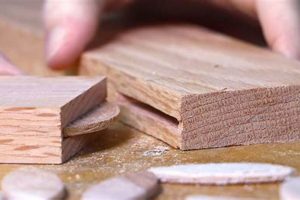
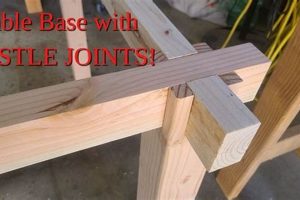
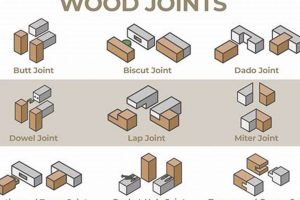
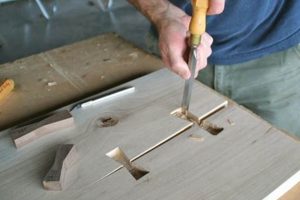
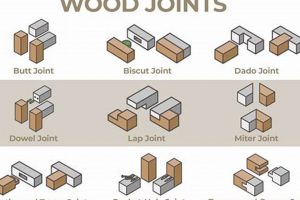
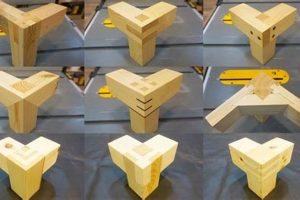
The points where separate pieces of wood connect to form a drawer are critical structural areas. These connections, achieved through various methods of joinery, are essential for the drawer’s durability, aesthetic appeal, and overall functionality. Examples include dovetail, rabbet, dado, and mortise and tenon assemblies, each offering distinct advantages in terms of strength and visual characteristics.
Well-executed assemblies at these connection points ensure the drawer can withstand repeated use and weight, preventing premature failure. Historically, the choice of connection method reflected available tools, skill levels, and design preferences. Strong, well-fitted connections contribute significantly to the furniture piece’s longevity and value, while also influencing its visual style.
The following sections will delve into specific connection types, analyzing their construction techniques, relative strengths, and suitability for different drawer designs and woodworking projects. Each method offers a unique balance of strength, ease of construction, and aesthetic properties that will be examined in detail.
Essential Guidance for Robust Drawer Construction
The following guidelines are intended to enhance the integrity and longevity of drawer assemblies in woodworking applications.
Tip 1: Select Appropriate Joinery: Consider the expected load and usage when choosing a connection method. Dovetails offer superior strength for heavy-duty applications, while rabbet joints may suffice for lighter loads.
Tip 2: Precise Cutting is Paramount: Accuracy in cutting components is essential for tight-fitting, strong connections. Employ sharp tools and precise measuring techniques to minimize gaps and ensure proper alignment.
Tip 3: Glue Application: Apply glue evenly and thoroughly to all mating surfaces. Insufficient glue compromises the strength of the joint. Clamp the assembly securely to ensure proper adhesion.
Tip 4: Clamping Strategy: Utilize appropriate clamping pressure to achieve a tight, gap-free connection. Excessive pressure can distort the wood, while insufficient pressure can result in a weak bond.
Tip 5: Grain Orientation: Pay attention to grain direction when constructing the drawer. Align the grain to minimize wood movement and prevent warping or cracking over time.
Tip 6: Dry Fit Before Gluing: Always assemble the drawer components without glue to check for proper fit and alignment. This pre-assembly allows for adjustments before permanent bonding.
Tip 7: Consider Drawer Slides: Select drawer slides that are appropriate for the size and weight of the drawer. High-quality slides contribute to smooth operation and prolong the life of the drawer.
Adhering to these principles during the construction of woodworking drawer joints will lead to more durable, functional, and aesthetically pleasing finished products.
The final section will provide a summary of connection methods and their recommended applications.
1. Strength

The capacity of a drawer to withstand applied forces without failure is fundamentally linked to the integrity of its joints. The connection method employed directly dictates the drawer’s resistance to stress from loading, repeated use, and the potential for racking. Joints lacking sufficient structural integrity are prone to separation, leading to drawer malfunction and eventual failure. For instance, a drawer constructed with poorly executed butt joints secured only with fasteners and minimal adhesive is highly susceptible to collapse under even moderate weight, whereas a dovetail joint inherently resists tensile forces due to its interlocking design.
The selection of an appropriate assembly technique, therefore, hinges on the intended application and load-bearing requirements of the drawer. For heavy-duty applications, such as tool drawers or those intended to store dense materials, stronger connection methods, such as dovetails or reinforced mortise and tenon joints, are essential. Conversely, lighter-duty drawers may suffice with less robust joinery. Consideration must also be given to the material properties of the wood itself; softer woods may require stronger joints or reinforcement to achieve adequate durability. Proper glue selection and application techniques are critical elements in maximizing the strength of any connection method.
In conclusion, strength represents a crucial performance parameter in drawer construction. Selecting a connection strategy that matches the anticipated load and usage patterns is essential for creating functional, long-lasting drawers. Ignoring strength considerations during the design and construction process inevitably leads to premature failure and compromised performance. The subsequent discussion will consider design and structural strategies to improve the performance of woodworking drawer joints.
2. Alignment

In the context of woodworking drawer joints, alignment refers to the precise positioning and orientation of drawer components relative to one another and to the overall structure. Accurate alignment is critical for achieving smooth drawer operation, structural integrity, and visual appeal. Deviations from proper alignment can lead to binding, uneven gaps, and ultimately, failure of the drawer assembly.
- Squareness of Drawer Box
The drawer box must be precisely square to ensure proper interaction with the cabinet opening. Any deviation from squareness will cause the drawer to bind as it is opened and closed, increasing friction and wear. This issue is particularly pronounced in drawers that extend fully or are heavily loaded. Accurate cutting and assembly techniques are essential for achieving squareness. Jigs and fixtures are often employed to maintain alignment during the gluing and clamping process. A simple check involves measuring diagonals; equal diagonal measurements confirm squareness.
- Parallelism of Sides
The drawer sides must be parallel to one another to maintain a consistent gap along the length of the drawer and to prevent binding against the cabinet sides. Non-parallel sides will create points of contact that impede smooth movement and can cause the drawer to become stuck. Careful attention to dimensions and consistent clamping pressure during assembly are crucial for ensuring parallelism. Accurate measurement and the use of spacer blocks during clamping can aid in achieving the required parallelism.
- Flushness of Faces
The drawer front must be flush with the drawer sides to provide a clean, aesthetically pleasing appearance and to ensure proper engagement with drawer pulls or knobs. Uneven surfaces will create visual imperfections and can compromise the functionality of the drawer. Careful milling of components and precise alignment during attachment are necessary to achieve flushness. Shimming and precise fastener placement can be used to fine-tune the alignment of the drawer front.
- Alignment with Drawer Slides
The drawer box must be accurately aligned with the drawer slides to ensure smooth, effortless operation. Misalignment with the slides will cause binding, noise, and premature wear of the slides. Precise installation of the slides, both on the drawer box and in the cabinet, is essential. Using a jig to ensure proper slide placement and carefully measuring the drawer opening can prevent alignment issues. Adjustable slides can compensate for minor imperfections in alignment.
Maintaining proper alignment in woodworking drawer joints is not merely an aesthetic consideration; it is fundamental to the functionality, durability, and overall quality of the finished product. Consistent attention to detail throughout the construction process, from precise cutting to careful assembly, is essential for achieving the desired level of alignment and ensuring a smooth, reliable drawer system.
3. Aesthetics

The visual appeal of woodworking drawer joints significantly influences the perceived quality and overall design integration of furniture. The choice of joint and its execution contributes directly to the aesthetic character of the piece, ranging from subtle concealment to deliberate ornamentation.
- Joint Visibility
Whether a joint is exposed or concealed dictates a primary aesthetic decision. Exposed dovetails, for instance, showcase craftsmanship and can become a defining design element, especially in traditional styles. Conversely, rabbet or dado joints, when properly executed, offer a clean, seamless appearance, aligning with minimalist design principles. The decision hinges on the desired visual impact and the overall design intent.
- Wood Grain Orientation
The orientation of wood grain within the joint significantly impacts its aesthetic appearance. Aligning the grain to create a continuous flow enhances visual harmony, while contrasting grain patterns can introduce visual interest. Mitered joints, in particular, require careful grain matching to minimize the appearance of the joint line. The direction of the grain also influences how light reflects from the surface, adding another layer of aesthetic complexity.
- Joint Cleanliness and Precision
The precision and cleanliness of the joint line directly affect the perceived quality of the piece. Tight, gap-free joints signal attention to detail and contribute to a refined aesthetic. Gaps, unevenness, or excessive glue squeeze-out detract from the visual appeal and suggest a lack of craftsmanship. Accurate cutting, careful assembly, and proper finishing techniques are essential for achieving a clean, precise joint.
- Surface Finishing
The finishing process plays a crucial role in accentuating or concealing the aesthetics of the joint. Clear finishes highlight the natural color and grain of the wood, showcasing the joint’s construction. Alternatively, opaque finishes can minimize the joint’s visibility, creating a more uniform appearance. The choice of finish should complement the overall design aesthetic and the desired level of emphasis on the joinery.
These facets collectively underscore the significant impact aesthetics has on the selection and execution of woodworking drawer joints. Whether seeking to showcase traditional craftsmanship or achieve a sleek, modern aesthetic, careful consideration of these factors is paramount to creating visually appealing and functionally sound furniture.
4. Durability

Durability, in the context of woodworking drawer joints, signifies the capacity of a drawer assembly to withstand repeated use, stress, and environmental factors over an extended period without significant degradation in performance or structural integrity. It is a critical performance attribute, directly impacting the longevity and overall value of the furniture piece.
- Joint Selection and Material Properties
The inherent strength of the chosen joint directly impacts the drawer’s ability to withstand stress. Dovetail joints, renowned for their mechanical interlocking, offer superior resistance to pulling forces compared to simpler rabbet joints. Furthermore, the material properties of the wood itself play a crucial role. Hardwoods, such as oak or maple, provide greater resistance to wear and tear than softwoods like pine. The selection of an appropriate joint and wood species is therefore paramount for achieving a durable drawer.
- Adhesive Strength and Application
The adhesive used to bond the joint components significantly contributes to its overall strength and resistance to separation. High-quality wood glues, properly applied, create a bond stronger than the wood itself. The application technique is equally important; insufficient glue or uneven distribution can compromise the joint’s integrity. Clamping pressure during the curing process ensures optimal adhesion, maximizing the joint’s ability to withstand stress over time.
- Resistance to Environmental Factors
Drawers are often subjected to fluctuations in temperature and humidity, which can cause wood to expand and contract. This movement can stress the joints, leading to cracking or separation. The selection of a joint that accommodates wood movement, such as a floating tenon, can mitigate these effects. Furthermore, applying a protective finish can help to seal the wood and reduce its susceptibility to moisture absorption, enhancing the drawer’s overall durability.
- Wear and Tear Resistance
Repeated opening and closing of a drawer subjects the joints to frictional forces, leading to wear and tear. The design of the joint and the quality of the finish can influence its resistance to wear. Smooth, well-fitted joints minimize friction, while durable finishes protect the wood surface from abrasion. The selection of appropriate drawer slides, and their proper installation, also contributes to reducing stress on the drawer joints during operation.
Collectively, these factors illustrate the multifaceted nature of durability in woodworking drawer joints. Achieving long-lasting performance requires careful consideration of joint selection, material properties, adhesive quality, resistance to environmental factors, and wear and tear. Prioritizing durability in the design and construction process ensures a finished product that withstands the rigors of everyday use and retains its functionality and aesthetic appeal for years to come.
5. Precision
Precision is a non-negotiable element in the successful execution of woodworking drawer joints. It directly impacts the structural integrity, functionality, and aesthetic quality of the finished product. Any deviation from precise measurements and cuts can lead to a cascade of problems, including weakened joints, misaligned components, and compromised drawer operation. For instance, in crafting dovetail joints, even a fraction of an inch discrepancy in the angle or depth of the pins and tails can result in a loose-fitting connection prone to failure under stress. Similarly, when creating rabbet or dado joints, inaccurate cuts can lead to gaps, requiring unsightly and structurally unsound filler. The cause-and-effect relationship between precision and quality is therefore undeniable; meticulous adherence to accurate measurements and techniques is paramount for creating durable and visually appealing drawers.
The practical significance of precision extends beyond structural considerations to the overall user experience. A drawer constructed with precise joints will operate smoothly and consistently, gliding effortlessly within its opening. Conversely, a drawer with imprecise joints may bind, stick, or wobble, detracting from the perceived value of the furniture piece. The implementation of jigs and fixtures, along with the use of calibrated measuring tools, are standard practices in professional woodworking shops precisely to mitigate these risks. The selection of appropriate cutting tools, meticulously sharpened and maintained, also contributes to the achievement of precise cuts. Moreover, skilled craftsmen often employ techniques such as dry fitting, assembling the components without glue to identify and correct any imperfections before committing to the final assembly.
In summary, precision is not merely a desirable attribute but a fundamental requirement for achieving excellence in woodworking drawer joints. The challenges associated with maintaining precision are significant, demanding a high level of skill, attention to detail, and investment in appropriate tools and techniques. However, the rewards are commensurate, resulting in drawers that are not only structurally sound and functionally efficient but also aesthetically pleasing and built to withstand the test of time. Understanding the critical connection between precision and the quality of woodworking drawer joints is essential for any woodworker aspiring to produce high-caliber furniture.
6. Functionality

The effectiveness of woodworking drawer joints fundamentally dictates a drawer’s practical utility. Proper construction ensures smooth operation, load-bearing capacity, and resistance to wear and tear, all essential aspects of functionality. For example, a dovetail joint, known for its robust interlocking design, directly enhances a drawer’s ability to withstand repeated opening and closing under substantial weight, thereby maximizing its functional lifespan. Conversely, a poorly constructed butt joint, lacking inherent strength, compromises the drawer’s ability to support heavy loads or endure frequent use, significantly diminishing its practicality.
The choice of joint impacts more than just structural integrity; it affects ease of use. A correctly executed mortise and tenon joint, ensuring precise alignment and smooth surfaces, contributes to a drawer that glides effortlessly within its frame, offering a seamless user experience. A joint that is poorly fitted, or one that allows for racking, can cause the drawer to bind, stick, or require excessive force to operate, negating its intended function. Consider a kitchen drawer meant to hold heavy pots and pans: if its joints fail to support the weight or if it doesn’t slide smoothly, its functionality is severely compromised.
Ultimately, the relationship between well-crafted drawer joints and the functionality of the drawer system is symbiotic. Superior construction, from joint selection to execution, translates directly into enhanced usability, load capacity, and longevity. Ignoring the imperative of appropriate joinery leads to premature failure, user frustration, and a devaluation of the furniture piece as a whole. In essence, functionality is not simply a characteristic of a drawer; it is a direct consequence of the quality of its constituent woodworking drawer joints.
7. Wood Movement

Wood movement, the dimensional change in lumber due to variations in moisture content, presents a significant challenge in woodworking, especially concerning drawer construction. Understanding and accommodating this phenomenon is crucial for creating durable and functional drawers that withstand seasonal changes without warping, cracking, or binding. The interaction between wood movement and drawer joints determines the long-term stability and performance of the entire assembly.
- Expansion and Contraction
Wood expands as it absorbs moisture from the air and contracts as it dries. This dimensional change is most significant across the grain. In drawers, this means the width of the drawer sides and the front and back panels are most susceptible to movement. If the drawer joints do not allow for this movement, stress builds up, potentially leading to joint failure or warping of the drawer components. An example is a solid wood drawer bottom rigidly attached to the sides, which could crack as the wood expands.
- Joint Selection for Accommodation
Certain joint designs are better suited to accommodate wood movement than others. Floating tenons or tongue-and-groove joints, for example, allow the drawer bottom to expand and contract without placing undue stress on the drawer sides. Dovetail joints, while strong, can be problematic if they rigidly constrain wood movement. A properly designed drawer will incorporate joints that allow for expansion and contraction while maintaining structural integrity. Solid wood panels set into grooves that are slightly wider than the panel, allowing the panel to float within the frame, is a prime example of movement accommodation.
- Grain Direction and Panel Orientation
The direction of the wood grain significantly impacts the amount and direction of movement. Orienting the grain correctly in drawer components can minimize the visual impact of expansion and contraction. For instance, drawer bottoms are often oriented with the grain running from front to back, allowing the width to change without affecting the drawer’s fit within the cabinet opening. Paying attention to grain direction is a fundamental aspect of designing drawers that will remain functional and visually appealing over time. Also, engineered lumber is often used in drawer construction to overcome expansion issues.
- Finishing and Moisture Control
While finishing does not eliminate wood movement, it can slow the rate at which wood absorbs and releases moisture, thereby reducing the severity of dimensional changes. Applying a finish to all surfaces of the drawer components, including the inside faces, helps to create a more stable environment. However, it is essential to recognize that finishing is not a substitute for proper joint design and wood selection. Maintaining a stable humidity level in the environment where the furniture is kept also aids in minimizing wood movement.
Understanding the principles of wood movement and incorporating appropriate design strategies into woodworking drawer joints are essential for creating furniture that endures. Ignoring these considerations can result in drawers that fail prematurely, detracting from the overall quality and value of the finished piece. Careful attention to joint selection, grain orientation, and moisture control ensures that drawers function smoothly and retain their structural integrity throughout their lifespan. The understanding and use of engineered lumber have greatly improved woodworking drawer joint performance, and eliminated a vast majority of the older issues.
Frequently Asked Questions
The following addresses common inquiries regarding the selection, construction, and maintenance of woodworking drawer joints, providing clarity on best practices and problem-solving strategies.
Question 1: What are the primary factors to consider when selecting a joint type for a drawer?
Load requirements, aesthetic preferences, skill level, and available tools are essential considerations. High-stress applications benefit from robust joints like dovetails, while simpler designs might suffice with rabbets or dados. Matching the joint to the specific needs of the project ensures optimal performance and longevity.
Question 2: How can one minimize wood movement’s impact on drawer joints?
Employing joinery that accommodates expansion and contraction, such as floating tenons or tongue-and-groove construction for drawer bottoms, is crucial. Proper wood selection, grain orientation, and finishing techniques also play a significant role in managing the effects of humidity changes.
Question 3: What constitutes a well-executed dovetail joint?
Tight-fitting pins and tails, a flush surface, and clean lines characterize a quality dovetail joint. Gaps, misalignment, or excessive glue squeeze-out indicate deficiencies in execution. Proper layout, precise cutting, and careful assembly are paramount.
Question 4: How does glue selection affect the strength and durability of drawer joints?
A high-quality wood glue, appropriately matched to the wood species, forms a bond that surpasses the wood’s inherent strength. Proper application, even distribution, and adequate clamping pressure are critical for maximizing the adhesive’s effectiveness and ensuring long-term joint integrity.
Question 5: What are the common signs of failure in woodworking drawer joints?
Gaps, cracking, separation, binding, and difficulty in operation are indicators of potential joint failure. These symptoms may arise from inadequate joint selection, poor construction techniques, or environmental factors. Early detection and repair can prevent further damage.
Question 6: Can engineered lumber improve the performance of woodworking drawer joints?
Yes, engineered lumber, such as plywood or MDF, offers superior dimensional stability compared to solid wood, reducing the risk of warping or cracking due to moisture changes. Its consistent properties make it suitable for applications where minimizing wood movement is crucial.
In summary, informed decision-making regarding joint selection, construction methods, and material choices are essential for creating woodworking drawer joints that are strong, durable, and aesthetically pleasing. Prioritizing quality craftsmanship ensures a finished product that withstands the test of time.
The following section will discuss common mistakes and troubleshooting techniques for woodworking drawer joints.
Concluding Remarks on Woodworking Drawer Joints
The preceding exploration has illuminated the multifaceted considerations inherent in the design and construction of woodworking drawer joints. The discussion encompassed joint selection criteria, the imperative of precision, the accommodation of wood movement, and the impact on both functionality and aesthetics. The selection process is not arbitrary; it requires a careful assessment of intended load, usage frequency, and the desired visual characteristics. A comprehensive understanding of these factors is essential for achieving a robust and reliable outcome.
The long-term performance of cabinetry and furniture hinges significantly on the integrity of these connections. Further investigation into advanced joinery techniques, material science, and the application of precision tools will continue to refine the standards of craftsmanship and durability. Commitment to continuous learning and adherence to established best practices remains paramount in the pursuit of excellence within this domain.