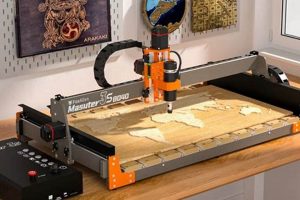
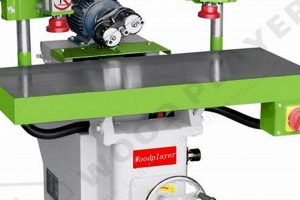
A specialized apparatus used in woodworking replicates existing forms. It guides a cutting tool to precisely mimic the contours of a master template or original workpiece, creating identical copies. For example, this equipment can produce multiple chair legs with uniform shapes based on a single, carefully crafted original.
This technology provides significant advantages in production efficiency, consistency, and accuracy. Its use reduces manual labor, minimizes variations between pieces, and allows for the efficient reproduction of intricate designs. Historically, these devices have evolved from simple hand-operated systems to sophisticated computer-controlled (CNC) versions, expanding their capabilities and precision.
The following sections will delve into the different types of these systems, examining their functionality, applications, and factors to consider when selecting appropriate equipment for specific woodworking tasks.
Tips for Optimizing Replication Workflows
The efficient and accurate utilization of replication equipment in woodworking demands careful attention to detail and adherence to established best practices. Implementing the following tips can significantly enhance productivity and minimize material waste.
Tip 1: Template Precision: The accuracy of the final replicated piece is directly proportional to the precision of the master template. Ensure the template is free of imperfections, accurately represents the desired form, and is securely mounted to prevent movement during the replication process. Inaccuracies in the template will be transferred to each copy.
Tip 2: Cutter Selection: Select a cutter appropriate for the material being worked and the complexity of the design. A smaller diameter cutter may be necessary for intricate details, while a larger cutter can remove material more quickly on simpler shapes. Consider the cutter’s material (e.g., high-speed steel, carbide) and its sharpness for optimal performance and longevity.
Tip 3: Feed Rate Control: Maintain a consistent and appropriate feed rate during the cutting process. Excessive feed rates can lead to inaccurate cuts, material chipping, or damage to the cutter. Conversely, excessively slow feed rates can result in burning or inefficient material removal. Experimentation with scrap material can help determine the optimal feed rate for each project.
Tip 4: Secure Workpiece Clamping: Ensure the workpiece is securely clamped to the replication table to prevent movement or vibration during cutting. Inadequate clamping can result in inaccurate cuts and potential safety hazards. Use clamps that are appropriately sized and positioned to provide uniform pressure without damaging the workpiece.
Tip 5: Regular Maintenance: Perform regular maintenance on the replication equipment, including lubricating moving parts, checking for loose connections, and ensuring the cutter is properly aligned. Preventive maintenance can extend the life of the equipment and ensure consistent performance.
Tip 6: Dust Extraction: Implement a dust extraction system to remove wood shavings and dust generated during the cutting process. Dust accumulation can impair visibility, affect the accuracy of the cut, and pose a health hazard. A dedicated dust collection system is recommended for optimal performance.
Tip 7: Material Considerations: Different wood species and densities will require adjustments to feed rates and cutter selection. Harder woods may require slower feed rates and more robust cutters. Be mindful of the material properties and adjust the replication process accordingly.
Implementing these strategies will lead to improved efficiency, reduced errors, and increased lifespan of both materials and the machine itself.
The subsequent sections will explore specific applications and advanced techniques associated with these replication workflows.
1. Precision

Precision is fundamentally linked to the utility and value of a replication apparatus in woodworking. The core function of the apparatus involves creating near-identical copies of a master template or model. Any deviation from the original design negatively affects the quality and consistency of the replicated pieces. Consequently, the level of precision achievable directly determines the machine’s suitability for applications where uniformity and accuracy are paramount. For example, in furniture making, producing multiple matching chair legs or table components requires a high degree of precision to ensure structural integrity and aesthetic harmony.
The precision of a replication apparatus is influenced by several factors, including the quality of its mechanical components, the stability of its frame, the accuracy of its control systems (in automated models), and the skill of the operator. Mechanical play, vibrations, or inaccuracies in the template-following mechanism can all introduce errors in the replicated piece. Similarly, thermal expansion or contraction of materials during the cutting process can affect dimensional accuracy. High-precision systems employ robust construction, advanced control algorithms, and temperature compensation techniques to minimize these errors. The practical outcome of this accuracy is reflected in the reduced need for manual adjustments, decreased material waste, and faster production times.
In summary, precision is not merely a desirable attribute but a critical functional requirement for a woodworking replication apparatus. The ability to reliably and repeatedly produce accurate copies directly impacts the economic viability and practical application of such technology. Challenges remain in achieving perfect replication, particularly when dealing with complex geometries or variable material properties. However, ongoing advancements in machine design, control systems, and materials science continue to push the boundaries of achievable precision, expanding the range of applications for this essential woodworking tool.
2. Efficiency

Efficiency, in the context of woodworking replication technology, directly translates to the capacity to produce a greater volume of identical pieces within a given timeframe while minimizing resource expenditure. The primary driver behind implementing replication equipment in woodworking is to enhance production efficiency compared to manual crafting methods. A well-designed and properly utilized system significantly reduces the time and labor required to create multiple copies of a design. For instance, a furniture manufacturer can use the technology to quickly produce numerous identical chair spindles, a process that would be labor-intensive and time-consuming if done manually. This increase in throughput has a direct and positive impact on profitability.
Several factors contribute to the overall efficiency of a replication apparatus. These include the speed of the cutting tool, the ease of template setup and changeover, the degree of automation integrated into the process, and the minimization of material waste. A system with a high-speed cutter can reduce the time required for each pass, but only if precision is maintained. Quick template changeover allows for greater flexibility and reduces downtime between production runs. Automated systems can further increase efficiency by reducing the need for constant operator intervention, but require significant programming and maintenance oversight. Minimizing material waste through precise cutting and efficient material usage is crucial, especially when working with expensive hardwoods. An optimized workflow considers each of these factors to maximize efficiency without compromising quality.
In conclusion, efficiency is an indispensable component of woodworking replication technology, driving its adoption across various woodworking industries. The ability to rapidly and accurately reproduce designs translates directly to increased productivity, reduced labor costs, and improved profitability. While challenges remain in optimizing all aspects of the process, continuous advancements in machine design, control systems, and workflow management ensure that efficiency remains a key focus in the development and application of replication systems.
3. Versatility

Versatility, when applied to woodworking replication technology, describes the breadth of applications, materials, and designs that a given apparatus can accommodate. The practical utility of a replication system is directly proportional to its adaptability and capacity to handle diverse woodworking tasks. A limited system restricts potential projects, while a versatile machine expands its user’s creative and productive possibilities.
- Design Complexity
The ability to reproduce intricate designs is a key facet of versatility. Some devices are limited to simple shapes, while others can handle complex carvings, detailed moldings, and three-dimensional forms. Machines with multi-axis control and advanced template-following mechanisms offer greater design freedom. For example, replicating ornate chair backs or decorative architectural elements requires a machine capable of handling intricate details and complex geometries.
- Material Compatibility
Versatile replication equipment can work with a wide range of wood species, from softwoods like pine to hardwoods like oak and maple. The capacity to handle different materials also extends to engineered wood products like plywood and MDF. Each material presents unique cutting challenges, and a versatile apparatus is equipped with adjustable speed, feed rate, and cutter options to optimize performance for each specific wood type. This adaptability allows a woodworker to select the appropriate material for the project without being constrained by the limitations of the replication device.
- Scale of Projects
The size and scale of projects that a replication machine can handle are critical aspects of its versatility. Some systems are designed for small-scale production, such as replicating decorative trim or small furniture components. Others are built to handle larger projects, such as reproducing entire furniture pieces or architectural millwork. The size of the replication table, the travel range of the cutting tool, and the weight capacity of the machine all determine the scale of projects that can be undertaken.
- Interchangeable Templates and Fixtures
A versatile apparatus incorporates user-friendly methods for quick changeovers between templates and workholding fixtures. These facilitate production of dissimilar copies with minimal downtimes, thereby maximizing utility. Fixtures are often constructed in-house to enable highly specialized replications.
The versatility inherent within woodworking replication equipment is fundamental to its adoption across diverse woodworking sectors. As technology progresses, systems exhibit ever-greater adaptability, extending the horizons of design and production capabilities. This continuing evolution enhances the value of such equipment for woodworkers seeking to produce a wide range of high-quality, replicated products efficiently.
4. Automation
The integration of automation into woodworking replication technology represents a significant advancement in production capabilities. It transforms manually operated devices into sophisticated systems capable of producing precise copies with minimal human intervention, increasing efficiency and reducing the need for skilled labor.
- Computer Numerical Control (CNC) Integration
CNC systems utilize pre-programmed instructions to control the movement of the cutting tool, eliminating the need for a human operator to manually guide the replication process. This integration allows for the creation of complex designs with high precision and repeatability. For example, intricate carvings or curved furniture components can be produced with consistent accuracy using CNC-equipped systems. The implications are reduced material waste, faster production cycles, and the ability to handle intricate geometries that are difficult or impossible to replicate manually.
- Automated Template Following
Traditional replication equipment relies on manual template following, where an operator physically guides the cutting tool along the contours of a master template. Automated template following systems employ sensors and servo motors to automatically trace the template, freeing the operator from this repetitive task. This reduces operator fatigue, improves accuracy, and allows for higher production speeds. Automated template following is particularly useful for replicating large quantities of identical parts, such as chair legs or table spindles.
- Robotic Material Handling
Automated material handling systems, such as robotic arms, can be integrated into the replication process to load and unload workpieces, move templates, and perform other material handling tasks. This reduces the need for manual labor, improves efficiency, and minimizes the risk of injury. Robotic material handling is particularly beneficial in high-volume production environments where repetitive tasks can lead to operator fatigue and errors. An example would be a robotic arm placing a wooden blank into the machine and removing the finished product once cutting is complete.
- Automated Tool Changing
Automated tool changing systems automatically switch between different cutting tools during the replication process, allowing for the creation of complex designs with multiple features. This eliminates the need for manual tool changes, reducing downtime and improving efficiency. Automated tool changing is particularly useful for replicating designs with intricate details that require different cutting tools to achieve the desired results. The implication is a more efficient production process and reduced operator involvement.
The incorporation of automation into woodworking replication equipment has revolutionized the industry, enabling manufacturers to produce high-quality, consistent products with increased efficiency and reduced labor costs. These automated systems extend beyond mere duplication; they represent the future of woodworking manufacturing.
5. Materials

The selection and characteristics of materials used in conjunction with a woodworking duplication machine exert a significant influence on the quality, efficiency, and longevity of the replication process. The composition of the original template, the workpiece being replicated, and the cutting tool itself all contribute to the final outcome. A mismatch between these materials can lead to inaccurate cuts, excessive tool wear, or compromised structural integrity of the replicated piece. For instance, attempting to replicate a steel template using a high-speed steel cutter on hardwood can result in rapid cutter degradation and inaccurate reproduction. Similarly, using a template made of a material prone to warping in a high-humidity environment can compromise the accuracy of each subsequent copy.
The hardness, density, and grain structure of the workpiece directly affect the cutting parameters required for optimal replication. Denser hardwoods necessitate slower feed rates and more robust cutters compared to softwoods. The presence of knots or other imperfections in the workpiece can also impact the cutting process, potentially causing chipping or tear-out. Therefore, careful consideration of the workpiece material is essential for selecting the appropriate cutter, feed rate, and cutting depth. For example, replicating a complex molding in walnut requires a sharp carbide cutter and a slow, steady feed rate to prevent splintering and maintain precise detail. Conversely, replicating a simple shape in pine can be accomplished with a less aggressive cutter and a faster feed rate.
In conclusion, the materials used in woodworking duplication are not merely passive elements but active contributors to the replication process. Understanding the properties of the template, workpiece, and cutting tool, and selecting materials that are compatible with each other and the desired outcome, is critical for achieving accurate, efficient, and reliable replication. Furthermore, ongoing research into new materials and cutting tool technologies continues to refine the process and expand the range of materials that can be effectively replicated.
6. Maintenance

Regular maintenance is paramount for ensuring the sustained performance, accuracy, and longevity of woodworking duplication equipment. Neglecting routine upkeep can lead to diminished precision, increased downtime, and potential safety hazards, ultimately impacting productivity and profitability.
- Lubrication of Moving Parts
Consistent lubrication of bearings, slides, and other moving components minimizes friction, reduces wear, and prevents premature failure. Lack of lubrication can result in increased heat generation, leading to dimensional inaccuracies and potential damage to the machine’s structure. For instance, neglecting to lubricate the bearings on the template-following arm can cause erratic movement, resulting in imperfectly replicated pieces. Appropriate lubricants and application frequencies, as specified by the manufacturer, must be strictly adhered to.
- Inspection and Replacement of Cutting Tools
Cutting tools, such as router bits or saw blades, are subject to wear and tear during the replication process. Regular inspection for dullness, chipping, or other damage is crucial for maintaining cut quality and preventing damage to the workpiece. Worn or damaged tools should be replaced promptly to ensure accurate and clean cuts. Failure to do so can lead to splintering, tear-out, and increased material waste. The frequency of inspection and replacement depends on the material being cut, the cutting parameters, and the tool’s quality.
- Calibration and Alignment
Maintaining proper calibration and alignment of the replication machine’s components is essential for ensuring accuracy. Misalignment of the template-following mechanism or the cutting tool can result in dimensional inaccuracies and distortions in the replicated pieces. Routine calibration procedures, as outlined in the manufacturer’s manual, should be performed to correct any deviations. Precise alignment is critical for replicating intricate details and maintaining dimensional consistency across multiple copies. Proper calibration often involves checking and adjusting the axes for squareness, parallelism, and concentricity.
- Cleaning and Dust Removal
The accumulation of wood dust and debris can interfere with the machine’s operation and reduce its lifespan. Regular cleaning of all components, including the template table, the cutting area, and the motor housing, is necessary to prevent dust buildup. In particular, ensure that dust extraction systems are functioning properly to remove airborne particles and prevent them from settling on critical machine parts. Dust accumulation on electrical components can lead to overheating and potential fire hazards.
These maintenance facets are fundamental to the successful operation of woodworking duplication machines. Adhering to a rigorous maintenance schedule minimizes downtime, ensures consistent performance, and extends the lifespan of the equipment, maximizing its return on investment.
7. Safety
Operation of woodworking duplication machines presents several inherent safety risks necessitating strict adherence to established protocols. The high-speed rotation of cutting tools, potential for workpiece ejection, and generation of airborne particulate matter pose tangible threats to operators. Failure to implement appropriate safeguards can result in severe injuries, including lacerations, amputations, and respiratory ailments. Safety, therefore, constitutes an indispensable component of machine operation, influencing equipment design, operational procedures, and operator training. An example is requiring the use of push sticks to maneuver workpieces near the cutting tool, minimizing the risk of hand contact. Another involves installing effective dust collection systems to mitigate respiratory hazards. The absence of these measures elevates the probability of workplace accidents and long-term health problems.
Safety protocols extend beyond the immediate operation of the equipment. Proper machine setup, maintenance, and material handling are equally crucial. Securely clamping workpieces to prevent ejection during cutting is paramount, as is ensuring that all safety guards are in place and functioning correctly. Regular inspection of power cords, switches, and other electrical components is essential to prevent electrical shocks. Furthermore, operators must receive comprehensive training on the machine’s operation, potential hazards, and emergency procedures. A real-world application includes a checklist used before machine startup, confirming the presence of guards, functionality of safety switches, and proper workpiece clamping. These precautions collectively reduce the likelihood of accidents and contribute to a safer working environment.
In summary, the connection between safety and woodworking duplication machines is inextricable. Prioritizing safety through equipment design, operational procedures, and operator training is not merely a regulatory requirement but a moral imperative. Addressing the challenges posed by high-speed cutting tools, material ejection, and airborne particulates requires a multi-faceted approach that encompasses engineering controls, administrative procedures, and personal protective equipment. A comprehensive understanding of these safety considerations is paramount for ensuring the well-being of operators and promoting a safe and productive woodworking environment. Further development of automated safety features represents a promising avenue for mitigating risks associated with these machines.
Frequently Asked Questions About Woodworking Duplicator Machines
This section addresses common inquiries regarding the function, application, and maintenance of woodworking replication equipment, providing informative answers based on industry standards and best practices.
Question 1: What are the primary applications of woodworking duplicator machines?
Woodworking replication equipment primarily serves to reproduce identical copies of wooden components. Common applications include furniture making (chair legs, spindles), architectural millwork (moldings, trim), and instrument manufacturing (guitar necks, components). This equipment streamlines production, ensuring consistency and reducing labor compared to manual methods.
Question 2: What are the key differences between manual and CNC woodworking duplicator machines?
Manual duplication devices rely on an operator to physically guide a cutting tool along a template. CNC (Computer Numerical Control) versions utilize pre-programmed instructions to automate the cutting process. CNC machines offer greater precision, repeatability, and the ability to produce complex designs, while manual machines require skilled operators and are typically suited for simpler tasks.
Question 3: What factors influence the accuracy of a woodworking duplicator machine?
The accuracy of a replication device depends on several factors, including the quality of the machine’s components, the stability of its frame, the precision of its template-following mechanism (or CNC control system), and the skill of the operator (for manual machines). Vibration, material inconsistencies, and improper setup can also negatively impact accuracy.
Question 4: What types of maintenance are essential for woodworking duplicator machines?
Essential maintenance includes regular lubrication of moving parts, inspection and replacement of cutting tools, calibration and alignment of components, and thorough cleaning to remove dust and debris. Following the manufacturer’s recommended maintenance schedule is crucial for preserving the machine’s performance and lifespan.
Question 5: What safety precautions should be observed when operating a woodworking duplicator machine?
Safety precautions include wearing appropriate personal protective equipment (safety glasses, hearing protection, dust mask), ensuring that all safety guards are in place and functioning correctly, securely clamping workpieces to prevent ejection, and receiving adequate training on the machine’s operation and potential hazards. Emergency stop procedures must be clearly understood.
Question 6: What are the primary considerations when selecting a woodworking duplicator machine for a specific application?
Selection considerations should include the size and complexity of the parts to be replicated, the types of materials to be used, the desired level of precision and automation, the available budget, and the space requirements of the machine. Assessing production volume and future needs is also important.
Woodworking duplication equipment offers significant advantages in terms of efficiency and consistency, provided that they are properly maintained and operated. Understanding the key aspects addressed above contributes to informed decision-making regarding the use of this technology.
The subsequent section will address advanced techniques when using woodworking duplicator machines.
Conclusion
The preceding exploration has presented a comprehensive overview of the woodworking duplicator machine, encompassing its function, applications, maintenance, safety protocols, and selection criteria. This technology provides demonstrable benefits in terms of efficiency, consistency, and precision, rendering it an invaluable asset in diverse woodworking sectors. However, maximizing the potential of such apparatus necessitates a thorough understanding of its capabilities, limitations, and the requisite operational parameters.
Continued advancement in machine design, control systems, and materials promises to further refine the replication process and expand its application horizon. Therefore, woodworkers are encouraged to pursue ongoing education and remain abreast of technological developments to effectively leverage this powerful tool and achieve optimal results. Mastering this area of woodworking will bring a lot of advantages, from revenue and skills for woodworkers.