



A piece of furniture crafted from wood, designed to stand adjacent to a seating area, providing a convenient surface for placing items such as lamps, books, or beverages. These furnishings are often characterized by their compact size and stylistic variations, reflecting diverse design aesthetics from traditional to contemporary. For example, a small, square table situated next to a sofa, supporting a reading lamp, exemplifies this type of furniture.
These items enhance the functionality and aesthetic appeal of living spaces. Their presence offers practical convenience while simultaneously contributing to the overall dcor of a room. Throughout history, variations of these tables have served as essential elements in interior design, evolving in form and function to meet changing societal needs and preferences, becoming ubiquitous in homes and public spaces.
The construction and design of such furnishings encompass a wide range of woodworking techniques and material choices. Subsequent sections will explore these aspects in greater detail, examining joinery methods, wood selection criteria, finishing processes, and considerations for design and ergonomics.
Essential Considerations for Woodworking End Table Construction
The successful creation of a durable and aesthetically pleasing furnishing requires careful attention to several key aspects. These tips outline best practices for design, material selection, and construction techniques.
Tip 1: Prioritize Joint Strength: Employ robust joinery methods such as mortise and tenon, dovetails, or reinforced dowel joints to ensure structural integrity. A poorly constructed joint can compromise the table’s stability and longevity.
Tip 2: Select Appropriate Wood Species: Consider the intended use and aesthetic preferences when choosing wood. Hardwoods like maple, oak, or walnut offer superior durability and resistance to wear, while softwoods such as pine may be more suitable for painted finishes or projects prioritizing cost-effectiveness.
Tip 3: Account for Wood Movement: Wood expands and contracts with changes in humidity. Design the piece to accommodate this natural movement, employing techniques such as floating table tops or avoiding the use of screws across the grain.
Tip 4: Implement Precise Measurement and Cutting: Accuracy in measurement and cutting is paramount for achieving tight-fitting joints and a professional finish. Utilize precision measuring tools and sharp cutting instruments to minimize errors.
Tip 5: Apply a Durable Finish: A high-quality finish protects the wood from moisture, scratches, and stains, extending the table’s lifespan. Consider factors such as durability, appearance, and ease of application when selecting a finish. Options include varnish, lacquer, polyurethane, and oil-based finishes.
Tip 6: Sand Thoroughly: Proper sanding is critical for achieving a smooth and even surface prior to finishing. Progress through progressively finer grits of sandpaper, ensuring all scratches and imperfections are removed.
Tip 7: Consider Ergonomics: Design the table’s dimensions to complement the height of surrounding seating. A table that is too high or too low can be uncomfortable to use.
Adhering to these recommendations will contribute to the creation of a functional, durable, and visually appealing furnishing, enhancing the overall value and longevity of the piece.
With these principles in mind, the subsequent sections will delve deeper into specific design choices and construction methodologies relevant to creating a high-quality wooden furnishing.
1. Dimensions

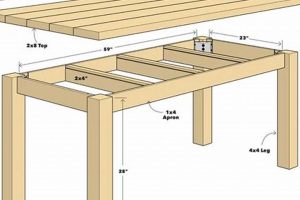
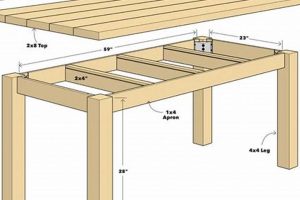
The dimensions of a wooden furnishing are fundamental to its functionality and aesthetic integration within a given space. These measurements directly impact the table’s usability, its visual harmony with surrounding furniture, and its overall suitability for the intended purpose. Careful consideration of these figures is therefore paramount in the design and construction process.
- Height and Seating Proximity
The table’s height must complement the adjacent seating. A surface too low will be inconvenient for reaching items, while one too high will impede comfortable use. Standard heights often range between 20 and 24 inches, but adjustments should be made based on the specific seating configuration. For example, a table positioned beside a high-backed armchair may require a taller profile.
- Surface Area and Functionality
The surface area dictates the table’s capacity for accommodating items. A smaller surface is suitable for minimalist arrangements, holding perhaps a lamp and a beverage. Larger surfaces offer greater versatility, accommodating books, decorative objects, or electronic devices. The intended function, therefore, directly informs the dimensions of the table top.
- Width and Depth Relative to Space
The width and depth of the table must be proportionate to the available floor space. An oversized piece can overwhelm a small room, while an undersized piece may appear insignificant. Consideration should be given to traffic flow and the need to maintain adequate clearance around the table. A narrow design may be necessary in constrained areas.
- Leg Placement and Stability
The placement and dimensions of the table legs influence its stability. A wider leg stance generally provides greater stability, particularly for taller tables or those intended to support heavier objects. Leg thickness also contributes to perceived robustness and visual balance. In contrast, an overly narrow leg structure will impact the physical integrity.
These dimensional considerations collectively determine the success of the piece. A table designed with appropriate height, surface area, and spatial proportions will seamlessly integrate into its environment, providing both functional utility and aesthetic enhancement. Disregard for these factors can result in a piece that is either impractical or visually jarring, undermining its intended purpose.
2. Joinery

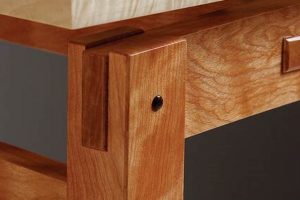
Joinery constitutes a foundational element in the successful creation of a wooden furnishing. The methods employed to connect individual wooden components directly influence the structural integrity, longevity, and aesthetic presentation of the piece. A poorly executed joint will inevitably lead to instability, premature failure, or visual imperfections, thereby diminishing the overall value and utility of the table.
Consider, for instance, a typical design utilizing mortise and tenon joints to secure the legs to the table’s apron. Properly executed, these joints provide a robust connection capable of withstanding significant stress and strain. Conversely, a simplified butt joint, relying solely on fasteners like screws, lacks the inherent strength of a mortise and tenon. Over time, the butt joint may loosen or fail, particularly under repeated loading or changes in environmental conditions. Similarly, dovetail joints, often used in drawer construction for wooden tables, showcase both strength and visual appeal. The interlocking nature of dovetails provides exceptional resistance to pulling forces, ensuring the drawer remains structurally sound over years of use.
Ultimately, the selection and execution of appropriate joinery techniques are critical determinants of the quality and durability of the table. An understanding of the various joinery options available, coupled with meticulous craftsmanship, is essential for producing a wooden furnishing that not only meets functional requirements but also endures the test of time. Improper joinery represents a significant challenge in woodworking, frequently resulting in structural weakness and reduced lifespan. Therefore, a deep understanding of these techniques is vital to producing a quality woodworking end table.
3. Wood Selection

The selection of wood fundamentally dictates the durability, aesthetic appeal, and overall suitability of a woodworking end table. Careful consideration of wood species, grain patterns, and inherent properties is essential for crafting a piece that meets both functional and visual requirements.
- Hardwood vs. Softwood Durability
Hardwoods, such as oak, maple, and walnut, are generally more resistant to dents and scratches compared to softwoods like pine or fir. An end table constructed from hardwood is better suited for high-traffic areas or frequent use, while a softwood table may be appropriate for decorative purposes or situations where wear and tear are less of a concern. For instance, a walnut table top can withstand daily use with minimal marking, while a pine top may require a more protective finish and more careful handling. These attributes make hardness an important consideration.
- Grain Pattern and Aesthetic Impact
The grain pattern of wood contributes significantly to the visual character of the table. Straight-grained woods offer a clean, uniform appearance, while figured woods, such as curly maple or burl walnut, provide a more distinctive and decorative aesthetic. The choice of grain pattern should align with the overall design style of the table and the desired visual impact. A modern end table may benefit from the simplicity of a straight grain, whereas a more traditional piece could be enhanced by the richness of a figured wood.
- Wood Stability and Environmental Factors
Different wood species exhibit varying degrees of stability in response to changes in humidity and temperature. Wood movement can cause warping, cracking, or joint failure in a woodworking end table. Selecting a wood species with low shrinkage and swelling coefficients, such as mahogany or teak, is crucial for ensuring the table’s long-term structural integrity, particularly in environments with fluctuating humidity levels. This factor is especially important for tables intended for use in different climates.
- Workability and Construction Techniques
The ease with which a particular wood can be worked including cutting, shaping, and finishing affects the overall construction process. Some woods are more prone to tear-out during machining, while others may require specialized tools or techniques. Choosing a wood that is compatible with the intended construction methods can significantly impact the efficiency and quality of the woodworking process. Certain intricate designs necessitate the use of wood types that can be worked and manipulated for the tables required structure.
The aforementioned facets highlight the intricate relationship between wood selection and the ultimate success of a woodworking end table. While aesthetic considerations play a significant role, the chosen wood’s physical properties and workability are equally critical for producing a durable, functional, and visually pleasing furnishing. This holistic approach is pivotal in woodworking.
4. Finishing

Finishing is an essential component of crafting a durable and aesthetically pleasing wooden furnishing. The finishing process directly impacts the appearance, protection, and longevity of the piece. A woodworking end table, regardless of its design or construction, is incomplete without a properly applied finish. The finish serves as a protective barrier against moisture, scratches, and UV radiation, elements that can degrade the wood over time. Furthermore, the choice of finish significantly influences the table’s visual characteristics, enhancing the wood’s natural grain, adding color, or providing a specific sheen. An example is the application of a catalyzed varnish to a walnut surface. The catalyzed varnish is known for its durability and resistance to chemicals. This protects the walnut surface.
The selection of a suitable finishing method must consider several factors, including the type of wood, the intended use of the table, and the desired aesthetic. Oil-based finishes, such as linseed or tung oil, penetrate the wood, enhancing its natural color and providing a low-luster finish. These finishes are relatively easy to apply and maintain but offer limited protection against scratches and moisture. Alternatively, film-forming finishes, such as lacquer, varnish, or polyurethane, create a durable surface barrier that offers superior protection. However, these finishes require careful application to avoid runs, drips, or uneven coverage. The process often involves multiple coats, each requiring sanding and surface preparation to achieve a smooth, flawless surface. For example, polyurethane requires multiple coats and sanding, the goal being to prevent moisture and scratches.
In summary, finishing plays a crucial role in the overall quality and lifespan of the wooden furnishing. Selecting the appropriate finishing method and executing it with meticulous attention to detail are essential for protecting the wood, enhancing its beauty, and ensuring the piece can withstand the rigors of daily use. Challenges in finishing often arise from improper surface preparation or the use of incompatible finishing products. Addressing these challenges requires a thorough understanding of wood properties, finishing materials, and application techniques, ultimately contributing to the creation of a high-quality and long-lasting wooden furnishing.
5. Design Style

Design style exerts a fundamental influence on the aesthetic and functional characteristics of a woodworking end table. The chosen design aesthetic dictates the table’s form, materials, and overall visual presentation, impacting its compatibility with the surrounding environment and its suitability for the intended use. The connection between design and the final piece is intertwined.
- Modernism and Minimalist Forms
Modernist design emphasizes clean lines, geometric shapes, and the absence of ornamentation. When applied to a woodworking end table, this translates to simple, unadorned forms, often constructed from light-colored woods such as maple or birch. For example, a table with a square top, straight legs, and a clear finish embodies this aesthetic. The style rejects elaborate detailing in favor of functional elegance, making it suitable for contemporary interiors.
- Traditional Styles and Ornate Detailing
Traditional design encompasses a wide range of historical styles, each with its distinct characteristics. Queen Anne, Victorian, or Arts and Crafts styles often incorporate ornate carvings, intricate inlays, and rich finishes. In the context of an end table, this might involve cabriole legs, decorative aprons, and a dark, polished wood such as mahogany or cherry. These features are designed to evoke a sense of craftsmanship and historical precedent.
- Rustic Aesthetics and Natural Materials
Rustic design prioritizes natural materials, raw textures, and a sense of informality. A rustic end table might feature reclaimed wood, exposed joinery, and a distressed finish. The emphasis is on showcasing the inherent character of the wood, with imperfections and variations embraced as part of the design. Examples might include tables with live edges, visible knots, or a rough-hewn surface, creating a connection to nature.
- Eclectic Design and Mixed Influences
Eclectic design involves combining elements from different styles and periods to create a unique and personalized aesthetic. An eclectic end table might incorporate a modern form with traditional detailing or mix different wood species and finishes. The key is to create a cohesive and harmonious composition, reflecting the individual preferences of the designer or owner. This approach allows for greater flexibility and creative expression.
The interplay between design style and woodworking techniques ultimately determines the success of an end table. The selection of appropriate materials, construction methods, and finishing processes must align with the chosen design aesthetic to create a piece that is both visually appealing and functionally sound. A design aesthetic must consider woodworking capabilities.
6. Ergonomics

Ergonomics, the science of designing and arranging items for efficient and safe use, directly influences the functionality and user experience of a woodworking end table. The dimensions, placement, and features of such a table must align with human body mechanics to minimize strain and maximize convenience. An improperly designed table can lead to discomfort, awkward reaching, and potential physical stress. Thus, ergonomic considerations are not merely aesthetic but are integral to the table’s practical value.
For instance, table height must complement the surrounding seating. A surface too low necessitates excessive bending, while one too high requires awkward reaching. The ideal height facilitates easy placement and retrieval of items, promoting comfort and reducing strain on the back and shoulders. Similarly, the surface area should be adequate for the intended use, avoiding overcrowding and the need for constant repositioning of objects. The edge profile also plays a role; a rounded edge reduces pressure points on forearms, improving comfort during extended use. A table’s positioning relative to seating must allow easy access, preventing users from needing to stretch or twist to reach items. Consider a scenario where a lamp is placed on a poorly positioned table; this may cause glare or require a constant shift in seating position. Examples like these highlight the direct impact of ergonomic design on the user’s physical well-being.
In conclusion, the ergonomic design of a woodworking end table directly affects its functionality, user comfort, and long-term physical health of the user. The principles of ergonomics ensures the table supports rather than hinders natural human movements. Neglecting ergonomic factors can result in an aesthetically pleasing table that is ultimately uncomfortable or impractical to use. An understanding of ergonomics, coupled with skilled craftsmanship, is essential for creating a wooden furnishing that serves its purpose effectively and promotes user well-being.
Frequently Asked Questions
This section addresses common inquiries regarding the construction, design, and maintenance of wooden furnishings. The following questions and answers provide insights into key aspects of these items, aiming to clarify typical concerns and inform purchasing decisions.
Question 1: What wood species are best suited for constructing an enduring end table?
Hardwoods, such as oak, maple, cherry, and walnut, generally offer superior durability and resistance to wear compared to softwoods. These species are better equipped to withstand daily use and potential impacts. However, the optimal choice depends on the desired aesthetic and budget constraints.
Question 2: Which joinery techniques provide the most robust connections in a wooden furnishing?
Mortise and tenon joints, dovetail joints, and properly executed dowel joints offer excellent strength and stability. These methods create mechanical interlocks that resist stress and prevent separation of components. Simple butt joints, relying solely on fasteners, are generally less durable.
Question 3: How does wood movement impact the long-term integrity of a wooden table?
Wood expands and contracts with changes in humidity, potentially causing warping, cracking, or joint failure. Designs must accommodate this movement through techniques such as floating tabletops, expansion gaps, or careful grain orientation. Neglecting wood movement can compromise structural integrity.
Question 4: What factors should be considered when selecting a finish for a woodworking end table?
Durability, appearance, ease of application, and protection against moisture, scratches, and UV radiation are key considerations. Oil-based finishes enhance natural grain but offer limited protection. Film-forming finishes, such as lacquer or polyurethane, provide greater durability but require careful application.
Question 5: What are the ideal dimensions for ensuring ergonomic comfort and functionality?
Table height should complement the surrounding seating, typically ranging from 20 to 24 inches. Surface area should be adequate for the intended use, avoiding overcrowding. Leg placement must provide stability and prevent obstruction of legroom. These dimensions impact ease of use and physical comfort.
Question 6: How can the lifespan of a wooden end table be maximized?
Regular cleaning, proper maintenance of the finish, and avoiding exposure to extreme temperatures or humidity are crucial. Using coasters or placemats to prevent stains and scratches is also recommended. Promptly addressing any structural issues, such as loose joints, can prevent further damage.
These questions provide a basic understanding of key considerations for end tables. Selecting appropriate materials, construction methods, and maintenance practices are crucial for ensuring a durable and aesthetically pleasing piece of furniture. These tables add a degree of organization, utility, and decor.
Subsequent sections delve deeper into specific design and customization options for such furnishings.
Conclusion
This exploration has detailed the core elements involved in the design and construction of a woodworking end table. Key aspects discussed include material selection, joinery techniques, dimensional considerations, finishing processes, design styles, and ergonomic principles. A comprehensive understanding of these factors is paramount for achieving both functional efficacy and aesthetic integration within a given space.
The creation of a wooden furnishing represents a confluence of practical skill and artistic vision. By adhering to sound woodworking practices and prioritizing user-centered design, it is possible to create a piece that not only serves its intended purpose but also endures as a testament to quality craftsmanship. Continued attention to detail and a commitment to sustainable material sourcing will ensure the longevity and value of these furnishings in future generations.
![Best Woodworking Plans Drafting Table [Guide] for Table | Step-by-Step Guides, Tools & Inspiration to Build Beautiful Wooden Decor on a Budget](https://woodfromhome.com/wp-content/uploads/2026/05/th-80-300x200.jpg "Best Woodworking Plans Drafting Table [Guide] for Table Step-by-Step Guides, Tools & Inspiration to Build Beautiful Wooden Decor on a Budget")