



These tools are designed to apply even pressure across a wide surface, ensuring that joined wood pieces are held flush and square during glue-up. Featuring jaws that remain parallel throughout their range of motion, they prevent racking and twisting, which can compromise the integrity of the finished product. For example, when assembling a cabinet door, these tools provide the necessary force to keep the frame square while the glue dries.
The utilization of these tools is critical in achieving professional-quality results in woodworking projects. Their even clamping pressure minimizes gaps and ensures strong, reliable joints, leading to increased durability and aesthetic appeal of the final product. Historically, woodworkers relied on less precise methods of applying pressure, resulting in potential alignment issues. These tools provide greater control and accuracy, saving time and reducing material waste.
The subsequent sections will delve into the specific features that differentiate various models, exploring factors such as clamping force, throat depth, and ease of adjustment. An overview of proper maintenance techniques to maximize the lifespan and performance of these tools will also be discussed.
Optimizing the Use of Clamping Tools
Effective use of clamping tools is paramount for achieving professional-quality woodworking results. The following tips outline best practices for maximizing their performance and ensuring accurate, durable assemblies.
Tip 1: Cleanliness is Crucial: Regularly clean the threaded rods and jaws of the tool. Glue residue and debris can impede smooth operation and reduce clamping force. Use a wire brush or solvent to remove buildup.
Tip 2: Distribute Pressure Evenly: When applying multiple clamps, stagger them along the workpiece. This prevents localized stress and ensures uniform distribution of clamping force across the entire joint.
Tip 3: Utilize Protective Cauls: Employ wooden cauls between the clamp jaws and the workpiece surface. Cauls prevent marring and distribute pressure more evenly, particularly on delicate or uneven surfaces.
Tip 4: Apply Appropriate Clamping Pressure: Avoid overtightening. Excessive force can damage the wood fibers and compromise the joint’s integrity. Aim for firm, even pressure that closes the joint without crushing the material.
Tip 5: Check for Squareness: Before the glue sets, verify that the assembly is square using a reliable square or measuring diagonals. Adjust the clamp positions as needed to correct any deviations.
Tip 6: Maintain Proper Alignment: Ensure that the jaws are aligned parallel to each other and perpendicular to the workpiece surface. Misalignment can introduce racking and twisting, leading to inaccurate joints.
Tip 7: Consider the Wood Species: Different wood species require varying clamping pressures. Softer woods are more susceptible to compression damage and require lighter pressure than hardwoods.
Tip 8: Store Properly: Store the clamps in a clean, dry environment to prevent corrosion and damage. Hanging them or storing them in a designated rack helps to maintain their condition and accessibility.
By adhering to these guidelines, woodworkers can ensure that their clamping procedures contribute to stronger, more accurate, and visually appealing finished projects. Attention to detail in clamping is a hallmark of skilled craftsmanship.
The subsequent section will address common troubleshooting scenarios encountered when using these tools, along with solutions to resolve them effectively.
1. Parallel Jaw Alignment

Parallel jaw alignment is a defining characteristic of this specialized clamping tool and a critical factor influencing the outcome of woodworking projects. The jaws must maintain parallelism throughout the clamping range to apply even pressure across the entire surface being joined. Without this alignment, pressure concentrates on certain areas, potentially resulting in warped joints, uneven glue lines, or compromised structural integrity. Therefore, the precision of this alignment directly affects the quality and durability of the finished piece.
The effect of skewed jaws becomes evident when assembling large panels or frames. If the jaws are not parallel, the applied force can cause the material to bow or twist, even when using multiple clamps. Ensuring proper alignment often involves visually inspecting the tool before use and making minor adjustments to the clamp head or screw mechanism. Some higher-end models incorporate features to automatically maintain jaw parallelism, further simplifying the clamping process. The result is a more consistent and reliable clamping operation, especially vital for precision-oriented woodworking.
In summary, parallel jaw alignment is not merely a feature of these clamps; it is fundamental to their intended purpose. This design element allows for consistent pressure distribution, preventing joint distortion and ensuring the integrity of woodworking assemblies. Ignoring or neglecting jaw alignment can lead to diminished project quality and structural instability. Therefore, a thorough understanding of this aspect is indispensable for woodworkers seeking professional-grade results.
2. Clamping Force Distribution
Clamping force distribution represents a pivotal factor in the effective utilization of these tools, influencing the strength, appearance, and longevity of bonded woodworking joints. The uniformity with which force is applied across the joint surface dictates the success of the glue-up process and the subsequent structural integrity of the finished piece.
- Even Pressure Application
The primary role of these clamps is to distribute force evenly across the joint. This prevents localized stress concentrations that can lead to weakened bonds or material deformation. For example, when edge-gluing boards to create a tabletop, uniform pressure ensures a seamless and robust joint, resisting warping and separation over time.
- Mitigating Cupping and Warping
Uneven force distribution can exacerbate tendencies for wood to cup or warp during glue-up. By maintaining consistent pressure along the entire joint line, these tools help counteract these natural tendencies, resulting in flatter, more stable panels. This is particularly important when working with wider boards or dimensionally unstable wood species.
- Optimizing Glue Line Thickness
Proper clamping force distribution optimizes the glue line thickness within the joint. Excessive pressure can starve the joint of adhesive, while insufficient pressure results in a thick, weak glue line. The ideal is a thin, consistent glue line that maximizes bond strength. These clamps, when properly adjusted, facilitate achieving this optimal glue line.
- Preventing Clamp Marks
Localized pressure from poorly distributed clamping force can leave unsightly marks on the wood surface. The broad, flat jaws of these tools, combined with even pressure application, minimize the risk of clamp marks, preserving the aesthetic appeal of the finished piece. Using cauls in conjunction with the clamps further protects the wood from indentation.
In conclusion, clamping force distribution is inextricably linked to the successful application of these woodworking tools. By ensuring even and controlled pressure, woodworkers can achieve stronger, more durable, and visually appealing joints, underscoring the importance of understanding and optimizing this crucial aspect of the clamping process.
3. Throat Depth Variation
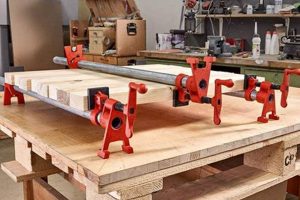
Throat depth, a critical specification of woodworking parallel clamps, denotes the distance between the clamp bar and the clamping face. This measurement dictates the maximum reach of the clamp, influencing its suitability for projects of varying dimensions. Understanding throat depth variation is essential for selecting the appropriate clamps for specific woodworking tasks.
- Accessibility in Panel Assembly
Deeper throat depths facilitate clamping further from the edge of wide panels, crucial for assembling large surfaces like tabletops or cabinet sides. The increased reach ensures even pressure distribution across the entire panel, minimizing warping and ensuring a flush surface. Insufficient throat depth limits the clamp’s effectiveness on wider materials.
- Accommodation of Project Thickness
The throat depth must accommodate the combined thickness of the materials being clamped. Projects involving thicker stock or multiple layers require clamps with greater throat depth to provide sufficient clamping force and maintain stability during glue-up. Selecting clamps with inadequate throat depth may result in unstable setups or an inability to properly secure the workpiece.
- Versatility Across Project Types
A range of throat depths offers versatility across different project types. A collection including both shallow and deep-throated clamps enables woodworkers to adapt to various clamping scenarios, from small boxes and drawers to large casework and furniture. Investing in a diverse set of clamps maximizes their utility and minimizes the need for makeshift clamping solutions.
- Trade-offs Between Depth and Rigidity
While deeper throat depths offer extended reach, they can sometimes compromise clamp rigidity. Clamps with excessively deep throats may exhibit more flex or deflection under load, potentially affecting clamping accuracy. Selecting a balance between throat depth and clamp stiffness is important for maintaining precision and preventing movement during the glue-up process. High quality materials and construction techniques mitigate this trade-off.
Throat depth variation in woodworking parallel clamps directly impacts project scope and execution. Appropriate selection ensures adequate reach, accommodation of material thickness, and overall clamping effectiveness. The interplay between throat depth, clamping force, and clamp rigidity necessitates careful consideration to achieve optimal results in diverse woodworking applications.
4. Durability and Material
The longevity and reliability of woodworking parallel clamps are inextricably linked to the materials used in their construction and the overall robustness of their design. The selection of appropriate materials dictates the clamp’s ability to withstand repeated use, resist deformation under pressure, and maintain accuracy over an extended lifespan. The following points elaborate on key aspects of material selection and their impact on clamp durability.
- Steel Bar Composition
The steel bar forming the backbone of these tools is typically constructed from high-carbon steel or alloy steel. High-carbon steel offers exceptional strength and resistance to bending, crucial for maintaining parallelism under clamping force. Alloy steel further enhances these properties, adding improved toughness and resistance to corrosion. The grade and heat treatment of the steel significantly influence the bar’s load-bearing capacity and resistance to permanent deformation.
- Jaw Construction Materials
Clamp jaws are often made from cast iron, ductile iron, or high-strength polymers. Cast iron provides excellent rigidity and vibration damping, while ductile iron offers increased impact resistance. High-strength polymers are used in some designs to reduce weight and prevent marring of the workpiece. The choice of jaw material impacts the clamp’s ability to grip the wood securely without causing damage and withstand the stresses of repeated clamping.
- Thread Design and Material
The threaded screw mechanism is critical for applying and maintaining clamping pressure. High-quality clamps utilize Acme threads, which provide a larger contact area and reduced friction compared to standard threads. The screw material is typically hardened steel, ensuring resistance to wear and preventing thread stripping under high loads. The thread design and material directly influence the clamp’s clamping force capacity and ease of adjustment.
- Protective Coatings and Finishes
Protective coatings, such as zinc plating, powder coating, or black oxide, are applied to clamp components to resist corrosion and extend their lifespan. These finishes prevent rust and oxidation, which can compromise the structural integrity of the steel and reduce the clamp’s operational smoothness. A durable finish also protects the clamp from environmental factors and minimizes maintenance requirements.
In summation, the durability and long-term performance of woodworking parallel clamps are contingent upon the careful selection of robust materials and the implementation of effective protective measures. High-quality steel bars, durable jaw materials, precision-engineered threads, and protective coatings all contribute to a clamp’s ability to withstand the rigors of woodworking applications, ensuring reliable and accurate performance for years to come. Compromising on material quality inevitably leads to reduced lifespan, diminished clamping force, and potential damage to the workpiece.
5. Ease of Adjustment
Ease of adjustment significantly impacts the efficiency and precision of woodworking operations utilizing parallel clamps. The capacity to rapidly and accurately position and tighten the clamp directly correlates with the time required for glue-up processes and the overall quality of the resulting joint. Clamps that are cumbersome or difficult to adjust can introduce inaccuracies, extend project timelines, and increase the risk of material damage. For example, when assembling a large cabinet carcass, multiple clamps must be quickly and precisely positioned to ensure squareness and proper alignment before the adhesive sets. A clamp with a smooth-operating spindle and easily adjustable jaws allows for rapid corrections and fine-tuning, minimizing the risk of misaligned joints.
Several design features contribute to the ease of adjustment in these clamps. These include quick-release mechanisms, which allow for rapid repositioning of the sliding jaw; ergonomic handles that provide a comfortable and secure grip, enabling efficient tightening; and finely threaded spindles, which facilitate precise application of clamping pressure. Furthermore, some models incorporate features such as thrust bearings to reduce friction and improve the smoothness of spindle rotation. The presence or absence of these features directly affects the user’s ability to manipulate the clamp effectively and efficiently. For instance, a clamp with a sticky or jerky spindle can make it difficult to apply consistent pressure, potentially leading to a weakened joint or distorted workpiece.
Ultimately, the ease of adjustment is not merely a convenience but a critical factor influencing the accuracy and efficiency of woodworking projects. Clamps that offer smooth, precise, and intuitive adjustment capabilities contribute to improved project outcomes, reduced material waste, and enhanced overall productivity. Selecting clamps with attention to these features is an investment in both the quality of the finished product and the efficiency of the woodworking process. While other aspects such as clamping force and throat depth are important, ease of adjustment directly translates into practical benefits on the workshop floor.
Frequently Asked Questions About Woodworking Parallel Clamps
This section addresses common inquiries regarding the selection, use, and maintenance of woodworking parallel clamps. The objective is to provide clear and concise answers based on accepted woodworking practices.
Question 1: What is the primary advantage of woodworking parallel clamps over traditional F-clamps?
Parallel clamps maintain consistent jaw alignment, distributing pressure evenly across the joint surface. This prevents warping and ensures a stronger, more accurate glue-up compared to F-clamps, which are prone to angled pressure.
Question 2: How does one determine the appropriate size of parallel clamps required for a given project?
The clamp length should exceed the maximum dimension of the workpiece being joined. Consider the thickness of any cauls used to protect the wood. It is advisable to have a range of sizes to accommodate various project needs.
Question 3: What is the recommended clamping pressure when using parallel clamps on softwood versus hardwood?
Softwoods require less clamping pressure to avoid crushing the wood fibers. Over-tightening can damage the joint. Hardwoods generally tolerate higher pressure, but excessive force remains detrimental. Aim for firm, even pressure sufficient to close the joint without deforming the material.
Question 4: How frequently should woodworking parallel clamps be cleaned and maintained?
Clamps should be cleaned after each use to remove glue residue and debris. Regularly lubricate the threaded spindle to ensure smooth operation. Inspect the jaws for wear and damage, replacing components as needed. A consistent maintenance schedule prolongs the clamp’s lifespan and performance.
Question 5: What are cauls, and why are they used in conjunction with parallel clamps?
Cauls are protective strips of wood or other material placed between the clamp jaws and the workpiece. They distribute pressure evenly, preventing clamp marks and protecting delicate surfaces. Cauls are particularly useful when clamping irregular shapes or thin materials.
Question 6: Can woodworking parallel clamps be used for purposes other than glue-ups?
While primarily designed for glue-ups, parallel clamps can also be used for temporary workpiece stabilization during assembly, routing, or other machining operations. Ensure the clamp is securely positioned and does not interfere with the intended operation.
Understanding these fundamental aspects of woodworking parallel clamps empowers informed decisions regarding their application and maintenance. Adherence to best practices ensures optimal performance and contributes to the creation of high-quality woodworking projects.
The following section will delve into the comparative analysis of various brands and models, highlighting their strengths and weaknesses to aid in the selection process.
Conclusion
This exposition has detailed critical aspects of woodworking parallel clamps, ranging from jaw alignment and clamping force distribution to throat depth, material durability, and ease of adjustment. Each characteristic significantly impacts the tool’s efficacy in ensuring robust and accurate woodworking joints. Recognizing these elements enables informed selection and optimal application of these tools.
Ultimately, proper utilization of woodworking parallel clamps directly influences project quality and longevity. Continued refinement of clamping techniques, coupled with conscientious maintenance, will undoubtedly contribute to enhanced precision and lasting structural integrity in woodworking endeavors. Consider the information presented to improve your craft and achieve consistently superior results.
![Top-Rated: Best Quick Clamps for Woodworking Projects [2024] | Step-by-Step Guides, Tools & Inspiration to Build Beautiful Wooden Decor on a Budget](https://woodfromhome.com/wp-content/uploads/2026/04/th-264-300x200.jpg "Top-Rated: Best Quick Clamps for Woodworking Projects [2024] Step-by-Step Guides, Tools & Inspiration to Build Beautiful Wooden Decor on a Budget")