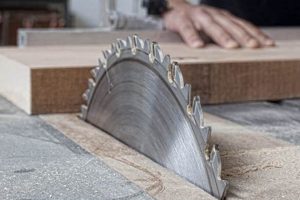
The collection of tools necessary for manipulating the teeth of a saw blade to optimize its cutting performance is a vital element in fine woodworking. This usually involves a specialized instrument to bend the teeth alternately to the left and right, creating a kerf wider than the blade’s thickness. An example would be adjusting a hand saw’s teeth to properly cut through hardwoods without binding.
Properly configured teeth enhance cutting efficiency, reduce friction, and contribute to a cleaner, more accurate cut. Historically, mastery of this process was a crucial skill for carpenters and cabinetmakers, as it allowed them to maintain and customize their blades for specific tasks and wood types. This ensures longevity of the blades and optimum performance on a variety of project.
Understanding the different types of these tools, the techniques for their use, and the factors influencing tooth configuration are essential for any woodworker seeking to achieve professional-quality results. The remainder of this article will delve into these areas, providing a practical guide to selecting, using, and maintaining these essential tools.
Tips on Utilizing Woodworking Saw Setting Devices
Effective use of instruments that prepare saw teeth is crucial for optimal cutting performance. These guidelines promote precision and longevity in woodworking.
Tip 1: Select the Appropriate Tool: Different gauges and designs exist for various saw types and tooth pitches. Using the incorrect device can damage the blade’s temper or tooth geometry.
Tip 2: Understand Tooth Pitch (TPI): The teeth per inch (TPI) dictates the required setting angle. Finer pitches necessitate smaller adjustments to prevent weakening the teeth.
Tip 3: Maintain Consistent Set: Unevenly set teeth lead to erratic cutting and increased friction. Employ a consistent, measured approach for each tooth.
Tip 4: Avoid Over-Setting: Excessive bending weakens the teeth and can cause premature breakage. Small, incremental adjustments are preferable.
Tip 5: Sharpen Before Setting: Sharpening before adjusting tooth configuration ensures clean, defined teeth that are less prone to damage during the setting process.
Tip 6: Use a Saw Vise: Securely clamp the saw blade in a vise to provide a stable platform. This enhances precision and prevents blade flex during the tooth-setting process.
Tip 7: Test and Adjust: After setting, test the saw on scrap material. Observe the cut for straightness and smoothness. Make minor adjustments as needed to optimize performance.
Adhering to these principles improves the efficiency, accuracy, and lifespan of both saw blades and woodworking projects. Mastering tooth configuration is a cornerstone of refined woodworking practice.
The subsequent sections of this article will address the practical applications of these concepts, guiding users through the process of achieving optimal saw performance.
1. Tooth Geometry

Tooth geometry is a fundamental aspect influencing the performance of any hand saw, demanding careful consideration during adjustment. The following facets explore how different elements of tooth form impact cutting efficiency and precision.
- Rake Angle
The rake angle, the angle of the tooth’s cutting face relative to a line perpendicular to the blade, dictates the aggressiveness of the cut. A steeper (more positive) rake angle increases cutting speed but can lead to tear-out, especially in hardwoods. Conversely, a shallower rake angle reduces cutting speed but provides a smoother finish. Selecting the appropriate rake angle for the material being cut is crucial for achieving desired results and preventing damage to the workpiece. For example, saws intended for ripping along the grain typically feature steeper rake angles, while those for crosscutting have shallower angles.
- Fleam Angle
The fleam angle, the angle at which the teeth are filed relative to the saw blade’s plane, influences the saw’s ability to sever wood fibers cleanly. In crosscut saws, the fleam angle creates a knife-like action, slicing the fibers. A larger fleam angle results in more aggressive cutting but can produce a rougher surface. The selection of the appropriate fleam angle directly impacts the quality of the cut and is a critical factor in achieving a smooth, splinter-free finish. Incorrect fleam angles can lead to binding and inefficient cutting.
- Tooth Pitch (TPI)
Tooth pitch, measured in teeth per inch (TPI), determines the fineness of the cut. A higher TPI results in a smoother finish but slower cutting speed, ideal for hardwoods and delicate work. A lower TPI provides faster cutting but leaves a rougher surface, suitable for softwoods and rapid material removal. Matching the TPI to the material and the desired finish is essential for efficient and precise woodworking. For example, fine-toothed saws (high TPI) are preferred for cutting dovetails, while coarser-toothed saws (low TPI) are used for rough framing lumber.
- Gullet Depth and Shape
The gullet, the space between the teeth, serves to remove chips and sawdust from the cut. Insufficient gullet depth can lead to clogging and binding, reducing cutting efficiency. The shape of the gullet also influences chip removal; a rounded gullet promotes smoother flow, while a more angular gullet can accommodate larger chips. Proper gullet design is critical for maintaining consistent cutting performance, particularly when working with dense or resinous woods. Gullets must be appropriately shaped and sized to facilitate effective sawdust removal to prevent the blade from overheating and binding.
The interplay between these facets of tooth geometry underscores the significance of precise saw configuration. Understanding and adjusting each aspect allows woodworkers to optimize their tools for specific tasks, achieving superior results and maximizing efficiency. Ignoring these parameters results in compromised performance and potentially damaged materials.
2. Blade Tension

The relationship between blade tension and a tool set for woodworking is crucial for achieving accurate and efficient cuts. A saw blade that lacks adequate tension is prone to bending and vibration, resulting in inaccurate cuts and increased friction. The tool designed to adjust tooth configuration directly influences the level of tension a blade can effectively maintain. Over-setting or inconsistent placement of teeth can compromise the blade’s structural integrity, leading to a loss of tension over time. Consequently, the blade becomes more susceptible to wandering or binding during use.
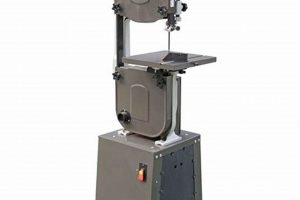
Consider the example of a bandsaw. Proper blade tension, achieved through a calibrated tensioning mechanism, allows the blade to track straight and cut accurately. If the teeth are not properly manipulated, perhaps by inconsistent or overly aggressive setting, the blade may experience uneven stress. This uneven stress can induce fatigue in the blade, causing it to stretch and lose tension prematurely. In hand saws, improper setting can similarly distribute forces unevenly, making it difficult to maintain a straight cutting line even with adequate tension applied by the user. Therefore, the configuration instrument is indirectly but significantly responsible for the blade’s ability to function under tension.
In summary, the appropriate configuration of teeth complements and supports the blade’s capacity to maintain proper tension. Tools that alter the teeth have a direct effect on the stress distribution within the blade, and consequently, influence its long-term ability to operate under tension without deformation or premature failure. Understanding this interplay is vital for ensuring both the longevity and optimal performance of blades across various sawing operations.
3. Kerf Width

Kerf width, defined as the width of the cut produced by a saw blade, is inextricably linked to the tools used to manipulate the teeth of that blade. The configuration instrument employed directly determines the extent to which the teeth are offset from the blade’s body, subsequently influencing the kerf’s dimensions. Maintaining appropriate kerf width is essential for minimizing friction, optimizing cutting efficiency, and achieving precise results in woodworking operations.
- Tooth Set and Kerf
The primary function of the tool is to impart a “set” to the saw teeth, bending them alternately to the left and right. This offset creates a kerf wider than the blade’s thickness, preventing the blade from binding within the cut. The amount of set directly correlates with the kerf width; a greater set produces a wider kerf, while a smaller set yields a narrower kerf. The choice of setting angle must be appropriate for the wood species and the type of cut being performed to prevent excessive material removal or inadequate clearance.
- Impact on Material Waste
Kerf width has a direct impact on the amount of material lost during sawing operations. A wider kerf results in more material being converted to sawdust, reducing the yield from each workpiece. In fine woodworking, where precision and material conservation are paramount, minimizing kerf width is essential. Thin-kerf blades, requiring precise tooth manipulation, are often preferred for delicate tasks such as creating intricate joinery or cutting valuable hardwoods.
- Friction and Cutting Effort
Inadequate kerf width, resulting from insufficient tooth set, leads to increased friction between the blade and the sides of the cut. This friction increases the effort required to push the saw, generates heat, and can cause the blade to deflect, compromising accuracy. The correct configuration instrument ensures an optimal set that minimizes friction while maintaining a stable cut. Oversetting the teeth, conversely, increases the kerf unnecessarily, leading to wasted effort and a rougher cut.
- Saw Design and Kerf Management
Different saw designs, such as rip saws and crosscut saws, require specific kerf widths optimized for their intended purpose. Rip saws, designed to cut along the grain, often have a more aggressive tooth geometry and a wider kerf to efficiently remove material. Crosscut saws, intended to sever wood fibers across the grain, typically have a narrower kerf for a cleaner cut. The precise tool is thus employed to configure the teeth according to the specific demands of each saw type.
In conclusion, careful consideration of the relationship between the tool used to set teeth and kerf width is crucial for optimizing woodworking performance. The configuration instrument is instrumental in achieving a balance between efficient material removal, minimal friction, and precise cutting, ensuring that each saw is appropriately tuned for its specific task.
4. Setting Angle

The setting angle, a critical parameter in saw tooth configuration, directly dictates the performance characteristics of woodworking saws. It represents the degree to which a saw tooth is bent away from the plane of the blade. The woodworking saw set, as a collection of tools, serves the primary function of establishing and maintaining this angle with precision. An inadequate or inconsistent setting angle results in compromised cutting efficiency, increased friction, and reduced accuracy. For example, consider a hand saw used for cutting dovetails. If the teeth are not set at the correct angle, the saw will struggle to track a straight line, leading to sloppy joints and wasted material. The precision of the instrument used to establish this angle is, therefore, paramount for achieving clean, accurate cuts.
The appropriate setting angle varies depending on the type of wood being cut and the saw’s intended purpose. Softer woods require a smaller setting angle to prevent excessive tear-out and maintain a smooth finish. Harder woods necessitate a greater angle to provide adequate clearance and prevent the blade from binding. Similarly, rip saws, designed to cut along the grain, typically require a larger setting angle than crosscut saws, which are designed to sever wood fibers across the grain. The woodworking saw set enables the user to tailor the setting angle to these specific requirements, ensuring that the saw performs optimally for each task. In practice, this means a woodworker may have different sets for different saws, each calibrated for a specific range of materials and cutting styles.
In conclusion, the setting angle is an integral component of saw tooth geometry, and the tool set is the means by which this critical parameter is controlled. While challenges may arise in maintaining consistent angles across all teeth and in selecting the optimal angle for a given application, a thorough understanding of this relationship is fundamental to achieving efficient, accurate, and high-quality results in woodworking. The skillful use of configuration tools, informed by knowledge of materials and cutting techniques, empowers the woodworker to optimize saw performance and produce superior craftsmanship.
5. Tool Calibration
Tool calibration, referring to the process of ensuring that a measuring instrument or tool provides accurate and consistent results, is paramount in the context of maintaining a set for woodworking saws. The precision afforded by a correctly calibrated instrument used to manipulate saw teeth directly impacts the quality of the saw’s cut and the overall efficiency of woodworking operations. Ensuring accuracy in the instruments readings or settings is crucial for achieving consistent and predictable results.
- Accuracy of Setting Angle Adjustment
The accuracy with which a tool can adjust the setting angle of saw teeth is a primary concern. If the device used to bend the teeth is not properly calibrated, the actual angle may deviate from the intended angle. This discrepancy can lead to uneven cutting, increased friction, and a compromised finish. For instance, if a setting tool’s dial indicates a 5-degree set, but the actual set is closer to 7 degrees, the saw may cut aggressively but with a rough edge. Such inaccuracies can significantly reduce the quality of the workpiece, necessitating recalibration or adjustment of the tool.
- Consistency in Tooth Set
Calibration ensures that each tooth within a saw blade is set to the same angle and offset. Inconsistency in tooth set can cause the saw to pull to one side during cutting, resulting in inaccurate cuts and increased effort. A well-calibrated device will deliver uniform pressure and movement, guaranteeing that each tooth receives the same treatment. Examples include measuring the tooth set with a dial indicator or using a standardized gauge to verify the consistency of the set across the entire blade. Any deviation indicates a calibration issue that needs correction.
- Prevention of Tool Damage
A properly calibrated configuration tool is less likely to damage the saw teeth during manipulation. Over-setting or bending teeth beyond their elastic limit can weaken them, leading to premature breakage and reduced saw life. Calibration involves ensuring that the tool applies force evenly and within acceptable limits. Regular inspection and maintenance are essential to detect and rectify any issues that may cause excessive stress on the saw teeth.
- Optimizing Cutting Efficiency
Calibration contributes to optimal cutting efficiency by ensuring that the saw is set up to perform its intended task with minimal effort and maximum precision. The correct setup ensures efficient removal of material with minimal friction and a smooth, accurate cut. Therefore, a device that is not properly calibrated can significantly reduce cutting efficiency, leading to wasted time and effort.
In summation, the importance of calibration within the context of tools for woodworking saws cannot be overstated. Precise and consistent results are contingent upon the proper calibration, emphasizing the necessity of regular inspection and maintenance of the setting tool. Failure to calibrate can negate the benefits of a high-quality saw blade, diminishing its performance and impacting the quality of woodworking projects.
6. Material Compatibility
Material compatibility is a crucial consideration when selecting and utilizing a set for woodworking saws. The hardness, density, and grain structure of the wood being cut necessitate adjustments to tooth configuration, blade selection, and cutting technique. Failure to account for these material properties can result in inefficient cutting, increased tool wear, and compromised workpiece quality. Therefore, matching the woodworking saw and its configuration to the material is essential for optimal results.
- Hardness and Tooth Set
The hardness of a wood species dictates the degree of tooth set required for effective cutting. Hardwoods, such as maple or oak, demand a more pronounced tooth set to create sufficient clearance for the blade to move freely through the dense fibers. Insufficient set leads to binding and increased friction, making the cutting process laborious and inaccurate. Conversely, softwoods, such as pine or fir, require a less aggressive set to prevent excessive tear-out and maintain a smooth finish. The instrument used to manipulate the teeth must be capable of providing fine adjustments to accommodate this range of material hardness.
- Grain Orientation and Tooth Geometry
The orientation of the wood grain significantly impacts the choice of saw type and tooth geometry. Ripping, or cutting along the grain, requires teeth designed to sever the long fibers efficiently. This typically involves a steeper rake angle and a larger gullet to remove the resulting long shavings. Crosscutting, or cutting across the grain, necessitates teeth that slice the fibers cleanly to prevent splintering. This is often achieved with a shallower rake angle and a finer tooth pitch. The tool enables the woodworker to optimize tooth geometry based on the grain orientation of the material, ensuring clean and efficient cuts.
- Resinous Content and Blade Binding
The resinous content of certain woods, such as pine and cedar, can lead to blade binding due to the accumulation of pitch on the saw teeth. This binding increases friction, reduces cutting efficiency, and can even cause the blade to overheat. To mitigate this issue, a wider kerf and a blade designed for pitch removal are often necessary. The process might also need more frequent cleaning and lubrication. Therefore, the ability to adjust tooth set and select appropriate blade coatings is crucial when working with resinous woods, and the configuration instruments must be robust enough to handle blades designed for these conditions.
- Exotic Woods and Specialized Blades
Exotic woods, such as ebony or rosewood, often possess unique properties that demand specialized saw blades and tooth configurations. These woods may be extremely hard, brittle, or contain oils that affect cutting performance. Standard blades may dull quickly or produce unsatisfactory results. In such cases, specialized blades with carbide-tipped teeth or unique tooth geometries are often required. The ability to accurately adjust these specialized blades is essential for achieving clean cuts and preventing damage to the expensive and often irreplaceable material. Thus, high-precision instruments may be required to properly manipulate the teeth of such specialized blades.
In summary, material compatibility is a fundamental consideration when employing tools to adjust teeth of woodworking saws. The optimal tooth configuration, blade selection, and cutting technique are all dictated by the properties of the wood being cut. Therefore, a thorough understanding of these relationships is essential for achieving efficient, accurate, and high-quality results in woodworking.
Frequently Asked Questions
The following section addresses common inquiries regarding tools used to manipulate saw teeth, providing clarity and addressing potential misconceptions.
Question 1: What constitutes a complete “woodworking saw set?”
A complete tooth configuration instrument usually consists of a device for bending teeth, a gauge for measuring tooth set, and potentially a sharpening file. The specific components may vary depending on the type of saw being maintained.
Question 2: How often should the tooth configuration of a saw be adjusted?
The frequency of tooth configuration depends on the type and amount of usage, as well as the hardness of materials being cut. Inspect blades regularly for signs of dulling or inconsistent cutting, and adjust as needed.
Question 3: Can any device be used to manipulate saw teeth?
No. Utilizing inappropriate tools can damage saw teeth and compromise blade integrity. Only implements specifically designed for adjusting saw teeth should be employed.
Question 4: What is the significance of “TPI” (teeth per inch) in relation to tooth adjustment?
TPI influences the amount of set required. Finer pitches (higher TPI) typically require less set, while coarser pitches (lower TPI) often benefit from a more aggressive configuration.
Question 5: Does tooth configuration affect the lifespan of a saw blade?
Yes. Incorrectly set teeth can cause increased friction, heat build-up, and premature wear. Proper adjustment extends blade life.
Question 6: Is there a risk of over-setting saw teeth?
Yes. Excessive bending weakens teeth and can cause breakage. Small, incremental adjustments are preferable to prevent this.
The correct usage of these instruments is essential for realizing the complete potential of a woodworking saw. Proper utilization maximizes cutting efficiency, accuracy, and blade longevity.
The next segment will explore various types of instruments and their selection.
Conclusion
The preceding discussion has explored the multifaceted nature of woodworking saw set. From its fundamental role in shaping tooth geometry and managing kerf width to its less obvious influence on blade tension and material compatibility, its mastery emerges as central to woodworking practice. Furthermore, the critical importance of proper tool calibration and understanding setting angles were underscored. Without careful attention to these interconnected elements, achieving precision and efficiency in sawing operations is demonstrably compromised.
Therefore, sustained proficiency in manipulating teeth with this tool demands a commitment to continuous learning and meticulous execution. Woodworkers are encouraged to adopt a deliberate approach, consistently evaluating and refining their techniques to fully harness the potential of their tools and materials. Through thoughtful practice, one can unlock not only enhanced cutting performance but also a deeper appreciation for the craft itself.