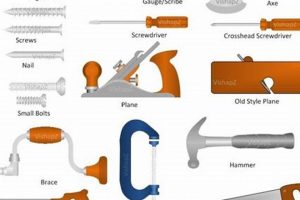
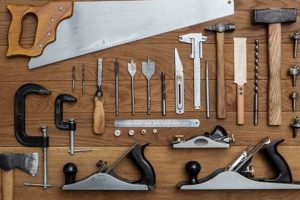
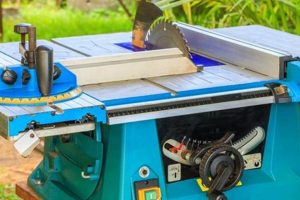
The topic at hand concerns specialized implements that augment the efficacy and precision of woodworking projects. These are instruments frequently overlooked by both novice and experienced woodworkers but can significantly improve the quality and efficiency of their work. Examples range from specialized measuring tools to aids for clamping and material handling.
The acquisition and utilization of such implements offer multiple advantages. They can lead to more accurate cuts, sturdier joinery, and safer working conditions. Historically, woodworking relied on a limited set of core tools; however, advancements in technology and design have introduced specialized tools that address specific challenges and improve the overall workflow.
The subsequent sections will delve into a variety of these less commonly known, yet valuable, tools, outlining their specific functions and demonstrating how they can enhance the woodworking process.
Enhancing Woodworking Projects
This section provides practical advice on leveraging underutilized implements to improve woodworking outcomes. These techniques focus on precision, efficiency, and enhanced project quality.
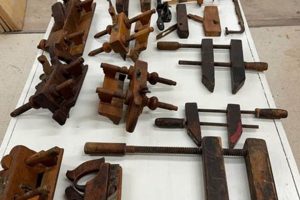
Tip 1: Employ Precision Marking Gauges. These tools facilitate accurate and repeatable marking for joinery, surpassing the accuracy of traditional rulers. A wheel marking gauge ensures consistent lines, critical for tight-fitting joints.
Tip 2: Utilize a Drum Sander for Fine Smoothing. A drum sander enables uniform thicknessing and smoothing of small or delicate parts, especially useful for projects involving intricate inlays or detailed work.
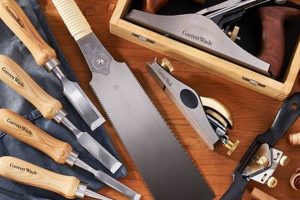
Tip 3: Invest in a Quality Card Scraper Set. Card scrapers offer superior control and finish compared to sandpaper for certain hardwoods. Mastering their use results in exceptionally smooth surfaces without sanding dust.
Tip 4: Incorporate a Digital Angle Finder. This tool provides precise angle measurements for complex miters and bevels, eliminating guesswork and improving the accuracy of angled cuts.
Tip 5: Acquire Specialized Clamps for Unique Shapes. Clamps designed for specific shapes, such as pipe clamps or band clamps, provide even pressure distribution when assembling irregular forms, minimizing gaps and ensuring strong bonds.
Tip 6: Leverage Bench Cookies for Finishing. These non-slip pads elevate workpieces during finishing, preventing sticking and allowing for even coating application on all surfaces.
Tip 7: Consider a Domino Joiner for Mortise and Tenon Alternatives. This tool creates precise, strong mortise and tenon joints quickly, suitable for projects requiring significant structural integrity.
By incorporating these techniques, woodworkers can elevate the precision, efficiency, and overall quality of their projects. These tools represent investments in skill enhancement and project outcomes.
The following sections will further explore specific tool categories and their application within diverse woodworking contexts.
1. Precision Enhancement

Precision enhancement in woodworking refers to the degree to which measurements, cuts, joinery, and overall construction adhere to specified dimensions and angles. Specialized tools, often overlooked in standard woodworking practices, are integral to achieving superior precision and minimizing errors. Their adoption translates to projects with tighter tolerances and improved structural integrity.
- Micro-Adjustable Fences for Table Saws
Traditional table saw fences, while functional, often lack the fine-tuning capabilities required for highly precise cuts. Micro-adjustable fences allow for incremental adjustments, enabling woodworkers to achieve exact dimensions, particularly critical for joinery components like tenons and rabbets. For instance, shimming a tenon can be eliminated, or the precision of a cut can be improved by very small increments, leading to a tight fit.
- Digital Angle Finders and Protractors
Conventional protractors and angle finders are prone to parallax error and subjective interpretation. Digital angle finders provide precise, unambiguous angular measurements, ensuring accurate miter cuts, bevels, and other angled joinery. In applications like creating segmented bowls or complex architectural moldings, achieving consistent and accurate angles is paramount, and these tools reduce errors.
- High-Resolution Measuring Tools
Standard measuring tapes and rulers have inherent limitations in resolution and accuracy. Tools such as dial calipers and digital scales offer significantly higher resolution, allowing for measurements to within fractions of a millimeter or thousandths of an inch. When crafting intricate inlays, ensuring each component is precisely sized is crucial for a seamless fit, something high-resolution tools facilitate.
- Precision Marking Gauges
Traditional marking gauges can shift during use, leading to inaccurate lines. Wheel marking gauges, with their hardened steel wheels and fine adjustment mechanisms, provide consistent and repeatable marking for joinery lines, dovetails, and other critical layout tasks. The wheel’s design prevents it from following the grain of the wood, resulting in consistently accurate marks, leading to enhanced accuracy in joinery.
These examples illustrate how the integration of specialized tools directly addresses limitations in conventional woodworking practices, leading to significant improvements in precision and ultimately enhancing the quality and structural integrity of finished projects. These tools, though perhaps initially perceived as unnecessary, represent an investment in accuracy and the reduction of rework due to errors.
2. Efficiency Amplification

Efficiency amplification in woodworking refers to the measurable increase in productivity achieved through the strategic application of specialized tools and techniques. The integration of instruments not traditionally considered essential contributes substantially to this enhancement. This relationship is causal: the adoption of appropriate, albeit unconventional, implements directly reduces the time and effort required to complete woodworking tasks. This component of “woodworking tools you didn’t know you needed” highlights the importance of streamlining processes.
For example, consider the implementation of self-centering doweling jigs. Traditional doweling methods often involve painstaking measurement and alignment, resulting in inconsistencies and wasted material. Self-centering jigs, however, automate this process, ensuring precise dowel placement with minimal effort. Similarly, power carving tools offer a significant increase in material removal speed compared to hand tools, allowing for rapid shaping and detailing in carving projects. These tools diminish the dependency on hand-based labor for efficient execution. Vacuum clamping systems represent another effective means to streamline project workflow through holding intricate or fragile parts securely in place. The resulting accuracy and stability enhances routing, sanding and assembly procedures, while ensuring the work is completed with higher precision and in a shorter timeframe.
In conclusion, efficiency amplification is a crucial benefit derived from embracing less common woodworking implements. While the initial investment in these tools may be perceived as a cost, the long-term gains in productivity, reduced material waste, and improved project turnaround times represent a significant return. Overcoming the inertia of traditional methods and exploring these tools promotes a more efficient and profitable woodworking practice. A better quality and efficiency are the true purposes of “woodworking tools you didn’t know you needed”.
3. Versatility Expansion

Versatility expansion, in the context of woodworking, represents the augmented range of tasks a woodworker can perform effectively through the acquisition and skillful application of specialized or multi-functional tools. These tools, often falling outside the purview of standard woodworking kits, enable the completion of diverse project types and the execution of intricate techniques previously unattainable with conventional implements. The lack of such tools inherently restricts the scope of potential projects and the complexity of designs that can be realistically undertaken.
For instance, the acquisition of a CNC router expands a woodworker’s capabilities from primarily subtractive methods (sawing, planing, chiseling) to include precise, computer-controlled carving, engraving, and even the creation of complex 3D shapes. Similarly, a well-equipped metal lathe, though not a typical woodworking tool, allows for the fabrication of custom hardware components (e.g., pulls, hinges, threaded inserts) that can significantly enhance the design and functionality of wooden furniture. The ability to create custom hardware components from diverse materials can be a substantial enhancement to a wooden product. This expansion of skill and capability directly correlates to increased project variety and a broadened creative potential.
In essence, versatility expansion is a core component of a strategic approach to woodworking. By embracing these instruments, woodworkers overcome limitations imposed by traditional toolsets, enabling them to tackle diverse projects and explore innovative designs. This strategic tool selection contributes to professional growth and adaptability in a constantly evolving field. The understanding and application of “woodworking tools you didn’t know you needed” can significantly unlock opportunities for diversification.
4. Problem Solving

Problem-solving in woodworking often necessitates the utilization of specialized implements to overcome specific challenges that arise during the construction process. These tools, frequently absent from standard woodworking collections, address inefficiencies, precision deficits, and material-specific difficulties encountered in the field.
- Addressing Tear-Out on Difficult Grains
Certain wood species, characterized by interlocked or highly figured grains, exhibit a propensity for tear-out during planing or routing operations. Specialized high-angle planes or scrapers, often not included in basic toolsets, are designed to mitigate this issue. The increased cutting angle reduces the likelihood of the grain lifting, resulting in a smoother surface finish. The application of these instruments directly addresses a common problem encountered when working with challenging wood types, therefore achieving a refined finish.
- Extracting Broken Fasteners
The shearing or stripping of screws and bolts is a frequent occurrence in woodworking projects. Standard extraction methods can damage surrounding material. Dedicated screw extractors, designed with reverse threads, provide a controlled means of removing damaged fasteners without compromising the integrity of the workpiece. This capability is particularly crucial in delicate or structurally significant areas where damage would be detrimental to the project’s stability or appearance.
- Achieving Precise Mortise and Tenon Alignment in Complex Assemblies
Assembling projects with multiple mortise and tenon joints demands accurate alignment to prevent racking or structural weakness. Specialized clamping systems and alignment jigs facilitate precise positioning during glue-up, ensuring that all joints are properly seated and aligned. This is particularly vital in large-scale furniture construction where cumulative errors can compromise the overall integrity of the structure.
- Mitigating Glue Squeeze-Out in Confined Spaces
Glue squeeze-out, particularly in intricate joinery, can be challenging to remove without damaging surrounding surfaces. Specialized glue scrapers, featuring thin, flexible blades and angled profiles, allow for precise removal of excess adhesive in tight corners and crevices. This avoids unnecessary sanding or refinishing, preserving the integrity of the workpiece and streamlining the finishing process.
The aforementioned tools demonstrate how the strategic application of specialized implements directly addresses common problems encountered in woodworking. The acquisition and proficient utilization of these implements reduces wasted time, material, and effort, ultimately contributing to more efficient and successful project outcomes. Mastering the art of resolving the issues in woodworking with “woodworking tools you didn’t know you needed” represents a tangible investment in professional skill and production standards.
5. Quality Improvement

Quality improvement in woodworking is directly linked to the application of specialized implements that address limitations inherent in traditional methods. These tools, often absent from standard woodworking arsenals, facilitate superior precision, smoother finishes, and enhanced structural integrity, collectively contributing to projects of elevated quality.
- Superior Surface Finishing with Card Scrapers
Conventional sanding methods, while effective to a degree, can leave swirl marks and uneven surfaces, particularly on hardwoods with complex grain patterns. Card scrapers, when properly sharpened and used, produce exceptionally smooth surfaces free from sanding dust and imperfections. The use of card scrapers provides a finish that sanding alone cannot replicate, resulting in a tangible improvement in surface quality. Skilled artisans understand the impact of high-quality woodworking tools for the smoothness of woodworking.
- Enhanced Joinery Precision with Specialized Jigs
Loose or poorly fitted joinery compromises the structural integrity and aesthetic appeal of woodworking projects. Dovetail jigs, mortise and tenon jigs, and other specialized joinery tools ensure accurate and repeatable cuts, resulting in tight-fitting, structurally sound joints. The consistent precision afforded by these tools minimizes gaps and ensures long-term durability, markedly enhancing the overall quality of the finished piece.
- Precise Replication and Consistency with Templates
Replicating complex shapes or creating multiple identical components requires precision that is difficult to achieve with freehand methods. Templates, combined with routers or other shaping tools, allow for consistent replication of intricate designs. This is particularly useful in furniture making or cabinet construction where uniformity is essential for a professional-grade appearance. The accuracy in repetition boosts the woodworking quality.
- Optimized Finishing Application with Spray Systems
Hand-applied finishes, such as brushing or wiping, can result in uneven coatings, brush marks, or inconsistencies in color. Spray finishing systems, including HVLP (High Volume Low Pressure) sprayers, provide a consistent, even application of finish, minimizing imperfections and enhancing the overall appearance of the project. The improved uniformity and control offered by spray systems contribute significantly to a high-quality finish.
The examples provided illustrate how the adoption of specialized tools directly influences the quality of woodworking projects. The improvements in surface finish, joinery precision, replication accuracy, and finish application are all tangible benefits derived from incorporating less conventional implements into the woodworking process. Embracing these tools allows for the realization of higher standards of craftsmanship and enhances the longevity and aesthetic appeal of finished projects. “Woodworking tools you didn’t know you needed” for your collection can affect your woodwork projects.
6. Ergonomic Benefits

The intersection of ergonomic design and woodworking implements represents a significant, yet often overlooked, aspect of professional practice. The selection and integration of tools prioritizing user comfort and biomechanical efficiency directly mitigate the risk of musculoskeletal disorders and enhance long-term productivity. The following elucidates specific facets of this relationship.
- Vibration Reduction in Power Tools
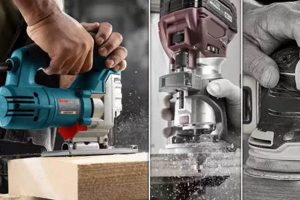
Prolonged exposure to vibration from power tools such as sanders and routers can induce hand-arm vibration syndrome (HAVS), a debilitating condition affecting nerves, blood vessels, and joints. Modern power tools incorporating vibration dampening technology significantly reduce the transmission of these vibrations, minimizing the risk of HAVS and allowing for extended periods of use without compromising user health. Examples include sanders with counter-balancing mechanisms and routers with rubberized grips designed to absorb vibrations. These tools represent proactive investments in worker well-being.
- Optimized Grip Design for Hand Tools
The repetitive motions involved in using hand tools, such as chisels, planes, and saws, can strain the muscles and tendons of the hand and wrist, leading to conditions like carpal tunnel syndrome. Hand tools with ergonomically designed handles, featuring contoured grips and non-slip surfaces, promote a more natural and comfortable hand position, reducing strain and improving control. Examples include chisels with cushioned handles and saws with pistol-grip designs. An optimized grip reduces strain and improves control.
- Adjustable Work Surfaces and Support Systems
Maintaining awkward postures for extended periods while working on large or irregularly shaped projects can lead to back pain and fatigue. Adjustable-height workbenches and specialized support systems, such as roller stands and outfeed tables, allow woodworkers to maintain a comfortable and neutral body posture, reducing strain on the back, neck, and shoulders. An adjustable and leveled work surface is the key to success.
- Lightweight Tool Construction
The weight of tools, particularly power tools, can contribute significantly to user fatigue and muscle strain. Lightweight tools, constructed from materials such as aluminum and composite plastics, reduce the physical demands of woodworking tasks, allowing for longer periods of use with less exertion. Examples include cordless drills with lithium-ion batteries and hand planes with aluminum bodies. This feature improves safety and provides control.
The discussed facets exemplify how a conscious focus on ergonomic design in tool selection directly translates to improved worker health, reduced risk of injury, and enhanced productivity. The proactive integration of these “woodworking tools you didn’t know you needed,” from a health and safety perspective, represents a strategic investment in the long-term well-being and professional longevity of woodworkers.
Frequently Asked Questions
The following addresses common inquiries regarding specialized woodworking implements that augment project outcomes and overall efficiency, often remaining outside standard tool inventories.
Question 1: What constitutes a “woodworking tool you didn’t know you needed,” and how does it differ from a standard tool?
A “woodworking tool you didn’t know you needed” refers to a specialized implement designed to address specific woodworking challenges or enhance particular techniques. These tools often fall outside the scope of basic woodworking kits, offering solutions for precision, efficiency, or unique project requirements not adequately met by conventional tools.
Question 2: How does investment in specialized woodworking tools translate into tangible benefits for woodworking projects?
Investment in specialized tools yields a multitude of tangible benefits, including enhanced precision in measurements and cuts, smoother surface finishes, tighter and more durable joinery, increased efficiency in specific tasks, and a reduction in material waste. The tools also facilitate the execution of complex designs and techniques previously unattainable with standard tools.
Question 3: What are some examples of woodworking tools commonly overlooked but valuable for quality project outcomes?
Examples of often-overlooked yet valuable tools include precision marking gauges, card scrapers, digital angle finders, self-centering doweling jigs, drum sanders, and specialized clamps designed for unique shapes. These tools address specific limitations in conventional woodworking methods, leading to improved results.
Question 4: How does the utilization of ergonomic woodworking tools contribute to the well-being and productivity of woodworkers?
Ergonomic tools, designed with user comfort and biomechanical efficiency in mind, reduce strain and fatigue during woodworking tasks. Features such as vibration dampening, optimized grip designs, adjustable work surfaces, and lightweight construction minimize the risk of musculoskeletal disorders, ultimately enhancing productivity and promoting long-term well-being.
Question 5: How does the expansion of a woodworking tool collection to include specialized items contribute to project versatility?
Expanding a tool collection with specialized implements broadens the range of projects a woodworker can undertake. Tools such as CNC routers, metal lathes, and specialized carving tools enable the execution of intricate designs, complex joinery, and the incorporation of diverse materials, thereby increasing project versatility.
Question 6: What factors should be considered when selecting specialized woodworking tools to ensure optimal value and utility?
When selecting specialized tools, consider the specific needs of your projects, the quality and durability of the tool, the ergonomics of the design, and the availability of replacement parts and support. Prioritize tools that address recurring challenges or significantly enhance your capabilities, ensuring a worthwhile investment in your woodworking practice.
In conclusion, the strategic acquisition of specialized woodworking implements can significantly enhance project outcomes, improve efficiency, and promote user well-being. Careful consideration of individual needs and project requirements will ensure the selection of tools that provide optimal value and utility.
The subsequent section will provide a comprehensive guide to selecting and maintaining specialized woodworking tools.
Conclusion
The exploration of woodworking tools frequently overlooked has revealed their significance in enhancing precision, efficiency, versatility, problem-solving capabilities, quality, and ergonomic benefits within woodworking endeavors. Each category examined underscores the value of integrating specialized implements beyond the standard toolset.
A continuous evaluation of available tools and techniques remains essential for woodworking professionals and hobbyists. Embracing appropriate advancements ensures sustained growth in skill and the consistent delivery of high-quality finished products. The strategic acquisition and application of woodworking tools one didn’t know were needed should be viewed as an investment in long-term success and professional development.