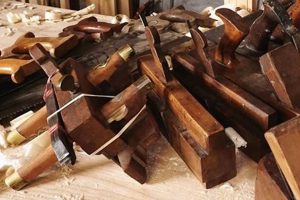
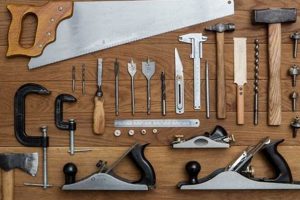
Tools for woodworking available at lower price points enable individuals to engage in the craft without substantial upfront financial investment. These implements, often sourced from entry-level brands or purchased used, provide functionality necessary for various woodworking tasks. An example is a hand plane priced significantly lower than professional-grade models, still capable of achieving acceptable surface finishing.
Accessible equipment broadens participation in woodworking, fostering creativity and skill development across a wider demographic. Historically, woodworking was often limited to those with access to expensive tools. The availability of more economical options has democratized the craft, allowing more people to explore its potential and contribute to its traditions. This has a positive impact on independent projects.
The following sections will delve into specific types of equipment and considerations for acquiring them, focusing on optimizing value and ensuring functionality for beginning and intermediate woodworking endeavors. Topics will include selecting essential hand tools, power tool alternatives, and maintenance strategies for long-term use.
Guidance for Economical Woodworking Equipment
The following recommendations offer a strategic approach to acquiring equipment without exceeding financial constraints, while maintaining acceptable levels of performance and longevity.
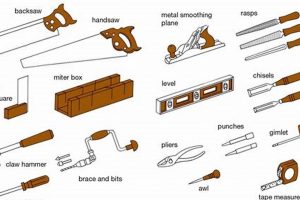
Tip 1: Prioritize Essential Hand Tools: Begin with a core set of hand tools, such as chisels, a hand saw, measuring tools (square, ruler), and a marking gauge. These tools are fundamental to many woodworking operations and can be acquired at reasonable prices.
Tip 2: Consider Used Equipment: Explore the used market for power tools and larger equipment. Well-maintained used tools can offer significant cost savings compared to purchasing new items. Inspect any used equipment thoroughly before purchase.
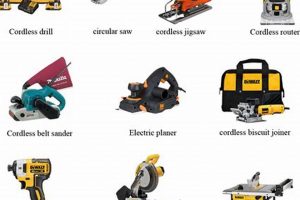
Tip 3: Opt for Corded Power Tools: Corded power tools generally provide more power for the initial investment compared to their cordless counterparts. For workshop-based tasks, corded tools offer a reliable and cost-effective solution.
Tip 4: Choose Refurbished Tools: Several retailers offer refurbished tools with warranties. Refurbished tools undergo inspection and repair, presenting a more reliable alternative to purchasing used items from individual sellers.
Tip 5: Invest in Quality Sharpening Equipment: Sharp tools are safer and more efficient. Investing in sharpening stones or a sharpening system ensures that existing tools maintain optimal performance, reducing the need for frequent replacements.
Tip 6: Consider Tool Rental: For infrequent tasks requiring specialized tools, consider renting instead of purchasing. Tool rental provides access to expensive equipment without the long-term financial commitment.
Tip 7: Research Before Purchasing: Thoroughly research brands and models before committing to a purchase. Read reviews and compare specifications to ensure that the chosen equipment meets specific woodworking needs.
A strategic approach to acquiring tools, prioritizing essential items, exploring the used market, and maintaining existing equipment, enables effective woodworking within financial parameters. These guidelines allow individuals to build a functional workshop without compromising on safety or project quality.
The subsequent section will discuss strategies for maintaining economical equipment, maximizing its lifespan, and achieving consistent woodworking results.
1. Initial Cost

The initial cost represents a primary factor in the accessibility of woodworking as a craft. For individuals with limited financial resources, the price point of tools directly dictates the feasibility of engaging in woodworking activities. Therefore, understanding the components that influence initial cost is critical for making informed decisions.
- Material Quality and Manufacturing Processes
The materials used in tool construction and the complexity of the manufacturing process significantly impact the purchase price. Tools constructed from high-grade steel, utilizing advanced forging techniques, generally command a premium. Alternatives using less expensive materials or streamlined production methods reduce costs but may compromise durability and precision.
- Brand Reputation and Marketing
Established brands with a history of quality often command higher prices due to their reputation and associated marketing expenditures. While brand recognition can indicate reliability, lesser-known brands may offer comparable functionality at a lower initial investment, particularly when targeting the entry-level woodworking market.
- Feature Set and Complexity
The inclusion of advanced features or complex designs directly influences production costs. Tools designed for specialized applications or boasting multiple adjustable settings will typically be more expensive than simpler, more basic models. Determining the essential features required for specific woodworking projects is crucial to avoid unnecessary expenditure.
- Distribution Channels and Retailer Markups
The distribution channel through which tools are sold impacts the final price. Tools purchased directly from manufacturers or through online retailers may be more competitively priced compared to those acquired from traditional brick-and-mortar stores, which often incorporate higher overhead costs into their retail markups.
Understanding the interplay of these factors allows prospective woodworkers to navigate the market effectively. By prioritizing essential features, considering alternative brands, and exploring various distribution channels, it becomes possible to acquire functional equipment that aligns with budgetary constraints, enabling entry into woodworking without substantial financial burden.
2. Tool Quality

Tool quality, within the context of economical woodworking equipment, represents a critical determinant of both project success and long-term cost-effectiveness. The inherent tension lies in balancing affordability with the necessary performance attributes to execute woodworking tasks accurately and safely. Compromising excessively on implement quality can lead to inaccurate cuts, material waste, and, in some instances, hazardous working conditions. Conversely, overspending on tools that provide capabilities beyond current skill levels or project needs can be a misallocation of resources. An example of this balance is found in the selection of chisels; a set of inexpensive chisels, properly sharpened and maintained, can initially perform many of the same tasks as a high-end set, albeit with a potentially shorter lifespan and a greater need for frequent sharpening.
The relationship between tool quality and financial constraints necessitates a strategic evaluation of specific tool requirements. Woodworkers must consider factors such as the types of wood they intend to work with, the complexity of their projects, and the frequency of tool use. For instance, individuals primarily working with softwoods and undertaking simple projects may find that entry-level equipment suffices. However, those working with hardwoods or pursuing intricate designs may require tools with greater precision and durability, justifying a higher initial investment. Regular sharpening and maintenance can extend the life of cheaper tools, thus affecting the frequency of tool replacement. These factors can reduce long-term spending on equipment.
In summary, the successful acquisition of budget-friendly woodworking tools hinges on a nuanced understanding of the interplay between initial cost and long-term performance. A balanced approach, prioritizing essential features and considering the trade-offs between cost and quality, enables woodworkers to equip their workshops efficiently. Furthermore, the understanding that proper maintenance and sharpening are integral parts of maximizing the lifespan of inexpensive items is crucial. The pursuit of financial savings should never compromise safety or the ability to achieve acceptable project outcomes.
3. Maintenance Needs

Maintenance needs constitute a critical factor when considering the acquisition of economical woodworking equipment. The long-term cost-effectiveness of tools is significantly influenced by the frequency and complexity of required maintenance procedures. Instruments initially offered at lower price points may necessitate more frequent upkeep, potentially offsetting initial savings.
- Sharpening Requirements
Cutting tools, such as chisels, planes, and saws, demand periodic sharpening to maintain optimal performance. Economical tools may utilize steel alloys that dull more rapidly compared to premium-grade counterparts, thereby increasing the frequency of sharpening. Investment in sharpening equipment and the time dedicated to honing edges represent ongoing maintenance costs associated with such tools. As an example, a less expensive plane iron may require sharpening after a shorter period of use than a more expensive, high-carbon steel one. The result is the expenditure of time and materials.
- Calibration and Adjustment
Power tools, including saws and sanders, may require periodic calibration and adjustment to ensure accurate operation. Lower-priced instruments may exhibit looser tolerances or utilize less robust components, resulting in a greater need for calibration. The lack of precision leads to material waste. The process could involve recalibrating fences, adjusting blade parallelism, or tightening loose components. Failure to address these issues can compromise project quality and safety.
- Lubrication and Cleaning
Mechanical components within woodworking tools, such as bearings, gears, and threaded fasteners, necessitate regular lubrication and cleaning to prevent corrosion and ensure smooth operation. Tools acquired at lower price points may employ less effective seals or utilize materials more susceptible to corrosion, thereby increasing the frequency of lubrication and cleaning intervals. Neglecting these procedures can lead to premature wear and reduced tool lifespan.
- Component Replacement
Wear and tear inevitably lead to component failure, regardless of tool quality. Economical tools may utilize less durable components, increasing the likelihood of replacement. Belts, brushes, bearings, and switches represent examples of components prone to failure. The availability and cost of replacement parts are critical considerations. Difficulty in sourcing replacement parts or high prices can render tool repair economically infeasible, necessitating complete tool replacement.
These maintenance considerations are essential in evaluating the true cost of economical woodworking tools. Prospective purchasers must factor in the cost of required maintenance supplies, the time investment for performing maintenance tasks, and the potential expense of component replacement. A comprehensive assessment of maintenance requirements allows for a more informed decision-making process, ensuring that acquired tools align with both financial constraints and project demands.
4. Versatility
Versatility, within the scope of economical woodworking equipment, defines the range of tasks a tool can effectively perform. In situations where financial resources are restricted, prioritizing tools capable of executing diverse operations becomes paramount. This approach maximizes the utility of each acquisition, enabling a broader spectrum of woodworking projects without necessitating a large upfront investment.
- Multi-Function Hand Tools
Certain hand tools, by design, can accomplish various tasks. A spokeshave, for instance, can shape curved surfaces, chamfer edges, and perform light carving. A block plane, with appropriate adjustments, can smooth surfaces and trim end grain. Selecting tools that inherently offer multiple functions reduces the need for specialized equipment, optimizing resource allocation. Prioritization of tools with broad applicability expands project possibilities without increasing expenses.
- Adaptable Power Tool Platforms
Some power tool brands offer modular systems where a single powerhead can accommodate different attachments, such as a drill, a saw, or a sander. While the initial cost of the powerhead may represent a significant investment, the ability to add affordable attachments over time provides a cost-effective path to expanding tool capabilities. The selection of a brand with a well-supported and reasonably priced attachment ecosystem ensures long-term adaptability.
- Jigs and Fixtures for Tool Modification
Building or acquiring jigs and fixtures can extend the functionality of existing tools. A shop-built jig can transform a basic circular saw into a tool capable of cutting precise dados or grooves. Similarly, a simple fixture can enable a drill press to perform angled drilling operations. Employing jigs and fixtures amplifies the versatility of limited equipment resources, allowing for more complex projects without additional tool purchases.
- Combining Techniques to Substitute Tools
Employing ingenuity can expand project execution with the substitution of tools for one another. For instance, a hand saw can be used in place of a bandsaw for curved cuts by using precise sawing methods. Another example involves using sandpaper to file down protruding material in a similar manner to using a router. Developing proficiency in traditional woodworking techniques allows the operator to compensate for the lack of specialized tools, maximizing the value of existing equipment.
The emphasis on versatility allows woodworkers operating with financial constraints to optimize their equipment investments. By prioritizing multi-functional hand tools, adaptable power tool platforms, jigs and fixtures, and adaptable techniques, a broader range of projects can be undertaken effectively. This strategic approach maximizes return on investment, enabling creativity and skill development without requiring extensive expenditures.
5. Safety features

Safety features constitute an indispensable consideration when evaluating economical woodworking equipment. The pursuit of budget-friendly options must not compromise operator well-being. A thorough assessment of safety mechanisms and design elements is essential to mitigate potential hazards associated with woodworking operations.
- Guards and Shields
Guards and shields provide physical barriers between the operator and moving parts, such as blades or cutters. On economical power tools, the design and material quality of these guards may differ significantly from those found on higher-priced models. Inspecting the integrity and functionality of guards is critical; ensuring they are securely mounted, properly adjusted, and constructed from durable materials mitigates the risk of accidental contact. An example would be the blade guard on a circular saw. A weak or poorly fitted guard can easily fail and lead to injury.
- Emergency Stop Mechanisms
Emergency stop mechanisms provide a means to immediately halt tool operation in the event of an emergency. The accessibility and responsiveness of these mechanisms are paramount. On economical power tools, emergency stop switches may be less robust or positioned in less convenient locations compared to premium models. Verifying the functionality of the emergency stop before each use is essential to ensure a rapid response capability in hazardous situations. Some machines have emergency stop options that are non-obvious or placed such that reaching them in an emergency is difficult or impossible.
- Dust Collection Compatibility
Wood dust poses a significant health hazard. Compatibility with dust collection systems is a critical safety feature, particularly when working with power tools. Economical tools may not include integrated dust collection ports or may utilize designs that are less efficient in capturing airborne particles. Supplementing these tools with aftermarket dust collection accessories or implementing alternative dust mitigation strategies, such as wearing a respirator, is essential for protecting respiratory health. Even a well-ventilated workspace may not be enough to stop the dangers of wood dust inhalation. Appropriate safety protocols are an absolute must.
- Stability and Vibration Dampening
Tool stability minimizes the risk of uncontrolled movement or tipping during operation, while vibration dampening reduces operator fatigue and improves control. Economical tools may exhibit less robust construction and lack advanced vibration dampening features. Securing tools to a stable workbench and utilizing anti-vibration gloves can enhance safety and reduce the risk of accidents arising from tool instability or excessive vibration. A small benchtop tool that is not sufficiently secured can be a major hazard.
These safety considerations underscore the importance of conducting thorough inspections and implementing supplementary safety measures when utilizing economical woodworking equipment. Prioritizing operator well-being through proactive risk mitigation strategies ensures a safer and more productive woodworking experience, irrespective of budgetary constraints. Lack of safety features can dramatically increase the risks involved, and should be accounted for prior to beginning work. Even simple measures can greatly decrease harm.
Frequently Asked Questions
The following section addresses common inquiries and misconceptions surrounding the acquisition and utilization of woodworking equipment within budgetary limitations. The aim is to provide clarity and guidance for informed decision-making.
Question 1: What constitutes a “budget” woodworking tool?
A “budget” woodworking tool is characterized by its relatively low purchase price compared to professional-grade or premium alternatives. These instruments typically utilize less expensive materials, streamlined manufacturing processes, or offer a reduced feature set. However, the term does not inherently imply inferior quality; rather, it signifies a trade-off between cost and performance characteristics.
Question 2: Is it possible to achieve professional-quality results with economical equipment?
While the inherent capabilities of budget woodworking tools may impose certain limitations, achieving professional-quality results remains attainable with appropriate skill, technique, and meticulous attention to detail. The operator’s proficiency in sharpening, tuning, and utilizing the tool effectively plays a crucial role in maximizing performance. Furthermore, the selection of suitable materials and adherence to sound woodworking practices are essential for producing high-quality outcomes.
Question 3: What are the potential risks associated with using low-cost power tools?
Potential risks include reduced accuracy, inconsistent performance, and diminished safety features. Lower-priced power tools may exhibit greater vibration, increased noise levels, and a higher likelihood of component failure. Furthermore, safety mechanisms, such as blade guards and emergency stop switches, may be less robust or responsive compared to premium models. A thorough inspection and understanding of the tool’s limitations are crucial for safe operation.
Question 4: How can the lifespan of economical woodworking tools be extended?
Extending the lifespan of economical tools requires proactive maintenance and diligent care. Regular cleaning, lubrication, and sharpening are essential for preserving functionality and preventing premature wear. Avoiding overloading the tool beyond its intended capacity, utilizing appropriate accessories, and storing tools in a dry, protected environment also contribute to longevity. Prompt repair or replacement of worn components prevents further damage and extends the tool’s service life.
Question 5: Are used or refurbished tools a viable option for those on a budget?
Used or refurbished tools represent a potentially cost-effective alternative to purchasing new equipment. However, a thorough inspection is paramount to assess the tool’s condition and functionality. Factors to consider include the extent of wear and tear, the presence of any damage or defects, and the availability of replacement parts. Purchasing from reputable sources that offer warranties or guarantees provides added protection. Refurbished models often undergo inspection and repair, representing a more reliable option than purchasing directly from private sellers.
Question 6: What are the most essential tools for a beginner woodworker on a budget?
The most essential tools for a beginner woodworker include a hand saw, a set of chisels, a measuring tape, a square, and a marking gauge. These tools form the foundation for many woodworking operations and can be acquired at reasonable prices. Investing in quality sharpening equipment is also crucial for maintaining the performance of cutting tools. Additional tools can be acquired gradually as skills develop and project requirements expand.
In summary, navigating the world of economical woodworking equipment requires a balanced approach, considering both initial cost and long-term performance. Prudent selection, diligent maintenance, and a commitment to safety are essential for achieving successful woodworking outcomes without exceeding budgetary constraints.
The subsequent section will delve into specific examples of budget-friendly tool options and provide guidance on selecting appropriate equipment for various woodworking tasks.
Budget Woodworking Tools
This exploration has illuminated the complexities inherent in selecting economical woodworking equipment. Emphasis has been placed on the trade-offs between initial cost, tool quality, maintenance requirements, versatility, and safety features. A comprehensive understanding of these factors is crucial for making informed purchasing decisions and achieving successful woodworking outcomes within financial constraints.
The judicious application of the principles outlined herein empowers individuals to engage in woodworking without necessitating excessive financial investment. Continued diligence in tool maintenance, adherence to safety protocols, and a commitment to skill development will further enhance the value derived from budget woodworking tools. Such measures will ensure longevity and consistent performance, while expanding creative potential.