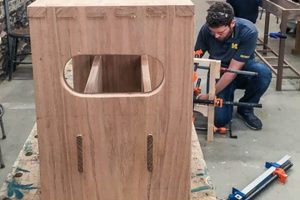
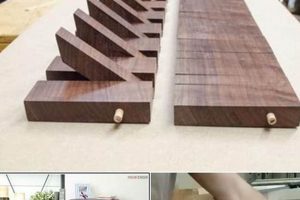
Simple crafts constructed from wood, suitable for individuals with limited or no prior experience, involve fundamental techniques and easily accessible materials. Examples include building birdhouses, small shelves, or simple picture frames. These introductory endeavors are designed to teach basic skills like measuring, cutting, joining, and finishing wood.
Engaging in these activities fosters creativity, enhances problem-solving abilities, and provides a tangible sense of accomplishment. Historically, learning woodworking has been a valuable skill, passed down through generations for practical application and artistic expression. Successfully completing an initial project builds confidence and motivates individuals to explore more complex woodworking techniques.
This understanding provides a foundation for examining specific projects, essential tools, safety considerations, and available resources for those starting their woodworking journey. The following sections will explore these critical areas in detail.
Essential Guidance for Introductory Wood Crafts
The following suggestions are intended to provide a solid foundation for individuals embarking on their initial experiences in woodworking. Adherence to these guidelines will increase the likelihood of successful project completion and promote safe practices.
Tip 1: Prioritize Safety. Always wear appropriate personal protective equipment, including safety glasses and hearing protection. Ensure the workspace is well-ventilated to avoid inhalation of sawdust or fumes.
Tip 2: Select Simple Designs. Opt for projects with minimal complexity, such as small boxes or basic cutting boards. Simpler designs allow for focus on mastering fundamental techniques before tackling more challenging builds.
Tip 3: Utilize Softwoods. Pine or poplar are recommended for their ease of workability. These woods are less dense and require less force to cut and shape, making them ideal for beginners.
Tip 4: Accurate Measurement is Critical. Employ a reliable measuring tape and double-check all dimensions before cutting. Precise measurements are essential for ensuring proper fit and alignment of project components.
Tip 5: Sharp Tools are Safer Tools. Dull tools require more force, increasing the risk of slippage and injury. Regularly sharpen chisels, saws, and other cutting implements.
Tip 6: Practice Joinery Techniques. Start with basic joints like butt joints or lap joints. These joints are relatively simple to execute and provide a solid foundation for learning more advanced joinery methods.
Tip 7: Sand Thoroughly. Proper sanding is crucial for achieving a smooth, professional finish. Progress through progressively finer grits of sandpaper to remove imperfections and prepare the wood for staining or painting.
By following these fundamental principles, newcomers to woodworking can build confidence and establish a strong skillset. This approach minimizes errors and enhances the overall learning experience.
With these tips in mind, the next step involves exploring specific project ideas and resources that further support the development of woodworking skills.
1. Simplicity in Design

The principle of simplicity is paramount in the context of introductory woodworking. It dictates the scope and complexity of projects undertaken by novices, significantly influencing their learning curve and success rate. A design’s intricacy directly correlates with the required skill level; therefore, simplified designs are inherently more suitable for those with minimal experience.
- Reduced Number of Components
A simplified design minimizes the quantity of individual pieces required for project completion. This reduction streamlines the cutting, shaping, and assembly processes, decreasing the likelihood of errors and promoting a more manageable workflow. Examples include projects constructed from a single piece of wood, such as a basic spoon, or those comprising only a few easily joined components, like a small tray.
- Straightforward Joinery Techniques
Complex joinery methods, such as dovetails or mortise-and-tenon joints, demand precision and experience. Simplified designs, conversely, typically employ basic joinery techniques like butt joints, lap joints, or simple screw-fastened connections. These methods are easier to execute accurately and require fewer specialized tools, making them more accessible to beginners.
- Limited Tool Requirements
Intricate designs often necessitate a wider array of specialized tools, many of which require considerable skill to operate effectively. Simplified designs, on the other hand, can typically be completed using a limited selection of hand tools, such as a saw, chisel, and hammer, or basic power tools, such as a drill and sander. This reduces the initial investment required and simplifies the learning process.
- Emphasis on Fundamental Skills
Simplified projects provide an ideal platform for developing fundamental woodworking skills, such as accurate measuring, precise cutting, and proper sanding. By focusing on these core skills in a less demanding context, beginners can build a solid foundation of knowledge and technique, which will serve them well as they progress to more complex projects. A simple cutting board project, for example, will emphasize the importance of accurate measurement and straight cuts.
In essence, simplicity in design serves as a crucial stepping stone for those new to woodworking. By prioritizing projects with fewer components, straightforward joinery, limited tool requirements, and a focus on fundamental skills, beginners can maximize their chances of success, build confidence, and lay the groundwork for continued learning and skill development. These aspects ensure a positive and rewarding introduction to the craft, fostering a lasting interest in woodworking.
2. Material Selection

The selection of appropriate materials constitutes a fundamental aspect of woodworking, particularly within the domain of introductory projects. The characteristics of the chosen wood directly impact the ease of workability, the final aesthetic of the piece, and the overall success of the project. Therefore, careful consideration of material properties is essential for those new to the craft.
- Wood Softness and Workability
Softwoods, such as pine, poplar, and fir, are generally recommended for initial woodworking projects due to their lower density and ease of manipulation. These woods require less force to cut, shape, and join, making them more forgiving for beginners who are still developing their skills. The relative softness reduces the risk of tool slippage and promotes cleaner cuts. For example, constructing a simple box from pine will prove less challenging than using a hardwood like oak.
- Grain Pattern and Aesthetics
The grain pattern of the wood significantly affects the visual appeal of the finished project. While intricate grain patterns can be aesthetically pleasing, they may also present challenges during cutting and finishing. For beginner projects, woods with relatively straight and consistent grain patterns are preferred. This simplifies the process of achieving a smooth, uniform surface. A clear, consistent grain in poplar makes it a suitable choice for painting or staining.
- Material Cost and Availability
Budgetary constraints often influence material selection, especially for individuals starting out in woodworking. Softwoods are generally more affordable than hardwoods, making them a practical choice for practice projects and initial builds. Furthermore, the widespread availability of softwoods at most lumberyards simplifies the procurement process. Using readily accessible and cost-effective materials like pine reduces the barrier to entry for beginners.
- Environmental Considerations
Sustainable sourcing of wood is an increasingly important factor in material selection. Opting for wood that is certified by organizations like the Forest Stewardship Council (FSC) ensures that the timber is harvested responsibly. This consideration introduces a broader awareness of environmental issues within the context of woodworking. Sourcing sustainably harvested pine for a beginner’s shelf project instills a sense of environmental responsibility.
In summary, appropriate material selection plays a pivotal role in the success and enjoyment of introductory woodworking projects. Choosing softwoods with simple grain patterns, considering cost and availability, and prioritizing sustainable sourcing collectively contribute to a positive learning experience and a well-crafted final product. These factors empower beginners to develop their skills while fostering an appreciation for the materials they use.
3. Essential Tools

The acquisition and proper use of fundamental implements represent a cornerstone of successful engagement with elementary woodworking tasks. The selection of tools directly influences the precision, efficiency, and safety with which introductory projects can be executed. A deliberate approach to tool procurement and mastery is therefore essential.
- Measuring and Marking Tools
Accurate measurement and precise marking are prerequisites for successful woodworking. A reliable measuring tape, a combination square, and a marking knife are indispensable for transferring design dimensions onto the wood. Inaccurate measurements directly translate to misaligned joints and flawed project outcomes. For example, a poorly measured birdhouse component will result in an unstable or aesthetically displeasing structure.
- Cutting Tools
The ability to efficiently and accurately cut wood is paramount. A hand saw, specifically a crosscut saw for cutting against the grain and a rip saw for cutting along the grain, provides a foundation for controlled material removal. A coping saw is essential for curved cuts and intricate shapes. Alternatively, a power saw such as a jigsaw can expedite the cutting process, but requires careful operation and safety precautions. In the context of simple shelving, the correct saw allows for clean, square cuts necessary for structural integrity.
- Shaping and Smoothing Tools
After cutting, shaping and smoothing tools are needed to refine the dimensions and surface quality of the wood. A wood chisel, paired with a mallet, is crucial for removing small amounts of material and creating precise joinery. Sandpaper, in various grits, is used to smooth surfaces and prepare them for finishing. A hand plane, while not strictly essential for all beginner projects, can provide exceptionally smooth and flat surfaces. The use of a chisel to create a simple lap joint in a picture frame significantly improves the frame’s strength and appearance.
- Fastening and Assembly Tools
Securing wooden components together requires appropriate fastening methods and the corresponding tools. A hand drill, equipped with various drill bits, is necessary for creating pilot holes for screws and larger holes for dowels. A screwdriver (or a power drill with screwdriver bits) is used to drive screws, which provide a strong and readily adjustable method of joining wood. Clamps are essential for holding pieces together while glue dries, ensuring a strong and permanent bond. The assembly of a basic wooden box relies heavily on screws and clamps to create a durable structure.
These essential tools, while representing only a subset of the broader woodworking arsenal, provide a sufficient foundation for tackling a wide range of introductory projects. The proficiency in the safe and effective use of these tools directly correlates with the success and enjoyment derived from engaging in woodworking as a novice. Furthermore, the skills acquired through mastering these fundamental tools serve as a crucial springboard for more advanced woodworking techniques and projects.
4. Safety Procedures

The intersection of safety protocols and introductory woodworking is critical. Neglecting established safeguards directly increases the probability of injury. Beginner-level woodworking inherently involves the use of sharp tools and potentially hazardous machinery, albeit in simplified applications. The absence of proper safety training and adherence to established guidelines presents a tangible risk of cuts, abrasions, eye injuries, and more severe accidents. For instance, failure to wear safety glasses while operating a saw can result in projectiles entering the eye, potentially causing permanent damage. Similarly, neglecting to secure workpieces properly can lead to uncontrolled movement and subsequent injury. Proper procedure, thus, forms an integral component of any successful and responsible introduction to woodworking.
Practical application of safety procedures includes, but is not limited to, the consistent use of personal protective equipment (PPE). This PPE involves safety glasses, hearing protection, and appropriate respiratory protection when dealing with dust or finishes. Understanding the operational characteristics and limitations of each tool is similarly essential. New woodworkers should start with detailed demonstrations and supervised practice before attempting independent projects. Additionally, maintaining a clean and organized workspace minimizes the risk of trips and falls. Power tools should be disconnected when not in use, and all tools must be stored appropriately to prevent accidental contact. A structured approach to safety minimizes potential hazards in the learning environment.
Comprehending the connection between safety and woodworking, specifically within the context of beginner projects, establishes a foundation for responsible practices throughout an individual’s woodworking journey. While challenges may arise in adhering to all safety protocols consistently, diligence in this area contributes directly to a safer and more productive workshop environment. The emphasis on these procedures, from the outset, ultimately promotes not only safety but also a more confident and fulfilling experience with woodworking.
5. Finishing Techniques
The application of finishing techniques represents a crucial, albeit sometimes overlooked, stage in introductory woodworking projects. While the construction phase establishes the form and function of a piece, the finishing process dictates its long-term durability, aesthetic appeal, and overall perceived quality. Improper or omitted finishing can negate the effort invested in the preceding construction, leading to premature wear, susceptibility to moisture damage, and an unrefined final appearance. For instance, a meticulously crafted wooden box left unfinished will quickly show signs of wear and tear, becoming prone to scratches, stains, and warping. Conversely, a properly finished project, even one with minor construction imperfections, can exhibit an enhanced level of craftsmanship and resilience.
Beginner-level finishing techniques primarily involve sanding, staining, and applying a protective topcoat. Sanding prepares the wood surface by removing imperfections and creating a smooth substrate for subsequent finishes. Staining adds color and enhances the wood’s natural grain patterns, providing a degree of customization. A topcoat, such as varnish, lacquer, or polyurethane, seals the wood, protecting it from moisture, scratches, and UV damage. Practical examples include applying polyurethane to a simple wooden shelf to protect it from water damage or using a stain to enhance the grain of a basic picture frame. Mastering these fundamental techniques empowers beginners to transform utilitarian projects into aesthetically pleasing and durable items. These processes teach patience and attention to detail, important woodworking values, and lay groundwork for more complex techniques.
In conclusion, finishing techniques are inextricably linked to the success of introductory woodworking projects. While challenging at first, mastering basic finishing processes significantly enhances the quality, longevity, and visual appeal of completed projects. These techniques transform raw wood into polished, functional items and establish foundational skills that are crucial for progressing to more advanced woodworking endeavors. Ignoring finishing undermines the entire crafting process, diminishing the final product and the overall learning experience. Learning the basics of finishing gives confidence in one’s craftsmanship and ensures projects are of lasting quality.
Frequently Asked Questions About Introductory Wood Crafts
The following section addresses common inquiries regarding the initiation of woodworking projects. These answers aim to provide clarity and guidance for individuals embarking on this craft.
Question 1: What constitutes an appropriate initial woodworking project?
A suitable introductory project typically involves simple joinery, limited components, and readily available materials. Examples include small boxes, basic shelves, or cutting boards. Projects that prioritize the development of fundamental skills are highly recommended.
Question 2: Are specialized tools required for beginner projects?
While a comprehensive set of tools is not essential at the outset, certain implements are necessary. These include a measuring tape, a saw (hand saw or jigsaw), a drill, a screwdriver, sandpaper, and clamps. The acquisition of more specialized tools can be deferred until skills progress.
Question 3: What types of wood are best suited for beginners?
Softwoods, such as pine or poplar, are generally favored due to their ease of workability. These woods are less dense and require less force to cut and shape. They are also typically more affordable than hardwoods, making them a cost-effective choice for practice projects.
Question 4: How important is safety in beginner woodworking?
Safety is paramount. The consistent use of personal protective equipment, including safety glasses and hearing protection, is non-negotiable. A thorough understanding of tool operation and adherence to established safety guidelines are essential to prevent injury.
Question 5: What is the recommended approach to learning woodworking techniques?
A structured approach is advisable. Begin with basic techniques, such as measuring, cutting, and joining, and gradually progress to more complex methods. Online tutorials, instructional books, and woodworking classes can provide valuable guidance.
Question 6: How can potential mistakes be minimized during a project?
Careful planning, accurate measurements, and consistent attention to detail are crucial. Double-checking dimensions before cutting and practicing joinery techniques on scrap wood can help to identify and correct potential errors before they impact the final project.
These responses provide a foundational understanding for those new to woodworking. Careful consideration of these points will contribute to a more successful and enjoyable learning experience.
The next section will delve into available resources to further assist individuals pursuing woodworking endeavors.
Concluding Remarks on Introductory Wood Crafts
This article has presented a comprehensive overview of beginner level woodworking projects, emphasizing essential elements such as design simplicity, appropriate material selection, core tool acquisition, unwavering adherence to safety protocols, and skillful application of finishing techniques. These factors collectively establish a foundation for novices to successfully engage with the craft and develop competence.
As individuals navigate the initial stages of woodworking, continuous learning, diligent practice, and a commitment to safety remain paramount. The skills acquired through these early projects provide a valuable basis for future exploration of more complex woodworking endeavors, fostering both practical skills and creative expression. The continued pursuit of knowledge and refinement of technique are encouraged for sustained growth within the field.