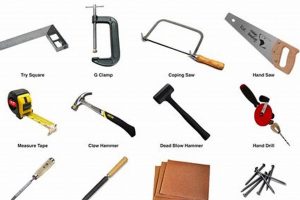
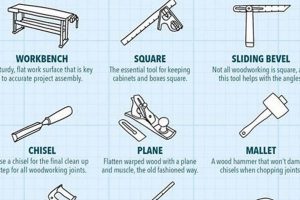
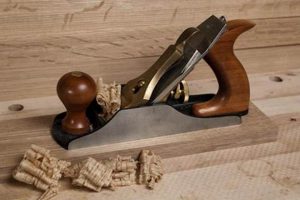
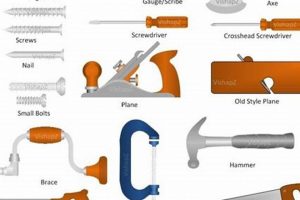
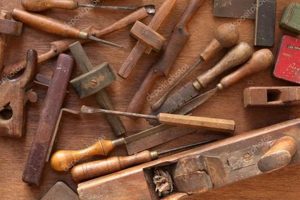
Crafted implements used in shaping wood, relying on human skill and manual power rather than automated processes, represent a distinct category within the woodworking field. These instruments, often forged and honed by artisans, encompass a range of items such as hand planes, chisels, saws, and carving knives. Their creation involves techniques like blacksmithing, handle shaping, and blade sharpening, resulting in tools with unique characteristics and a connection to the maker’s craftsmanship.
The significance of these manually produced instruments lies in their enhanced control, tactile feedback, and potential for intricate detail work. Historically, they represent the foundation of woodworking, predating the widespread adoption of power tools. The use of such tools fosters a deeper understanding of wood properties and cutting techniques, promoting precision and minimizing material waste. The inherent value extends beyond mere functionality; it also encompasses the appreciation of artisanal skill and the enduring quality often absent in mass-produced alternatives.
The subsequent discussion will delve into the nuances of selecting appropriate implements, maintaining their optimal condition, and exploring various applications within specific woodworking projects. Attention will be given to understanding the tool’s anatomy, sharpening methods, and the impact of different wood types on tool performance. Furthermore, practical examples of their use in joinery, shaping, and finishing will be presented, offering a comprehensive overview of their integration into the woodworking process.
Selection and Usage Guidance
The following guidelines offer practical advice for acquiring and employing manually crafted woodworking implements. Adherence to these recommendations will improve efficiency, precision, and the longevity of both the tools and the finished product.
Tip 1: Tool Steel Assessment: Prior to acquisition, scrutinize the steel composition of the cutting edge. High-carbon steel generally provides superior edge retention compared to softer alloys. Examine for consistent tempering and absence of visible flaws.
Tip 2: Handle Ergonomics: Evaluate the handle’s shape, size, and material for suitability to hand size and grip preference. An ergonomic handle minimizes fatigue and enhances control during prolonged use. Consider hardwoods like beech or ash for durability and comfort.
Tip 3: Initial Sharpening: Prior to first use, meticulously sharpen and hone the cutting edge. Establish a consistent bevel angle and remove any manufacturing imperfections. This ensures optimal performance and reduces the risk of damage.
Tip 4: Wood Grain Consideration: Be mindful of wood grain direction when performing cuts. Cutting with the grain minimizes tear-out and facilitates smoother surfaces. Adjust tool angle and pressure accordingly.
Tip 5: Consistent Maintenance: Regularly clean and lubricate tools after each use. Prevent rust formation by applying a thin layer of oil to exposed metal surfaces. Proper maintenance extends tool lifespan and maintains optimal performance.
Tip 6: Secure Work Holding: Employ appropriate clamping and work holding methods to ensure stability during operation. A secure workpiece prevents slippage and enhances accuracy. Various vises and bench dogs are essential accessories.
Tip 7: Controlled Force Application: Apply steady, controlled force when using cutting tools. Avoid excessive pressure, which can lead to tool slippage or material damage. Patience and precision yield superior results.
Adherence to these principles promotes not only the effective utilization of manually crafted woodworking tools but also a safer and more rewarding woodworking experience. Consistent application of these techniques ensures the creation of high-quality, enduring projects.
The subsequent section will address specific applications, highlighting the advantages of utilizing manually crafted implements in contrast to power tools for particular woodworking tasks.
1. Artisan Forging

Artisan forging represents a critical component in the creation of high-quality, manually crafted woodworking implements. The process, involving the shaping of metal through hammering and heating, directly influences the structural integrity and performance characteristics of the finished tool. A skilled artisan forger manipulates the metal’s grain structure, resulting in enhanced hardness, toughness, and resistance to wear compared to mass-produced tools that rely on less controlled manufacturing methods. For instance, a hand-forged chisel, carefully shaped and tempered, will maintain its edge sharpness for a significantly longer period than a stamped or cast alternative. The controlled heating and hammering involved in artisan forging also minimize internal stresses within the metal, reducing the risk of cracking or deformation during use.
The specific techniques employed during artisan forging directly correlate with the tool’s suitability for particular woodworking tasks. A blade intended for fine carving, for example, requires a different forging process than one designed for heavy chopping. The artisan’s understanding of metal properties allows for precise control over the blade’s geometry, bevel angle, and overall balance, optimizing its performance for the intended application. A properly forged plane iron, for example, will exhibit minimal chatter and produce a smoother surface compared to an improperly forged one. Moreover, the hand-forging process allows for the incorporation of unique design elements and ergonomic considerations, tailoring the tool to the individual craftsman’s needs and preferences.
In summary, artisan forging is not merely a manufacturing technique but rather an integral element that defines the quality and functionality of manually crafted woodworking tools. The process imparts superior material properties, facilitates precise shaping, and enables customization, ultimately enhancing the tool’s performance and longevity. The appreciation of artisan forging underscores the value of traditional craftsmanship and its enduring relevance in the field of woodworking. However, the cost and limited availability of artisan-forged tools represent a challenge, prompting some woodworkers to seek out vintage tools or explore alternative manufacturing methods that emulate the benefits of hand-forging.
2. Material Quality

Material quality constitutes a fundamental determinant of the performance and longevity of handcrafted woodworking instruments. The selection of specific metals, wood types, and other components directly impacts the tool’s ability to maintain a sharp edge, withstand stress, and resist wear under operational conditions. For example, a hand plane constructed with a low-quality iron casting is prone to warping, rendering precise surface planing impossible. The cause-and-effect relationship between material selection and tool efficacy is readily apparent: superior materials translate into superior performance and extended service life, whereas inferior materials lead to diminished functionality and premature failure.
The practical significance of understanding material quality extends to the tool selection process. An informed woodworker will meticulously examine the composition of the blade, the density of the wood used for the handle, and the integrity of any fasteners or joinery elements. High-carbon steel, known for its hardness and edge retention, is a desirable material for cutting edges. Dense hardwoods, such as beech or maple, provide durable and comfortable handles. Brass or bronze fittings offer corrosion resistance and aesthetic appeal. Conversely, the presence of porous castings, soft metals, or poorly seasoned wood indicates compromised material quality and diminished long-term performance. As an additional example, a saw made with improperly hardened steel will dull quickly, demanding frequent sharpening and hindering efficient sawing.
In conclusion, material quality is an intrinsic attribute of manually crafted woodworking implements, exerting a direct influence on their functionality, durability, and overall value. The diligent assessment of material composition enables woodworkers to make informed purchasing decisions, ensuring the acquisition of tools that are both reliable and capable of producing high-quality results. While high-quality materials may entail a higher initial investment, the long-term benefits, including enhanced performance, reduced maintenance, and extended tool lifespan, justify the expense. The pursuit of material excellence remains a cornerstone of traditional woodworking practices.
3. Edge Geometry
Edge geometry, pertaining to the specific angles, curves, and surface finish of a cutting edge, is a pivotal factor governing the performance of manually crafted woodworking tools. It directly impacts the tool’s ability to sever wood fibers cleanly, efficiently, and with minimal effort. The correct edge geometry facilitates precise cutting, reduces the likelihood of tear-out, and extends the usable lifespan of the tool between sharpenings. The intricacies of edge geometry are compounded by variations in wood species, grain direction, and the intended application of the tool.
- Bevel Angle and Its Significance
The bevel angle, measured between the tool’s back and the cutting edge, influences the tool’s aggressiveness and resistance to chipping. A steeper bevel angle (e.g., 30-35 degrees) is suitable for hardwoods and provides increased durability, while a shallower angle (e.g., 20-25 degrees) is preferable for softwoods, offering a sharper, more delicate cutting edge. An incorrect bevel angle can result in excessive force requirements, premature dulling, or damage to the tool.
- Secondary Bevel (Micro-Bevel)
The secondary bevel, a small, slightly steeper bevel applied to the very edge of the tool, strengthens the cutting edge without significantly increasing the overall cutting angle. This micro-bevel improves edge retention and reduces the frequency of sharpening, particularly in demanding applications. Its precise application requires careful honing and a steady hand. A poorly executed secondary bevel can negatively impact the tool’s cutting performance and create an uneven edge.
- Cutting Edge Curvature (Camber)
The curvature of the cutting edge, often found on hand planes and some chisels, affects the tool’s ability to create a smooth, flat surface. A slight camber allows the tool to remove material gradually, preventing corner digging and facilitating a more controlled cut. The amount of camber must be carefully adjusted based on the tool’s size and the intended application. Excessive camber can create uneven surfaces, while insufficient camber can lead to corner marks.
- Surface Finish of the Cutting Edge
The surface finish of the cutting edge, ranging from coarse to highly polished, impacts the tool’s cutting efficiency and surface quality. A finely polished edge reduces friction and allows the tool to glide more smoothly through the wood, resulting in a cleaner cut. However, an overly polished edge can be more prone to damage. The optimal surface finish depends on the specific wood species and the desired level of precision. Coarser finishes may be acceptable for rough work, while highly polished edges are essential for fine detailing.
Collectively, these facets of edge geometry are vital for optimizing the performance of manually crafted woodworking tools. Achieving the appropriate edge geometry requires a thorough understanding of the tool’s intended application, the properties of the wood being worked, and the principles of sharpening and honing. A well-maintained and properly shaped cutting edge transforms a simple tool into a precision instrument, enabling the craftsman to execute intricate joinery, create flawless surfaces, and achieve a level of craftsmanship that is difficult to replicate with power tools.
4. Ergonomic Design

Ergonomic design, relating to the optimization of tools for human use and physical well-being, constitutes a significant factor in the effectiveness and longevity of handcrafted woodworking implements. The shaping of handles, distribution of weight, and overall tool balance directly impact the user’s comfort, control, and risk of repetitive strain injuries. A well-designed tool minimizes fatigue and enhances precision, allowing for extended periods of focused work. Conversely, implements lacking ergonomic considerations can lead to discomfort, reduced efficiency, and potential long-term health issues. The absence of proper ergonomics can effectively negate the benefits of superior material quality or edge geometry, rendering a tool difficult and potentially harmful to use.
The practical application of ergonomic principles in tool design manifests in several ways. Handle shapes are often contoured to fit the natural curvature of the hand, minimizing pressure points and maximizing grip strength. The selection of handle materials, such as hardwoods with inherent shock-absorbing properties, further contributes to user comfort. Tool balance is carefully considered to ensure that the weight is distributed evenly, reducing the need for excessive force exertion. Examples include hand planes with handles angled to promote a natural wrist position and chisels with mushroomed ends that allow for comfortable and efficient striking. A comparison between a vintage, mass-produced chisel with a cylindrical handle and a modern, handcrafted chisel with a sculpted, ergonomic handle immediately reveals the enhanced comfort and control afforded by the latter.
In summary, ergonomic design is not a mere aesthetic consideration but rather a critical component of handcrafted woodworking tools, directly influencing their usability and the well-being of the craftsman. The thoughtful application of ergonomic principles enhances control, reduces fatigue, and minimizes the risk of injury, ultimately contributing to higher-quality work and a more sustainable practice. The investment in ergonomically designed tools represents a commitment to both the craft and the craftsman, ensuring that these instruments are not only effective but also a pleasure to use. However, the individual nature of hand size and grip preferences underscores the importance of selecting tools that are personally suited to the user.
5. Manual Precision
Manual precision, the ability to execute movements with controlled accuracy using hand tools, is inextricably linked to the use and efficacy of handcrafted woodworking instruments. These tools, devoid of automated assistance, demand a high degree of user skill to achieve desired results. The cause-and-effect relationship is evident: greater manual precision translates directly into higher-quality joinery, smoother surface finishes, and more intricate detailing. Without the mitigating influence of power tool automation, inaccuracies in hand movements are immediately reflected in the finished workpiece. Thus, manual precision is not merely a desirable attribute but rather a fundamental component for successfully employing these implements. As an example, accurately cutting dovetails by hand requires precise saw cuts and chisel work; any deviation from the intended lines results in a weak or aesthetically flawed joint.
The attainment of manual precision in woodworking is a product of practice, focused attention, and a deep understanding of the tool’s capabilities and limitations. It involves developing a keen sense of tactile feedback, allowing the craftsman to feel the interaction between the tool and the wood. This tactile awareness is crucial for controlling cutting depth, angle, and speed. Specific applications, such as carving complex moldings or inlaying delicate veneers, necessitate exceptional manual precision to achieve the intended aesthetic effect. The choice of specific tools, like a finely tuned hand plane or a meticulously sharpened carving knife, directly contributes to the feasibility of achieving this level of accuracy. This understanding and control also allows for subtle corrections and adjustments during the woodworking process, something more difficult to achieve with the fixed parameters of many power tools.
In conclusion, manual precision is both a prerequisite for and a defining characteristic of working with handcrafted woodworking tools. The inherent demand for accuracy cultivates a heightened level of skill and a deeper connection to the craft. While the initial learning curve may be steeper compared to power tool-based woodworking, the rewards of mastering manual precision include superior craftsmanship, a greater sense of accomplishment, and the ability to create truly unique and enduring pieces. The limitations posed by the reliance on manual dexterity also encourage resourcefulness and innovative solutions to woodworking challenges, further enriching the craft.
6. Tangible Craftsmanship

Tangible craftsmanship, in the context of manually crafted woodworking tools, represents the evident manifestation of skill, intentionality, and individual expression embedded within the instrument itself. It signifies a departure from mass-produced uniformity, reflecting instead the maker’s unique approach and the inherent variations of the manufacturing process. This aspect elevates the tool beyond mere utility, transforming it into an artifact that embodies the ethos of traditional woodworking.
- Tool Markings and Surface Textures
Handmade tools often bear the marks of their creation, subtle imperfections or surface textures resulting from the forging, shaping, and finishing processes. These traces are not flaws but rather evidence of human intervention, differentiating the tool from its machine-made counterparts. A hand-planed sole, for example, may exhibit minute undulations that contribute to its unique performance characteristics. The presence of these markings serves as a visual reminder of the tool’s provenance and the artisan’s skill.
- Material Selection and Adaptation
The choice of specific materials, such as the grade of steel or the type of wood, and their adaptation to the tool’s intended purpose is a tangible expression of craftsmanship. Artisans often hand-select materials based on specific criteria, ensuring optimal performance and durability. The careful grain orientation of a wooden handle, for instance, enhances its strength and resistance to splitting. This deliberate selection and adaptation of materials reflects a deep understanding of their properties and their interaction with the tool’s function.
- Customization and Individualization
Handmade tools often incorporate elements of customization, tailored to the specific needs or preferences of the user. This may involve adjusting the handle shape, modifying the blade geometry, or incorporating decorative elements. The ability to personalize a tool transforms it from a generic object into a bespoke instrument, reflecting the unique partnership between the craftsman and the tool. A custom-made handle, shaped to fit the user’s hand perfectly, enhances comfort and control, improving overall performance.
- Legacy and Provenance
Handmade tools frequently possess a traceable history, connecting them to a particular maker, workshop, or region. This provenance adds to their value, imbuing them with a sense of legacy and historical significance. The presence of a maker’s mark, a unique stamp, or other identifying features allows for tracing the tool’s lineage and appreciating its place within the broader tradition of woodworking. Such tools become more than just functional objects; they are artifacts that embody the history and heritage of the craft.
These facets of tangible craftsmanship collectively contribute to the distinct character of handmade woodworking tools. They underscore the value of human skill, intentionality, and the enduring appeal of objects created with care and attention to detail. The presence of these characteristics elevates these tools beyond mere implements, transforming them into tangible expressions of the art and craft of woodworking.
Frequently Asked Questions
The subsequent questions and answers address common inquiries and misconceptions regarding manually crafted woodworking implements, providing clarity on their selection, usage, and relative merits.
Question 1: What distinguishes handmade woodworking hand tools from their mass-produced counterparts?
Handmade tools typically exhibit superior material quality, individual craftsmanship, and greater potential for customization compared to mass-produced alternatives. The forging process, for instance, often results in improved steel hardness and edge retention.
Question 2: Is the higher cost of handmade tools justifiable for the average woodworker?
The justification depends on the woodworker’s needs and priorities. While handmade tools represent a significant investment, their enhanced performance, durability, and potential for heirloom quality can offset the higher initial cost, particularly for those engaged in frequent or specialized woodworking.
Question 3: Are specialized skills required to effectively use handmade woodworking hand tools?
A foundation of woodworking knowledge and skill is essential. Proficiency with sharpening techniques, understanding wood grain direction, and applying appropriate force are crucial for achieving optimal results and preventing tool damage.
Question 4: How does one properly maintain handmade woodworking hand tools to ensure longevity?
Regular cleaning, lubrication with appropriate oils, and meticulous sharpening are essential. Preventing rust formation and storing tools in a dry environment are also crucial for preserving their condition and extending their lifespan.
Question 5: Are handmade tools suitable for all types of woodworking projects?
While versatile, handmade tools may be less efficient than power tools for certain tasks, such as large-scale material removal. Their strength lies in precision work, intricate detailing, and tasks where tactile feedback and control are paramount.
Question 6: Where can one reliably acquire authentic handmade woodworking hand tools?
Reputable toolmakers, specialized woodworking suppliers, and antique tool dealers represent potential sources. Thorough research, careful inspection, and a discerning eye are necessary to ensure authenticity and quality.
In summary, handmade woodworking hand tools represent a distinct category characterized by craftsmanship, precision, and a connection to traditional woodworking techniques. Their value extends beyond mere functionality, encompassing the appreciation of artisanal skill and enduring quality.
The subsequent section will offer a comparative analysis of specific tool types, contrasting the features and benefits of handmade versus mass-produced examples.
Conclusion
The preceding exploration has illuminated the multifaceted nature of handmade woodworking hand tools. From the artisan forging processes to the tangible evidence of craftsmanship, these instruments represent a distinct and valuable component of the woodworking tradition. Their inherent qualities, including superior material selection, ergonomic design, and the potential for manual precision, contribute to both the quality of the finished product and the overall woodworking experience.
The continued appreciation for, and skillful utilization of, handmade woodworking hand tools ensures the preservation of time-honored techniques and the production of enduring, high-quality works. Further research and dedicated practice in these areas can only serve to enrich the craft and expand the possibilities within the realm of woodworking.