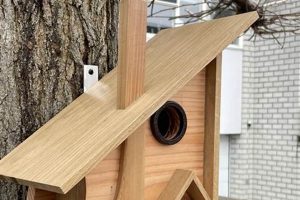
The act of capturing images of completed carpentry and related endeavors is a crucial final step in showcasing craftsmanship. This visual documentation serves various purposes, from personal archiving and portfolio building to online sales and marketing. For instance, a finely crafted table, meticulously joined and finished, benefits greatly from high-quality imagery that accurately portrays its details and overall aesthetic.
Effective visual representation enhances the perceived value of woodwork and expands its reach beyond immediate, in-person viewing. Historically, artisans relied on word-of-mouth and local display to promote their work. Today, digital platforms offer unprecedented opportunities to share creations globally, making compelling visuals indispensable. Superior images can attract potential clients, demonstrate skill, and establish a professional brand.
The following sections will delve into specific techniques for achieving optimal results, covering aspects such as lighting considerations, camera settings, background selection, and post-processing adjustments to effectively present the nuances and beauty of finished woodwork.
Techniques for Visual Woodwork Documentation
The following guidelines provide practical advice for producing high-quality images of woodworking projects, focusing on clarity, accuracy, and aesthetic appeal.
Tip 1: Optimize Ambient Illumination: Natural light often yields the most pleasing results. Position projects near a large window or outdoors on an overcast day to minimize harsh shadows and highlight surface details. Avoid direct sunlight, which can create strong contrasts and wash out colors.
Tip 2: Control White Balance: Ensure accurate color representation by adjusting the camera’s white balance settings. Use a gray card for precise calibration or select a preset that matches the dominant light source (e.g., daylight, fluorescent, incandescent).
Tip 3: Select Appropriate Aperture: Achieve sufficient depth of field to keep the entire project in focus. A narrower aperture (higher f-number, such as f/8 or f/11) is generally preferable for larger pieces, ensuring sharpness from front to back.
Tip 4: Utilize a Tripod: Stabilize the camera to eliminate motion blur, especially when using slower shutter speeds or narrow apertures. A tripod ensures sharp, detailed images, particularly in low-light conditions.
Tip 5: Choose a Neutral Background: Opt for a simple, uncluttered background that does not distract from the project. Solid-colored paper, fabric, or a clean wall can provide a visually appealing backdrop.
Tip 6: Focus Manually: Override the camera’s autofocus system and manually select the point of focus, typically on the most visually interesting or detailed area of the project. This ensures critical sharpness where it matters most.
Tip 7: Employ Image Editing Software: Enhance images using software to adjust exposure, contrast, and color. Correct any imperfections, such as dust spots or minor blemishes, and optimize the overall visual appeal.
These techniques are crucial for effectively capturing and presenting the quality and craftsmanship inherent in woodwork, maximizing its appeal to potential customers or viewers.
The subsequent section will explore advanced considerations, including composition strategies and specialized equipment, for further elevating the quality of visual woodworking documentation.
1. Lighting techniques

Effective visual capture of woodworking projects relies heavily on appropriate illumination. The interplay of light and shadow reveals form, texture, and finish, all of which are crucial for conveying the quality of craftsmanship. Inadequate lighting can obscure details, distort colors, and create undesirable distractions, diminishing the impact of the image. For example, direct, harsh sunlight often produces strong shadows and blown-out highlights, obscuring the nuances of the wood grain. Conversely, overly dim or uneven lighting can render a piece flat and lifeless, failing to capture its true essence. Controlled lighting, whether natural or artificial, is therefore a prerequisite for quality photographic documentation.
A common practical application involves employing a light tent or lightbox, which diffuses light and minimizes harsh shadows, creating a soft, even illumination. This is particularly useful for smaller projects or detail shots. Alternatively, strategically placed reflectors can redirect light, filling in shadows and enhancing contrast. For larger projects, multiple light sources may be necessary to ensure consistent illumination across the entire piece. Understanding the properties of different light sources, such as color temperature and intensity, is essential for achieving accurate color rendition and avoiding unwanted color casts. Furthermore, the angle of incidence of the light significantly impacts the visibility of texture; side lighting often accentuates surface details, while front lighting tends to flatten the image.
In conclusion, lighting techniques are not merely a secondary consideration but a fundamental component of photographing woodworking projects. Mastering these techniques is essential for accurately and effectively showcasing the intricacies, materials, and craftsmanship inherent in the finished product. The challenge lies in balancing the intensity, color, and direction of the light to create an image that is both visually appealing and representative of the true character of the woodwork, linking directly to successful project documentation and presentation.
2. Camera settings

The effective visual representation of woodworking projects hinges significantly on appropriate camera settings. Optimized camera configurations are critical for capturing the fine details, textures, and dimensions inherent in woodworking pieces. Incorrect settings can result in blurred images, inaccurate color rendition, and loss of detail, detracting from the overall quality of the visual documentation.
- Aperture (f-number)
The aperture setting controls the depth of field, which is the portion of the image that appears sharp and in focus. For woodworking projects, a narrower aperture (higher f-number, e.g., f/8 or f/11) is often preferred to ensure that the entire piece, from front to back, is in focus. This is particularly important for larger projects or those with intricate details at varying distances from the camera. Conversely, a wider aperture (lower f-number) creates a shallow depth of field, which can be used selectively to isolate a specific detail, blurring the background for emphasis. For example, photographing the joinery of a dovetail joint might benefit from a wider aperture, while a full shot of a cabinet requires a narrower aperture.
- Shutter Speed
Shutter speed determines the length of time the camera’s sensor is exposed to light. A faster shutter speed is necessary to freeze motion and prevent blur, especially when photographing in low light or without a tripod. However, faster shutter speeds require more light, either through a wider aperture or higher ISO. When photographing stationary woodworking projects, a slower shutter speed can be used, provided the camera is mounted on a tripod to eliminate camera shake. A slower shutter speed allows for more light to enter the camera, enabling the use of a narrower aperture for greater depth of field. The interplay between shutter speed and aperture is crucial for achieving the desired exposure and sharpness in the image. For instance, shooting a detailed carving in a dimly lit workshop requires a tripod and a slower shutter speed to maintain sharpness while using a narrow aperture.
- ISO
ISO represents the camera’s sensitivity to light. A lower ISO setting (e.g., ISO 100 or 200) produces cleaner images with less noise, but requires more light. A higher ISO setting allows for shooting in low-light conditions but introduces more grain or noise into the image. When photographing woodworking projects, it is generally advisable to use the lowest ISO setting possible to minimize noise and maximize image quality. Additional lighting may be necessary to compensate for the lower ISO. For instance, shooting a large piece of furniture in a studio setting allows for controlled lighting and a low ISO, resulting in a cleaner image. In contrast, documenting a project in a poorly lit environment might necessitate a higher ISO, accepting some noise in exchange for capturing the image.
- White Balance
White balance ensures accurate color representation by adjusting the camera’s sensitivity to different color temperatures of light. Incorrect white balance can result in images with a color cast (e.g., too warm or too cool). Setting the white balance appropriately for the lighting conditions is essential for accurately portraying the natural colors of the wood and the finish. Using a gray card to calibrate the white balance can provide the most accurate results. For example, shooting a project under fluorescent lights requires a different white balance setting than shooting in daylight. Failing to adjust the white balance can result in images with an unnatural color tint, misrepresenting the true appearance of the woodworking piece.
In summary, the successful visual documentation of woodworking projects relies on a nuanced understanding and careful application of camera settings. By optimizing aperture, shutter speed, ISO, and white balance, it is possible to capture images that accurately and effectively showcase the quality, craftsmanship, and aesthetic appeal of the finished work.
3. Background selection

The backdrop against which a woodworking project is photographed significantly influences the viewer’s perception of the piece. A poorly chosen background can distract from the subject, diminish its apparent quality, and undermine the overall impact of the image. Conversely, a well-selected background enhances the woodworking project, highlighting its features and contributing to a professional presentation.
- Neutrality and Simplicity
A neutral background, devoid of distracting patterns or colors, allows the woodworking project to take center stage. Solid colors such as white, gray, or black are often effective. The absence of competing elements prevents the viewer’s eye from being drawn away from the subject. For example, a complexly patterned wallpaper behind a finely crafted wooden bowl detracts from the bowl’s smooth lines and natural grain. The aim is to create a visually unobtrusive environment that supports, rather than competes with, the woodworking.
- Contextual Relevance
While neutrality is often desirable, a background that subtly suggests the intended environment or purpose of the woodworking project can add value. This should be executed with restraint. For instance, photographing a wooden desk in a stylized home office setting subtly reinforces its function and target audience. However, the contextual elements should remain secondary, never overpowering the main subject. Overly elaborate sets risk overshadowing the woodworking itself.
- Scale and Proportion
The background should complement the scale and proportions of the woodworking project. A background that is too large can dwarf a small item, while a background that is too small can make a large piece appear cramped. The relative size of the background elements should maintain visual harmony and accurately convey the dimensions of the woodworking. For example, photographing a miniature model against a vast, empty wall creates a distorted sense of scale, undermining the model’s detail.
- Texture and Materiality
The background’s texture and material should harmonize with the woodworking project. A smooth, matte background can effectively showcase the texture of rough-hewn wood, while a textured background might complement a smoothly finished piece. Contrasting textures can create visual interest, but the primary focus should remain on the woodworking. For instance, placing a rustic wooden bench against a polished concrete wall can highlight both the bench’s natural imperfections and the wall’s sleekness, but the composition should ensure the bench remains the focal point.
In conclusion, selecting an appropriate background is not merely an aesthetic consideration but a critical aspect of photographing woodworking projects. A thoughtful choice of background enhances the subject, conveys its intended purpose, and contributes to a professional and visually compelling presentation. Effective background selection should always serve to amplify the beauty and craftsmanship inherent in the woodworking itself.
4. Composition principles

Effective visual depiction of woodworking projects necessitates adherence to fundamental composition principles. Composition dictates how elements within the frame are arranged to guide the viewer’s eye, emphasize key features, and convey the overall quality and craftsmanship of the piece. Neglecting these principles can result in images that are visually unbalanced, fail to highlight critical details, and ultimately, do not effectively showcase the woodworking project.
- Rule of Thirds
The rule of thirds involves dividing the image into nine equal parts using two horizontal and two vertical lines. Positioning key elements along these lines or at their intersections creates a more visually engaging and balanced composition. In the context of woodworking, this principle might involve placing the most intricate joinery or a particularly striking grain pattern at one of these intersection points. For example, when photographing a cabinet, aligning the door handle or a detailed carving with one of these points can draw the viewer’s attention and create a more dynamic image.
- Leading Lines
Leading lines are visual pathways that direct the viewer’s eye towards the subject. These lines can be literal, such as the edges of a table or the grain pattern of the wood, or implied, such as the arrangement of objects in the background. When photographing woodworking projects, utilizing leading lines can emphasize the shape, form, and depth of the piece. For instance, if photographing a long workbench, positioning the camera to capture the bench’s edges as leading lines that converge towards a point in the distance can create a sense of perspective and draw the viewer into the image.
- Symmetry and Balance
Symmetry refers to the balanced arrangement of elements on either side of a central axis, while balance refers to the distribution of visual weight within the frame. Symmetry can create a sense of order and formality, while asymmetry can introduce visual interest and dynamism. In woodworking photography, symmetry can be effective for showcasing pieces with a symmetrical design, such as a mirror frame or a set of matching chairs. Asymmetry, on the other hand, can be used to highlight a unique feature or to create a more casual and inviting composition. For example, photographing a deliberately asymmetrical piece of furniture requires careful attention to balance, ensuring that the visual weight is evenly distributed despite the lack of symmetry.
- Negative Space
Negative space, also known as white space, refers to the empty areas surrounding the subject. Strategically utilizing negative space can isolate the subject, emphasize its form, and create a sense of calm and simplicity. In the context of woodworking photography, negative space can be used to draw attention to the intricate details of a carving or the clean lines of a piece of furniture. For instance, photographing a small wooden sculpture against a plain, uncluttered background allows the viewer to fully appreciate the sculpture’s form and texture without distractions.
These composition principles, when thoughtfully applied, elevate the visual impact of photographs showcasing woodworking projects. By considering the rule of thirds, leading lines, symmetry and balance, and negative space, the resulting images more effectively communicate the craftsmanship, design, and overall quality of the finished work, directly contributing to successful visual representation.
5. Post-processing adjustments

Post-processing adjustments are integral to the photographic representation of woodworking projects. The initial capture, regardless of its technical proficiency, often benefits from refinement to accurately convey the nuances of the material, finish, and craftsmanship. Post-processing addresses discrepancies introduced by camera sensors, lighting conditions, and inherent limitations in digital image capture. For instance, raw images often exhibit color casts or exposure imbalances that require correction to faithfully represent the wood’s natural tone and grain. The absence of such adjustments can lead to misrepresentation, affecting the perceived value and quality of the woodworking project.
Specific adjustments commonly applied include exposure correction, contrast enhancement, white balance refinement, and sharpening. Exposure adjustments compensate for underexposed or overexposed images, ensuring that details are visible in both highlights and shadows. Contrast enhancement increases the separation between light and dark areas, revealing subtle textures and details within the wood grain. White balance adjustments correct color casts caused by varying light sources, ensuring accurate color rendition. Sharpening enhances the perceived sharpness of edges and fine details, improving overall clarity. For example, a photograph of a walnut table taken under artificial light may exhibit a yellow cast. Post-processing, specifically white balance correction, can neutralize this cast, revealing the wood’s true color and the richness of its grain. Similarly, sharpening can accentuate the crisp edges of joinery, highlighting the precision of the craftsmanship. Furthermore, imperfections such as dust spots or minor blemishes can be addressed through retouching, ensuring a clean and professional final image.
In summary, post-processing adjustments are not merely cosmetic enhancements but essential steps in accurately and effectively representing woodworking projects through photography. While skillful initial capture minimizes the need for extensive post-processing, the ability to refine images ensures that the final visual representation does justice to the craftsmanship and materials involved. The challenge lies in achieving a balance between correction and over-manipulation, preserving the integrity of the original subject while maximizing its visual appeal. Failing to incorporate these adjustments can significantly detract from the perceived value and quality of the presented woodworking.
6. Equipment choices

The selection of photographic equipment directly influences the quality and effectiveness of documenting woodworking projects. Camera type, lens selection, lighting apparatus, and support systems each contribute significantly to the final image. A higher-resolution camera, for instance, captures finer details in the wood grain and joinery than a lower-resolution counterpart. Lens selection dictates perspective and depth of field; a macro lens allows for detailed close-ups of intricate carvings, while a wide-angle lens captures the entirety of larger furniture pieces in confined spaces. Lighting equipment, whether natural or artificial, illuminates the subject and reveals texture, form, and finish. Support systems, such as tripods, ensure stability and sharpness, particularly in low-light conditions or when using longer shutter speeds. The absence of suitable equipment often leads to compromised image quality, hindering the effective presentation of woodworking craftsmanship. For example, attempting to photograph a large dining table in a dimly lit workshop with a smartphone camera invariably results in a dark, blurry image that fails to capture the table’s true form and detail.
The practical application of informed equipment choices extends to various woodworking contexts. A professional furniture maker building a portfolio benefits from investing in high-quality camera equipment and lighting to showcase their work to potential clients. Online sellers rely on clear, detailed images to attract buyers and accurately represent their products. Hobbyists documenting their projects for personal enjoyment and skill development find that better equipment yields more satisfying and informative results. Specialized equipment, such as light tents and product photography tables, streamlines the process of photographing smaller items, ensuring consistent lighting and backgrounds. Furthermore, software tools for image editing and processing enhance the final product, correcting imperfections and optimizing visual appeal. The cumulative effect of judicious equipment selection and skilled application amplifies the visual impact of woodworking projects.
In summary, equipment choices are a critical determinant of success in visually documenting woodworking. While skill and technique play essential roles, the inherent limitations of inadequate equipment cannot be overcome through post-processing or ingenuity alone. The investment in suitable equipment reflects a commitment to presenting woodworking projects in their best possible light, enabling effective communication of their quality, design, and craftsmanship. The challenge lies in balancing budgetary constraints with the need for performance, selecting equipment that meets specific needs and maximizes the potential for capturing compelling and informative images.
7. Detail magnification
The ability to visually amplify minute features holds significant importance in accurately representing woodworking projects through photography. Detail magnification serves as a crucial tool for showcasing the precision, craftsmanship, and unique characteristics inherent in such projects, allowing viewers to appreciate subtleties often missed in wider shots.
- Macro Photography Applications
Macro photography, a specialized technique within detail magnification, enables the capture of extremely close-up images. In woodworking, this facilitates the visualization of intricate joinery, tool marks, or the subtle texture of wood grain. For instance, a macro photograph of a dovetail joint can reveal the accuracy of the fit and the quality of the wood fibers, providing tangible evidence of skilled craftsmanship. This technique goes beyond mere visual appeal; it provides verifiable proof of quality construction.
- Reveal Flaws or Excellence
Magnified details expose both imperfections and exceptional qualities that may be invisible to the naked eye. Photographic magnification might uncover minute scratches, glue residue, or uneven finishes requiring correction. Conversely, it can highlight perfectly executed carving, seamless joints, or the unique beauty of figured wood grain. Therefore, skillfull and accurate usage of detail magnification should be part of photographing woodworking projects.
- Material Authentication
Detail magnification is instrumental in material authentication. The precise characteristics of wood grain, cellular structure, and surface treatment become evident under high magnification. Expert woodworkers and buyers can utilize detailed images to confirm the type and quality of wood, assess the authenticity of antique pieces, or identify potential defects. A magnified image of wood grain can differentiate between genuine mahogany and a less expensive substitute, impacting the perceived value and integrity of the project.
In conclusion, detail magnification is not simply an aesthetic addition to visual documentation; it is an essential tool for accurately representing the quality, materials, and craftsmanship inherent in woodworking projects. By revealing subtleties and complexities, magnified images provide valuable information and enhance the overall impact of the visual presentation. These images are crucial for attracting clients, substantiating claims of quality, and preserving a detailed record of woodworking accomplishments.
Frequently Asked Questions about Photographing Woodworking Projects
This section addresses common inquiries and misconceptions regarding the visual documentation of woodworking endeavors. The following questions and answers provide guidance on achieving optimal results when photographing finished woodworking pieces.
Question 1: What constitutes adequate lighting for photographing woodworking projects?
Adequate lighting involves providing sufficient illumination to reveal details, textures, and finishes accurately. Diffused natural light, such as that found on an overcast day, is often preferred. Artificial lighting, if utilized, should be carefully controlled to avoid harsh shadows and color casts. Employing multiple light sources or reflectors can help achieve even illumination across the entire project.
Question 2: Is specialized photographic equipment necessary, or can a smartphone suffice?
While smartphones have improved significantly, specialized equipment generally yields superior results. DSLR or mirrorless cameras offer greater control over settings, higher resolution, and lens versatility. Tripods ensure stability, while external lighting enhances illumination. Though smartphones can capture decent images in optimal conditions, dedicated equipment is recommended for professional-quality photographs.
Question 3: How important is post-processing in photographing woodworking projects?
Post-processing is a crucial step in optimizing visual representations. Adjustments to exposure, contrast, white balance, and sharpness can significantly enhance the final image. Retouching can remove blemishes and correct imperfections. However, excessive manipulation should be avoided to maintain the integrity of the original subject. Skilled post-processing elevates, rather than fundamentally alters, the image.
Question 4: What background is most suitable for photographing woodworking projects?
A neutral background, devoid of distracting patterns or colors, is generally preferred. Solid-colored paper, fabric, or walls in shades of white, gray, or black are effective. The aim is to minimize distractions and allow the woodworking project to take center stage. Contextual backgrounds, if used, should be subtle and relevant to the project’s intended purpose.
Question 5: How can detail magnification enhance photographs of woodworking projects?
Detail magnification, through macro photography or close-up shots, showcases intricate joinery, tool marks, and wood grain patterns. It reveals the precision and craftsmanship inherent in the project. Magnified images can also be used for material authentication or to highlight unique characteristics of the wood.
Question 6: What compositional principles should be considered when photographing woodworking projects?
Compositional principles such as the rule of thirds, leading lines, symmetry and balance, and negative space influence the visual impact of the photograph. Employing these principles can guide the viewer’s eye, emphasize key features, and create a more engaging and balanced composition. Thoughtful arrangement of elements within the frame enhances the overall presentation.
Effective photographic documentation hinges on careful attention to lighting, equipment, post-processing, background selection, detail magnification, and composition. Mastering these elements significantly improves the quality and impact of visual representations of woodworking creations.
The subsequent section will explore advanced techniques and strategies for further refining the art of photographing woodworking projects.
Conclusion
This examination of photographing woodworking projects has underscored the critical role visual representation plays in showcasing craftsmanship. Effective photography, encompassing lighting, camera settings, composition, and post-processing, significantly impacts how these projects are perceived. Attention to detail in each of these areas directly influences the viewer’s appreciation of the woodworkings quality, materials, and design.
Therefore, mastering techniques for photographing woodworking projects is not merely a supplementary skill, but an integral component of the woodworking process itself. The ability to visually communicate the value and artistry of a project is paramount for personal archiving, professional promotion, and online sales. Continuous refinement of these photographic skills will lead to enhanced documentation and increased recognition for woodworking endeavors.