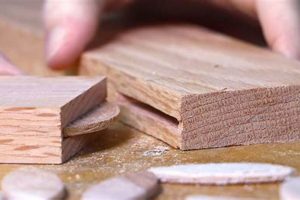
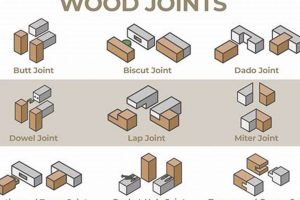
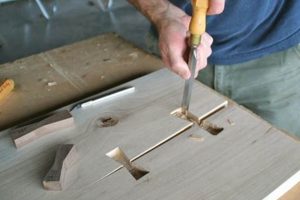
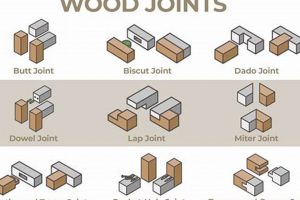
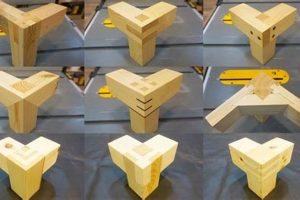
A rectangular channel or groove cut into the surface of a piece of wood, designed to receive another piece, forms a strong and aesthetically pleasing connection. This recess runs perpendicular to the grain of the receiving piece and allows the inserted element to sit flush, providing enhanced stability and support compared to simpler joinery methods. For example, shelves in a bookcase are frequently secured using this technique for its inherent strength and clean appearance.
This method of joining wood offers several advantages, including increased surface area for gluing, resulting in a stronger bond. The mechanical interlock contributes to structural integrity, resisting racking and shear forces. Historically, it has been a fundamental technique in furniture making and construction, demonstrating enduring utility and reliability across various applications, from simple boxes to complex cabinetry.
The subsequent sections will delve into the specific tools and techniques employed in creating precise and effective examples of this joinery. The discussion will encompass considerations for material selection, cutting methods, and best practices for achieving optimal fit and finish.
Essential Considerations for Precision
Achieving a high-quality result requires careful planning and execution. The following tips outline critical aspects to consider during the process.
Tip 1: Material Selection: Selecting appropriate wood species is crucial. Hardwoods offer greater strength and stability, particularly under load, making them suitable for shelves or structural elements. Softer woods may be sufficient for decorative applications, but careful consideration of load-bearing capacity is still necessary.
Tip 2: Precise Measurement and Marking: Accuracy is paramount. Use a sharp marking knife and a precision square to transfer dimensions accurately. Errors in measurement will compromise the integrity and appearance of the finished joint.
Tip 3: Tool Selection and Setup: The correct tool significantly impacts the quality of the cut. A router with a straight bit, a table saw with a suitable blade, or specialized hand tools can all be employed. Proper setup and calibration are essential for consistent results.
Tip 4: Cutting Depth Control: Maintaining a consistent cutting depth is vital for a flush fit. Utilize stop blocks or depth gauges to ensure uniform depth across the entire length of the cut.
Tip 5: Ensuring a Clean Fit: A snug, but not overly tight, fit is ideal. Avoid forcing the joining piece, as this can cause damage to the wood. Minor adjustments can be made with a chisel or sandpaper to achieve the desired fit.
Tip 6: Glue Application: Apply glue evenly to all surfaces of the mating pieces. Ensure sufficient coverage to create a strong bond, but avoid excessive glue that will squeeze out and require cleanup.
Tip 7: Clamping Techniques: Proper clamping is essential for a strong and durable joint. Use clamps to apply even pressure and maintain alignment while the glue dries. Protective cauls can prevent clamp marks on the wood surface.
Adhering to these guidelines will increase the likelihood of achieving strong, accurate, and aesthetically pleasing results, contributing to the overall quality and longevity of the woodworking project.
The subsequent section will address common challenges encountered and techniques for troubleshooting potential issues.
1. Precision

The quality of a dado joint hinges fundamentally on precision. Deviation from accurate measurements or cuts directly compromises the joint’s strength, stability, and visual appeal. Inaccurate dimensions in the channel lead to a loose fit, reducing the surface area available for adhesive bonding and diminishing the joint’s resistance to shear forces. Conversely, an undersized recess creates excessive friction, hindering proper assembly and potentially damaging the wood. Consider, for example, a bookcase: imprecisely cut channels result in shelves that are either wobbly and unstable or require undue force to install, risking cracks and splinters.
Precision extends beyond mere measurement. It encompasses the accuracy of the cutting tool and the operator’s skill in guiding it. A warped table saw blade or a router bit with excessive runout introduces inaccuracies, regardless of precise initial markings. Similarly, inconsistent pressure or an unsteady hand during the cutting process can lead to variations in depth and width, undermining the intended uniformity. The ability to maintain a consistent cutting line and depth is paramount, requiring meticulous attention to detail and a thorough understanding of the tools involved. For instance, utilizing a precision measuring tool like a dial caliper for setting router bit depth ensures uniform cuts.
In summary, precision is not merely a desirable attribute but a critical requirement for successful creation and application of woodworking dado joint. Its absence initiates a cascade of negative effects, impacting both the structural integrity and aesthetic quality of the finished piece. Accurate measurements, properly calibrated tools, and skillful execution are indispensable for achieving optimal results. Overlooking this foundational element inevitably leads to compromised outcomes and potentially unsafe structures.
2. Strength
The inherent strength derived from a woodworking dado joint arises from its increased surface area for adhesion and its mechanical resistance to shear forces. By recessing one piece of wood into another, the joint provides a larger gluing surface compared to butt joints or simple lap joints, thereby enhancing the bond’s overall holding power. This increased surface area distributes stress more evenly across the joint, reducing the likelihood of failure under load. Furthermore, the physical interlock created by the recessing action provides resistance to lateral movement, making it inherently stronger when subjected to forces that would otherwise cause the joint to rack or shear. Consider, for instance, the construction of a bookshelf: shelves supported within this type of joint are significantly more resistant to sagging or collapse under the weight of books compared to shelves merely attached to the sides.
The selection of materials and the precision of execution directly influence the ultimate strength achieved. Using hardwoods like oak or maple will result in a stronger joint than using softwoods like pine or fir. Similarly, a tightly fitted joint with minimal gaps maximizes the gluing surface and enhances the mechanical interlock. In contrast, a loosely fitted joint with significant gaps reduces the effectiveness of the adhesive and diminishes the joint’s capacity to resist racking. For applications requiring exceptional strength, the joint can be further reinforced with fasteners such as screws or dowels, providing an additional layer of security. An example of this reinforced strength is often seen in heavy-duty shelving units or cabinet frames designed to support substantial weight or withstand frequent use.
In summary, the strength of a woodworking dado joint is a composite property resulting from its design, material selection, and execution. The increased gluing surface and mechanical interlock inherent in the design provide superior resistance to shear and racking forces. While proper material selection and precise execution amplify these benefits, suboptimal choices will conversely diminish the joint’s strength. Understanding the interplay between these factors is paramount for achieving a durable and reliable connection in various woodworking applications.
3. Alignment

Alignment is a fundamental requirement for a structurally sound and aesthetically pleasing woodworking dado joint. Its significance extends beyond mere visual appeal, impacting the joint’s overall strength and stability. Proper alignment ensures that the joined components bear weight evenly and function as intended.
- Parallelism of the Dado and Receiving Piece
The faces of the piece being inserted into the channel must maintain a parallel relationship with the sides of the channel itself. Any deviation from parallelism introduces stress concentrations within the joint, weakening its structural integrity. In cabinet construction, for example, a shelf not perfectly parallel to the cabinet sides will bear weight unevenly, potentially leading to warping or eventual failure.
- Squareness to the Face
The dado must be cut perpendicular to the face of the board into which it is being cut. A dado that is skewed will prevent the joining piece from sitting flush, creating unsightly gaps and compromising the joint’s ability to resist racking forces. This is particularly crucial in drawer construction, where a skewed channel can cause the drawer to bind or operate unevenly.
- Flush Alignment of Surfaces
The surfaces of the joining piece and the board into which the channel is cut must align to create a smooth, continuous surface. Any misalignment creates a lip or unevenness that detracts from the finished piece’s aesthetic appeal and can present a functional impediment. This is especially important in furniture making, where a smooth, uninterrupted surface is often desired.
- Consistent Depth and Width
Maintaining consistency in the depth and width ensures that the joining piece will fit securely and evenly along the entire length of the channel. Variations in depth or width can lead to binding in some areas and looseness in others, undermining the joint’s structural integrity and aesthetic coherence. For instance, inconsistencies when creating a support for a bookshelf may cause the shelf to rock slightly.
The discussed aspects of alignment, each contribute to the strength, stability, and visual appeal of the woodworking dado joint. Achieving and maintaining proper alignment requires careful planning, precise execution, and a thorough understanding of woodworking techniques. Failure to prioritize alignment results in a compromised joint, diminishing both its structural integrity and aesthetic quality.
4. Fit

The term “fit,” when applied to woodworking dado joint, describes the dimensional relationship between the recess and the element intended to occupy it. Accurate fit dictates the joint’s structural integrity and aesthetic outcome. An improperly sized channel diminishes the adhesive surface area, compromising joint strength, and may also detract from the visual appeal of the finished piece. Conversely, a dimensionally tight recess may hinder assembly, potentially causing wood deformation or splitting. In situations such as drawer construction, a poor fit can impede smooth operation and reduce the overall lifespan of the piece. Therefore, achieving a specific fit within a prescribed tolerance range is essential.
The pursuit of optimal fit necessitates precise measurement, accurate cutting techniques, and often, iterative adjustments. A common scenario involves shelves for a bookcase. Should the channels cut to receive these shelves be too wide, the shelves will lack support and exhibit undesirable movement. Conversely, channels that are too narrow will necessitate forceful insertion of the shelves, potentially damaging the wood or disrupting the overall alignment of the bookcase. The ideal fit allows the shelf to slide into the dado with slight resistance, ensuring maximum surface contact for adhesive bonding without undue stress on the surrounding material. Achieving this level of precision frequently involves test cuts on scrap material and fine-tuning of cutting tools.
The interplay between fit and other factors, such as wood species and adhesive type, must also be considered. Harder woods require tighter tolerances than softer woods due to their resistance to compression. Similarly, certain adhesives may require a closer fit to achieve optimal bond strength. In conclusion, fit is not a singular attribute but a critical element of this joinery, inextricably linked to its overall success. Understanding and controlling fit is therefore paramount for any woodworking project utilizing this method.
5. Adhesion

Adhesion constitutes a critical element in the structural integrity of a woodworking dado joint. The extended surface area created by the recess facilitates a significantly larger bonding area compared to other joinery methods, thereby enhancing the joint’s overall strength. Adequate adhesion ensures the transfer of stress between the joined components, distributing load evenly and minimizing the risk of localized failure. The absence of effective adhesion undermines the mechanical advantage provided by the joint’s geometry, rendering it vulnerable to separation under stress. For example, in the construction of a bookshelf, insufficient adhesion within the joints can lead to sagging shelves or, in extreme cases, complete structural collapse. This underlines the essential role of adhesion in realizing the intended benefits of the design.
Achieving optimal adhesion necessitates careful consideration of several factors. These include the selection of an appropriate adhesive, proper surface preparation, and the application of sufficient clamping pressure during the curing process. Wood species, moisture content, and ambient temperature influence the adhesive’s ability to form a strong and durable bond. Surface contaminants such as dust, oil, or wax can impede adhesion, requiring thorough cleaning prior to assembly. Adequate clamping pressure ensures intimate contact between the joined surfaces, maximizing the bond area and promoting effective curing of the adhesive. For instance, when creating cabinet frames, the correct glue type paired with secure clamping is indispensable to prevent the frame from separating, and warping overtime.
In summary, adhesion is not merely an ancillary consideration, but rather an integral component of a strong and reliable woodworking dado joint. Maximizing adhesion requires a comprehensive approach encompassing adhesive selection, surface preparation, and proper clamping techniques. A failure to adequately address these factors significantly compromises the joint’s structural integrity, potentially leading to premature failure and diminished longevity. Understanding these interdependencies is therefore paramount for anyone seeking to exploit the full potential of this method.
6. Application

The application of a woodworking dado joint dictates the specific design considerations and execution techniques employed. The intended purpose of the joint directly influences the required strength, precision, and aesthetic finish. For instance, a channel used to support a heavy shelf in a bookcase demands a deeper, wider, and more precisely cut channel than one used for a decorative inlay. Misjudging the application’s demands can lead to structural instability or an aesthetically displeasing outcome.
Real-world examples illustrate the practical significance of understanding this relationship. In cabinet making, the application often involves joining side panels to a top or bottom. The joint must withstand the weight of the cabinet’s contents and resist racking forces. Therefore, a strong, well-fitted channel is essential. Conversely, in smaller projects like box making, the applications might emphasize aesthetics over sheer strength, allowing for shallower and more decorative channel variations. Considering the specific conditions of the structure’s use ensures the joint fulfills its intended function over the long term.
In summary, application serves as the primary driver in determining the appropriate design and execution of a woodworking dado joint. It’s influence ranges from material selection to cutting method, ultimately defining the joint’s success in meeting the demands of its intended purpose. The ability to assess application-specific requirements and adapt techniques accordingly represents a fundamental skill for any woodworker seeking to create durable and visually appealing structures.
7. Aesthetics

Aesthetics, in the context of woodworking dado joint, pertains to the visual appeal and overall harmony achieved through precise execution and thoughtful design. While structural integrity remains paramount, the aesthetic dimension elevates the joint from a purely functional element to an integral component of the finished piece’s visual narrative.
- Flush Surface Integration
One primary aesthetic consideration is the flush integration of surfaces. A properly executed joint ensures that the joining piece sits precisely within the recess, creating a seamless transition. Uneven surfaces or noticeable gaps detract from the piece’s overall quality and indicate a lack of precision. Examples include cabinet doors or drawer fronts where a flush, uninterrupted surface is essential for a polished appearance. A visible lip or misalignment disrupts the visual flow and undermines the intended elegance of the design.
- Consistent Line and Shadow
The channel itself creates a line that can be incorporated as a design element. A consistent, clean line conveys precision and attention to detail. Variations in width or depth disrupt this line and create irregular shadows that detract from the aesthetic. When used to join shelves within a cabinet, consistent lines of the channels contribute to a sense of order and visual balance.
- Wood Grain Alignment
Careful wood grain alignment between the joining piece and the receiving element can enhance the visual harmony of the joint. Matching the grain pattern creates a sense of continuity, making the joint appear more integrated and less conspicuous. This is particularly important in high-end furniture construction where visual cohesion is highly valued. In applications where grain matching is not feasible, selecting woods with complementary colors and textures can still contribute to a pleasing aesthetic outcome.
- Concealment or Accentuation
The presence of a channel can be either concealed or accentuated depending on the desired aesthetic effect. Some designs aim to minimize the joint’s visibility by using fillers or careful finishing techniques. Conversely, other designs celebrate the joint as a design feature, highlighting it with contrasting materials or decorative elements. A modern furniture design might deliberately showcase the joint as a testament to craftsmanship, while a traditional piece might prioritize its concealment for a more seamless appearance.
These aesthetic considerations, while seemingly subtle, collectively contribute to the overall impression of quality and craftsmanship associated with a woodworking dado joint. A harmonious integration of these elements transforms the joint from a mere structural necessity to a defining aspect of the piece’s visual identity, enhancing its value and aesthetic appeal.
Frequently Asked Questions
The following questions address common concerns and misconceptions regarding the application of woodworking dado joint.
Question 1: What distinguishes this type of joint from a rabbet joint?
While both involve a recess cut into a piece of wood, the recess runs along the edge in a rabbet joint, whereas the recess is cut into the face of the material, away from the edge, in the discussed method.
Question 2: What types of wood are most suitable for creating strong joints?
Hardwoods such as oak, maple, and cherry generally provide greater strength and stability compared to softwoods like pine or fir, particularly when the joint is subjected to significant stress.
Question 3: Is specialized equipment required for creating this type of joint?
While specialized tools such as routers with appropriate bits or table saws equipped with dado blades can simplify the process, the joint can also be effectively created using hand tools such as chisels and saws, albeit with a greater investment of time and effort.
Question 4: What is the optimal depth for the channel?
The appropriate depth depends on the application and the thickness of the material being joined. As a general guideline, the depth should be approximately one-third to one-half the thickness of the receiving material, ensuring sufficient strength without compromising the structural integrity of the surrounding wood.
Question 5: How can a tight fit be achieved without damaging the wood?
Precise measurement and careful cutting are essential. If a tight fit is unavoidable, use sandpaper or a chisel to subtly adjust the dimensions of the joining piece, ensuring a snug fit without requiring excessive force.
Question 6: What type of adhesive provides the strongest bond for this type of joint?
Polyvinyl acetate (PVA) glue, commonly known as wood glue, is generally suitable for most applications. For projects requiring exceptional strength or water resistance, consider using epoxy resin or polyurethane adhesives.
This FAQ section offers clarity on fundamental aspects related to the utilization of a woodworking dado joint.
The subsequent section addresses troubleshooting potential issues encountered during the creation process.
Conclusion
This exploration of the woodworking dado joint has illuminated its multifaceted nature, emphasizing the critical role of precision, strength, alignment, fit, adhesion, application, and aesthetics. Each aspect contributes significantly to the overall integrity and visual appeal of the finished product. The discussion has highlighted the need for meticulous planning, skillful execution, and a comprehensive understanding of the materials and tools involved. It serves as a reliable method in furniture construction.
The enduring utility of the woodworking dado joint stems from its inherent strength and adaptability. Continued adherence to established best practices ensures its ongoing relevance in both traditional and contemporary woodworking endeavors. Mastery of this technique remains a valuable asset for any woodworker seeking to create durable and visually compelling structures.