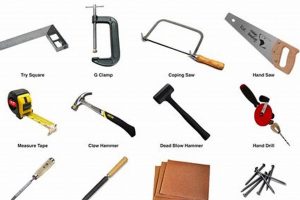
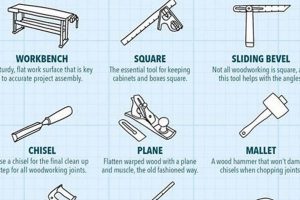
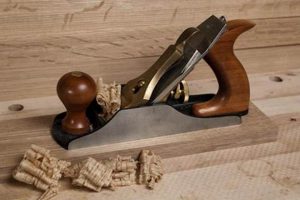
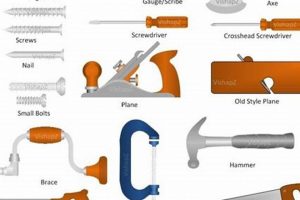
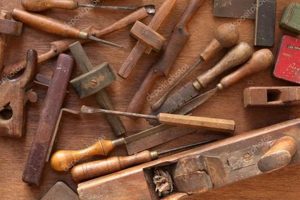
Implements manipulated directly by the artisan’s hand to shape and refine timber are fundamental to the craft of transforming raw material into functional or aesthetic objects. A plane, for example, serves to smooth a rough-sawn board, while a chisel permits the creation of precise joinery. These instruments, relying on manual dexterity and applied force, represent a direct connection between the worker and the material.
The utilization of these implements offers significant advantages, including enhanced control and precision, especially valuable in intricate work. Furthermore, their deployment fosters a deeper understanding of material properties and the inherent limitations of wood. Historically, these instruments were the primary means of fabrication, shaping not only material culture but also influencing the development of construction techniques and artistic expression across civilizations.
The ensuing discussion will delve into specific categories of these instruments, examining their applications, maintenance requirements, and selection criteria to inform both novice and experienced practitioners. Focus will be placed on understanding how the selection of appropriate instruments can significantly enhance the quality and efficiency of the woodworking process.
Essential Usage Considerations
Optimal performance and longevity of implements depend on careful attention to detail throughout the woodworking process. The following guidelines aim to maximize the effectiveness of manual shaping and cutting operations.
Tip 1: Sharpening is Paramount: Regular honing and sharpening of blades are essential for efficient material removal and clean cuts. A dull edge necessitates increased force, leading to inaccurate results and potential damage to the workpiece.
Tip 2: Grain Direction Awareness: Understanding the wood grain’s orientation is crucial to prevent tear-out and ensure smooth planing. Always work with the grain, not against it, to achieve the desired finish.
Tip 3: Proper Tool Selection: Choosing the correct implement for the specific task is critical. A paring chisel, for example, is better suited for delicate trimming than a heavy-duty mortise chisel.
Tip 4: Controlled Force Application: Excessive force can lead to injury or damage to the work. Employ a controlled and deliberate approach, allowing the tool’s sharpness to do the work.
Tip 5: Regular Cleaning and Maintenance: After each use, implements should be cleaned of sawdust and debris. Oiling metal parts prevents rust and maintains smooth operation.
Tip 6: Secure Workholding: Ensuring the workpiece is securely clamped or held in place prevents movement during cutting or shaping, promoting safety and accuracy.
Tip 7: Handle with Care: Store woodworking implements in a manner that protects their blades and edges from damage. A dedicated toolbox or rack can prevent accidental nicks or dulling.
Adhering to these considerations promotes safety, enhances precision, and extends the lifespan of valuable shaping and cutting instruments, contributing to superior craftsmanship.
The subsequent section will provide a detailed overview of maintenance procedures for ensuring optimal performance.
1. Precision

Precision, in the context of shaping and cutting implements, is paramount to achieving high-quality results in woodworking. Accurate joinery, smooth surfaces, and consistent dimensions depend directly on the capability of the user and implement to perform with minimal deviation from the intended outcome.
- Blade Geometry and Sharpening
The geometry of a blade edge and its sharpness are critical factors influencing cutting precision. A well-honed edge, with the appropriate bevel angle for the intended material, allows for clean, controlled cuts with minimal effort. Inversely, a dull or improperly shaped edge can lead to splintering, tear-out, and inaccurate cuts, requiring significant additional effort and potentially compromising the final product.
- Handle Design and Ergonomics
Handle design significantly influences control and precision. A comfortable, ergonomic handle allows the user to maintain a secure grip and apply force consistently and accurately. Poorly designed handles can lead to fatigue, reduced control, and an increased risk of errors. The shape, size, and material of the handle should be optimized for the specific type of operation and the user’s hand size.
- Calibration and Setup
The accuracy of these implements also depends on proper calibration and setup. For example, a hand plane requires precise adjustment of the blade depth and mouth opening to achieve a consistent shaving thickness and a smooth surface. Failure to calibrate the implements properly can result in uneven surfaces, inconsistent cuts, and increased material waste. The need to properly “dial in” the shaping and cutting implements is an essential component of achieving repeatable high precision work.
- Technique and Skill
The skill of the woodworker in using the implement is critical. Maintaining a consistent angle, applying even pressure, and following the grain of the wood are essential techniques for achieving precise cuts. Experience and practice are necessary to develop the muscle memory and tactile feedback required for consistent accuracy.
Ultimately, precision in woodworking arises from the synergistic interaction between the quality of the implements, the skill of the user, and the meticulous attention to detail throughout the entire process. Mastery of these elements is essential for achieving the highest standards of craftsmanship.
2. Sharpness

Sharpness constitutes a fundamental attribute of any effective woodworking hand tool. It directly influences the ease and precision with which the tool cuts or shapes wood. A keen edge severs wood fibers cleanly, minimizing tearing and producing a smooth surface. Insufficient sharpness necessitates increased force application, leading to reduced control and potential inaccuracies. For example, a dull chisel used to create a mortise joint can crush wood fibers, resulting in a loose and structurally unsound joint. Conversely, a razor-sharp chisel allows for precise removal of material, ensuring a tight, robust fit.
The relationship between sharpness and specific tools is particularly evident in planes and knives. A plane with a honed blade effortlessly glides across the wood surface, producing uniform shavings and a flawlessly smooth finish. However, a dull plane blade requires significant force and leaves a rough, uneven surface requiring additional sanding. Similarly, a carving knife with a razor edge enables intricate and detailed work, while a blunt knife is prone to slippage and imprecision, potentially damaging the workpiece and posing a safety hazard. Regular sharpening is, therefore, not merely a maintenance task but an integral component of safe and effective woodworking practice.
Maintaining optimal sharpness presents a consistent challenge, requiring ongoing attention and specific skills. Understanding the principles of sharpening, employing appropriate honing techniques, and utilizing suitable sharpening stones are critical for ensuring the tool performs as intended. In conclusion, sharpness is not merely a desirable characteristic; it is an essential prerequisite for achieving precision, efficiency, and safety in woodworking. Regular attention to sharpness is paramount for any woodworker aspiring to produce high-quality results.
3. Ergonomics
Ergonomics, the science of designing and arranging things people use so that the people and things interact most efficiently and safely, is of paramount importance in the design and selection of woodworking hand tools. The repetitive motions and sustained postures inherent in woodworking can lead to musculoskeletal disorders if the implements are poorly designed or used improperly. For instance, a chisel with a handle that is too small or has sharp edges can cause hand fatigue and carpal tunnel syndrome. Similarly, a saw with an improperly angled handle can strain the wrist and shoulder, leading to chronic pain.
The implementation of ergonomic principles in tool design can significantly mitigate these risks. Larger diameter handles distribute force more evenly across the hand, reducing pressure points and improving grip. Handles crafted from materials that absorb vibration can minimize the impact on the user’s joints. The angle and shape of the handle should allow for a neutral wrist posture, preventing strain and promoting efficiency. Furthermore, tool weight and balance are critical considerations. Overly heavy tools require more effort to use, increasing fatigue, while poorly balanced tools can be difficult to control, leading to inaccuracies and potential injuries. The application of ergonomic principles extends beyond the tools themselves to the overall workspace. The height of the workbench, the arrangement of tools, and the availability of adequate lighting all contribute to a more comfortable and productive woodworking environment.
Understanding the ergonomic considerations related to woodworking hand tools is not merely a matter of comfort; it is essential for preserving the woodworker’s long-term health and well-being. By selecting tools designed with ergonomics in mind and adopting proper work practices, woodworkers can minimize the risk of injury, improve efficiency, and enjoy the craft for years to come. Prioritizing ergonomic factors also contributes to improved precision and quality of the finished product, as reduced fatigue and increased comfort enable the woodworker to focus more intently on the task at hand.
4. Material Quality
The longevity, performance, and overall utility of any woodworking implement are intrinsically linked to the quality of its constituent materials. The correlation is causal: substandard materials invariably lead to diminished performance, reduced lifespan, and potentially hazardous operation. For instance, a plane crafted from low-grade steel will dull quickly, require frequent sharpening, and may even fracture under stress. Conversely, a plane made from high-carbon steel, properly hardened and tempered, will maintain its edge for extended periods, resist deformation, and provide consistent, reliable performance. The selection of appropriate materials, therefore, is not a superficial consideration but a fundamental determinant of the implement’s value and effectiveness. The effects of such choices determine the quality of the work.
Practical significance becomes evident when considering specific examples. A chisel forged from inferior steel may chip or bend when used to cut hardwood, rendering it useless for precise joinery. A saw with poorly set and tempered teeth will bind in the cut, requiring excessive force and producing a rough, uneven kerf. The handles, too, are subject to the influence of material quality. A handle made from brittle plastic may crack or shatter under impact, while a handle crafted from durable hardwood, such as ash or hickory, will withstand years of use and provide a comfortable, secure grip. Material choice ensures that the components used in the implements remain operational.
In summary, the quality of materials employed in the fabrication of woodworking implements directly dictates their performance, durability, and safety. Selection of high-grade materials is not merely a matter of aesthetic preference or marketing hype but a critical factor in achieving accurate, efficient, and safe woodworking. Failure to prioritize material quality represents a false economy, as inferior implements will inevitably require frequent replacement, lead to subpar results, and potentially cause injury. Understanding and appreciating the importance of material quality is, therefore, essential for any serious woodworker.
5. Maintenance

The operational effectiveness and longevity of woodworking implements are inextricably linked to consistent and appropriate maintenance procedures. The absence of regular upkeep results in diminished performance, accelerated wear, and potential compromise of safety. For instance, a neglected hand plane, characterized by a rusty sole and a dull blade, requires significantly greater effort to operate, produces uneven surfaces, and increases the risk of injury due to uncontrolled movement. Conversely, a well-maintained plane, with a clean, lubricated sole and a honed blade, glides effortlessly across the wood, yielding a smooth, consistent finish while minimizing strain on the user. This example underscores the causal relationship between maintenance and operational efficiency. The act of maintenance itself is a component that determines the degree of value of a wooden implement.
Specific maintenance tasks vary depending on the type of implement and the materials from which it is constructed. However, certain principles apply universally. Cleaning to remove dust, debris, and pitch is essential to prevent corrosion and ensure smooth operation. Sharpening, honing, and flattening are critical for maintaining the cutting edges of blades and the accuracy of surfaces. Lubrication reduces friction and prevents rust. Proper storage protects implements from damage and environmental factors. For example, saws should be cleaned after each use to remove sawdust, which can attract moisture and promote rust. Chisels and plane blades should be regularly honed to maintain their sharpness. Wooden handles should be periodically treated with linseed oil to prevent drying and cracking. These actions ensure that the tools are ready when the craftsman needs them and increase the implements’ lifespan.
In conclusion, diligent maintenance is not merely a supplementary activity but an integral aspect of woodworking, directly impacting the performance, durability, and safety of these tools. Neglecting maintenance results in degraded performance, increased risk of injury, and premature tool failure. The effort invested in proper care is a worthwhile investment that preserves the craftsman’s instruments, enhances their capabilities, and contributes to the overall quality of the finished product. The importance of the effort in maintaining a wooden instrument cannot be overstated, because a poorly maintained implement will fail sooner than one under constant maintenance.
Frequently Asked Questions
The following section addresses common inquiries and misconceptions regarding the selection, utilization, and care of implements essential to the craft of woodworking.
Question 1: What constitutes a suitable “starter set” for an aspiring woodworker unfamiliar with manual implements?
A foundational collection should include a smoothing plane, a set of chisels of varying widths, a marking gauge, a combination square, a dovetail saw, and a sharpening stone. This selection provides the necessary tools for basic tasks such as preparing stock, cutting joinery, and ensuring accuracy.
Question 2: What are the primary distinctions between high-carbon steel and alloy steel in implement construction?
High-carbon steel offers superior sharpness and edge retention but is more susceptible to corrosion. Alloy steel provides increased durability and resistance to rust but may require more frequent sharpening.
Question 3: How frequently should blades be sharpened to maintain optimal performance?
Sharpening frequency depends on usage intensity and the type of material being worked. A general guideline is to sharpen when the implement begins to require increased force or produces a less clean cut. Honing should be performed more frequently to maintain the edge between sharpenings.
Question 4: What are the common causes of tear-out during planing operations, and how can they be mitigated?
Tear-out is often caused by planing against the grain or using a dull blade. Mitigation strategies include ensuring the blade is sharp, adjusting the plane’s depth of cut, and utilizing a backer board to support the wood fibers.
Question 5: What is the proper method for flattening the back of a chisel or plane blade?
Flattening involves lapping the back of the blade on progressively finer abrasive surfaces, such as diamond plates or sharpening stones, until a perfectly flat surface is achieved. This process is crucial for achieving a keen and durable edge.
Question 6: How should woodworking implements be stored to prevent damage and corrosion?
Implements should be stored in a dry environment, preferably in a dedicated toolbox or on a rack. Metal surfaces should be lightly oiled to prevent rust, and blades should be protected with sheaths or wraps to prevent accidental damage.
Effective utilization of these implements hinges on a comprehensive understanding of their capabilities, limitations, and appropriate maintenance protocols. Continued education and practical experience are essential for mastering the art of woodworking.
The subsequent section will address the selection of specific implements based on project requirements and individual skill level.
Conclusion
The preceding discussion has elucidated the multifaceted nature of woodworking hand tools, encompassing their definition, advantages, essential considerations for usage, and specific factors that influence their performance, namely precision, sharpness, ergonomics, material quality, and maintenance. These elements are interconnected and collectively determine the effectiveness of the implement in transforming raw material into finished form.
Proficient application of these shaping and cutting instruments demands a synthesis of knowledge, skill, and attentive practice. Understanding the nuances of tool selection, coupled with consistent maintenance, enables practitioners to achieve superior results while fostering a deeper appreciation for the time-honored traditions of woodworking. Continued exploration and refinement of these skills will undoubtedly contribute to preserving and advancing this enduring craft.