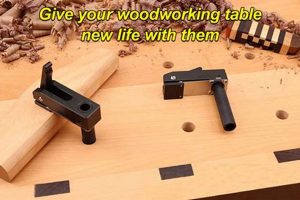
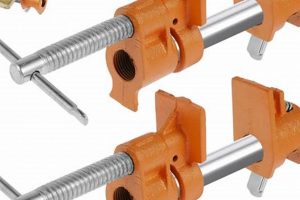
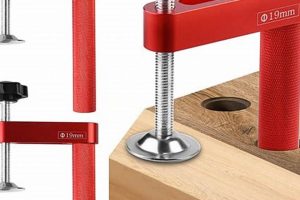
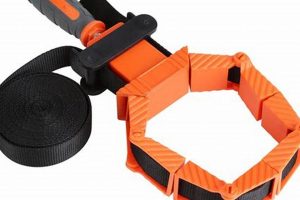
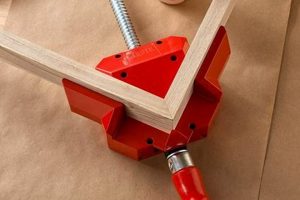
Bar clamps, essential tools in woodworking, provide the necessary force to hold components securely during gluing and assembly. These devices consist of a long bar, typically steel or aluminum, with a fixed head at one end and a sliding jaw that can be tightened against the workpiece using a screw mechanism. Their primary function is to apply even pressure across a joint, ensuring a strong and accurate bond. An example of its usage is clamping together pieces of lumber when creating a table top, preventing gaps and distortions as the adhesive cures.
The effectiveness of woodworking projects hinges on the ability to maintain precise alignment and apply consistent pressure. Using quality clamps contributes directly to the structural integrity and aesthetic appeal of finished items. Historically, rudimentary clamping methods existed, but the development of the modern bar clamp has significantly improved efficiency and accuracy in woodworking. This advancement allows for the creation of complex and durable structures with greater ease and reliability.
The following sections will delve into the key features to consider when selecting these tools, explore the diverse range of options available on the market, and provide guidance on their proper usage and maintenance. This information will empower woodworkers to make informed decisions and optimize their clamping strategies for superior results.
Essential Guidelines for Optimized Woodworking Clamping
The following guidelines offer crucial insights into effectively using clamping tools in woodworking. Proper application ensures accurate assemblies and durable construction.
Tip 1: Assess Clamping Needs: Before acquiring clamping tools, evaluate the typical project scope. Small-scale projects may benefit from lighter-duty options, while larger assemblies necessitate heavier-duty, longer-reach models. This proactive assessment prevents inadequate clamping force or reach.
Tip 2: Select Appropriate Length: The clamp’s length must exceed the widest dimension of the workpiece. Insufficient length compromises the clamping force and overall effectiveness. For example, clamping a 36-inch wide tabletop requires clamps longer than 36 inches to accommodate the clamp heads.
Tip 3: Distribute Clamping Pressure Evenly: Use multiple clamps spaced evenly across the joint. This prevents localized pressure points and ensures a consistent bond. Uneven pressure can lead to warping or gaps in the final assembly.
Tip 4: Employ Protective Pads: Utilize soft pads, such as wood shims or cork, between the clamp jaws and the workpiece. This safeguards the wood surface from indentations and blemishes caused by direct contact with the metal clamp.
Tip 5: Avoid Over-Tightening: Excessive clamping force can damage the wood fibers, weakening the joint. Apply sufficient pressure to close the joint securely without crushing the wood. A properly glued joint does not require extreme pressure.
Tip 6: Consider Jaw Depth: Jaw depth, or throat depth, is the distance from the bar to the clamping surface. Choose models with sufficient jaw depth for projects requiring clamping beyond the edge of the material. In situations where this is not enough, specialized deep-reach clamps may be necessary.
Tip 7: Regularly Maintain Clamps: Clean clamp threads and bars to remove glue residue and sawdust. Lubricate moving parts to ensure smooth operation and prevent corrosion. Regular maintenance prolongs the lifespan and effectiveness of the tools.
Following these guidelines enhances the quality and durability of woodworking projects by ensuring properly aligned and securely bonded joints. Adhering to these practices contributes to professional-grade results and minimizes potential errors.
The subsequent sections will further elaborate on specific clamp types and their applications, providing a more comprehensive understanding of woodworking clamping strategies.
1. Clamping Force

Clamping force is a fundamental consideration when selecting bar clamps for woodworking. It dictates the maximum pressure the clamp can exert on a joint, directly influencing the strength and integrity of the bond. Adequate clamping force ensures tight, gap-free joints, while insufficient force can lead to weak or failed assemblies.
- Material Hardness
The type of wood being worked with directly affects the required clamping force. Hardwoods, such as maple or oak, necessitate greater force to compress their dense fibers and achieve a tight bond compared to softwoods like pine or cedar. Selecting bar clamps with appropriate clamping force ratings prevents joint failure when working with denser materials.
- Joint Type
Different joint types demand varying levels of clamping force. Miter joints, with their angled surfaces, often require higher force to maintain alignment during glue-up than simpler butt joints. Complex joinery, such as dovetails or mortise-and-tenon joints, also benefits from robust clamping force to ensure precise engagement and secure adhesion.
- Clamp Mechanism Efficiency
The design and mechanism of a bar clamp influence the clamping force it can deliver. Clamps with smooth-operating screw mechanisms and durable threads are more efficient at translating user input into actual clamping pressure. Gear ratios and the quality of materials used in the clamp’s construction also contribute to its overall force-generating capacity.
- Workpiece Dimensions
The size and geometry of the workpiece affect the distribution of clamping force. Larger or more complex assemblies require multiple clamps to distribute pressure evenly across the joints. Failure to provide adequate support can lead to uneven clamping force and compromised joint integrity. The length and rigidity of the clamp bar also impact its ability to maintain consistent pressure over extended spans.
Effective utilization of bar clamps in woodworking hinges on selecting tools that provide sufficient clamping force for the specific materials, joint types, and workpiece dimensions involved. Understanding the interplay of these factors enables woodworkers to achieve strong, durable, and aesthetically pleasing results. It is important to remember that while maximizing force may seem beneficial, over-tightening can damage the wood fibers and weaken the joint, highlighting the need for a balanced approach.
2. Jaw Capacity

Jaw capacity, the maximum distance between the clamping surfaces of a bar clamp, directly influences the size of the workpiece it can accommodate. This specification is a critical determinant in selecting an appropriate tool for a given woodworking task. Insufficient jaw capacity renders a clamp unusable, while excessive capacity may lead to inefficiency and reduced precision.
- Project Dimensions
The overall dimensions of a woodworking project dictate the necessary jaw capacity. Larger assemblies, such as tabletops or cabinets, require clamps with extended reach to span the width or length of the components being joined. Measuring the maximum dimension of the workpiece prior to selecting clamps is essential to ensure proper fit and functionality. Inadequate reach necessitates the use of multiple smaller clamps, potentially compromising even pressure distribution.
- Edge Clamping vs. Face Clamping
The method of clampingwhether applied to the edge or the face of the workpieceaffects the required jaw capacity. Edge clamping, commonly used for assembling panels or attaching edging, generally requires less capacity than face clamping, which is often employed when securing larger, flat surfaces. Recognizing the intended clamping technique enables a more precise determination of the necessary tool specifications.
- Throat Depth Considerations
While jaw capacity defines the maximum workpiece width, throat depth, the distance from the bar to the clamping surface, also plays a role. Deeper throat depths allow for clamping further away from the edge of a piece, useful in situations where edge clamping is not feasible or desirable. A balance between sufficient jaw capacity and appropriate throat depth ensures versatility in a variety of woodworking applications.
- Clamp Design and Application
The design of a bar clamp impacts its effective jaw capacity. Some clamps feature adjustable heads or extensions that can increase their maximum reach. Specialized clamps, such as pipe clamps with variable pipe lengths, offer adaptable capacity to suit diverse project requirements. The intended application should guide the selection of a clamp design that optimizes both reach and clamping force.
Selecting bar clamps with suitable jaw capacity requires careful consideration of project dimensions, clamping techniques, and clamp design. Matching the tool to the task ensures secure and effective clamping, contributing to the overall quality and durability of the woodworking project. Neglecting this specification can lead to compromised joints, warped assemblies, and inefficient workflow. The assessment of jaw capacity is, therefore, an integral part of the selection process.
3. Parallel Clamping

Parallel clamping denotes the application of even pressure across the entire surface of a joint, crucial for achieving flat, structurally sound assemblies in woodworking. Its effectiveness is intrinsically linked to the quality and design of clamping tools, making it a key consideration when evaluating the “best bar clamps for woodworking.”
- Even Pressure Distribution
Parallel clamping ensures that pressure is uniformly distributed across the joint, preventing localized stress points that can lead to warping or weak bonds. High-quality bar clamps designed for parallel clamping feature jaws that remain aligned throughout the tightening process. An example is clamping a large tabletop where consistent pressure along the entire glue line minimizes the risk of cupping or bowing.
- Accuracy in Assembly
The capacity to maintain parallel clamping is critical for precise alignment of components during assembly. Bar clamps designed for parallel clamping minimize racking or twisting, ensuring that parts remain square and true throughout the gluing process. This is particularly important when constructing cabinets or other case goods, where dimensional accuracy is paramount.
- Clamp Jaw Design
The design of the clamp jaws directly impacts the ability to achieve parallel clamping. Clamps with wide, flat jaws provide a larger surface area for pressure distribution, reducing the likelihood of indentation or damage to the workpiece. Self-squaring jaws automatically adjust to the angle of the workpiece, maintaining parallel alignment even on slightly uneven surfaces. The jaw design of “best bar clamps for woodworking” must prioritize even pressure distribution to minimize errors and warping during assembly.
- Clamp Bar Rigidity
The rigidity of the clamp bar is essential for maintaining parallel clamping. A flexible bar can deflect under pressure, leading to uneven pressure distribution and compromised joint integrity. High-quality bar clamps utilize robust steel or aluminum bars to minimize deflection and ensure consistent pressure across the joint. This is particularly important when clamping large panels or long pieces of lumber, where bar deflection can significantly impact the flatness of the finished assembly. Prioritizing bar rigidity is essential when choosing the “best bar clamps for woodworking.”
The ability to achieve and maintain parallel clamping is a hallmark of high-quality bar clamps. Selecting “best bar clamps for woodworking” should prioritize features that promote even pressure distribution, accurate alignment, and minimal deflection, ultimately contributing to the creation of durable, aesthetically pleasing woodworking projects.
4. Durability
Durability, a paramount attribute in bar clamps, directly correlates with longevity and sustained performance in woodworking applications. Its presence ensures that the tool withstands repeated use and demanding conditions, making it a central consideration when identifying the “best bar clamps for woodworking.”
- Material Composition
The materials utilized in the construction of a bar clamp significantly influence its overall durability. Hardened steel bars resist bending and deformation under pressure, while cast iron or hardened steel jaws withstand repeated clamping forces without cracking or stripping. Rust-resistant coatings, such as zinc plating or powder coating, protect against corrosion, extending the clamp’s lifespan. The selection of high-quality materials is a key indicator of durability in bar clamps.
- Construction Quality
The manner in which a bar clamp is assembled impacts its ability to endure prolonged use. Welded or forged components provide greater structural integrity than mechanically fastened parts. Precise machining of threads and moving parts ensures smooth operation and reduces wear. A robust and well-executed design contributes significantly to the clamp’s durability, making it a reliable tool for years.
- Resistance to Wear and Tear
Woodworking environments often expose clamps to harsh conditions, including dust, glue, and physical impacts. Durable bar clamps resist wear and tear from these factors, maintaining their clamping force and functionality over time. Features such as hardened jaw pads, reinforced handles, and protected threads enhance the clamp’s ability to withstand demanding use.
- Long-Term Performance
Ultimately, durability translates to consistent performance over an extended period. Bar clamps that retain their clamping force, resist corrosion, and maintain smooth operation offer the greatest value to woodworkers. Investing in durable clamps reduces the need for frequent replacements, saving time and money in the long run. Long-term performance is a hallmark of the “best bar clamps for woodworking.”
In summary, durability is a multifaceted attribute that encompasses material quality, construction integrity, and resistance to wear. The “best bar clamps for woodworking” prioritize these aspects, ensuring that they deliver reliable and consistent performance throughout their lifespan. Investing in durable clamps is a strategic decision that enhances productivity and reduces long-term costs, making them indispensable tools for any woodworking professional or enthusiast.
5. Ease of Use
Ease of use significantly impacts the efficiency and accuracy of woodworking projects. The “best bar clamps for woodworking” incorporate design features that minimize user fatigue and streamline the clamping process. A clamp requiring excessive force to tighten or exhibiting cumbersome adjustments diminishes productivity and increases the likelihood of errors. Thread design, handle ergonomics, and quick-release mechanisms are critical factors contributing to ease of use. For instance, a clamp with finely threaded screws allows for precise pressure application with minimal effort, reducing strain during repetitive tasks. Similarly, clamps with ergonomic handles provide a comfortable grip, enabling consistent force application without hand fatigue.
The practical significance of ease of use is evident in projects involving multiple clamps or complex assemblies. Setting up and adjusting a large number of clamps can be time-consuming and physically demanding if the tools are not designed for efficient operation. Clamps with quick-release mechanisms facilitate rapid adjustments, allowing for efficient repositioning and minimizing delays in the workflow. In contrast, a poorly designed clamp that is difficult to adjust or tighten can lead to inconsistent clamping pressure, potentially compromising the structural integrity of the joint. The overall project outcome is directly influenced by the user’s ability to operate the clamping tools effectively and efficiently.
Selecting woodworking clamps involves careful consideration of ease of use. Features such as smooth thread action, comfortable handles, and quick-release mechanisms contribute to a more efficient and less fatiguing clamping experience. The “best bar clamps for woodworking” are those that not only provide adequate clamping force and durability but also prioritize user-friendliness, ultimately enhancing the quality and productivity of woodworking projects. Challenges in achieving optimal ease of use often stem from balancing robustness with ergonomic design, requiring manufacturers to carefully engineer clamping tools that meet both performance and usability demands.
6. Bar Deflection

Bar deflection, the bending or flexing of a clamp bar under load, is a critical factor influencing the efficacy of clamping operations in woodworking. Its minimization is a defining characteristic of woodworking clamps deemed to be superior. The application of force during clamping inherently introduces stress on the clamp’s structure; a bar susceptible to deflection compromises the uniformity of pressure applied across the joint. The result is an uneven distribution of clamping force, potentially leading to skewed assemblies, weakened bonds, and aesthetically unappealing gaps. Therefore, the inverse relationship between bar deflection and clamping performance dictates that the “best bar clamps for woodworking” exhibit minimal deflection under operational loads.
For instance, consider the glue-up of a large tabletop. If clamps used exhibit significant bar deflection, the center of the panel may experience less clamping pressure than the edges. This differential pressure can lead to a subtle bowing or cupping of the tabletop as the glue cures. Clamps featuring robust bar construction from high-strength materials mitigate this issue. Designs incorporating thicker bars or those with strategically placed reinforcing ribs enhance stiffness, reducing deflection. The investment in clamps engineered to resist bending translates directly into the production of flatter, more structurally sound woodworking projects. Accurate and repeatable results are, thus, closely tied to minimizing bar deflection.
The practical significance of understanding bar deflection extends to material selection and clamp placement. When working with thin or flexible materials, the risk of inducing unwanted curvature is exacerbated by clamps prone to deflection. In such cases, the strategic placement of multiple, low-deflection clamps is crucial for achieving uniform pressure. Ultimately, the ability to recognize and mitigate bar deflection contributes to the precision and quality of woodworking endeavors. Clamps that minimize this phenomenon are essential tools for achieving professional-grade results, solidifying their position as the “best bar clamps for woodworking.”
Frequently Asked Questions
The following frequently asked questions address common concerns and misconceptions regarding bar clamps in woodworking.
Question 1: What is the ideal clamping force for softwood versus hardwood?
Softwoods generally require less clamping force than hardwoods to avoid crushing the wood fibers. Sufficient pressure to close the joint is adequate, whereas hardwoods necessitate greater force to achieve a tight bond due to their denser structure.
Question 2: How does clamp length influence the effectiveness of a glue-up?
Clamp length must exceed the width or length of the workpiece being joined. Insufficient length reduces clamping pressure and can lead to skewed assemblies. Adequate length ensures even pressure distribution across the joint.
Question 3: What are the potential consequences of over-tightening bar clamps?
Over-tightening can damage wood fibers, weaken the joint, and even cause warping. Excessive force does not improve the bond; rather, it compromises the integrity of the wood. Moderate, consistent pressure is preferable.
Question 4: How frequently should bar clamps undergo maintenance?
Bar clamps should be cleaned regularly to remove glue residue and sawdust. Threads should be lubricated to ensure smooth operation and prevent corrosion. This maintenance extends the clamp’s lifespan and maintains its performance.
Question 5: Is it necessary to use protective pads between the clamp jaws and the workpiece?
Protective pads, such as wood shims or cork, are highly recommended to prevent indentations and blemishes on the wood surface. Direct contact with metal clamp jaws can mar the finish, especially on softer woods.
Question 6: How does bar deflection affect the accuracy of woodworking assemblies?
Bar deflection, the bending of the clamp bar under load, compromises pressure uniformity. It leads to uneven clamping force, potentially causing warped or skewed assemblies. Minimizing bar deflection is crucial for achieving accurate and structurally sound results.
Proper selection and utilization of bar clamps significantly enhance the quality and durability of woodworking projects. Understanding these key considerations ensures optimized clamping strategies for superior outcomes.
The succeeding sections will provide detailed reviews of specific bar clamp models, offering further insight into their features and suitability for various woodworking applications.
Conclusion
The preceding analysis has illuminated the salient factors defining “best bar clamps for woodworking.” Clamping force, jaw capacity, parallel clamping ability, durability, ease of use, and minimal bar deflection each contribute to the overall effectiveness of these essential tools. Careful consideration of these attributes, aligned with the specific demands of individual woodworking projects, is paramount for achieving optimal outcomes. Neglecting these considerations risks compromised joint integrity, skewed assemblies, and diminished project quality.
The selection of woodworking clamps represents a critical investment. By prioritizing performance characteristics and matching tools to task, woodworkers can significantly enhance their productivity and the longevity of their creations. Continued research and informed purchasing decisions will further refine clamping techniques and elevate the craft. Therefore, a deliberate and knowledgeable approach to acquiring and utilizing “best bar clamps for woodworking” remains essential for success in this field.