



Effective organization of fastening tools is paramount in any woodworking environment. These tools, essential for securing workpieces during assembly and fabrication processes, require a dedicated system to maintain accessibility and prevent damage. Solutions range from wall-mounted racks to mobile carts, each designed to accommodate varying clamp sizes and quantities. For instance, a parallel clamp benefits from vertical storage to prevent jaw misalignment, while smaller spring clamps can be efficiently stored in bins or on pegboards.
The implementation of a structured method offers several advantages. It streamlines workflow by reducing search time, contributing to increased project efficiency. Furthermore, it minimizes the risk of damage to these critical tools, extending their lifespan and preserving their operational effectiveness. Historically, rudimentary storage methods were common; however, the evolution of woodworking has driven the development of more sophisticated and purpose-built solutions to address the specific needs of modern workshops.
This article will delve into diverse strategies for achieving optimal arrangement of these fastening tools, considering factors such as space constraints, clamp types, and budget considerations. Exploration of DIY options versus commercially available products, coupled with insights into maximizing workshop space, will provide a comprehensive guide for woodworkers seeking to enhance their organizational infrastructure.
Woodworking Clamp Storage
Effective organization of woodworking clamps is crucial for maintaining a safe and efficient workspace. The following tips outline practical strategies for optimizing storage solutions.
Tip 1: Conduct a Clamp Inventory. Before implementing any storage system, assess the quantity and types of clamps currently owned. This evaluation provides a clear understanding of storage requirements.
Tip 2: Categorize Clamps by Type and Size. Grouping clamps according to their design (e.g., bar clamps, pipe clamps, spring clamps) and length facilitates quick retrieval. This organization reduces search time during projects.
Tip 3: Utilize Vertical Storage Solutions. Wall-mounted racks or pegboards are effective for maximizing floor space. These systems allow for easy visibility and accessibility of clamps.
Tip 4: Construct Dedicated Clamp Racks. Custom-built racks tailored to specific clamp dimensions ensure secure storage and prevent damage. Consider the weight capacity of the rack material.
Tip 5: Implement Mobile Storage Options. For larger workshops, a mobile cart with designated clamp compartments offers flexibility and portability. Ensure the cart has locking casters for safety.
Tip 6: Consider Overhead Storage. Suspended racks can utilize often-underutilized overhead space. Ensure the rack is securely mounted and can support the weight of the clamps.
Tip 7: Protect Clamp Threads and Jaws. Implement measures to prevent rust and damage to critical clamp components. Regularly cleaning and lubricating threads extends the lifespan of the clamps.
Optimizing the arrangement of woodworking clamps contributes significantly to overall workshop efficiency and tool longevity. A well-organized system minimizes downtime and ensures readily available access to essential fastening tools.
The subsequent sections of this article will explore specific storage solutions and DIY construction techniques in greater detail.
1. Accessibility

The ease with which a woodworker can retrieve a necessary clamp directly impacts project completion time and overall workflow efficiency. In the context of “woodworking clamp storage,” accessibility refers to the speed and simplicity of locating, extracting, and returning clamps to their designated locations. A poorly designed storage system results in wasted time searching for the correct clamp, potentially disrupting the workflow and leading to frustration. For instance, a pile of clamps stored haphazardly in a corner necessitates a manual search, delaying project progress. Conversely, a system with clearly labeled, readily accessible racks allows for immediate retrieval, minimizing downtime.
Effective accessibility is not solely about proximity; it is also about organization and visibility. A wall-mounted rack, for example, might be conveniently located but ineffective if clamps are obscured or tangled. The orientation of the clamps within the storage unit, the spacing between clamps, and the clear labeling of sizes or types contribute significantly to ease of access. Furthermore, the physical ergonomics of accessing the storage solution are important. High shelves or awkwardly positioned racks diminish accessibility, particularly for individuals with limited mobility or strength. Therefore, the design must consider user reach and ease of manipulation.
In conclusion, accessibility is a critical component of efficient “woodworking clamp storage.” It transcends mere physical proximity, encompassing organizational structure, visibility, and user ergonomics. Prioritizing accessibility minimizes wasted time, improves workflow, and ultimately enhances the overall productivity of the woodworking environment. The failure to address accessibility concerns results in a system that is functionally deficient, regardless of other positive attributes such as space efficiency or aesthetic appeal.
2. Space Optimization

Space optimization, in the context of woodworking, represents a critical factor influencing workshop functionality and overall efficiency. Maximizing available area, particularly within constrained environments, is paramount. Effective “woodworking clamp storage” directly contributes to space optimization, enabling a more organized and productive workspace.
- Vertical Storage Utilization
Vertical storage leverages wall space, effectively freeing up floor area. Implementing wall-mounted racks, pegboards, or shelving units allows for the storage of numerous clamps in a compact footprint. For example, a French cleat system provides versatile clamp storage while keeping the floor clear, mitigating tripping hazards and improving maneuverability within the workshop. This is particularly crucial in smaller workshops where every square foot matters.
- Mobile Storage Solutions
Mobile carts and rolling clamp racks offer a dynamic approach to space management. These solutions allow for the relocation of clamp storage to the immediate vicinity of the workbench, minimizing travel time and maximizing workspace flexibility. A rolling cart equipped with various clamp holders can be moved out of the way when not in use, reclaiming valuable floor space for other tasks. This adaptability is essential in workshops that handle diverse project types and require frequent reconfiguration of the workspace.
- Overhead Storage Implementation
Overhead space often remains underutilized in woodworking environments. Suspending clamp racks from the ceiling or rafters provides an efficient solution for storing less frequently used or larger clamps. Securely mounted overhead racks free up wall and floor space, contributing to a more spacious and organized workshop. Careful consideration must be given to weight capacity and accessibility when implementing overhead storage solutions.
- Combined Storage Systems
Integrating multiple storage strategies can yield optimal space utilization. For example, combining wall-mounted racks for frequently used clamps with a mobile cart for specialized or project-specific clamps provides a comprehensive and adaptable storage solution. This approach allows for tailored storage configurations to meet individual workshop needs and project demands, maximizing both efficiency and space utilization.
These diverse strategies underscore the importance of integrating space optimization principles within “woodworking clamp storage” design. By maximizing vertical space, implementing mobile solutions, leveraging overhead areas, and combining storage systems, woodworkers can create efficient and organized workspaces that promote productivity and safety. Failure to address space optimization results in cluttered and inefficient workshops, hindering project completion and increasing the risk of accidents.
3. Clamp type

The diversity of clamp types necessitates tailored “woodworking clamp storage” solutions. Each clamp design presents unique storage challenges, impacting space efficiency, accessibility, and long-term preservation of tool functionality. A universal storage approach proves inadequate given the varying shapes, sizes, and operational mechanisms inherent in different clamp categories.
- Bar Clamps and Parallel Clamps
Bar clamps and parallel clamps, characterized by their elongated bars, demand horizontal or vertical support systems to prevent warping or bending. Horizontal storage necessitates ample linear space, while vertical storage requires secure anchoring to prevent toppling. Improper storage can compromise the clamping force and accuracy of these tools, leading to project defects.
- Pipe Clamps
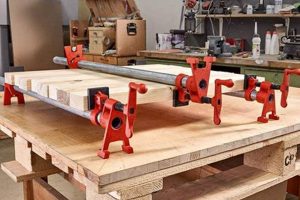
Pipe clamps, composed of adjustable heads and threaded pipes, pose unique storage considerations. The pipe length dictates storage dimensions, and the threaded ends require protection from damage or rust. A common approach involves wall-mounted racks that support the pipes horizontally, preventing bending and facilitating easy access. Separate storage of the clamp heads ensures their protection from impacts and debris.
- Spring Clamps
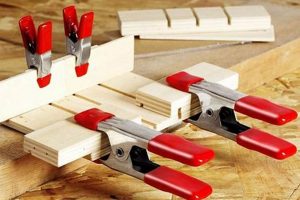
Spring clamps, typically smaller and lighter than other clamp types, benefit from storage solutions that prioritize accessibility and organization. Bins, pegboards, or magnetic strips offer effective storage options, preventing entanglement and facilitating rapid retrieval. Their compact size allows for dense storage configurations, maximizing space efficiency within the workshop.
- Corner Clamps and Specialty Clamps
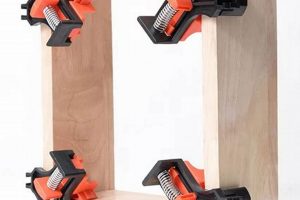
Corner clamps and other specialty clamps, designed for specific applications, often require custom storage solutions. Their unique shapes and sizes may not conform to standard rack systems. Dedicated storage slots or drawers provide secure and organized storage, preventing damage and ensuring their availability when needed. Clear labeling of these storage locations is essential for efficient retrieval.
The correlation between clamp type and “woodworking clamp storage” highlights the need for adaptable and thoughtful storage strategies. Recognizing the specific requirements of each clamp design ensures optimal space utilization, tool protection, and workflow efficiency. A well-planned storage system accounts for the diversity of clamp types, promoting a safer and more productive woodworking environment.
4. Protection
The preservation of woodworking clamps is intrinsically linked to the design and implementation of their storage solutions. Inadequate “woodworking clamp storage” invariably leads to accelerated degradation of these essential tools, impacting their performance and lifespan. Environmental factors, physical impacts, and improper handling contribute to this deterioration, emphasizing the critical role of protection as a core tenet of effective storage practices. For instance, exposure to humidity and temperature fluctuations can cause rust formation on steel components, weakening the clamp’s structural integrity and diminishing its clamping force. Similarly, haphazard storage often results in accidental drops or collisions, leading to jaw misalignment, thread damage, or handle breakage. These seemingly minor damages compound over time, rendering the clamps unusable or necessitating costly repairs or replacements.
Practical examples illustrate the significant impact of protective storage. Consider bar clamps stored horizontally on a bare concrete floor. The direct contact with the abrasive surface can scratch the bars, reducing their smooth gliding action. Moreover, moisture absorbed from the concrete accelerates rust formation, particularly in humid climates. Conversely, clamps stored on a purpose-built rack with padded supports and a protective coating are shielded from these detrimental factors. The padding minimizes scratches, while the coating prevents moisture ingress, thereby extending the clamp’s operational life. Likewise, spring clamps stored in an open bin are susceptible to tangling and spring fatigue. In contrast, individual compartments or pegboard arrangements prevent tangling and reduce stress on the springs, preserving their clamping power over time.
In summary, protection is not merely an ancillary benefit of “woodworking clamp storage,” but a fundamental design consideration. Prioritizing protection minimizes wear and tear, prevents environmental damage, and ultimately prolongs the lifespan of these valuable tools. Addressing potential threats through deliberate storage design, such as using appropriate materials, implementing protective coatings, and adopting organized storage methods, is essential for maintaining the functionality and economic value of woodworking clamps. Failure to recognize and address these protective measures leads to premature tool failure and increased operational costs, undermining the overall efficiency of the woodworking environment.
5. Organization

The efficiency of any woodworking operation hinges significantly on the meticulous organization of tools and materials. In the context of “woodworking clamp storage,” organization transcends simple arrangement; it becomes a critical determinant of workflow efficiency, safety, and the longevity of the clamps themselves. Disorganized clamp storage leads to wasted time searching for specific clamps, increased risk of damage to the tools, and a potentially hazardous work environment. The causal relationship is direct: poor organization precipitates inefficiencies, while effective organization fosters productivity. For example, a workshop with clamps scattered haphazardly across shelves or piled in corners suffers from reduced operational tempo. Conversely, a well-organized system utilizing labeled racks and designated storage locations allows for rapid retrieval, minimizing downtime and maximizing productive work hours.
Organization, as an integral component of woodworking clamp storage, necessitates a systematic approach. This includes categorizing clamps by type and size, implementing logical storage configurations, and maintaining a clear inventory management system. A practical application involves color-coding clamp types or sizes, enabling immediate visual identification. Furthermore, consistent placement of clamps within their designated storage locations fosters a sense of order and predictability, reducing the likelihood of misplacement and enhancing retrieval speed. The physical layout of the storage system should also align with the frequency of use; commonly used clamps should be positioned in readily accessible locations, while less frequently used clamps can be stored in more remote areas. This strategic arrangement optimizes workflow and minimizes unnecessary movement within the workshop.
The practical significance of understanding the connection between organization and woodworking clamp storage lies in its direct impact on project outcomes and overall workshop efficiency. A well-organized system not only saves time and reduces tool damage but also promotes a safer and more professional working environment. Challenges to maintaining organization include space limitations and the acquisition of new clamps over time. Overcoming these challenges requires ongoing evaluation and adaptation of the storage system to accommodate evolving needs. By prioritizing organization as a fundamental element of woodworking clamp storage, woodworkers can significantly enhance their productivity, safety, and the longevity of their valuable clamping tools.
6. Capacity
Capacity, in the context of “woodworking clamp storage,” directly dictates the system’s ability to accommodate a workshop’s existing clamp inventory and anticipated future acquisitions. A mismatch between storage capacity and the actual number of clamps results in inefficiencies, overcrowding, and potential damage to the tools. The effect of insufficient capacity manifests as clamps being stored haphazardly, increasing the likelihood of misalignment, rust, and physical damage. Conversely, a well-planned storage system with adequate capacity facilitates organized storage, easy access, and prolonged tool lifespan. The importance of capacity as a component of “woodworking clamp storage” lies in its direct influence on workflow efficiency and the protection of valuable assets. For example, a woodworker who frequently handles large projects necessitating numerous clamps requires a storage solution with a correspondingly high capacity. Failure to account for this need results in a chaotic and unproductive workspace.
Practical applications of capacity planning involve careful assessment of the current clamp inventory, projection of future needs, and selection of storage solutions that can accommodate these requirements. This may involve implementing modular storage systems that can be expanded as the clamp collection grows, utilizing vertical storage to maximize space utilization, or employing mobile carts for versatile capacity management. The selection of appropriate storage materials and construction techniques further contributes to effective capacity management. Robust racks constructed from durable materials can support heavier loads, while thoughtfully designed compartments prevent overcrowding and potential damage to the clamps. Moreover, the physical dimensions of the storage units should align with the sizes and types of clamps being stored, ensuring efficient space utilization and preventing wasted space.
In conclusion, the connection between capacity and “woodworking clamp storage” is fundamental to workshop organization and efficiency. Adequately addressing capacity needs is not merely a matter of accommodating existing tools but also a strategic investment in future productivity and tool longevity. Challenges to effective capacity management include space constraints, budget limitations, and evolving project requirements. However, by prioritizing capacity planning as an integral aspect of storage design, woodworkers can create optimized workspaces that support efficient workflow, minimize tool damage, and enhance overall productivity.
Frequently Asked Questions
This section addresses common inquiries regarding the optimal organization and preservation of woodworking clamps, offering practical guidance for enhancing workshop efficiency.
Question 1: What are the primary benefits of implementing a dedicated woodworking clamp storage system?
A dedicated system optimizes workspace utilization, reduces search time for specific clamps, minimizes the risk of tool damage, and promotes a safer work environment. Efficient storage contributes directly to increased productivity and project quality.
Question 2: What factors should be considered when determining the appropriate type of woodworking clamp storage?
Key factors include available workshop space, the quantity and types of clamps owned, budget constraints, and the desired level of accessibility. Prioritize solutions that address specific organizational needs and spatial limitations.
Question 3: How can rust formation be prevented on woodworking clamps?
Regular cleaning, application of rust inhibitors, and storage in a dry environment are essential. Consider storing clamps in a temperature-controlled space to minimize condensation, which accelerates rust formation.
Question 4: Is it advisable to construct custom woodworking clamp storage solutions?
Custom solutions offer tailored storage to specific clamp types and workshop dimensions. However, accurate planning, material selection, and construction skills are necessary. Evaluate the cost-effectiveness compared to commercially available options.
Question 5: How should different types of woodworking clamps (e.g., bar clamps, pipe clamps, spring clamps) be organized within a storage system?
Categorization by type and size facilitates efficient retrieval. Bar clamps and pipe clamps benefit from horizontal or vertical racking, while spring clamps can be stored in bins or on pegboards. Ensure each clamp type has designated storage to prevent damage.
Question 6: What are the potential consequences of neglecting proper woodworking clamp storage?
Neglecting proper storage leads to increased tool damage, reduced workspace efficiency, potential safety hazards, and premature replacement of clamps. The cumulative effect significantly increases operational costs and negatively impacts project quality.
Effective clamp management necessitates a proactive approach to storage design and implementation. Prioritizing organization, protection, and accessibility enhances workshop efficiency and preserves valuable woodworking tools.
The subsequent sections of this article will explore specific storage solution options and provide guidance on selecting the most appropriate system for individual workshop needs.
Conclusion
This exploration of “woodworking clamp storage” has underscored the criticality of a systematic approach to tool management within the woodworking environment. Key factors, including accessibility, space optimization, clamp type considerations, protection strategies, organization principles, and capacity planning, collectively influence the efficacy of any storage solution. The integration of these elements directly impacts workflow efficiency, tool longevity, and overall workspace safety.
The long-term benefits of a well-designed system extend beyond mere convenience, representing a tangible investment in operational productivity and cost savings. Therefore, the implementation of deliberate strategies for woodworking clamp storage warrants serious consideration, contributing to a more organized, efficient, and ultimately, more successful woodworking endeavor.
![Top-Rated: Best Quick Clamps for Woodworking Projects [2024] | Step-by-Step Guides, Tools & Inspiration to Build Beautiful Wooden Decor on a Budget](https://woodfromhome.com/wp-content/uploads/2026/04/th-264-300x200.jpg "Top-Rated: Best Quick Clamps for Woodworking Projects [2024] Step-by-Step Guides, Tools & Inspiration to Build Beautiful Wooden Decor on a Budget")