



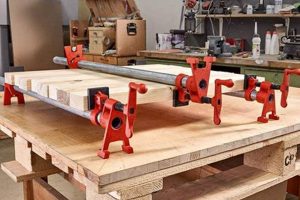
These tools, essential for securing workpieces during adhesive bonding, consist of a clamping mechanism that slides onto a length of standard threaded pipe. Applying pressure through tightening the mechanism provides uniform force across a broad surface. A typical use case is the assembly of large panels or furniture components where even clamping pressure is crucial for structural integrity.
Their utility lies in their adaptability to various project sizes; the length of the pipe dictates the maximum clamping capacity. This flexibility makes them invaluable in both professional woodworking shops and hobbyist environments. Historically, these types of clamps have offered a cost-effective alternative to more specialized clamping systems, retaining popularity due to their simplicity and robustness.
The following sections will delve into the selection criteria, optimal usage techniques, maintenance procedures, and safety considerations associated with employing this versatile clamping solution within woodworking practices.
Essential Usage Guidelines
The proper application of these woodworking tools enhances project quality and ensures user safety. Consider the following guidelines for optimal results.
Tip 1: Pipe Selection Matters: Select a pipe with sufficient strength and minimal surface corrosion. Schedule 40 steel pipe is generally recommended. Inspect pipe threads for damage prior to use; damaged threads compromise clamping force and can lead to slippage.
Tip 2: Parallel Alignment is Critical: Ensure the clamping faces remain parallel during tightening. Misalignment results in uneven pressure distribution and potential workpiece damage or joint failure. Utilize shims or cauls when necessary to maintain parallelism.
Tip 3: Pressure Management is Key: Apply adequate, but not excessive, clamping pressure. Over-tightening can deform the workpiece or damage the clamp mechanism. Gradual tightening and even distribution are preferred.
Tip 4: Surface Protection is Essential: Always use cauls or clamping blocks between the clamp faces and the workpiece. These protect the wood surface from indentation and prevent adhesive from bonding to the clamps. Consider using wax paper between the caul and the wood for additional protection from glue squeeze-out.
Tip 5: Regular Maintenance Prolongs Life: Clean the pipe threads and clamp mechanism after each use to remove adhesive residue and sawdust. Periodically lubricate the threads to ensure smooth operation and prevent corrosion. Store clamps in a dry environment to prevent rust.
Tip 6: Thread Engagement is Paramount: Ensure sufficient thread engagement between the clamp head and the pipe. Insufficient engagement weakens the assembly and increases the risk of clamp failure under load. Visually inspect the thread engagement before applying significant clamping pressure.
Tip 7: Clamping Sequence Matters: When clamping multiple joints simultaneously, alternate the tightening sequence. This ensures even pressure distribution across all joints, preventing localized stress and potential bond failure.
Effective use of these methods yields stronger, more reliable joints, contributing to the overall durability and aesthetic appeal of woodworking projects.
The subsequent sections will explore specific project applications and advanced techniques associated with this valuable clamping system.
1. Threaded Pipe Integrity

The threaded pipe forms the structural backbone of the clamping assembly. Its integrity directly impacts the clamping force and overall stability. Damage to the threads, such as stripping or corrosion, reduces the effective contact area between the clamp mechanism and the pipe. This diminished contact impairs the clamp’s ability to maintain a consistent and secure grip on the workpiece, potentially leading to joint failure. For instance, using a pipe with damaged threads to clamp a mitered corner joint might result in joint slippage during glue-up, compromising the accuracy and strength of the finished piece.
Beyond the immediate clamping force, the pipe’s thread integrity affects the longevity and safe operation of the entire assembly. A compromised pipe is more prone to catastrophic failure under stress, posing a risk of injury to the user and damage to the project. Regular inspection of the pipe threads is essential; any signs of degradation, such as rust, pitting, or flattened threads, warrant immediate replacement. Consider a scenario where several panels are being edge-glued to create a tabletop; the failure of a single clamp due to thread degradation can disrupt the alignment of all the panels, necessitating costly rework.
In summary, maintaining the threaded pipe in good condition is not merely a matter of convenience but a critical safety and quality control measure. Compromised threads compromise the effectiveness of the clamping assembly, leading to potential project failure and safety hazards. Regular inspections, proper storage, and the timely replacement of damaged pipes are essential for realizing the full potential of clamping systems.
2. Clamping Pressure Control

Clamping pressure control is paramount when employing pipe clamps in woodworking applications. The applied force directly influences joint strength, material integrity, and the final product’s aesthetic quality. Achieving optimal clamping pressure requires a nuanced understanding of material properties and joint construction.
- Material Compression
Excessive pressure can compress softer wood species, such as pine or cedar, leading to deformation or visible indentation around the clamp pads. Conversely, insufficient pressure on hardwoods, like maple or oak, may result in a weak or incomplete bond. For example, over-tightening a pipe clamp on a pine drawer front can permanently mar the surface, while under-tightening a clamp on an oak tabletop can cause joint separation after the adhesive cures.
- Adhesive Performance
Various woodworking adhesives require specific clamping pressures to achieve optimal bond strength. Polyvinyl acetate (PVA) glues typically require moderate pressure, while epoxy resins may benefit from higher clamping forces. Deviating from the recommended pressure range can compromise the adhesive’s ability to properly wet and bond the wood fibers. An instance of this would be failing to apply adequate clamping pressure when using epoxy to join a mortise and tenon joint, resulting in a weakened joint that is prone to failure under stress.
- Joint Integrity
Maintaining consistent pressure across the entire joint surface is crucial for achieving a uniform bond line. Uneven pressure can create localized stress points, leading to potential weaknesses or gaps in the joint. An example of this is a poorly clamped miter joint that develops a visible gap in the corner due to inconsistent pressure across the joint faces, compromising its aesthetic and structural integrity.
- Clamp Mechanism Limitations
The clamping mechanism itself has inherent limitations in terms of force application. Over-extending the clamp’s capacity can damage the threads, leading to slippage or complete failure. Regular maintenance and inspection of the clamp mechanism are necessary to ensure accurate and reliable pressure application. Attempting to force a pipe clamp beyond its designed limits to close a wide gap in a woodworking project can easily strip the threads, rendering the clamp unusable and potentially damaging the workpiece.
Therefore, careful management of clamping pressure, informed by material selection, adhesive properties, joint design, and the clamp’s mechanical capabilities, is essential for maximizing the effectiveness of pipe clamps in woodworking and achieving robust, aesthetically pleasing results.
3. Workpiece Surface Protection

Maintaining the integrity of the workpiece surface during clamping is a critical consideration in woodworking. Direct contact between the metal surfaces of clamping devices and the wood can result in undesirable indentations, staining, or adhesive bonding. Therefore, implementing effective protection measures is essential for preserving the aesthetic and structural qualities of the project.
- Caul Usage
Cauls, typically constructed from wood or rigid plastic, serve as intermediaries between the clamping faces and the workpiece. Their primary role is to distribute clamping pressure evenly across a broader surface area, mitigating the risk of localized indentations. For example, when edge-gluing boards to create a tabletop, cauls ensure uniform pressure along the glue lines, preventing individual boards from being pressed more deeply than others. The dimensions of the cauls should be proportionate to the size of the workpiece to maximize pressure distribution.
- Clamp Pad Selection
Many pipe clamps are equipped with metal pads that directly contact the wood. These pads can be replaced with softer alternatives made of cork, rubber, or even several layers of thick leather. The softer material conforms to the workpiece surface, minimizing the potential for damage. When clamping delicate moldings or veneers, using softer clamp pads is crucial to prevent crushing or marring the material. These softer pads must be replaced periodically as they wear and become less effective.
- Wax Paper Barrier
Adhesive squeeze-out is a common occurrence during clamping. Direct contact between the adhesive and the metal clamp faces can result in unwanted bonding. Placing a layer of wax paper between the workpiece and the clamp surfaces prevents this adhesion. This technique is particularly useful when using adhesives that create strong bonds, such as polyurethane glues. The wax paper is easily removed after the adhesive has cured, leaving a clean surface.
- Surface Preparation
Prior to clamping, ensuring the workpiece surface is free of debris, such as sawdust or wood shavings, is essential. These particles can become embedded in the wood under pressure, creating visible imperfections. A light sanding with fine-grit sandpaper can remove these particles and create a smoother surface for clamping. Furthermore, applying a finish to the wood before clamping can provide an additional layer of protection against staining or indentation.
These multifaceted approaches to workpiece surface protection contribute significantly to the successful application of clamping devices in woodworking. By understanding and implementing these protective measures, woodworkers can minimize the risk of damage and ensure the creation of high-quality, aesthetically pleasing projects.
4. Parallel Alignment Consistency

Within the context of woodworking, parallel alignment consistency represents a critical factor in the effective utilization of threaded pipe-based clamping systems. Inconsistent alignment of the clamping faces directly impacts the distribution of pressure applied to the workpiece. When the clamp faces are not parallel, the clamping force becomes concentrated on specific areas, potentially leading to uneven compression, joint misalignment, or even structural damage to the material. For instance, during the glue-up of a tabletop, if the clamping faces are not parallel, one edge of the boards might be compressed more than the other, resulting in a warped or uneven surface after the adhesive cures. This necessitates additional corrective measures, such as planing or sanding, adding time and material waste to the project.
Achieving consistent parallel alignment requires careful attention to several variables. The condition of the threaded pipe itself plays a role; bent or damaged pipes compromise the alignment of the clamping faces. Similarly, the design and construction of the clamping mechanism significantly influence its ability to maintain parallelism under load. High-quality mechanisms incorporate features that minimize deflection or tilting during tightening. The introduction of supplemental cauls rigid or semi-rigid boards placed between the clamp faces and the workpiece further enhances pressure distribution and promotes parallel alignment. Consider the construction of a cabinet door using mortise and tenon joinery; employing cauls in conjunction with correctly aligned clamping fixtures ensures the tenons are fully seated and the door remains square throughout the adhesive curing process.
In summation, maintaining parallel alignment consistency during clamping operations is not merely an ancillary concern, but a fundamental requirement for achieving structurally sound and aesthetically pleasing woodworking outcomes. Neglecting this aspect can lead to a cascade of problems, ranging from compromised joint integrity to irreversible material damage. By employing appropriate clamping techniques, selecting high-quality clamping mechanisms, and utilizing supplementary devices like cauls, woodworkers can effectively manage alignment and harness the full potential of this clamping method, resulting in enhanced project quality and reduced material waste.
5. Appropriate Pipe Length

The selection of the appropriate pipe length for threaded pipe clamps directly impacts the capacity and utility of the clamping system. The length determines the maximum distance between the clamp heads, thereby limiting the size of workpieces that can be effectively secured. Choosing a pipe length that is inadequate for the task results in an inability to properly clamp the materials, while an excessively long pipe introduces unnecessary bulk and potential instability.
- Project Dimensions
The primary determinant of suitable pipe length is the size of the project being undertaken. Large-scale projects, such as assembling a workbench or a large cabinet carcass, necessitate longer pipes to span the required distance. Conversely, smaller projects, such as constructing a small box or frame, require shorter pipes for optimal maneuverability and efficient clamping. Accurate measurement of workpiece dimensions prior to selecting pipe length is essential. Failing to do so can lead to the need for additional clamps or the inability to complete the project.
- Threaded Length Considerations
The effective clamping range is not solely determined by the overall pipe length. A portion of the pipe is occupied by the threaded segments, which engage with the clamp heads. The threaded length must be sufficient to allow for secure engagement with the clamp heads across a range of workpiece thicknesses. Insufficient threaded length can result in reduced clamping force and an increased risk of slippage. Examining the threaded length specifications of both the pipe and the clamp heads is therefore crucial to ensure compatibility and adequate clamping range.
- Material Thickness
The combined thickness of the workpieces being clamped affects the required pipe length. Thicker materials necessitate a longer pipe to accommodate the added dimension between the clamp heads. Calculating the total thickness of the materials being joined prior to selecting the pipe length ensures that the clamp can effectively apply pressure to the joint. Overlooking material thickness can lead to insufficient clamping force or the inability to close the joint completely.
- Working Space Limitations
The available working space around the project also influences the selection of appropriate pipe length. In confined areas, excessively long pipes can be cumbersome and difficult to maneuver. Conversely, in open areas, longer pipes provide greater flexibility and capacity. Assessing the working environment and considering space constraints optimizes the efficiency and safety of the clamping process.
In conclusion, the appropriate pipe length is a function of project dimensions, threaded length considerations, material thickness, and working space limitations. Careful consideration of these factors is essential for maximizing the effectiveness of threaded pipe clamps and achieving robust, aesthetically pleasing results in woodworking endeavors.
6. Mechanism Maintenance

The operational longevity and effectiveness of threaded pipe clamps in woodworking are intrinsically linked to the consistent implementation of mechanism maintenance. The clamping mechanism, responsible for applying and maintaining pressure, is subject to wear, contamination, and corrosion, all of which degrade its performance over time. The absence of regular maintenance precipitates a decline in clamping force, an increase in slippage, and ultimately, clamp failure. For instance, adhesive residue accumulating on the threads of the adjustment screw impedes smooth rotation, requiring increased force to achieve the desired clamping pressure. This added strain can accelerate wear on the screw threads, eventually leading to stripping and rendering the clamp unusable. Ignoring such routine maintenance contributes directly to compromised joint integrity and potentially unsafe working conditions.
Preventive maintenance protocols include regular cleaning, lubrication, and inspection. Cleaning removes accumulated sawdust, adhesive, and other debris that can impede the mechanism’s function. A solvent-based cleaner, followed by a dry cloth, effectively removes these contaminants. Lubrication with a light machine oil reduces friction between moving parts, ensuring smooth operation and preventing corrosion. Inspection involves examining the clamp body for cracks, checking the threads for damage, and ensuring the locking mechanism engages securely. A seized or corroded locking mechanism, if left unaddressed, could release unexpectedly under pressure, causing workpiece damage or user injury. Similarly, neglecting to inspect the clamp body for stress fractures risks catastrophic failure during a critical clamping operation.
In conclusion, the significance of mechanism maintenance within the context of woodworking cannot be overstated. A well-maintained mechanism ensures consistent clamping force, extends the lifespan of the clamps, and mitigates potential safety hazards. Prioritizing preventive maintenance, through regular cleaning, lubrication, and inspection, represents a cost-effective strategy for maximizing the utility and safety of threaded pipe clamps in woodworking applications. The long-term benefits of diligent maintenance far outweigh the minimal time and effort invested.
Frequently Asked Questions
The following addresses common inquiries regarding the use of pipe clamps in woodworking, providing clarifications and guidance for optimal application.
Question 1: What constitutes an appropriate pipe material for pipe clamps woodworking?
Schedule 40 steel pipe is generally recommended due to its robust construction and resistance to deformation under pressure. Galvanized pipe offers corrosion resistance but may require surface preparation to ensure proper adhesive bonding. Avoid using thin-walled or plastic pipes, as they lack the necessary strength for effective clamping.
Question 2: How can the potential for marring the wood surface be minimized when using pipe clamps woodworking?
The utilization of cauls or clamping blocks between the clamp faces and the workpiece is crucial. These distribute pressure evenly, preventing localized indentations. Softer materials, such as cork or leather, affixed to the clamp faces further reduce the risk of surface damage. Consider the wood’s hardness when selecting protective materials.
Question 3: What steps should be taken to maintain pipe clamps woodworking and prolong their lifespan?
Regular cleaning to remove adhesive residue and sawdust is essential. Light lubrication of the threads ensures smooth operation and prevents corrosion. Inspect the clamps periodically for signs of damage or wear, replacing components as needed. Proper storage in a dry environment minimizes rust formation.
Question 4: Is there a recommended clamping pressure for various woodworking adhesives when employing pipe clamps woodworking?
Clamping pressure is dependent on the adhesive type and wood species. Polyvinyl acetate (PVA) glues generally require moderate pressure, while epoxies may benefit from higher clamping forces. Consult the adhesive manufacturer’s specifications for precise recommendations. Excessive pressure can damage softer woods.
Question 5: How does pipe length affect the functionality of pipe clamps woodworking?
The pipe length dictates the maximum clamping capacity, limiting the size of workpieces that can be secured. Selecting the appropriate pipe length based on project dimensions is crucial. Overly long pipes can be cumbersome, while insufficient length renders the clamp ineffective.
Question 6: What safety precautions should be observed when using pipe clamps woodworking?
Inspect the clamps for damage prior to each use. Ensure sufficient thread engagement before applying pressure. Avoid over-tightening, which can lead to clamp failure. Wear appropriate personal protective equipment, including eye protection, to guard against potential hazards.
In summary, careful selection of materials, appropriate clamping techniques, consistent maintenance, and adherence to safety guidelines are paramount for realizing the full benefits of pipe clamps in woodworking applications.
The subsequent section will address advanced techniques and specialized applications of these clamps in woodworking.
Conclusion
This exploration of pipe clamps woodworking has illuminated their fundamental role in securing workpieces during adhesive bonding processes. From selecting appropriate materials and managing clamping pressure, to ensuring parallel alignment and conducting regular maintenance, each aspect contributes to the successful utilization of this tool. A comprehensive understanding of these elements is paramount for achieving robust and aesthetically pleasing results.
The proper application of these tools not only enhances project quality but also underscores the importance of safety within the workshop environment. By adhering to established guidelines and prioritizing preventative maintenance, woodworkers can maximize the utility and longevity of their clamping systems, ensuring a stable foundation for their craft for years to come.
![Top-Rated: Best Quick Clamps for Woodworking Projects [2024] | Step-by-Step Guides, Tools & Inspiration to Build Beautiful Wooden Decor on a Budget](https://woodfromhome.com/wp-content/uploads/2026/04/th-264-300x200.jpg "Top-Rated: Best Quick Clamps for Woodworking Projects [2024] Step-by-Step Guides, Tools & Inspiration to Build Beautiful Wooden Decor on a Budget")