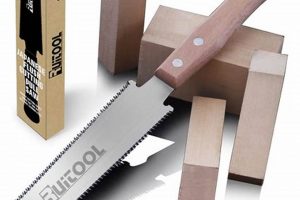
This manual sawing method involves cutting wood perpendicular to the grain. This technique, often employed in furniture construction and timber framing, produces a clean edge, minimizing splintering on the face of the material. For instance, it’s utilized to shorten a board’s length or create precise joints in joinery.
Mastery of this skill provides control and precision unattainable with power tools. Its quiet operation minimizes disruption in residential environments and enhances safety by reducing the risk of kickback associated with power saws. Historically, it represented a core skill for carpenters and remains a fundamental technique within traditional woodworking practices.
Subsequent discussion will elaborate on selecting the appropriate saw, mastering cutting techniques for optimal results, and detailing essential maintenance procedures to ensure tool longevity and performance. Attention will also be given to various applications within different woodworking projects.
Essential Techniques for Precise Wood Division
Achieving clean and accurate cuts requires adherence to specific techniques that optimize the saw’s performance and minimize common errors.
Tip 1: Secure Material Fixation: Implement a stable clamping system to prevent movement during the cutting stroke. Erratic movement results in uneven cuts and potential tool binding.
Tip 2: Initiate with Precision: Begin the cut with a shallow, deliberate kerf along the marked line using short, controlled strokes. A carefully established starting point dictates the accuracy of the subsequent cut.
Tip 3: Maintain Consistent Angle: Ensure the saw blade remains perpendicular to the workpiece’s surface throughout the cutting process. Deviation from a 90-degree angle produces beveled edges.
Tip 4: Apply Even Pressure: Utilize consistent downward pressure on the push stroke, allowing the saw’s teeth to efficiently remove material. Avoid forcing the tool; excessive pressure induces binding and premature dulling.
Tip 5: Track the Cut Line: Continuously monitor the saw’s alignment with the marked line. Minor adjustments during the cut correct for any drift and maintain accuracy.
Tip 6: Minimize Tear-Out: Reduce splintering on the exit side by scoring the wood fibers with a sharp knife prior to cutting, or by applying masking tape along the cut line.
Tip 7: Proper Saw Maintenance: Regular cleaning and sharpening of the saw blade are essential for maintaining optimal performance. A dull saw necessitates increased force, leading to fatigue and inaccurate cuts.
These guidelines, diligently applied, will promote enhanced control, reduced material waste, and improved quality of workmanship. Mastering these methods contributes significantly to the successful completion of various woodworking projects.
The following section will delve into specific project applications and explore advanced techniques for specialized cuts.
1. Tooth Geometry

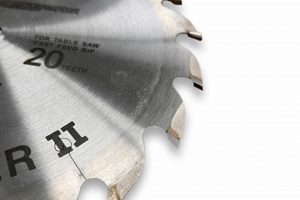
Tooth geometry represents a critical determinant in the performance of sawing. Its design directly impacts cutting efficiency, surface finish, and the overall suitability of a saw for particular wood types. Variations in tooth shape, angle, and set dictate how effectively the tool severs wood fibers perpendicular to their grain.
- Tooth Angle (Rake)
The angle at which the tooth face meets the wood influences the aggressiveness of the cut. A steeper angle (positive rake) results in more aggressive cutting, suitable for softer woods, but may increase tear-out in harder materials. A shallower angle (negative rake) provides a smoother cut, minimizing tear-out, but requires more force to operate. The appropriate rake angle balances cutting efficiency with surface quality.
- Tooth Shape (Profile)
The physical shape of the tooth affects its ability to sever wood fibers cleanly. Common profiles include fleam, which features beveled edges for slicing action, and peg, characterized by a straight, chisel-like edge for a more aggressive cut. Fleam teeth excel at producing smooth cuts in hardwoods, while peg teeth are often preferred for softwood applications due to their rapid material removal.
- Tooth Set
Tooth set refers to the alternating offset of teeth to either side of the blade. This offset creates a kerf (cut width) wider than the blade thickness, preventing binding during cutting. Insufficient set results in friction and overheating, while excessive set leads to a rough cut. The optimal set depends on the saw’s intended application and the type of wood being cut.
- Tooth Pitch (TPI)
Tooth pitch, measured as teeth per inch (TPI), impacts cutting speed and surface finish. A higher TPI (more teeth per inch) produces a smoother cut but removes material more slowly. A lower TPI (fewer teeth per inch) cuts faster but leaves a rougher surface. Selection of the appropriate TPI balances the need for cutting speed with the desired surface quality.
These geometric attributes, working in concert, determine the saw’s cutting characteristics and suitability for different applications. Proper selection and maintenance of tooth geometry are crucial for achieving desired results in sawing and, by extension, the overall quality and aesthetic of the finished woodworking project. Understanding these nuances facilitates informed tool selection and efficient operation.
2. Kerf Width

Kerf width, the amount of material removed by a saw blade during a cut, directly influences the precision and efficiency of sawing. Its impact on woodworking is substantial, affecting material yield, joint accuracy, and the overall structural integrity of assembled pieces. A wider kerf results in greater material waste; a narrower kerf, conversely, maximizes the number of usable components from a given stock.
In joinery, kerf width becomes paramount. For instance, creating a tenon joint requires precise dimensions for both the tenon and the mortise. An inaccurate kerf width during mortise creation, even by a small fraction, can compromise the joint’s strength and fit. Similarly, in projects involving inlay work, maintaining a consistent and predictable kerf ensures that the inlay material fits precisely within the prepared recess, without gaps or excessive pressure. Furthermore, the effort required to power a saw is directly proportional to the resistance met in cutting, resistance being determined by kerf width, density of wood, and length of blade.
Therefore, understanding and controlling kerf width is essential for achieving predictable and high-quality outcomes in applications. Factors influencing kerf width include tooth set, blade thickness, and the sawing technique employed. Skilled practitioners select tools with appropriate kerf widths for specific tasks and adjust their techniques to minimize variations, thus maximizing material usage and ensuring joint integrity. This understanding, while seemingly technical, has a significant impact on the economic and aesthetic outcomes of any woodworking endeavor.
3. Blade Material

The selection of blade material directly influences the performance and longevity within manual sawing applications. The material’s inherent properties, such as hardness, flexibility, and resistance to wear, dictate its effectiveness in severing wood fibers perpendicular to the grain. High-carbon steel, a common choice, offers a balance of hardness for maintaining a sharp cutting edge and sufficient flexibility to withstand bending forces during the cutting stroke. However, its susceptibility to corrosion necessitates regular maintenance to prevent degradation. Alloy steels, incorporating elements like chromium and vanadium, exhibit enhanced hardness and wear resistance, extending the lifespan of the blade and reducing the frequency of sharpening. The increased durability, however, comes at the expense of increased manufacturing cost.
The blade material’s temper, a result of heat treatment, further modifies its characteristics. Over-tempering results in a brittle blade prone to breakage, while under-tempering yields a blade that dulls quickly. A properly tempered blade strikes a compromise, providing a sharp, durable cutting edge that resists deformation under stress. Saw blades used in professional woodworking often feature hardened teeth, achieved through localized heat treatment, to maximize wear resistance at the cutting surface while maintaining a softer, more flexible body. This technique prolongs sharpness, allowing for extended use between sharpenings.
In summary, the choice of blade material for sawing represents a critical consideration. While high-carbon steel offers an economical option, alloy steels provide superior durability and edge retention. Proper tempering ensures that the blade performs optimally, resisting both dulling and breakage. Understanding the properties of different blade materials enables informed tool selection, ultimately impacting cutting efficiency, accuracy, and the overall quality of finished woodworking projects.
4. Cutting Angle
The cutting angle, the angle at which the saw blade interacts with the wood’s surface, profoundly impacts the efficiency and quality of sawing operations. Maintaining the appropriate cutting angle optimizes material removal, minimizes tear-out, and contributes significantly to the precision of the final cut.
- Perpendicularity to Grain
The primary characteristic defining sawing is that the blade must be held at or near a 90-degree angle relative to the wood grain. Deviation from this perpendicular orientation compromises the saw’s ability to sever wood fibers cleanly. For instance, angling the saw significantly while shortening a board results in a beveled edge instead of a square one, rendering it unsuitable for many joinery applications. Maintaining this angle is fundamental to achieving square and accurate cuts.
- Angle of Attack
While the overall goal is a 90-degree cut relative to the grain, the specific angle at which the saw’s teeth engage the wood during the stroke affects cutting efficiency. A slight forward angle (a few degrees) on the push stroke can improve the saw’s bite, particularly in dense hardwoods. However, excessive forward angling increases the risk of the saw binding or wandering off the cut line, reducing accuracy. Operators must carefully balance aggression with control.
- Impact on Tear-Out
The cutting angle directly influences the likelihood of tear-out, especially on the exit side of the cut. A shallower angle, achieved by slightly lifting the saw on the final strokes, can minimize splintering as the blade exits the material. Conversely, forcing the saw through the wood at a steep angle increases the risk of lifting wood fibers and creating a rough, uneven edge. Skilled sawing involves subtle adjustments to the cutting angle to manage and mitigate tear-out.
- Influence on Kerf Control
Maintaining a consistent cutting angle is crucial for controlling the kerf, the width of the cut produced by the saw blade. Variations in the cutting angle cause the kerf to widen or narrow unpredictably, compromising the precision required for tight-fitting joints. For example, a kerf that narrows mid-cut can cause the saw to bind, while a widening kerf weakens the structural integrity of a tenon shoulder. A stable, controlled cutting angle ensures a uniform kerf, essential for accurate and reliable sawing.
In summary, the cutting angle in sawing is a nuanced yet critical aspect of achieving precise and efficient material division. Adherence to correct cutting angle principles enhances the quality of the final result, while deviations can compromise accuracy and structural integrity. Mastery of cutting angle control is a hallmark of skilled craftsmanship and a prerequisite for achieving professional-quality woodworking.
5. Body Positioning

Effective body positioning is integral to the accurate and efficient execution of manual sawing tasks. Proper stance and posture enable the operator to apply force efficiently, maintain control over the saw, and minimize fatigue, thereby enhancing the quality and consistency of cuts achieved.
- Stance and Stability
A stable stance provides the foundation for controlled sawing. The operator’s feet should be positioned shoulder-width apart, with one foot slightly ahead of the other, creating a balanced and grounded posture. This stance allows for optimal weight distribution and prevents swaying or instability during the cutting stroke. For instance, sawing a large timber requires a wider stance to accommodate the increased range of motion and force needed. A stable stance is crucial for safety and precision.
- Arm and Shoulder Alignment
Proper alignment of the arms and shoulders is essential for efficient power transfer and reduced strain. The sawing arm should move freely from the shoulder, not just the elbow, allowing for a full and controlled stroke. The shoulder should be aligned with the saw blade, ensuring that force is applied directly along the cutting line. Misalignment leads to wasted energy, inaccurate cuts, and increased risk of injury. Visual inspection of arm and shoulder positioning can identify and correct inefficiencies in the sawing motion.
- Grip and Control
The grip on the saw handle should be firm but relaxed, avoiding excessive tension that can lead to fatigue and reduced control. The operator should maintain a consistent grip pressure throughout the cutting stroke, allowing the saw to move smoothly through the wood. An overly tight grip hinders the saw’s natural movement, while a loose grip compromises control. Experimentation with different grip positions can optimize comfort and control for individual users.
- Visual Focus and Alignment
Maintaining visual focus on the cutting line is crucial for accuracy. The operator should keep their eyes fixed on the marked line on the wood, guiding the saw blade along the intended path. Frequent visual checks ensure that the saw remains aligned and prevents it from wandering off course. Poor visual focus results in inaccurate cuts and increased material waste. Concentrated attention on the cutting line is a hallmark of skilled sawing.
These elements of body positioning collectively contribute to a more controlled, efficient, and safer sawing experience. Mastering these principles enables the woodworker to harness the full potential of sawing, achieving accurate and consistent results across a range of projects. The synergy between proper stance, arm alignment, grip, and visual focus transforms sawing from a laborious task into a refined and precise craft.
6. Sharpening Frequency
Maintaining optimal saw performance in manual sawing is directly contingent upon adherence to a consistent sharpening schedule. The interval between sharpenings directly affects the saw’s cutting efficiency, precision, and the physical effort required to operate it. Ignoring this critical aspect leads to diminished performance, increased risk of errors, and accelerated tool wear.
- Wood Hardness and Abrasiveness
The type of wood being sawn significantly impacts the required frequency of sharpening. Working with hardwoods, such as oak or maple, which possess higher densities and abrasive qualities, necessitates more frequent sharpening compared to working with softwoods like pine or cedar. The abrasive nature of hardwoods dulls the teeth more rapidly, requiring more frequent intervention to maintain optimal cutting performance. For example, a saw used regularly on hardwoods may require sharpening after every few projects, whereas a saw used exclusively on softwoods could function effectively for a longer period before requiring maintenance.
- Saw Usage Intensity
The intensity of saw usage is a primary determinant of sharpening frequency. A saw employed daily in a professional woodworking setting will require sharpening more often than a saw used sporadically for occasional projects. Continuous use accelerates tooth wear, reducing the sharpness and efficiency of the cutting action. A woodworker who utilizes their saw extensively will observe a decline in performance sooner, necessitating more frequent sharpening to restore the tool’s original cutting capabilities.
- Signs of Dullness
Recognizing the indicators of a dull saw is crucial for determining when sharpening is required. These indicators include increased effort required to initiate and maintain a cut, a tendency for the saw to bind or wander off the cut line, and the production of a rough or splintered cut surface. A sharp saw moves smoothly through the wood with minimal effort, producing a clean and precise cut. The presence of these signs signals that the saw teeth have lost their edge and require immediate attention to prevent further performance degradation and potential damage to the tool or workpiece.
- Sharpening Technique and Skill
The quality of the sharpening process itself influences the subsequent sharpening frequency. A properly sharpened saw, with teeth precisely filed to the correct angles and set, will maintain its sharpness for a longer period than a poorly sharpened saw. Incorrect sharpening techniques can damage the teeth, accelerating wear and requiring more frequent re-sharpening. Mastering the art of saw sharpening is essential for maximizing the lifespan of the saw and ensuring consistent cutting performance.
These interconnected factors underscore the importance of a proactive approach to saw maintenance. Neglecting to address sharpening needs results in diminished cutting efficiency, increased user effort, and a compromised quality of workmanship. Implementing a regular sharpening regimen, tailored to the specific characteristics of the wood being sawn, the intensity of saw usage, and the observed signs of dullness, preserves the saw’s cutting edge, prolongs its lifespan, and ensures optimal performance across all woodworking tasks.
Frequently Asked Questions
This section addresses common queries regarding the practical application and maintenance of hand saws.
Question 1: What distinguishes a crosscut saw from a ripsaw?
A crosscut saw is specifically designed to sever wood fibers perpendicular to the grain, while a ripsaw is intended for cutting along the grain. The teeth of a crosscut saw are shaped like knives to slice the wood fibers, whereas the teeth of a ripsaw are chisel-like to remove material in chunks.
Question 2: How does one determine the appropriate TPI (teeth per inch) for a particular project?
The selection of TPI depends on the type of wood being cut and the desired surface finish. A higher TPI is suitable for hardwoods and produces a smoother cut, while a lower TPI is more efficient for softwoods but results in a rougher surface. Generally, thicker materials benefit from lower TPI, and thinner materials from higher TPI.
Question 3: What are the primary causes of a saw blade binding during a cut?
Saw binding typically results from insufficient tooth set, which prevents the blade from creating a kerf wider than its thickness. Other contributing factors include excessive pressure during the cutting stroke, a dull blade, or attempting to cut wood that is warped or contains internal stresses.
Question 4: How often should a saw blade be sharpened?
Sharpening frequency depends on the frequency of use, the type of wood being cut, and the individual’s perception of diminished performance. A saw should be sharpened when it becomes difficult to initiate a cut, requires excessive force to operate, or produces a rough or uneven surface.
Question 5: What is the proper method for storing to prevent rust and corrosion?
To prevent rust and corrosion, the blade should be thoroughly cleaned after each use to remove sawdust and resin. Applying a thin coat of oil or wax to the blade surface provides a protective barrier. Store in a dry environment, ideally hung vertically to prevent warping or damage to the teeth.
Question 6: Is it possible to resharpen a saw blade effectively using only hand tools?
Yes, resharpening using hand tools, such as specialized files and a saw set, is a viable method for maintaining saw performance. However, this requires practice and a thorough understanding of saw tooth geometry. Alternatively, professional sharpening services can restore a blade to optimal condition.
Understanding these aspects of the usage allows for informed decision-making and extends the life of your tool, reducing downtime and improving results.
The following segment will provide guidelines on proper tool storage and maintenance.
Conclusion
This exploration of sawing has underscored the vital role of technique, tool maintenance, and material understanding in achieving optimal results. The precision and control afforded by this method are undeniable, demanding a commitment to skill development and consistent practice. Factors such as blade selection, sharpening frequency, and body positioning each exert a significant influence on the final outcome. A comprehensive grasp of these principles is essential for producing accurate, clean cuts across a variety of woodworking projects.
Continued dedication to honing these skills ensures the preservation of a valuable craft. By mastering the art of sawing, woodworkers elevate the quality of their work, maximizing material efficiency, and contributing to the longevity of their projects. The commitment to excellence in this fundamental technique forms the bedrock of fine woodworking and enduring craftsmanship.