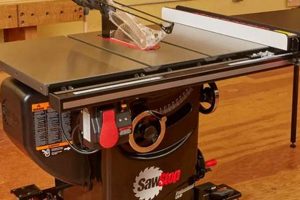
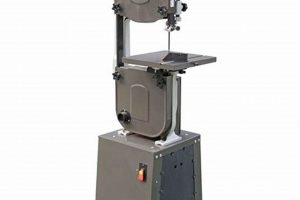
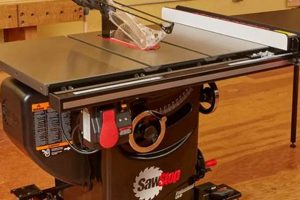
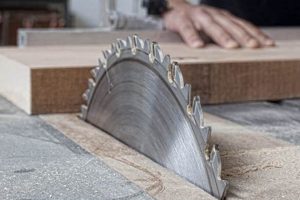
A crucial power tool in many woodworking shops, these machines utilize a continuous, toothed metal band to cut various shapes and thicknesses of wood. Featuring a motor-driven wheel system, this equipment allows for both straight and curved cuts, offering versatility that hand tools and other power saws cannot replicate. The narrow blade facilitates intricate designs, while the adjustable table provides support and control during operation.
The significance of this tool lies in its efficiency, precision, and safety. Compared to alternatives, it reduces material waste and creates smoother edges, minimizing the need for extensive sanding. Historically, such tools have evolved from manually operated devices to sophisticated electric models, improving productivity and expanding the possibilities of woodworking. They contribute to furniture making, cabinetry, and artistic projects.
The following sections will examine the various types of these tools, their components, safety precautions, and best practices for achieving optimal results. Subsequent topics will include blade selection, maintenance procedures, and innovative techniques that maximize this equipment’s potential.
Tips for Effective Operation
To maximize the functionality and longevity of these tools, adhere to the following operational and maintenance guidelines.
Tip 1: Blade Selection is Paramount: Choose the correct blade width and tooth configuration for the specific material and cutting task. A narrow blade is preferable for tight curves, while a wider blade offers greater stability for straight cuts. Consult blade charts for wood type recommendations.
Tip 2: Proper Tensioning: Ensure the blade is tensioned correctly. Under-tensioned blades wander, resulting in inaccurate cuts, while over-tensioning can lead to premature blade failure or damage to the machine. Refer to the manufacturer’s instructions for precise tensioning specifications.
Tip 3: Guide Adjustment is Critical: Adjust the blade guides to support the blade as close as possible to the workpiece. Proper guide adjustment minimizes blade deflection and improves cut accuracy. Check guide alignment regularly.
Tip 4: Feed Rate Control: Maintain a consistent and appropriate feed rate. Forcing the workpiece into the blade can cause the blade to overheat, buckle, or break. Conversely, feeding too slowly can result in burning or uneven cuts.
Tip 5: Regular Cleaning and Maintenance: Clean the machine regularly to remove sawdust and debris. Lubricate moving parts as specified in the owner’s manual. Periodic maintenance prolongs the life of the equipment and ensures optimal performance.
Tip 6: Consider a Riser Block Kit: For resawing wider boards, investigate installing a riser block kit. This modification increases the tool’s cutting capacity, enabling the processing of larger stock. Exercise caution and ensure the machine’s stability when utilizing a riser block.
Tip 7: Sharpen or Replace Dull Blades: A dull blade compromises cutting accuracy and efficiency. If sharpening is not feasible, replace the blade. Using sharp blades reduces strain on the motor and improves the quality of the cut.
Adhering to these tips will improve cutting precision, extend blade life, and promote a safer working environment.
The subsequent section will address troubleshooting common issues and advanced techniques for optimizing the performance of these machines.
1. Cutting Capacity

Cutting capacity, a defining specification of these saws, dictates the maximum dimensions of material that can be processed. It refers to two key measurements: the throat depth, which determines the width of material that can be cut, and the resaw capacity, indicating the maximum height of material that can be sliced vertically. Insufficient cutting capacity restricts the scope of projects that can be undertaken, necessitating alternative methods or the use of multiple tools to achieve desired results. For example, a tool with a small resaw capacity may be unable to slice a thick board into thinner pieces, limiting options for creating book-matched panels or producing veneer.
The relationship between cutting capacity and woodworking projects is direct. A larger capacity allows for greater flexibility in design and construction. Cabinet makers, for instance, often require resaw capacity to create custom panels and components from raw lumber. Woodworkers building larger furniture pieces, such as dining tables or casework, benefit from the ability to handle wider boards. Investing in a tool with adequate capacity is an investment in versatility, minimizing the need for joinery or the acquisition of specific-sized materials, often resulting in cost savings over the long term.
In summary, understanding the cutting capacity is paramount when selecting this machinery. It determines the scale of projects achievable and directly impacts the efficiency and effectiveness of woodworking operations. Choosing a model with sufficient capacity for anticipated needs is essential for maximizing its utility and avoiding limitations in future endeavors. The cutting capacity specifications represent a critical constraint, and should be carefully weighed when selecting any woodworking bandsaw to assure a good fit for the applications intended for it.
2. Blade Tension

Blade tension is a critical factor governing the performance and safety of woodworking band saws. Proper tension ensures accurate cuts, extends blade life, and minimizes the risk of blade breakage, directly impacting the quality of woodworking projects.
- Cut Accuracy
Inadequate tension allows the blade to wander, resulting in inaccurate cuts and uneven surfaces. This necessitates additional sanding and corrective measures, increasing project time and material waste. Conversely, excessive tension risks blade breakage, a potential safety hazard, while also stressing the saw’s frame and components.
- Blade Life
Consistent, proper tension distributes stress evenly across the blade. Under-tensioned blades experience increased friction and heat, accelerating wear. Over-tensioned blades are prone to fatigue and premature failure, particularly when encountering knots or dense grain patterns. Maintaining appropriate tension extends the operational life of the blade and reduces replacement frequency.
- Vibration and Noise
Insufficient tension exacerbates blade vibration, leading to increased noise levels and decreased cutting efficiency. This vibration compromises cut quality and can contribute to operator fatigue. Proper tension stabilizes the blade, minimizing vibration and creating a smoother, quieter cutting experience.
- Safety Implications
Incorrect tension poses significant safety risks. Under-tensioned blades are more likely to derail from the wheels, potentially causing injury. Over-tensioned blades are susceptible to snapping under stress, projecting blade fragments with considerable force. Adhering to recommended tension settings is essential for safe operation.
The facets of blade tension are interconnected and directly influence the overall functionality and safety of the woodworking band saw. Regular monitoring and adjustment of tension, based on blade width and material characteristics, are crucial for achieving optimal results. Understanding and managing blade tension is therefore fundamental to proficient use of this machinery.
3. Guide Alignment
In the operation of woodworking band saws, guide alignment plays a crucial role in achieving accurate and safe cuts. The guides, typically comprising both upper and lower sets positioned above and below the work table respectively, serve to support the blade, preventing it from wandering or deflecting during the cutting process. Misalignment of these guides directly compromises the precision of the saw, leading to inaccurate cuts and increased material waste. When the guides are not properly aligned, the blade is susceptible to twisting or bending, resulting in a cut that deviates from the intended path. This effect is particularly pronounced when cutting thicker materials or intricate curves.
The impact of guide alignment extends beyond cut accuracy to encompass blade lifespan and operational safety. Misaligned guides introduce undue stress on the blade, accelerating wear and increasing the likelihood of breakage. A broken blade poses a significant safety hazard to the operator and can damage the machine itself. Proper alignment ensures that the blade tracks correctly on the wheels and through the workpiece, distributing stress evenly and minimizing the risk of failure. Furthermore, correct guide setup minimizes vibration and noise, contributing to a more comfortable and controlled operating environment. For example, consider a cabinet maker tasked with cutting precise dovetails for drawer construction. Misaligned guides would render the task impossible, resulting in ill-fitting joints and a compromised final product. Similarly, in resawing lumber, accurate guide alignment is paramount to producing uniform slices and maximizing material yield.
Maintaining proper guide alignment is an ongoing process that requires periodic inspection and adjustment. Factors such as blade wear, material type, and cutting technique can influence guide settings. Regular checks and adjustments ensure that the saw operates at its optimal performance level, delivering accurate, clean cuts while minimizing safety risks. Neglecting guide alignment ultimately translates to reduced efficiency, increased waste, and compromised safety, underscoring its fundamental importance in band saw operation.
4. Motor Power

Motor power, measured in horsepower (HP) or amps, is a critical determinant of a tool’s capability to effectively cut through various wood types and thicknesses. A higher horsepower rating generally indicates a more robust motor capable of delivering greater torque, the rotational force required to turn the blade. Insufficient motor power results in reduced cutting speed, blade stalling, and increased strain on the motor, potentially shortening its lifespan. The selection of a model with appropriate motor power is therefore essential for woodworking tasks. For example, hardwoods such as oak or maple require significantly more power to cut than softwoods like pine or cedar. Similarly, resawing thick stock demands greater torque to maintain a consistent cutting speed without bogging down the blade. The practical consequence of insufficient motor power is diminished cutting performance and potential damage to the machine itself.
The relationship between motor power and blade speed is also noteworthy. While a higher horsepower motor can drive the blade at a faster rate, excessive speed can lead to burning of the wood and reduced control. Conversely, inadequate blade speed results in inefficient cutting and increased friction. Many models incorporate variable speed controls, allowing the operator to adjust the blade speed based on the material being cut and the desired finish quality. The judicious use of variable speed, in conjunction with appropriate blade selection, optimizes cutting performance and minimizes the risk of damage to the workpiece or the machine. Furthermore, consider the impact on dust collection. More powerful motors often generate more sawdust, necessitating a robust dust collection system to maintain a clean and safe working environment.
In summary, motor power is a fundamental specification governing the cutting capacity and performance characteristics of woodworking band saws. Selecting a model with adequate motor power is essential for achieving efficient, accurate, and safe cutting results. Understanding the relationship between motor power, blade speed, and material properties enables woodworkers to optimize performance and maximize the utility of their machinery. Deficiencies in motor power limit the range of projects that can be undertaken and can compromise the longevity of the machine itself, underscoring the practical significance of this parameter.
5. Safety Features

The integration of safety features into woodworking band saws is not merely an addendum but a fundamental requirement for mitigating inherent operational hazards. These features, including blade guards, interlock switches, and emergency stop mechanisms, are designed to minimize the risk of injury associated with the high-speed moving blade. The cause-and-effect relationship is direct: the absence of, or failure to utilize, these features dramatically increases the likelihood of accidents involving lacerations, amputations, or other serious bodily harm. For instance, a malfunctioning blade guard can expose the operator to the moving blade, particularly during blade changes or adjustments, leading to accidental contact and potential injury. Similarly, the failure to implement interlock switches, which prevent the machine from operating when safety guards are not in place, negates a critical layer of protection. A real-life example would be a woodworking shop where a technician removes the blade guard and forgets to replace it before restarting the tool and suffers a hand injury.
The practical significance of safety features extends beyond personal injury prevention. They also contribute to the longevity of the machinery and the quality of the finished product. Features like blade guides, while primarily designed to enhance cutting accuracy, also play a crucial role in preventing blade breakage and minimizing vibration, both of which can pose safety risks. Properly functioning safety mechanisms instill confidence in the operator, allowing them to focus on the task at hand without undue anxiety, leading to improved precision and efficiency. Furthermore, adherence to safety protocols, including the use of personal protective equipment (PPE) such as safety glasses and hearing protection, reinforces a culture of safety within the woodworking environment. Woodworkers operating with fully functional safety features and PPE, working within the specifications of the tool, are more likely to complete projects in a safe manner.
In conclusion, safety features are indispensable components of woodworking band saws, representing a critical line of defense against potential hazards. Regular inspection, maintenance, and proper utilization of these features are paramount for ensuring a safe working environment. The challenges lie in overcoming complacency and promoting a proactive approach to safety, where the use of safety features is viewed not as a burden but as an integral part of the woodworking process. Emphasizing the practical consequences of neglecting safety protocols is crucial for fostering a culture of responsibility and minimizing the risk of accidents.
Frequently Asked Questions
The following addresses common inquiries and misconceptions regarding the operation and maintenance of woodworking band saws, providing objective guidance for effective use.
Question 1: What is the appropriate blade tension for a specific blade width?
Blade tension varies based on blade width, thickness, and material composition. Consult the manufacturer’s recommendations for precise tension settings. Under-tensioning leads to inaccurate cuts; over-tensioning risks blade breakage.
Question 2: How frequently should blade guides be adjusted?
Blade guides require adjustment whenever the blade is changed or when there is a noticeable degradation in cut quality. Regular inspection and adjustment are essential to maintain accuracy and prevent blade wandering.
Question 3: What is the significance of blade kerf?
Blade kerf refers to the width of the cut produced by the blade. It is crucial for precise joinery and material calculations. A wider kerf results in greater material loss, influencing the dimensions of finished pieces.
Question 4: What factors influence the choice between carbon steel and bi-metal blades?
Carbon steel blades are generally suitable for softer woods and occasional use, while bi-metal blades offer superior durability and heat resistance, making them ideal for hardwoods and frequent cutting. Bi-metal blades also hold an edge longer and are more resistant to breakage.
Question 5: How can blade drift be minimized?
Blade drift, the tendency of the blade to deviate from the intended cutting line, can be minimized through proper blade tensioning, guide alignment, and feed rate control. Using a wider blade also provides greater stability and reduces drift.
Question 6: What safety precautions are paramount when operating this machinery?
Operating this machinery mandates the use of safety glasses, hearing protection, and appropriate clothing. Hands must be kept clear of the blade. The workpiece must be securely supported. The operator must adhere to all safety guidelines outlined in the manufacturer’s manual.
Understanding these fundamental aspects of operation ensures efficient, accurate, and safe use of these tools, maximizing their potential and minimizing the risk of accidents.
The following section will delve into advanced techniques and troubleshooting strategies for optimizing performance.
Conclusion
The preceding exploration of woodworking band saws has illuminated crucial aspects of their operation, maintenance, and safety. From the significance of cutting capacity and blade tension to the criticality of guide alignment and motor power, each element contributes to the overall performance and safety profile of this essential woodworking tool. Understanding the interplay of these factors enables informed decision-making in tool selection, operation, and project planning.
Mastery of this machine requires continuous learning and a commitment to best practices. Consistent diligence in maintenance, adherence to safety protocols, and a refined understanding of blade selection and cutting techniques will maximize the potential of woodworking band saws, yielding exceptional results and ensuring a safe and productive woodworking environment. Continued exploration and refinement of skills are paramount to realizing the full capabilities of this tool and pushing the boundaries of woodworking craftsmanship.