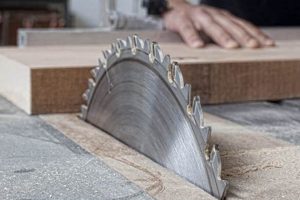
The coping saw is a specialized hand tool employed in woodworking to cut intricate curves and shapes. It is characterized by its thin, replaceable blade stretched taut within a deep C-shaped frame. This design allows the blade to be inserted into pre-drilled holes, enabling the creation of internal cuts and complex contours within a piece of wood. An example of its use is in creating the detailed profiles on decorative moldings, where its maneuverability facilitates accurate replication of the desired form.
The tool’s value lies in its precision and control, allowing for fine adjustments during cuts. It is particularly useful when working with delicate materials or executing tight curves that would be difficult or impossible to achieve with other saws. Historically, it has been a staple in furniture making and cabinetry, enabling craftspeople to produce elaborate designs and joinery with a high degree of accuracy. The benefits of using this tool include its relatively low cost, ease of use, and the ability to create intricate designs without the need for power tools.
The following sections will delve into specific applications, techniques for effective use, and maintenance procedures to ensure optimal performance of this valuable woodworking instrument.
Coping Saw Usage Tips
The efficient and accurate application of a coping saw requires attention to several key principles. Mastering these techniques will enhance the quality of cuts and prolong the life of the blade.
Tip 1: Blade Tension: Ensuring proper blade tension is crucial. A blade that is too loose will wander, resulting in inaccurate cuts. A blade that is too tight may snap. Adjust the tension knob until the blade produces a clear, ringing tone when plucked.
Tip 2: Blade Direction: The saw cuts on the pull stroke. Ensure the blade is installed with the teeth pointing toward the handle. This configuration allows for greater control and reduces the risk of blade breakage.
Tip 3: Workpiece Support: Secure the workpiece firmly to the workbench. Movement during cutting will compromise accuracy and potentially damage the wood. Utilize clamps or a vise to maintain stability.
Tip 4: Controlled Cutting: Avoid forcing the blade through the wood. Apply gentle, even pressure on the pull stroke and release pressure on the push stroke. Rushing the cut can lead to blade fatigue and breakage.
Tip 5: Turning the Blade: When cutting curves, rotate the saw frame, not the workpiece. Maintaining a smooth, continuous motion is key. For sharp turns, consider making relief cuts to remove excess material and reduce binding.
Tip 6: Relief Cuts: Employ relief cuts perpendicular to the intended cut line, especially when executing tight curves. These cuts alleviate pressure on the blade and prevent it from binding, allowing for smoother and more controlled turning.
Tip 7: Blade Selection: Use appropriate blade based on material being cut. Thinner blades can be more appropriate to cut tight curve.
By adhering to these guidelines, operators can maximize the effectiveness of the coping saw, achieving clean, accurate cuts and extending the lifespan of the tool. These practices contribute to a higher standard of craftsmanship and minimize material waste.
The concluding section will explore maintenance strategies to ensure the coping saw remains in optimal working condition, further enhancing its utility and longevity.
1. Intricate curve cutting

The ability to execute intricate curve cutting is a defining characteristic of the coping saw and a primary determinant of its role in woodwork. Its unique design facilitates the creation of complex shapes and contours that are difficult to achieve with other types of saws, making it indispensable for specific applications.
- Tight Radius Cuts
The coping saw excels at making cuts with tight radii, which refers to the sharpness of the curve. Due to its thin blade and maneuverable frame, it can navigate sharp turns and create small, detailed curves that other saws cannot. An example is cutting the inside curves of a cabriole leg on a piece of furniture. This capability is crucial in producing decorative elements and complex joinery.
- Internal Cutouts
The tool enables internal cutouts by inserting the blade through a pre-drilled hole. This function is essential for creating designs with enclosed shapes, such as fretwork panels or decorative inlays. The user can manipulate the blade to follow a pattern marked on the wood, removing material from within the workpiece without affecting the outer edges.
- Curved Joinery
Beyond decorative applications, the tool is used for creating curved joinery. When fitting curved pieces of wood together, its precision allows for accurate matching and seamless connections. An instance is fitting curved aprons to table legs, ensuring a tight and aesthetically pleasing joint. This precision contributes to the structural integrity and visual appeal of the finished piece.
- Complex Shape Replication
The saw’s maneuverability facilitates the replication of complex shapes from templates or drawings. It enables a craftsman to follow intricate lines and contours with a high degree of accuracy. This ability is valuable when reproducing historical designs or creating custom pieces with unique profiles. The precision achievable with this tool is crucial for maintaining the authenticity and quality of the work.
In conclusion, intricate curve cutting represents a fundamental aspect of the coping saw’s functionality. The applications described underscore its importance in achieving specific design goals and highlight its continued relevance in both traditional and contemporary woodworking practices. The precision and control afforded by this specialized tool remain invaluable for craftsmen seeking to create detailed and refined pieces.
2. Coping joints precisely

The application of a coping saw in achieving precise joints represents a core functionality of the tool within the realm of woodwork. This technique is particularly relevant when fitting moldings or trim, where a seamless and visually appealing connection is desired. The ability to cope joints accurately avoids the need for mitered corners in certain situations, offering a more forgiving and often stronger joint.
- Eliminating Miter Imperfections
Mitered corners are susceptible to gaps due to inaccuracies in angle measurement or slight movements in the wood over time. A coped joint, created by removing the back portion of one molding to match the profile of the other, allows for a more forgiving fit. This is particularly useful in spaces where walls are not perfectly square.
- Adapting to Irregular Angles
Coped joints excel when dealing with irregular or obtuse angles, situations where precise miter cuts are difficult to achieve. The coping saw facilitates the creation of a joint that conforms to the specific angle, ensuring a tight fit even if the angle deviates slightly from 90 or 45 degrees.
- Achieving a Seamless Appearance
A well-executed coped joint provides a virtually seamless appearance, as the profile of one molding exactly matches and overlaps the other. This creates a more professional and visually appealing result compared to a mitered joint that may exhibit gaps or unevenness.
- Increased Joint Strength
While not the primary purpose, a coped joint can offer slightly increased strength compared to a mitered joint. The interlocking nature of the coped profile provides a greater surface area for adhesion if glue is used, and it also resists movement or separation due to changes in humidity or temperature.
In summary, the precision afforded by the coping saw when creating coped joints is essential for achieving high-quality results in various woodworking projects. It provides a method for overcoming imperfections, adapting to irregular angles, creating seamless appearances, and potentially enhancing joint strength. These factors solidify the coping saw’s role as a valuable tool in applications requiring accurate and aesthetically pleasing joints.
3. Detailed pattern replication

Detailed pattern replication constitutes a significant function inextricably linked to the utility of the coping saw in woodwork. The tool’s design and capabilities directly enable the precise transfer and execution of intricate designs onto wooden surfaces. This replication process hinges on the saw’s capacity to navigate complex curves and tight corners, effectively translating a drawn or pre-existing pattern into a physical form. The relationship between the saw and pattern replication is causal: the coping saw facilitates the effect of reproducing a complex pattern due to its design cause which includes a thin blade and maneuverable frame.
The importance of detailed pattern replication as a component of the coping saw’s function lies in its contribution to decorative woodworking, furniture restoration, and historical reproduction. Examples include replicating ornate fretwork on antique cabinets, recreating damaged molding profiles, or producing intricate inlays for musical instruments. Without the ability to accurately follow intricate patterns, the coping saw’s application would be substantially limited to more basic cutting tasks. The practical significance of this understanding lies in enabling woodworkers to undertake projects requiring high degrees of precision and artistry.
Challenges in detailed pattern replication typically involve selecting the appropriate blade for the material being cut, ensuring adequate workpiece support to prevent movement during the cutting process, and mastering the technique of smoothly navigating curves without binding the blade. These challenges, however, underscore the necessity of a skilled operator who understands the intricacies of both the tool and the material, reinforcing the coping saw’s role as a precision instrument within the broader landscape of woodworking.
4. Internal shape removal

Internal shape removal represents a fundamental function inextricably linked to the coping saw’s utility in woodworking. The tools design directly enables the extraction of material from within a workpiece without altering its exterior dimensions. This is achieved by detaching one end of the blade, threading it through a pre-drilled pilot hole, reattaching it to the saw frame, and then executing the cut. The causal relationship is clear: the coping saw’s frame depth and detachable blade are specifically designed to facilitate the effect of removing internal shapes, providing capabilities that other saws cannot offer.
The importance of internal shape removal as a component of the coping saw’s function stems from its contribution to specialized woodworking tasks. Examples include creating decorative fretwork, cutting out the internal sections of picture frames, and preparing pieces for intricate inlay work. The absence of this capability would restrict the coping saw to edge-cutting applications, significantly diminishing its versatility and value in complex projects. Internal cuts permit designs where the outline of a workpiece remains intact, while interior sections are removed to produce a specific aesthetic or functional outcome.
Common challenges in internal shape removal involve maintaining consistent blade tension, preventing blade wandering, and accurately following the intended cut line, particularly when executing tight curves. These challenges underscore the necessity for both a well-maintained tool and a skilled operator, highlighting the coping saw’s role as a precision instrument requiring careful technique. Overcoming these challenges allows for the successful realization of intricate designs and underscores the critical function of internal shape removal within the broader context of the coping saw’s application in woodworking.
5. Thin stock cutting

The ability to efficiently and accurately cut thin stock is a key facet of the coping saw’s functionality in woodworking. The tool’s design lends itself particularly well to working with delicate materials where control and precision are paramount.
- Minimizing Splintering
When working with thin pieces of wood, splintering can be a significant issue. The fine teeth of a coping saw blade, coupled with careful cutting technique, help to minimize this risk. This is particularly important when using expensive or rare woods where material wastage is undesirable. For example, cutting thin veneers for marquetry work often relies on the coping saw’s ability to produce clean edges.
- Following Intricate Lines on Delicate Materials
Thin stock is often used in projects involving detailed patterns and intricate shapes. The coping saw’s maneuverability allows for precise adherence to these patterns, even when the material is fragile. A common application is cutting thin wood for model making or creating delicate ornamental pieces.
- Creating Smooth Curves in Thin Materials
The coping saw is adept at producing smooth, flowing curves in thin wood. This is essential for projects requiring aesthetic appeal, such as the construction of curved drawer fronts or the shaping of decorative trim. The narrow blade allows for tight turns and gradual curves without tearing or buckling the wood.
- Controlling Blade Deflection
In thin stock, even slight blade deflection can lead to inaccuracies. The deep frame of the coping saw helps maintain blade rigidity, reducing the likelihood of unwanted movement. This is crucial when cutting precision joints or fitting small pieces together, such as in building scale models or miniature furniture.
These characteristics highlight the coping saw’s value in projects involving thin stock, where its unique combination of precision, control, and blade stability makes it an indispensable tool for achieving high-quality results. The saws specific suitability contrasts sharply with the tearout and lack of control associated with faster, powered options. In essence, the coping saw provides a level of finesse critical when material loss must be minimized.
6. Creating smooth contours
Creating smooth contours constitutes a vital function closely associated with the application of a coping saw in woodwork. The tool’s inherent design features directly contribute to achieving refined surface transitions. The thin, maneuverable blade, coupled with a controlled cutting action, allows for the gradual removal of material to form flowing, even shapes. The relationship is causal: the coping saw’s blade characteristics and manageable frame enable the effect of generating smooth contours on a workpiece.
The significance of creating smooth contours as a function stems from its impact on both aesthetic and functional aspects of woodworking projects. An example can be seen in the creation of curved furniture components, such as chair backs or armrests, where a seamless transition is critical for comfort and visual appeal. Other practical applications include shaping edges on decorative plaques or producing custom profiles for molding. The capability to produce these contours with precision distinguishes the coping saw from tools less suited for delicate shaping tasks. Challenges may arise from blade wandering or inconsistent cutting pressure, necessitating a skilled operator who understands the interplay between tool, material, and desired outcome.
In summary, the ability to create smooth contours significantly defines the utility of a coping saw. By facilitating the formation of refined surface transitions, the tool contributes to enhanced aesthetics and functionality across a diverse range of woodworking applications. Overcoming challenges related to blade control is essential for achieving optimal results, underscoring the coping saw’s role as a precision instrument when crafting contoured forms.
7. Fine detail work
The execution of fine detail work is intrinsically linked to the utility of a coping saw in woodworking. This relationship stems from the tool’s design, which permits precision and control essential for intricate tasks. The inherent characteristics of the coping saw facilitate outcomes unattainable with larger or less maneuverable saws. This section will explore aspects of this connection.
- Intricate Inlays and Marquetry
The creation of intricate inlays and marquetry, wherein small pieces of different materials are precisely fitted together to form a decorative pattern, relies heavily on the coping saw. Its thin blade and maneuverability allow for accurate cutting of the delicate components required for such work. An example is the production of complex geometric patterns in antique furniture restoration.
- Fretwork and Pierced Designs
Fretwork, characterized by open, ornamental designs cut through a piece of material, is another application where the coping saw excels. The tool’s ability to create internal cuts and navigate tight curves enables the production of elaborate pierced designs in applications such as decorative panels or speaker grilles. It allows to follow a precise pattern in order to achive a particular and delicate effect.
- Model Making and Miniature Work
Model making and miniature woodworking projects often demand extreme precision and the ability to work with small pieces of material. The coping saw is ideally suited for these tasks, allowing for the precise shaping and fitting of components in scale models, dollhouses, and other miniature constructions. It’s a common tool for building intricate prototypes.
- Repairing Delicate Wooden Artifacts
The repair of delicate wooden artifacts, such as antique furniture or musical instruments, often requires the replacement of small or intricately shaped parts. The coping saw’s precision allows for the careful removal of damaged sections and the accurate shaping of replacement pieces, ensuring the preservation of these valuable items. It allows the restorer to preserve as much of the original artifact as possible.
The applications highlighted emphasize the significant role of the coping saw in fine detail work within woodworking. Its precision, maneuverability, and ability to create intricate cuts make it an indispensable tool for craftspeople engaged in decorative arts, restoration, and other specialized woodworking disciplines. It’s worth remembering that while powered options may exist for some of these applications, the coping saw offers a level of control and finesse not always achievable with mechanized tools.
Frequently Asked Questions
The following addresses common inquiries regarding the use and capabilities of the coping saw in woodworking.
Question 1: What is the primary advantage of using a coping saw over other types of saws?
The coping saw’s primary advantage lies in its ability to cut intricate curves and internal shapes with a high degree of precision, capabilities not readily available with larger saws or those designed for straight cuts.
Question 2: Can a coping saw be used on materials other than wood?
While primarily designed for wood, a coping saw can be used on other soft materials, such as plastic or thin metal sheets, provided that the appropriate blade is selected.
Question 3: How is blade tension adjusted on a coping saw?
Blade tension is typically adjusted using a knob or lever located on the saw frame. The blade should be taut enough to produce a clear tone when plucked, but not so tight that it risks snapping.
Question 4: What is the proper technique for starting a cut with a coping saw?
Begin by positioning the blade on the marked line and using gentle, controlled strokes. Ensure that the blade is cutting on the pull stroke and that the workpiece is securely supported to prevent movement.
Question 5: How can blade breakage be prevented when using a coping saw?
Blade breakage can be minimized by using the correct blade tension, avoiding excessive force, and employing relief cuts when navigating tight curves. Proper workpiece support also contributes to blade longevity.
Question 6: Is a coping saw suitable for cutting thick lumber?
A coping saw is not designed for cutting thick lumber. Its thin blade and frame depth limit its capacity to materials of relatively modest thickness. Attempting to cut thick stock can result in blade breakage and inaccurate cuts.
In summary, the coping saw serves a specific niche in woodworking, offering unparalleled precision for intricate cuts and internal shapes. Its successful application relies on proper technique and an understanding of its limitations.
The subsequent section will discuss the historical context and evolution of the coping saw within the field of woodworking.
Conclusion
This exposition has detailed the multifaceted functionality of the coping saw within the context of woodworking. It has served to underscore its defining characteristics, encompassing intricate curve cutting, precise joint creation, detailed pattern replication, and internal shape removal. Additional analyses have clarified its utility when working with thin stock, forming smooth contours, and executing tasks requiring exacting precision. These represent critical components of the tool’s role, demonstrating its significance in a variety of specialized applications.
The coping saw remains a valuable asset, offering a unique combination of control and maneuverability that addresses specific needs within woodworking practices. Its longevity within the craft and ongoing relevance in both traditional and contemporary techniques validate its enduring importance. Further exploration of specialized applications and advanced techniques will continue to reveal the coping saw’s full potential, solidifying its position as a vital tool for craftspeople seeking precision and artistry in their work.